When you pick milk from a supermarket fridge, you often see the word ‘pasteurized’ on the pack along with a temperature and a time. Freshly drawn milk is so rich in nutrients that bacteria multiply quickly, yet we drink it almost every day without worry. There is a way to make food safe by reducing harmful germs without boiling it hard, and that is ‘pasteurization.’
Put simply, pasteurization means ‘heating food below 100°C for a set time to reduce pathogens, spoilage microbes, and enzymes, and to extend shelf life.’ Named after the French scientist Louis Pasteur, who first proved the method experimentally, it is widely used for milk, juice, beer, liquid eggs, and more.
In this piece we will look in turn at the history of pasteurization that began with wine, the principle of matching temperature and time, how it differs from sterilization, myths about nutrient loss, and newer pasteurization technologies.
Heat That Keeps the Table Safe: How Pasteurization Works and Where It Is Used
Pasteur’s Solution That Began with Wine

In the wine regions of nineteenth-century France, wine in the middle of aging often turned sour. In the summer of 1864, Pasteur, staying in Arbois where he had spent his childhood, studied the problem and found that heating young wine briefly to about 50–60°C killed the microbes that cause spoilage, after which the wine could still age without losing its flavor.
(1) Boiling Is Not Necessary
Earlier, the French confectioner Nicolas Appert had developed a preservation method of sealing food in bottles and boiling them, but long boiling often changed taste and aroma. Pasteur’s discovery opened a new path by showing that heating only as much as needed could still control microbes.
(2) Pasteurization Moves to Milk
In 1886 the German chemist Franz von Soxhlet proposed applying the method to milk as well. Milk brought into cities was then a major route for spreading tuberculosis, and in England and Wales alone, about 65,000 people are estimated to have died of milk-borne tuberculosis between 1912 and 1937. After New York City adopted milk pasteurization rules in 1912 and made pasteurization mandatory the following year, many other countries followed.
Balancing Temperature and Time: Three Ways to Pasteurize

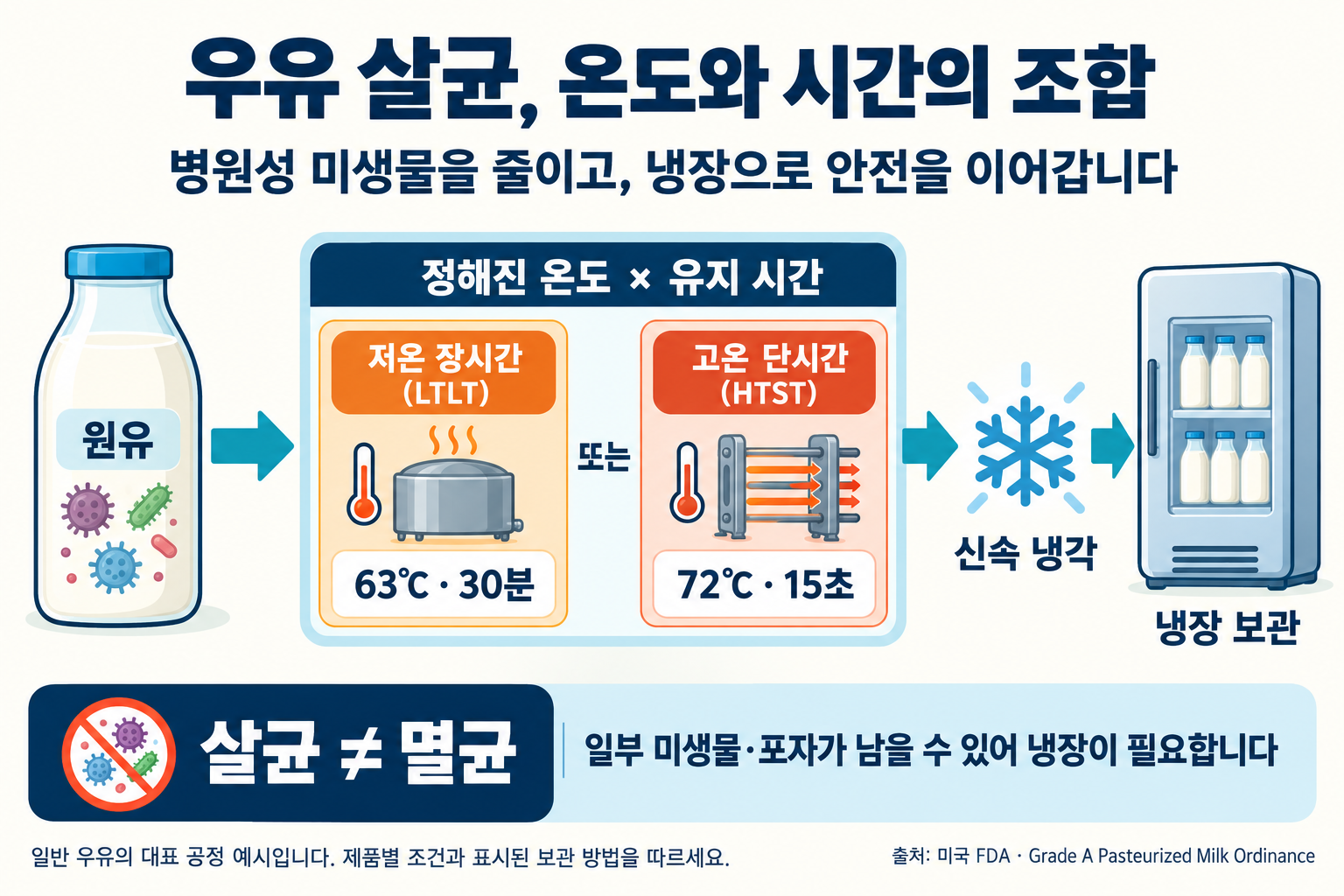
The heart of pasteurization is the combination of temperature and time. Lower the temperature and you heat longer; raise it and a very short heat can give a similar effect. The Codex Alimentarius sets the goal of milk pasteurization as reducing the heat-resistant pathogen Coxiella burnetii to one hundred-thousandth or less.
- Low Temperature Long Time (LTLT): The oldest method, slowly heating at 63–65°C for 30 minutes.
- High Temperature Short Time (HTST): Heating at 72–75°C for 15–20 seconds, the most widely used method worldwide.
- Ultra-High Temperature Processing (UHT): Heating at 130–150°C for 0.5–5 seconds, leaving almost no microbes behind.
What we commonly call ‘pasteurization’ is named for using temperatures below the boiling point; a large share of milk sold in Korea is actually made by treating it above 120°C for a few seconds to extend shelf life.
How Does Pasteurization Differ from Sterilization?

Pasteurization reduces harmful microbes to a safe level; it is not the same as sterilization, which aims to eliminate all microbes. Bacterial spores wrapped in a tough coat, in particular, can survive pasteurization temperatures.
(1) Why Refrigeration Is Needed
Pasteurized milk must be kept cold so remaining microbes do not grow again, and quality usually lasts about two weeks under refrigeration. By contrast, sterilized milk that has been ultra-high-temperature treated and packaged aseptically can be stored at room temperature for several months until it is opened.
(2) How to Confirm Proper Pasteurization
Alkaline phosphatase, an enzyme in milk, is destroyed at pasteurization temperatures. If the enzyme is no longer present, common pathogens are judged to have been eliminated as well, and Korea’s food code requires that phosphatase not be detected in LTLT or HTST pasteurized milk.
Myths About Nutrient Loss and Heat-Free Methods
People often say pasteurization destroys all the nutrition, but the real change is small. Some heat-sensitive vitamins decrease a little, while protein and calcium—the main reasons people drink milk—remain almost intact.
The Risk of Unpasteurized Milk
Raw milk that has not been pasteurized can be contaminated with bacteria such as Salmonella, Listeria, and enterohemorrhagic E. coli. The U.S. Centers for Disease Control and Prevention warns that improperly handled raw milk causes far more hospitalizations than many other foodborne sources. It is especially dangerous for children, older adults, and pregnant people.
Pressure and Electricity Instead of Heat
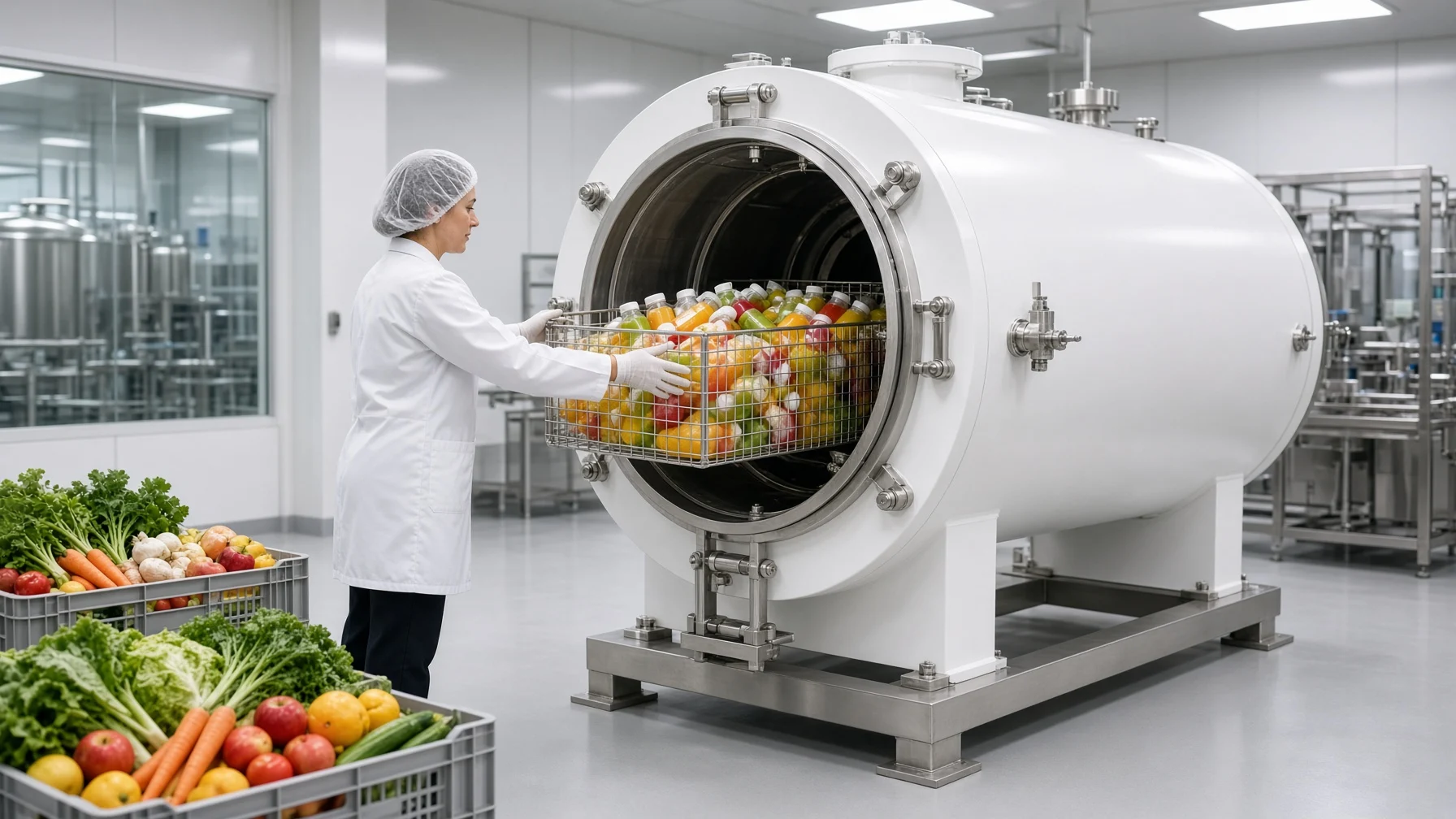
Recently, methods that use almost no heat have also been adopted to better preserve taste and aroma. High Pressure Processing, which applies very high pressure, and Pulsed Electric Field Processing, which delivers short electric pulses, are representative examples and are used for cold-pressed juices and the like.
Pasteurization is a technology that uses just enough heat not to boil, reducing harmful microbes so that taste and nutrition are preserved while safety and shelf life both improve. An experiment meant to protect wine some 160 years ago has become a foundation of public health that now guards the safety of every carton of milk.
Checking the pasteurization method and storage temperature on the pack once more, and putting opened milk straight back in the fridge, are small habits that keep that benefit to the end.
Understanding the invisible risks hidden in food is the first step toward a safer table.