You have probably reached for a carton of milk at the back of a convenience store fridge on purpose. That is because the products toward the back often have more time left before their date. Behind this small display habit lies an old principle that keeps warehouses and stores running.
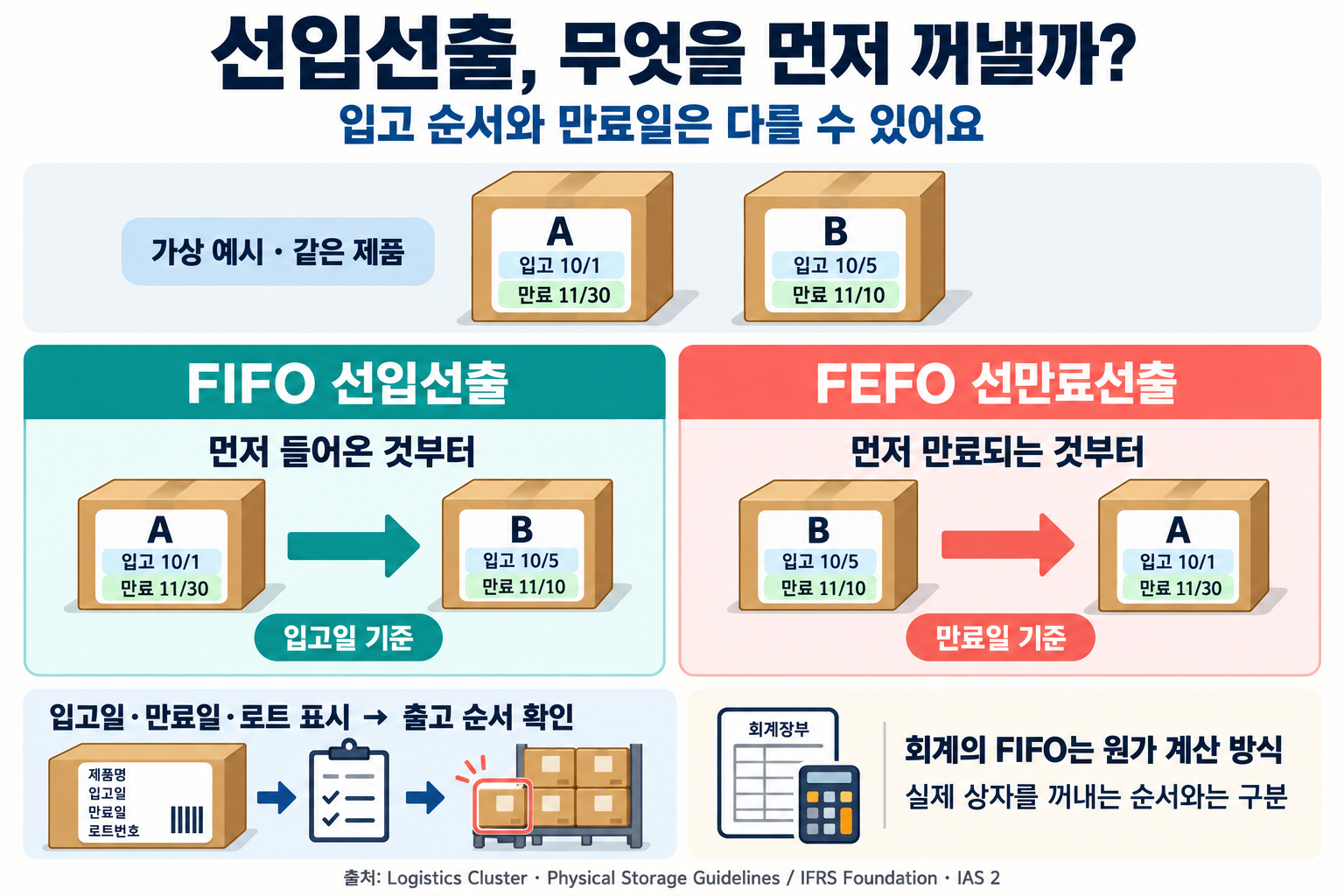
The inventory practice of sending out first the goods that came in first is called ‘First In, First Out’. Put simply, First In, First Out means ‘shipping out goods in order, starting with those that have waited longest, so that no stock sits around or spoils in the warehouse’. The name is simple, but keeping to it takes a lot of work, from shelf design to record-keeping.
In this article, we will look in turn at the meaning of First In, First Out and why it is needed, First Expired, First Out, which is based on dates, and Last In, First Out, which takes goods out in reverse, how the order is kept on the warehouse floor, and how the same name is used in accounting.
The Principle of Sending Out First What Came In First
What Is First In, First Out, and Why Is It Needed?
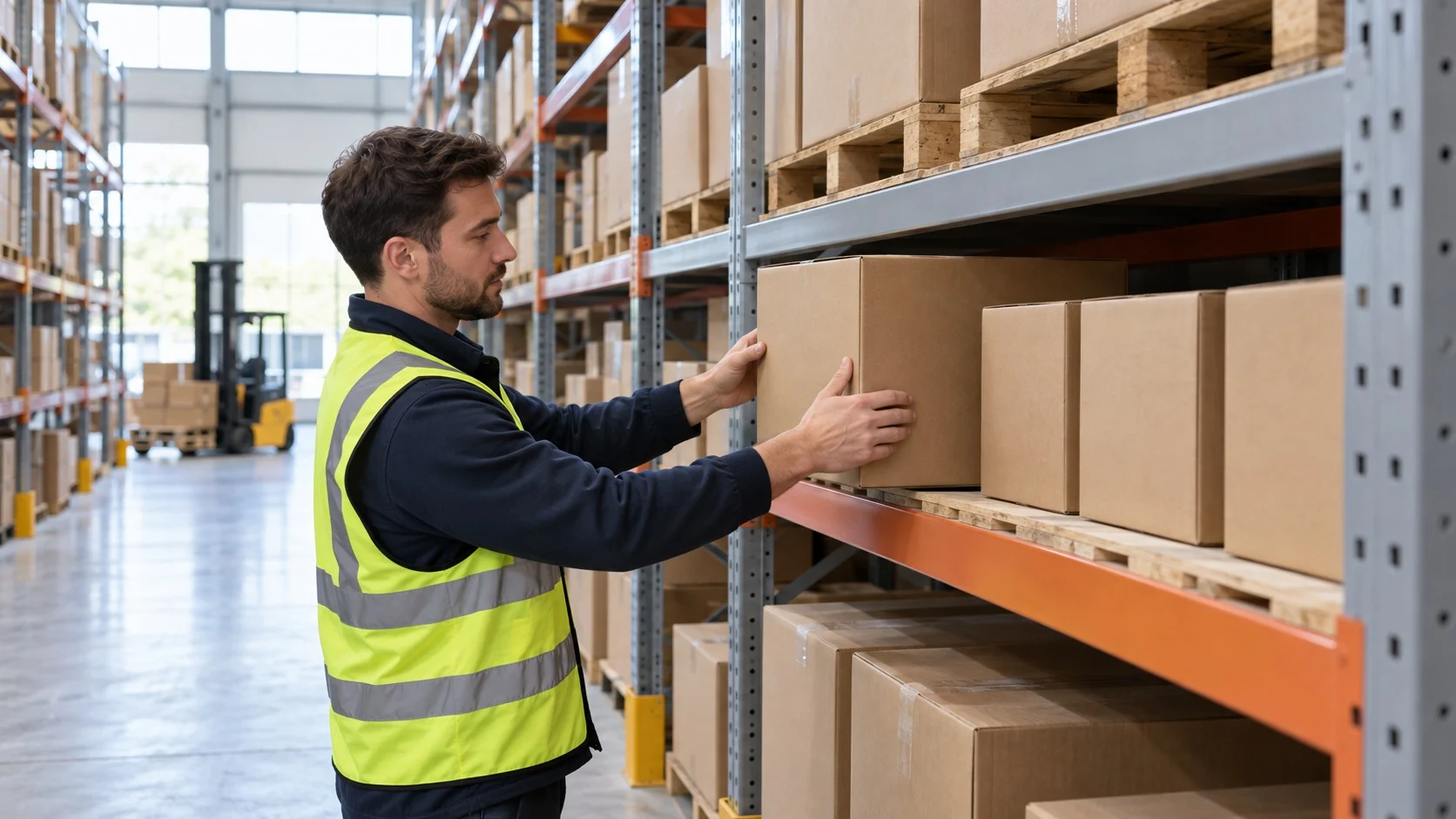
When the same item arrives at a warehouse in several separate deliveries, batches with different receiving dates end up stacked together on the shelves. If only the easy-to-reach items at the front keep being shipped, the items at the back stay put for months. First In, First Out is the rule of shipping goods in the order they were received to prevent this.
(1) It prevents stock from spoiling and wearing out
For goods that lose value over time, such as food and medicine, the longer they sit, the more of them is thrown away. When the order is kept, most of the stock reaches customers before its date.
(2) It prepares for trends and model changes
Even goods that do not spoil become hard to sell when a new model comes out or the packaging changes. Sending out old stock first reduces the build-up of this kind of dead stock.
(3) It makes inventory easier to track
When goods leave in the order they arrived, it is easy to estimate when the items now left on the shelf came in. There is also less need to search the entire shelf to find old stock.
First Expired, First Out and Last In, First Out: Other Ways to Set the Order

The order of receipt is not the only standard. The shipping order is sometimes set differently depending on the nature of the goods.
- First Expired, First Out: A method of sending out first the goods whose sell-by or use-by date ends soonest, rather than those that arrived first. Because a batch that arrived later may have a shorter date, it is widely used in food and pharmaceutical warehouses.
- Last In, First Out: A method of taking out first the goods that arrived last. Goods piled up and scooped from the top, such as sand or coal, naturally follow this order.
- First In, First Out: The basic method most widely used for general stock whose quality barely changes over time and where the same item arrives many times.
Whichever method is chosen, what matters is setting it up so that everyone in the warehouse follows the same order.
How Warehouses Keep to First In, First Out
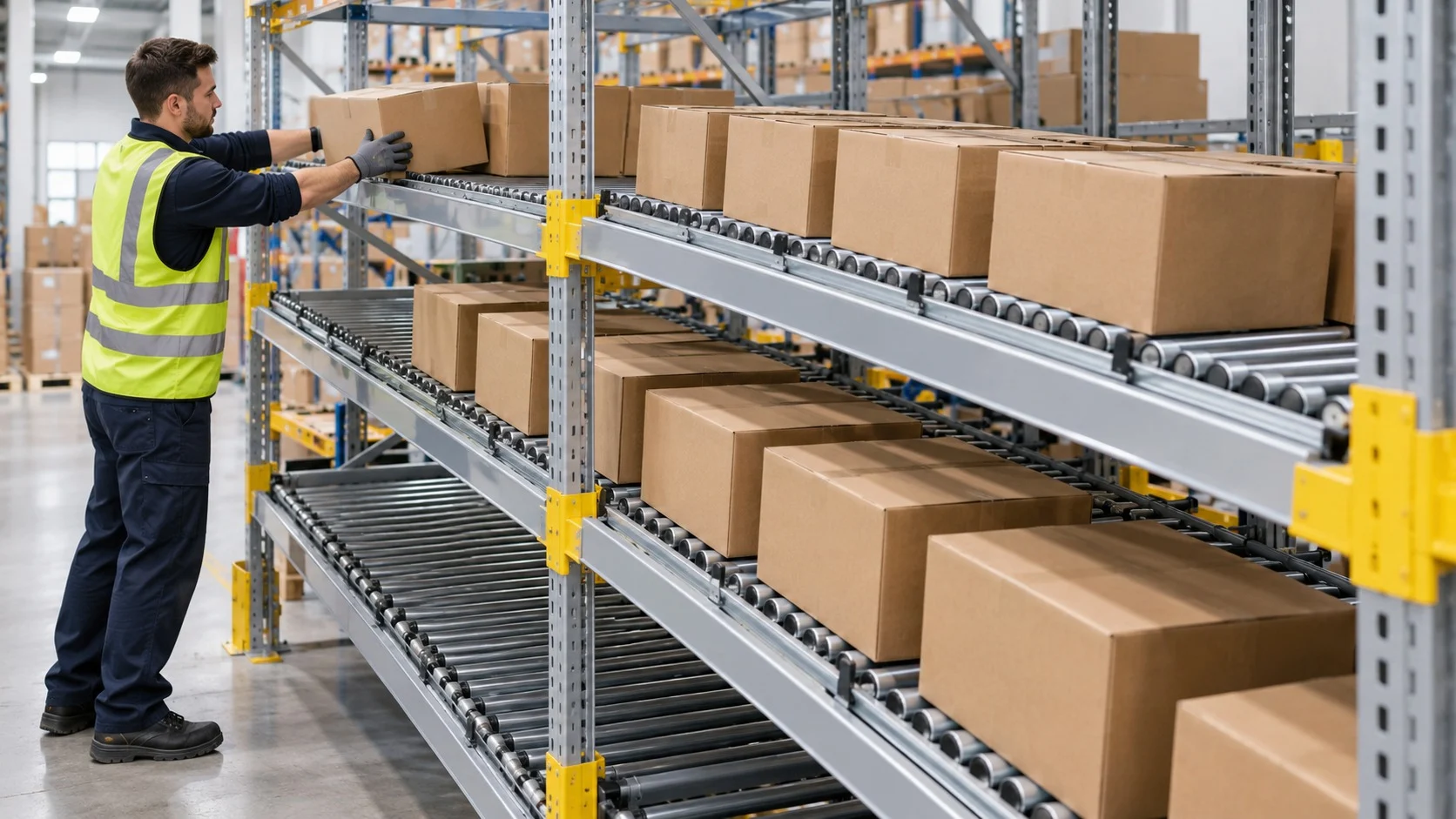
Even with a rule in place, on a busy floor it is easy to grab whatever is within reach first. That is why warehouses keep the order through structure and records rather than relying on people’s habits.
(1) Shelves loaded from the back and picked from the front
A Flow Rack, where boxes slide down over sloped rollers, is built to be loaded from the back and picked from the front, so the box put in first automatically comes out first. A Drive-Through Rack, where a forklift enters from one side and exits from the other, works on the same principle.
(2) Marking receiving dates and lot numbers
Each box is labeled with its receiving date, its use-by date and a lot number, which identifies a batch made under the same conditions. Workers choose the oldest batch by looking at the labels, and if a problem arises, only the same lot can be picked out and recalled.
(3) Picking instructions from a warehouse management system
A Warehouse Management System keeps track of the receiving date and date information for each item of stock, and at shipping time immediately tells workers which batch to take from which location.
First In, First Out in Accounting

The term First In, First Out is also used in bookkeeping. It refers to a method of deciding at which price to count the cost of goods sold when the same item has been bought several times at different prices.
Cost Flow Assumptions and International Standards
- First-In, First-Out Method: A method that treats the earliest purchase prices, in order, as the cost of goods sold. When prices are rising, the remaining inventory is shown at values close to recent prices.
- Weighted Average Cost Method: A method that uses the average of all purchase prices as the cost, spreading the effect of rising and falling prices evenly.
- Last-In, First-Out Method: A method that treats the latest purchase prices first as the cost. The International Financial Reporting Standards eliminated this method when the inventories standard (IAS 2) was revised in 2003, with the change applying from 2005.
The bookkeeping method does not necessarily match which box was actually taken out first. It helps to keep in mind that warehouse First In, First Out is a rule for protecting goods, while accounting First In, First Out is a convention for calculating cost.
First In, First Out is not a special technology; it starts from the habit of respecting the order in which goods arrived. When this simple principle is kept, less stock is thrown away, and customers receive fresh goods.
Remembering the order in which things came in and sending them out in that order: that is the first step in logistics toward keeping inventory healthy.