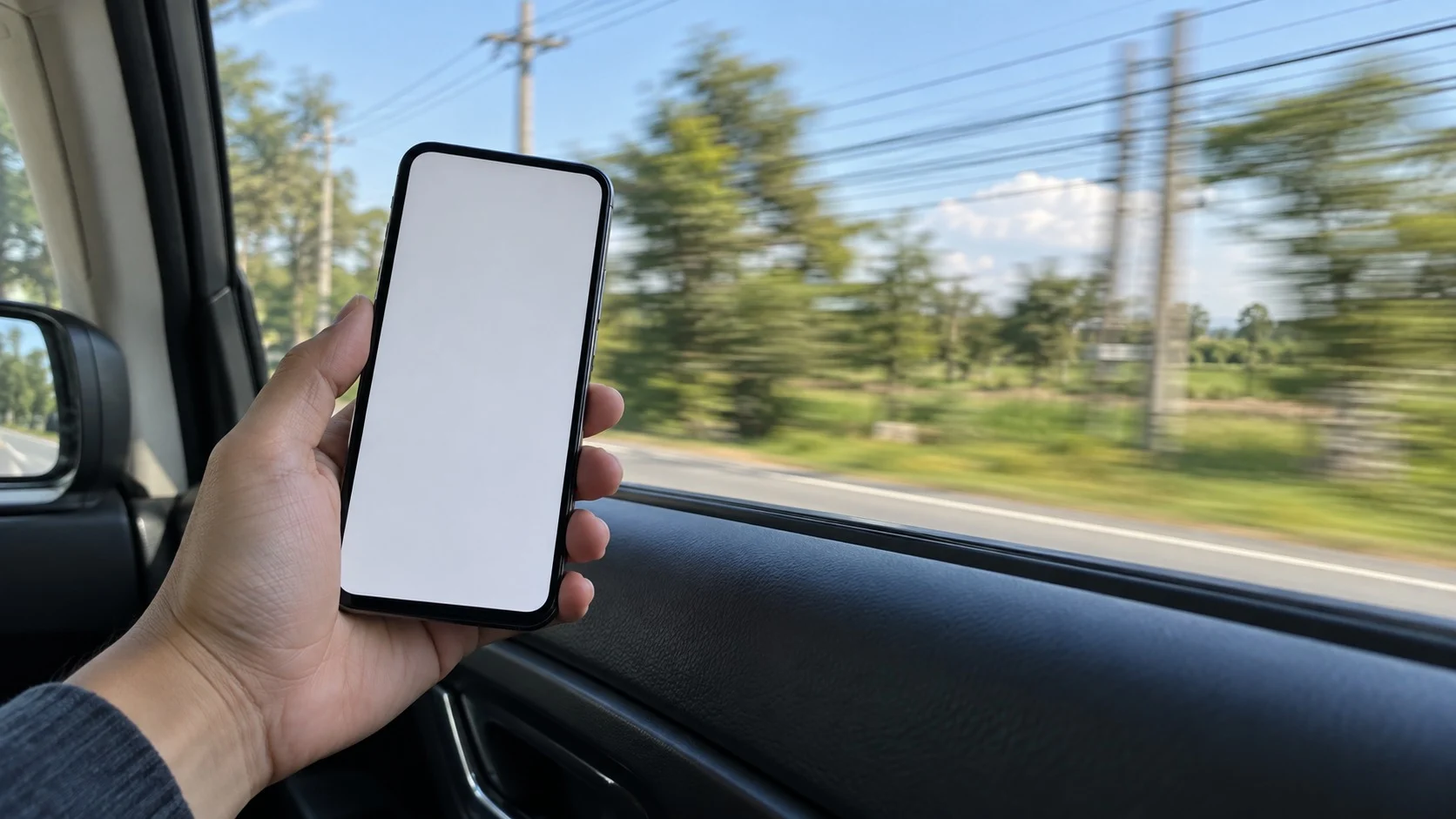
When you film the view from a moving car with a smartphone, a utility pole that was standing straight can sometimes look tilted. When you film a spinning fan or helicopter blades, the blades may bend like bananas or look as if they have come off the hub. The camera is not broken; this is a perfectly natural phenomenon caused by the way the image is recorded.
The term for this phenomenon is the ‘rolling shutter.’ Put simply, a rolling shutter means ‘a way of recording that does not capture a scene all at once in a single instant, but quickly scans and records it line by line from top to bottom.’ When this method makes fast-moving objects or momentary flashes of light come out strangely, it is called the rolling shutter effect.
In this article, we will look in turn at how the rolling shutter works, the typical distortions it produces on screen, ways to avoid them, and even cases where it is used as a means of expression.
A Screen Recorded Line by Line: How the Rolling Shutter Works and How It Is Used
How Does a Rolling Shutter Work?
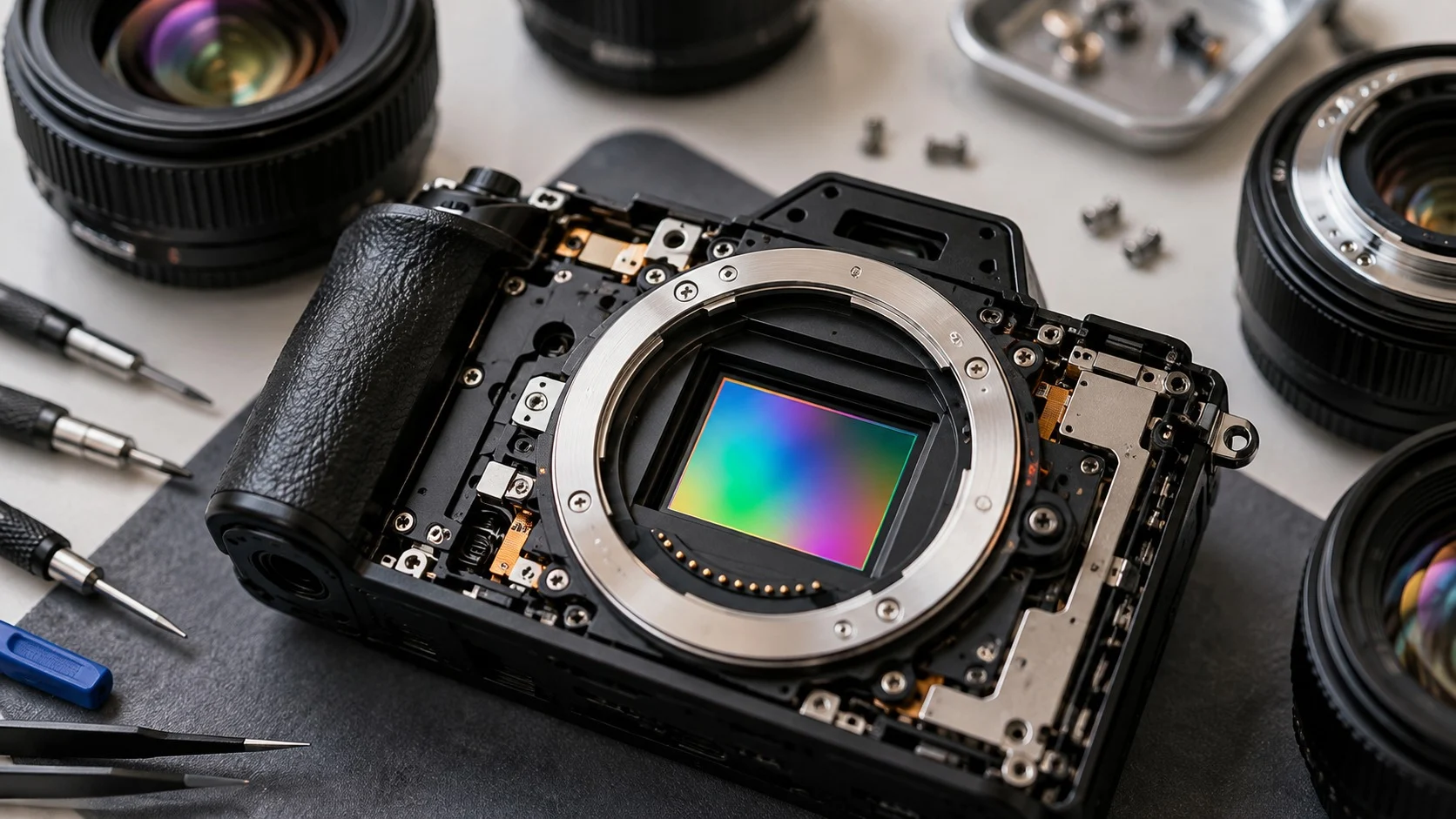
A digital camera’s image sensor is a panel in which countless tiny pixels are gathered like a checkerboard to take in light. Shutter methods are divided according to the order in which the information from these pixels is read out.
(1) Recording by Scanning from Top to Bottom
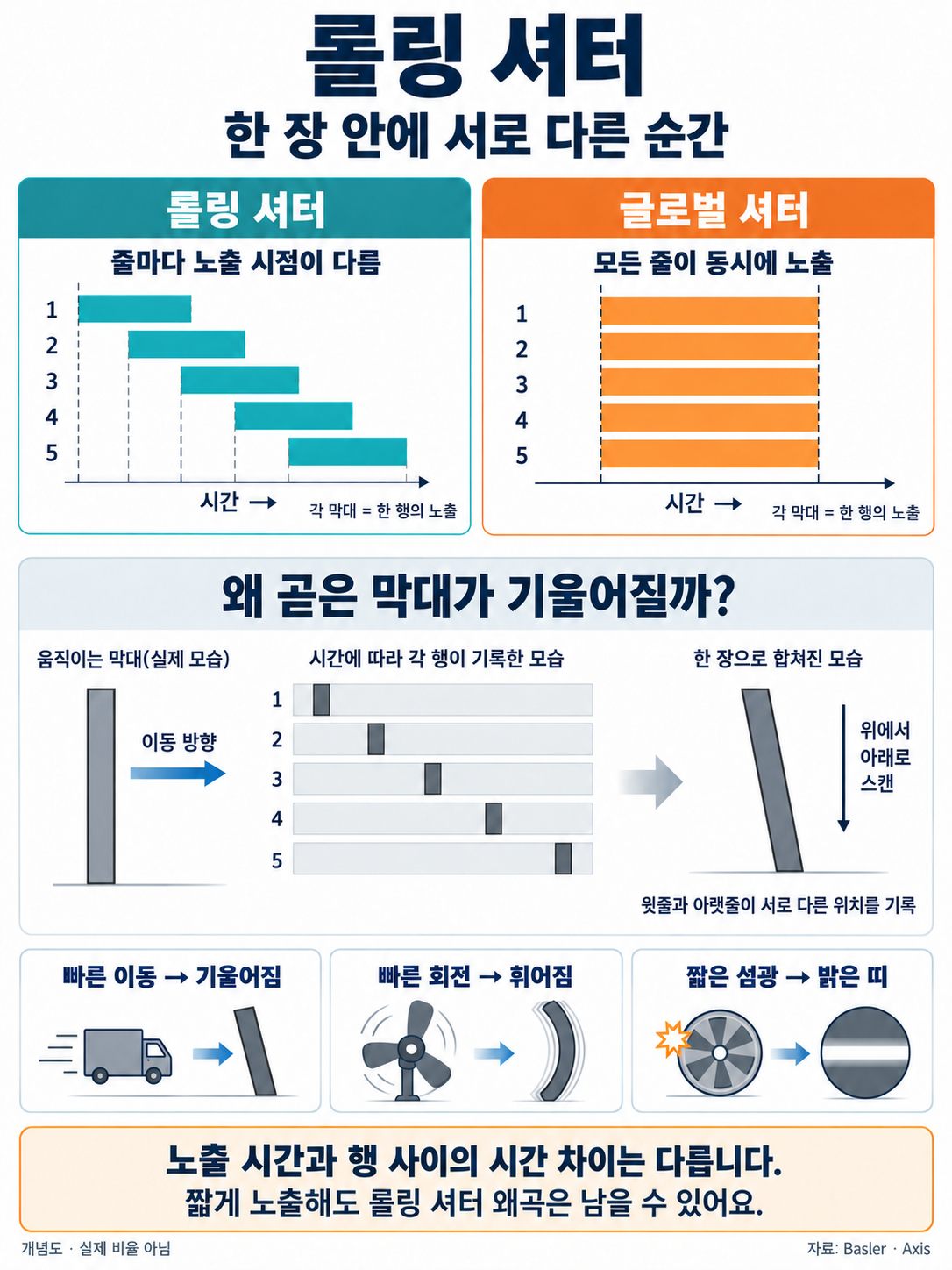
The CMOS sensors used in smartphones and many digital cameras mostly read out information in order, from the top row down to the bottom row. Reading one row takes a very short time, but there is a clear time difference between the top row and the bottom row. This difference is usually short, ranging from a few thousandths to a few hundredths of a second, so it is barely noticeable in slowly moving scenes. On playback, however, all of these rows are shown together as if they were a single instant, so an object that moved in between is captured at a different position in each row and its shape gets distorted.
(2) The Global Shutter, Which Captures Everything at Once
In contrast, the method in which every pixel takes in light at the same moment is called a global shutter. Cameras that used older CCD sensors often had global shutters, so this kind of distortion was rare. The rolling shutter is widely used today because it is simple in structure, inexpensive, and allows ample time for taking in light. Global shutters were long used mainly in industrial and some professional equipment, but in 2023 Sony released a full-frame mirrorless camera with a global shutter sensor, bringing the technology much closer to everyday photographers.
4 Distortions That Appear on Screen
The rolling shutter effect takes various forms depending on what is moving and how fast.
- Skew: When the camera or an object moves quickly sideways, vertically straight poles or buildings are captured leaning diagonally to one side.
- Jello effect: When filming from places with strong vibration, such as a vehicle or a drone, the whole frame wobbles like jelly. It also often happens when shooting handheld with a telephoto lens.
- Spatial aliasing: When filming something that spins very fast, such as a propeller, the blades look bent or broken, as if detached from the hub.
- Partial exposure: When very brief bursts of light such as a camera flash or lightning come in, only the upper part of the frame is bright while the rest comes out dark.
Horizontal stripes rolling across the screen under fluorescent or LED lighting also happen because the moments when the light flickers rapidly are recorded differently in each row.
The Rolling Shutter Through Simple Examples

The rolling shutter is not a phenomenon that first appeared in the digital age.
(1) A Racing Car Leaning Forward
In a car-racing photograph that French photographer Jacques Henri Lartigue is known to have taken in 1912, the wheel is tilted forward like an egg. This is because the car raced forward while the camera’s shutter curtain moved vertically, exposing the film strip by strip. Meanwhile, because the camera was swung to follow the car, the spectators and poles along the road appear tilted in the opposite direction. In effect, the same principle was at work in a mechanical shutter.
(2) Bent Blades on a Smartphone
If you film a propeller from an airplane window, or take a close-up of a plucked guitar string with a smartphone, you get footage in which the strings ripple like waves. It looks completely different from what your eyes see, but it is neither a malfunction nor a special effect. It simply shows that the blades and strings kept moving while the sensor was recording from top to bottom.
How to Deal with the Rolling Shutter

For people who make video, the rolling shutter is both a problem to avoid and a characteristic to understand and handle.
(1) Reducing It While Shooting
Avoiding fast, whipping pans and reducing shake with a gimbal or tripod noticeably reduce the distortion. Because the faster a sensor reads out a frame, the less distortion there is, high-end cinema cameras reduce this problem by increasing their readout speed. For sports, industrial settings, and visual-effects shoots, global shutter cameras are sometimes used instead.
(2) Fixing It in Editing
The rolling shutter correction feature in editing software calculates the time difference created in each row and straightens the skewed image. However, very severe distortion is hard to undo completely. Meanwhile, some artists and music video directors deliberately keep the bending blades or wobbling frames to create a distinctive mood.
The rolling shutter is a phenomenon that makes visible the fact that a camera records time by dividing it line by line. If you understand the principle, you won’t be thrown off when you come across strange footage, and you can prepare for it in shooting and editing or even use it as a creative device.
Remembering that different moments overlap even within a single frame is the first step toward shooting that captures motion accurately.