Have you ever watched a scene where a character realizes something terrible, and while their face stays exactly the same, the scenery behind them suddenly stretches away or rushes toward them? The camera isn’t shaking, yet the whole frame seems to ripple dizzily. The technique behind that strange feeling is the dolly zoom.
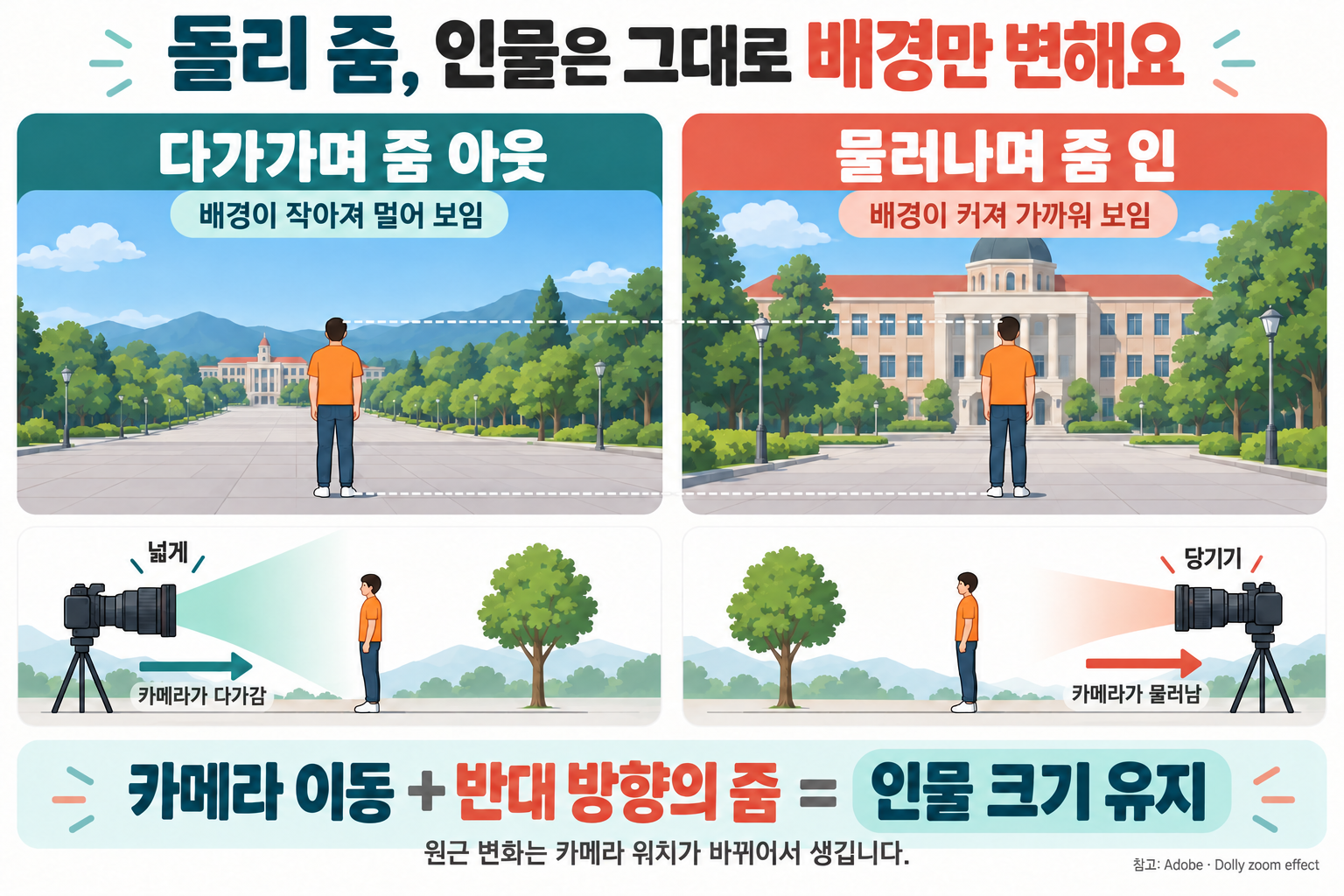
Put simply, a dolly zoom is “a shooting technique in which the camera moves toward or away from the subject while the lens zooms in the opposite direction, keeping the person the same size and changing only the perspective of the background.” Because it was first used in a film by Alfred Hitchcock, it is also called the Vertigo effect or the Hitchcock zoom.
In this piece we will look in turn at what the dolly zoom is and how it was born, the way lenses and distance make it work, famous scenes from classic films, and practical tips and cautions for shooting one yourself.
The Camera That Shakes Perspective to Reveal the Mind: The Dolly Zoom
What Is a Dolly Zoom?
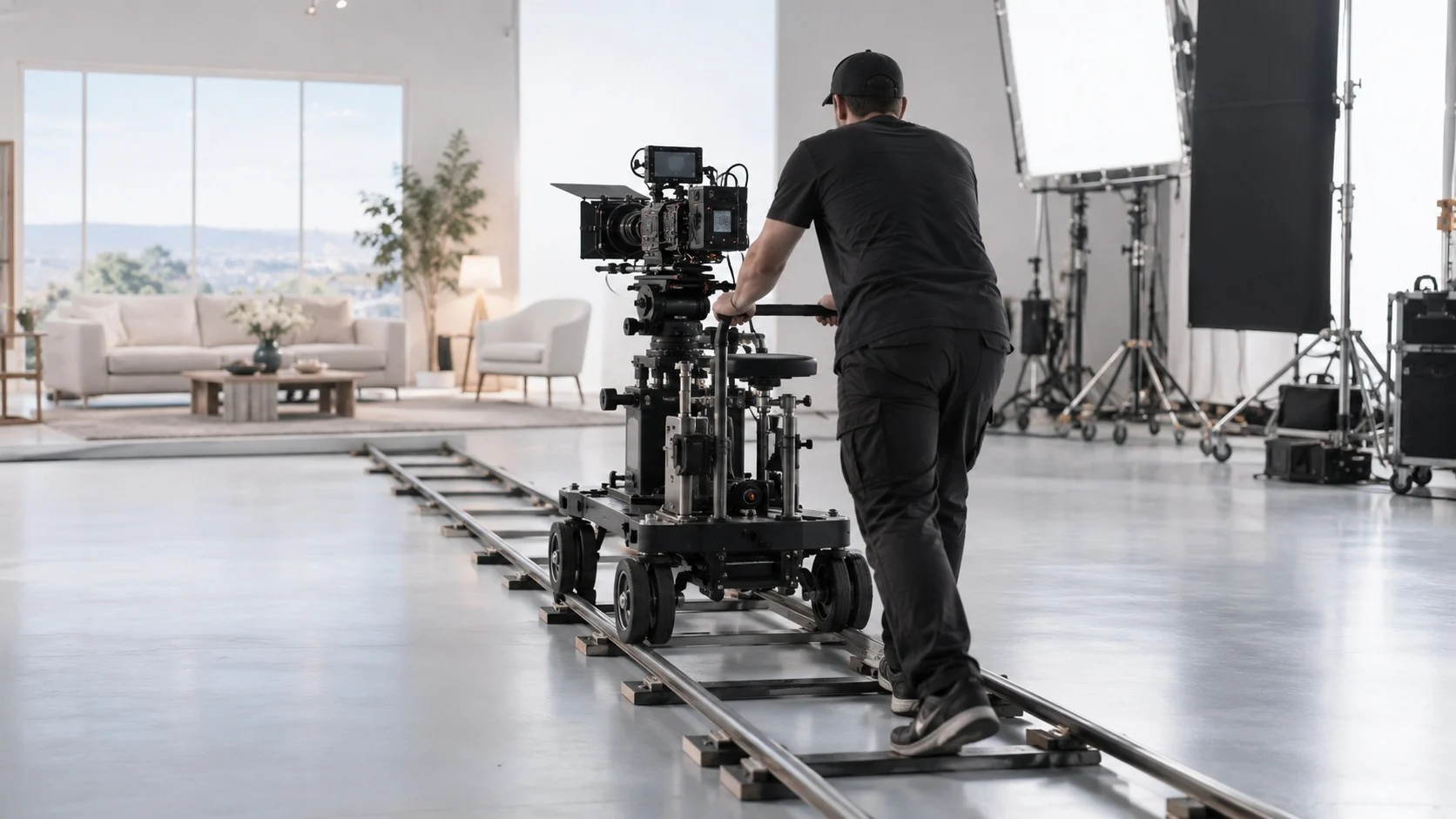
A dolly zoom combines two movements at the same time. One is the “dolly,” moving the camera forward or backward on a wheeled platform or track. The other is the “zoom,” changing the lens’s focal length to draw the picture in or widen it. When the two are matched so that they cancel each other out, the person stays the same size on screen while only the background stretches or shrinks.
The technique was first used in the 1958 film Vertigo. Hitchcock recalled that as a young man he had gotten drunk at a ball in London and felt as though everything were moving far away from him; he wanted to put that feeling on screen, and he said he had tried it on Rebecca but failed. Paramount camera operator Irmin Roberts devised the method, completing the scene in which the hero, who suffers from a fear of heights, looks down the stairs of a bell tower. Hitchcock later explained that they shot it using a model of the stairwell laid on its side, while Roberts himself never received proper screen credit.
- Dolly: moving the camera, mounted on a wheeled platform, toward or away from the subject.
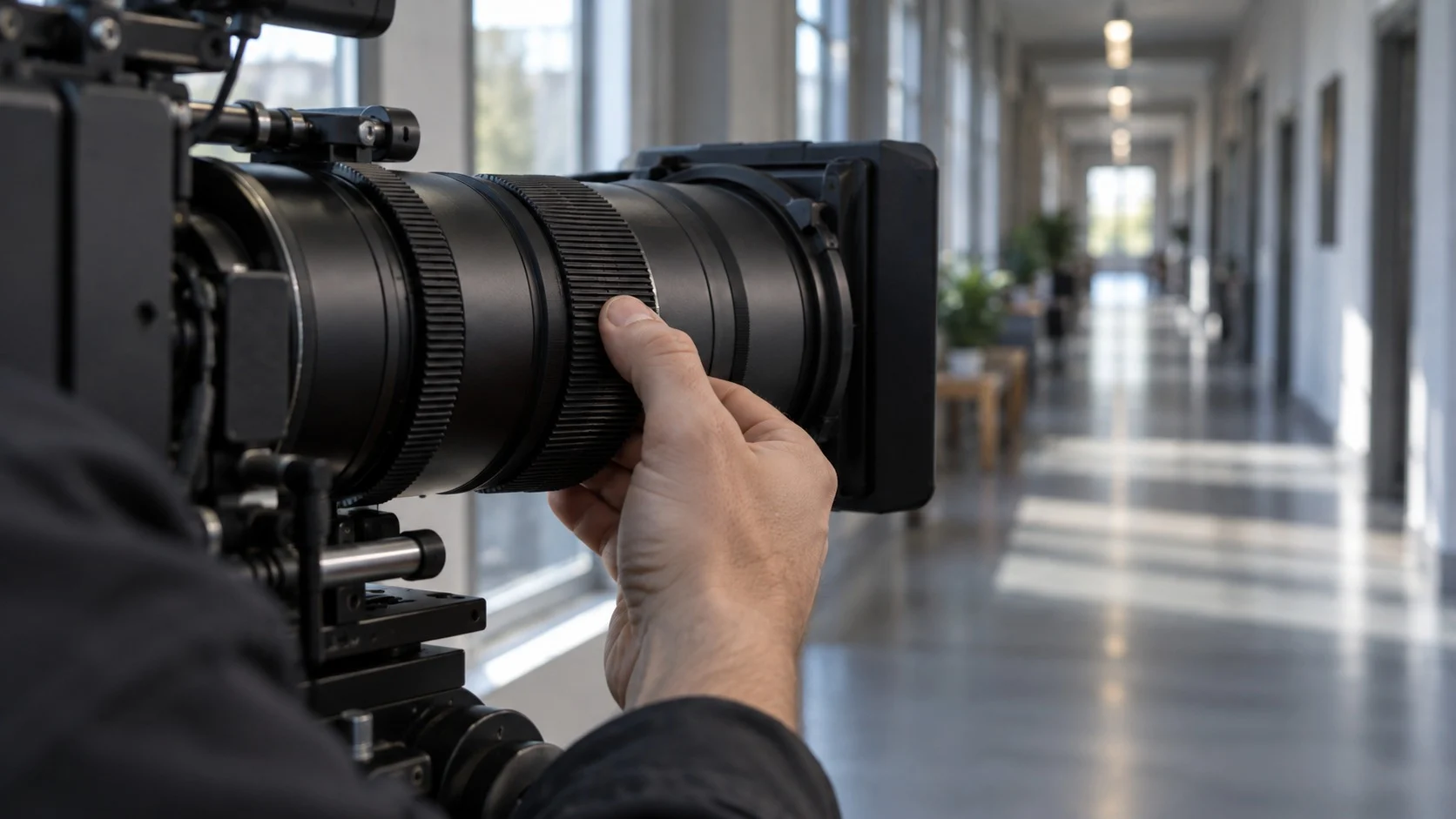
- Zoom: changing the lens’s focal length to magnify or widen the picture while the camera itself stays in place.
- Vertigo Effect: another name for the dolly zoom, taken from the film Vertigo.
How Lenses and Distance Make It Work
The dolly zoom looks uncanny because we normally sense perspective through “distance.” The size of a person on screen is set jointly by the distance from the camera and the focal length of the lens, but the size ratio between the background and the person is determined by the camera’s position alone.
(1) Trading distance for focal length
If the camera moves twice as far from the person and the focal length is also doubled, the person stays the same size. Holding the person’s size steady in this way is the basic condition of a dolly zoom.
(2) Pulling back while zooming in
If the camera moves backward while zooming in, the angle of view narrows and the compressed perspective typical of a telephoto lens appears. The background seems to press up right behind the person and swell larger.
(3) Moving in while zooming out
Conversely, if the camera moves forward while zooming out, the angle of view widens and the exaggerated perspective of a wide-angle lens appears. The background seems to stretch away as if being sucked into the distance, making the space feel vast and remote.
That is why using only the zoom leaves perspective unchanged, like enlarging a photograph, while using only the dolly makes the person and background grow or shrink together. Only by mixing the two movements do you get the unfamiliar image of “the person fixed while only the space changes.”
Dolly Zoom Scenes in Classic Films
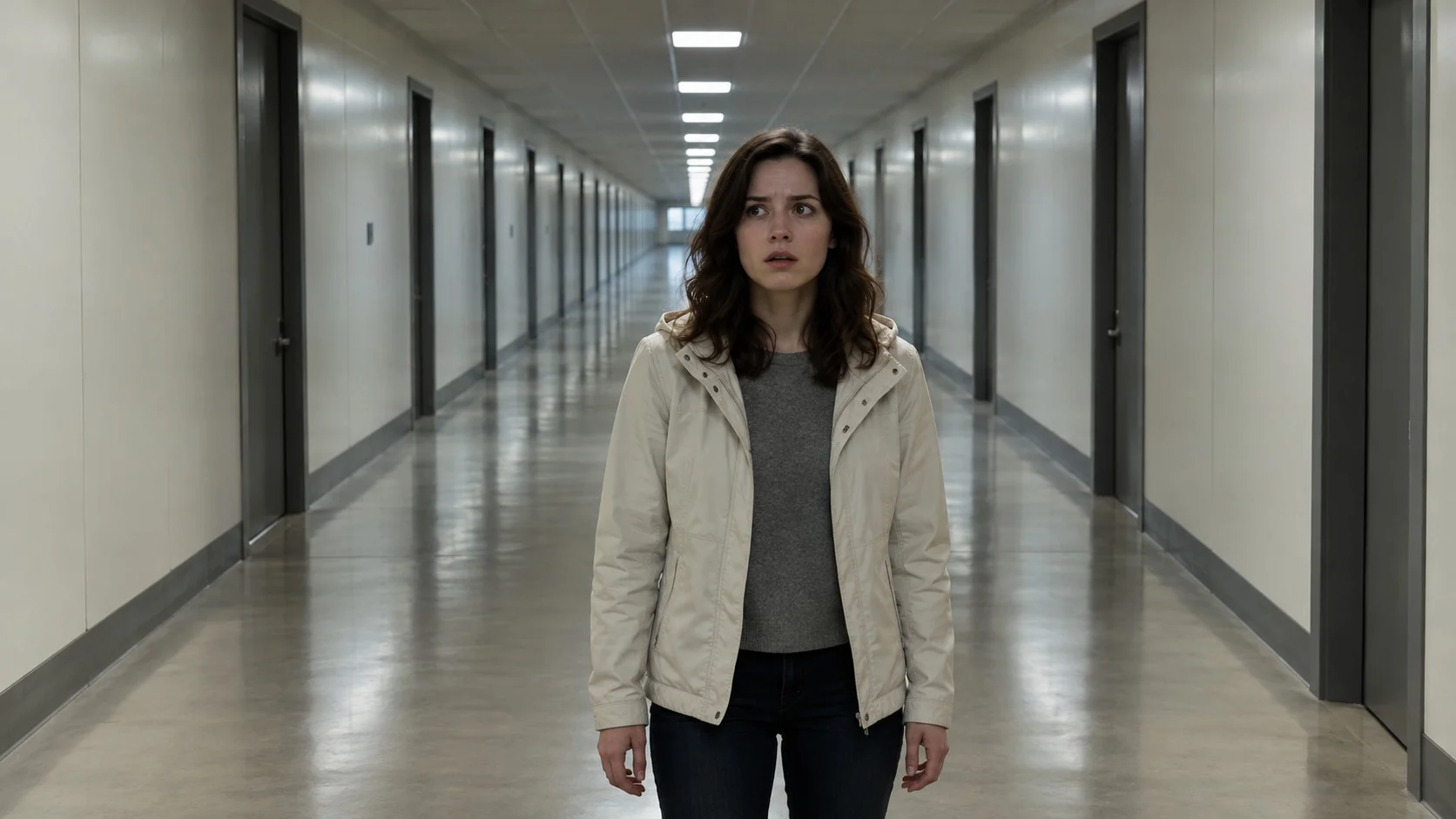
The dolly zoom is especially powerful for showing the moment a character’s world twists inside their mind. Watching the character’s expression stay the same while their surroundings change, the audience physically shares the shock and anxiety the character feels.
(1) Vertigo (1958)
In the point-of-view shot looking down the bell tower stairs, the bottom of the stairwell dizzily stretches and shrinks, transferring the hero’s fear of heights to the audience’s own senses.
(2) Jaws (1975)
Director Steven Spielberg used the technique at the moment police chief Brody, sitting on the beach, realizes a shark attack is happening, creating a famous shot in which his face stays still while only the background lurches.
(3) Goodfellas (1990) and The Lord of the Rings
Director Martin Scorsese used it in a diner scene to convey the ominous tension a character feels, and in The Lord of the Rings it appears as the road seeming to stretch out at the moment Frodo senses an approaching threat.
Tips and Cautions for Shooting a Dolly Zoom
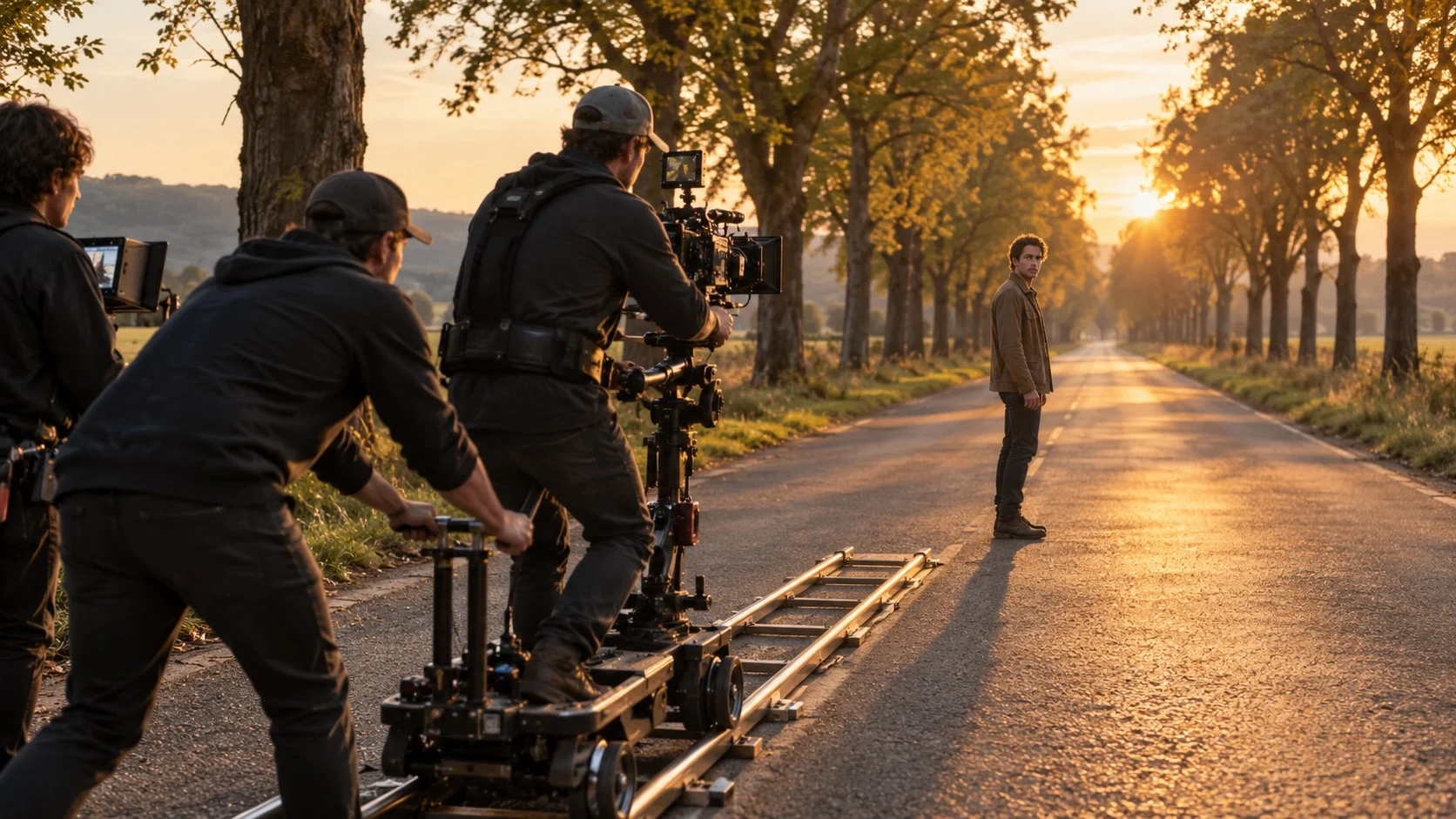
The principle of the dolly zoom may look simple, but precisely matching the speed of the two movements is tricky. If they are even slightly off, the person grows and shrinks, and the shot easily looks like a clumsy zoom instead of the intended effect.
- Zoom Lens: the wider the focal length range, the more dramatic the change in the background, so it is best to choose a lens with a generous zoom ratio.
- Stabilized Movement: use a track or gimbal so the camera moves at a steady speed without shaking.
- Deep Background: a corridor or road that stretches far behind the person is needed for the change in perspective to show clearly.
The dolly zoom also shines brightest when used sparingly. Used often at moments that are not decisive to the story, it easily registers with the audience as mere technical flourish. Today some drones and video editing tools can create a similar effect automatically, but deciding when to use it is still the director’s job.
The dolly zoom pairs camera movement and lens zoom in exactly opposite directions, leaving the person in place while shaking only the perspective of the world. Starting with Hitchcock’s Vertigo and carried on through Jaws and countless other films, it has become a signature visual language for revealing a character’s inner feelings that never surface on screen.
Before shooting the scene, first picture how the world inside the character’s mind twists at that moment. That is the first step in directing a dolly zoom that goes beyond technique to convey emotion.