When we think of a trip to Jeju Island, the sea, the volcanic cones, and good restaurants usually come to mind first. Yet that trip already began the moment we packed our bags at home and booked our flights, and it ends only when we pass through the airport and the plane and open our own front door again. Looking at the destination alone, we cannot see the whole picture of the trip. The framework that views tourism as a single structure connecting the place of departure to the destination is “Leiper’s Tourism System.”
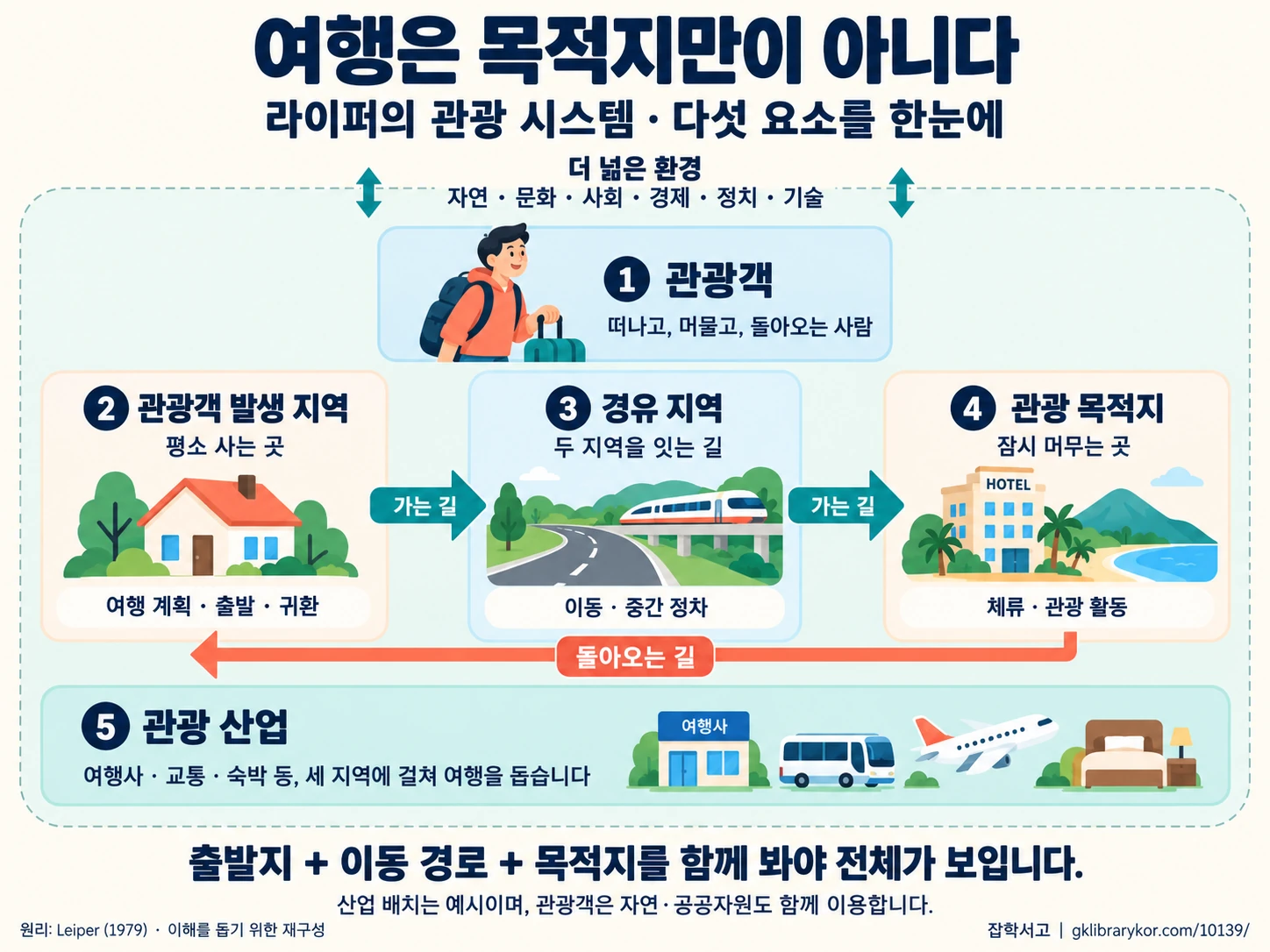
Simply put, Leiper’s Tourism System means “a single system in which five elements, namely tourists, the region tourists leave, the route they pass through, the destination where they stay, and the tourism industry, are connected and move together.” It was proposed by Australian tourism scholar Neil Leiper in a paper published in 1979 in the journal Annals of Tourism Research.
In this article, we will look in turn at why Leiper created this model, its five components, the role each of the three regions plays, and what the model teaches us about understanding and managing tourism today.
The Structure of a Trip That Leaves, Passes Through, and Stays: Leiper’s Tourism System
What Is Leiper’s Tourism System?

Until the 1970s, tourism was defined differently by different scholars. Economists explained tourism through the flow of money, and people working in lodging or aviation explained it from the viewpoint of their own industry, so there was no definition that captured the whole picture.
(1) Defining tourism as a system
Leiper defined tourism as “a system made up of the movement and stay of people who leave of their own free will, go beyond the place where they usually live, and stay away for at least one night.” However, he excluded travel whose main purpose is to earn money at the places visited along the way.
(2) Five components
This system is made up of five elements: tourists, the tourist generating region, the transit route region, the tourist destination region, and the tourism industry. The five elements are connected to one another both spatially and functionally.
(3) An open system that interacts with the outside
The tourism system does not exist on its own. Leiper saw it as an open system that influences and is influenced by a wider environment, including nature, culture, society, the economy, politics, and technology.
The Roles of the Three Regions
Three of the five elements are geographical spaces. Tourists complete their trip by passing through these three regions in order.
(1) Tourist generating region: where the trip begins and ends
This is where tourists usually live, both the starting point and the end point of the trip. It is where the factors that make people want to leave arise, such as everyday fatigue or a longing for new experiences, and it is also the market where tourism demand comes from. That is why marketing activities such as advertising, promotion, and the sale of travel packages mainly take place here.
(2) Transit route region: the path linking origin and destination
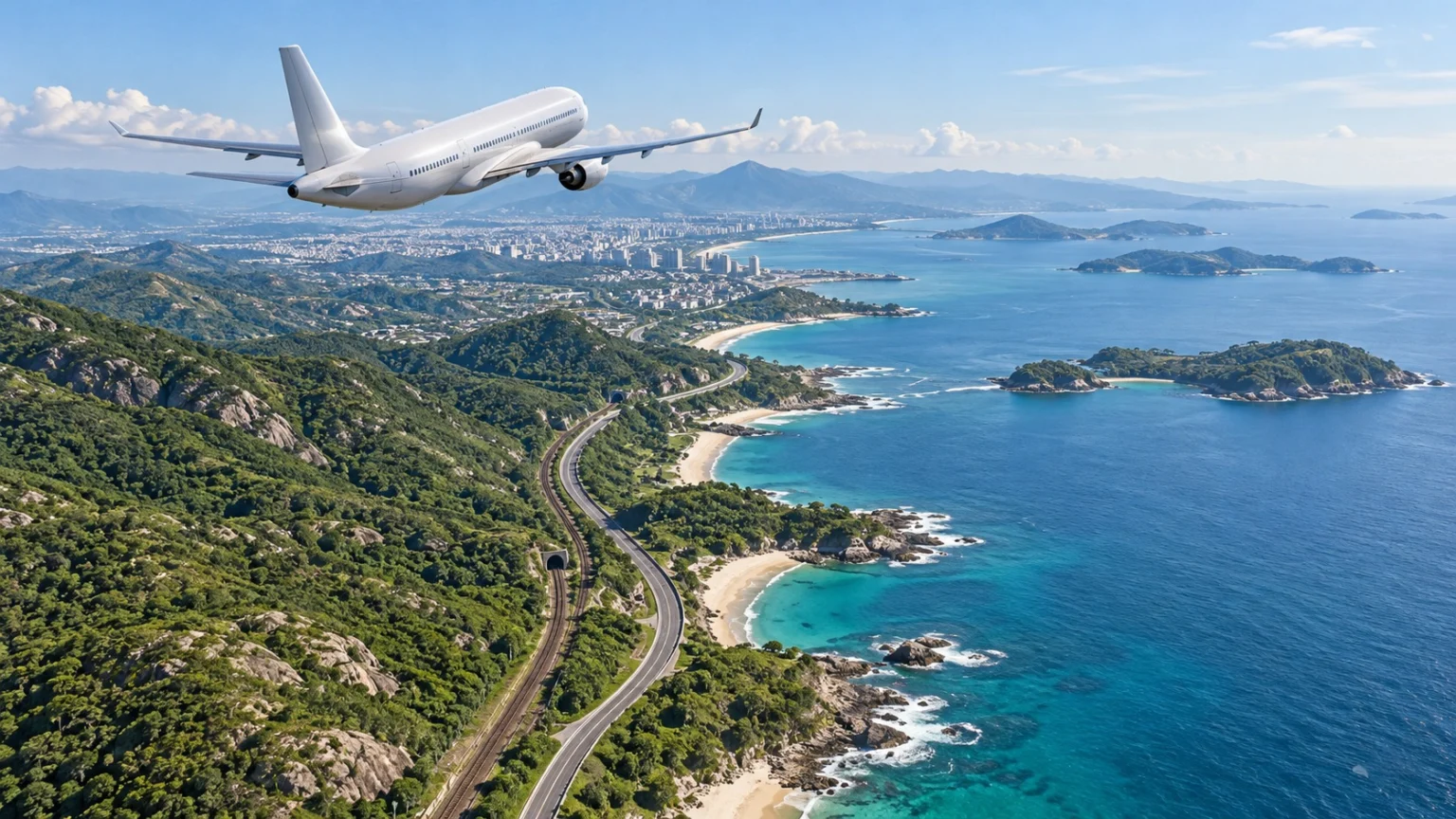
This is the stretch of travel that connects the two regions. Roads, railways, air routes, and sea routes, the means of transport that run on them, and airports and rest stops all belong here. The transit route region is more than a simple passageway; it is also where stopover tourism, with brief visits along the way, can develop.
(3) Tourist destination region: where tourists stay for a while
This is the place tourists visit and stay in, expecting something that their generating region does not have. Attractions and services such as lodging and food are concentrated here, and it is where the effects of tourism on the local economy, society, and environment appear most strongly.
Tourists and the Tourism Industry That Drive the System

The remaining two elements are people and industry. If tourists are the main characters moving within the system, the tourism industry is the stage set that supports their movement.
Leiper paid attention to the fact that the tourism industry is not gathered in one place but spread out across the three regions.
- Travel agencies: mainly plan and sell travel packages in the generating region.
- Transport operators: carry tourists across the transit route region, like airlines, railways, buses, and ships.
- Accommodation: provides places for tourists to stay in the destination region.
- Tourist information services: share information and encourage visits in both the generating region and the destination.
Leiper also saw tourism as an activity that is only “partially industrialized.” This is because tourists use not only hotels and airlines but also resources that are not part of the tourism industry, such as neighborhood parks, ordinary restaurants, and public roads.
What Becomes Visible Only When Seen as a System

The greatest value of this model is that it shows at a glance how a change in one element spreads to the others.
(1) When a link breaks, the whole system stops
If the air route to a city is cut, the hotels, restaurants, and even taxi drivers there lose their customers. No matter how attractive a destination is, tourism does not happen if the transit route region is blocked. The same principle explains why world tourism came to a halt all at once during the COVID-19 pandemic, when borders were closed.
(2) The effects do not stay at the destination
Changes also occur in generating regions from which many tourists depart, as money flows outward and ways of life change. In transit route regions, problems such as traffic congestion, noise, and exhaust emissions appear.
(3) Only joint management makes it sustainable
That is why tourism policy and management should not look at the destination alone but should consider marketing at the origin, means of transport, and the destination’s carrying capacity together. This is why the model so often serves as a foundation when people talk about sustainable tourism today.
Leiper’s Tourism System lets us see a trip not as an experience in one place but as a single flow that starts at home and returns home. Although it is a simple diagram, it shows how closely tourists, regions, and industry are woven together, and it is still counted among the first models taught in introductory tourism studies. On your next trip, looking not only at the destination but also at the place you leave and the route you travel is the first step toward a deeper journey.