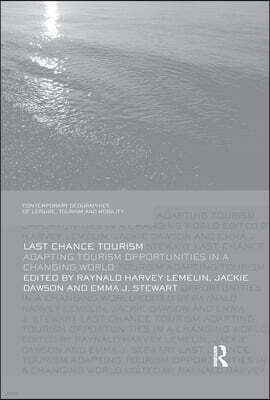
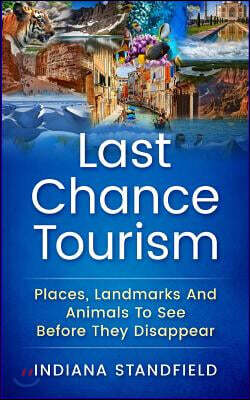
Whenever you see news that glaciers are shrinking year after year, a thought sometimes crosses your mind: you'd like to see that landscape with your own eyes at least once before it disappears. In fact, more and more people are setting off to see melting glaciers, coral reefs turning white, and polar bears in seas where the ice is shrinking. The term for this kind of travel is ‘Last Chance Tourism.’
Put simply, last chance tourism means ‘travel to see a vanishing landscape, living thing, or culture in person before it is gone.’ The media also call it ‘Doom Tourism’ or ‘disappearing tourism,’ and as climate change has moved to the center of the story, it has become an important research topic in tourism studies.
In this piece, we will look in turn at the concept and origins of last chance tourism, why people are drawn to it, well-known destinations, and the paradox and challenges this kind of travel carries.
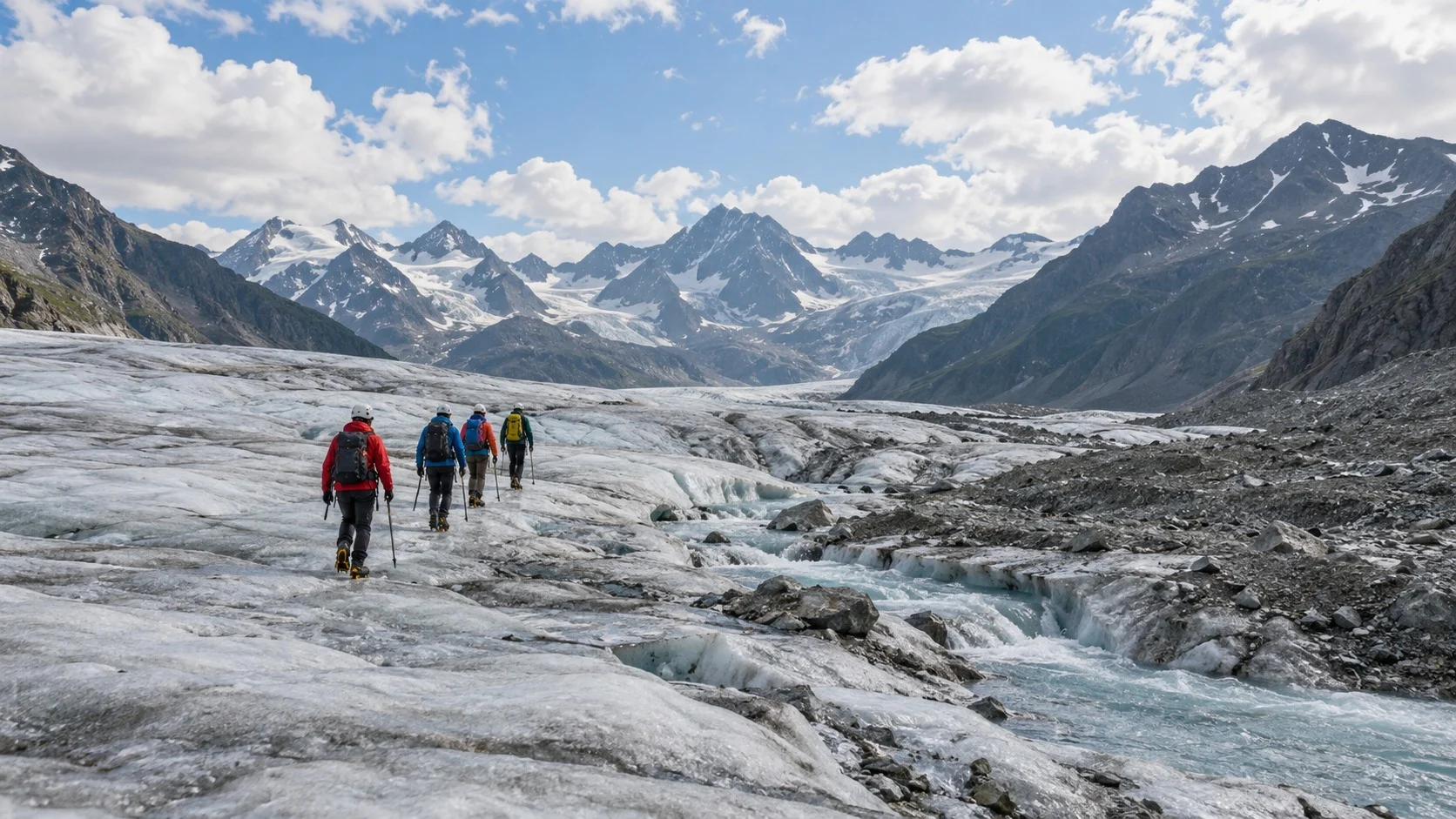
Travel in Search of Vanishing Landscapes
What Is Last Chance Tourism?
The people who refined the term academically were a research team led by the Canadian tourism scholar Harvey Lemelin. In a 2010 paper, they defined last chance tourism as ‘a niche tourism market where tourists explicitly seek vanishing landscapes or seascapes, and/or disappearing natural and/or social heritage.’
(1) Vanishing natural landscapes
Typical examples are landscapes that could change dramatically or disappear, such as melting glaciers, snowcaps on mountain peaks, and low-lying island nations threatened by rising sea levels.
(2) Declining wildlife
Trips to see animals whose numbers are falling as their habitats collapse, such as polar bears and creatures living on coral reefs, also belong here.
(3) Changing cultures and ways of life
Broadly speaking, trips to traditional villages or distinctive ways of life that are changing quickly under globalization and modernization also count as last chance tourism.
The roots of this trend are often traced to the 1990 travel book Last Chance to See. It records how the writer Douglas Adams and the zoologist Mark Carwardine went in search of endangered animals such as the Yangtze river dolphin and the Komodo dragon.
Why Are People Drawn to the ‘Last’?
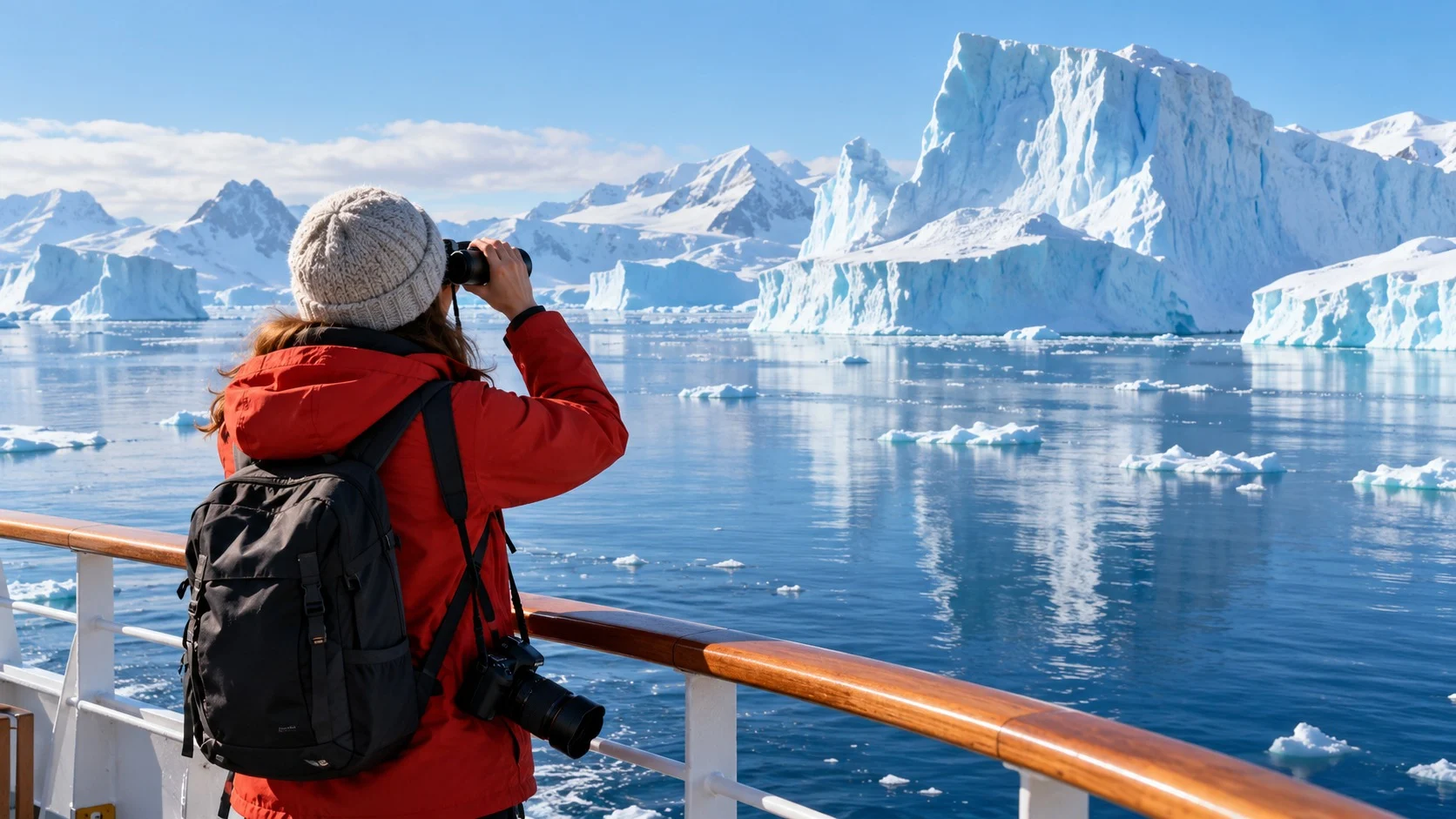
Even the same landscape feels far more valuable once you hear it will soon disappear. Several psychological factors work together in last chance tourism.
- Scarcity: The thought that you may never see it again raises the value of the experience. It works much like the way people flock to limited-edition products.
- Media Coverage: The more reports there are that a place is in danger, the greater the demand to visit it. News meant to warn of a crisis ends up acting as advertising, contrary to its intent.
- Dark Tourism: Lemelin's team saw last chance tourism as closely connected to dark tourism, which seeks out traces of loss and death. Watching something disappear carries feelings of sadness and mourning.
- Bucket List: The culture of putting vanishing attractions on a list of things you must do in your lifetime also fuels this kind of travel.
Well-Known Last Chance Destinations
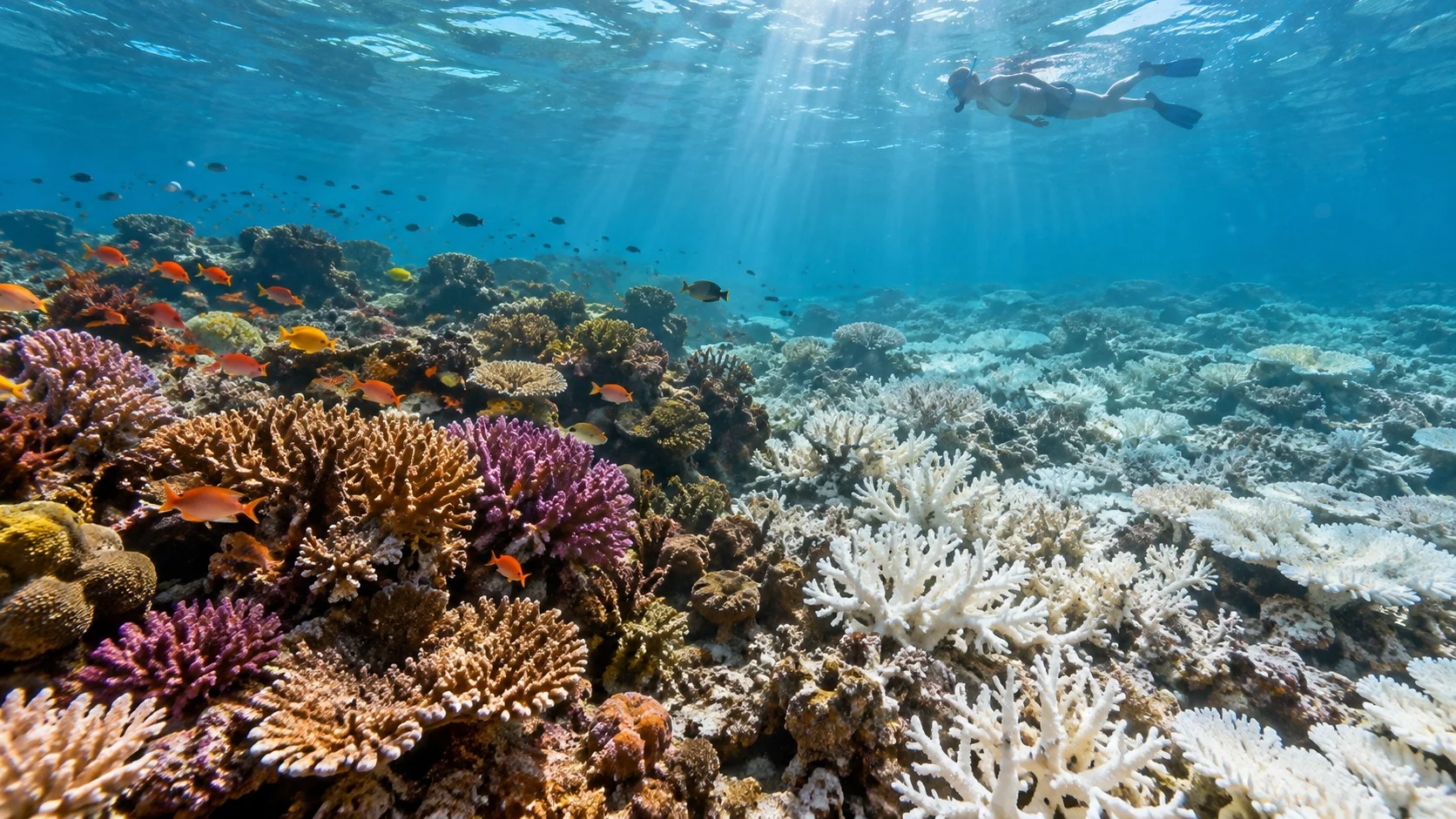
The places researchers study most often are those where the effects of climate change are easy to see.
[Case 1] Australia's Great Barrier Reef
In a 2015 study that surveyed 235 tourists at three tourist destinations in Queensland, Australia, 69.6% rated the motivation of coming ‘to see the reef before it is gone’ as very or extremely important. Of 15 travel motivations, this was also the one that drew the most ‘extremely important’ responses.
[Case 2] The Polar Bears of Churchill, Canada
Churchill, a small town in the Canadian province of Manitoba, calls itself the ‘Polar Bear Capital of the World.’ Wild polar bear viewing tourism has gone on there for more than 50 years, and as the sea ice of Hudson Bay has shrunk, tourists wanting to see the polar bears before they disappear have kept coming.
[Case 3] Antarctica
According to the International Association of Antarctica Tour Operators (IAATO), 122,072 visitors went to Antarctica in the 2023–24 season, the most ever. Among the Antarctic Treaty parties, discussions continue about the need for a framework to regulate growing tourism.
The Paradox and Challenges of Last Chance Tourism
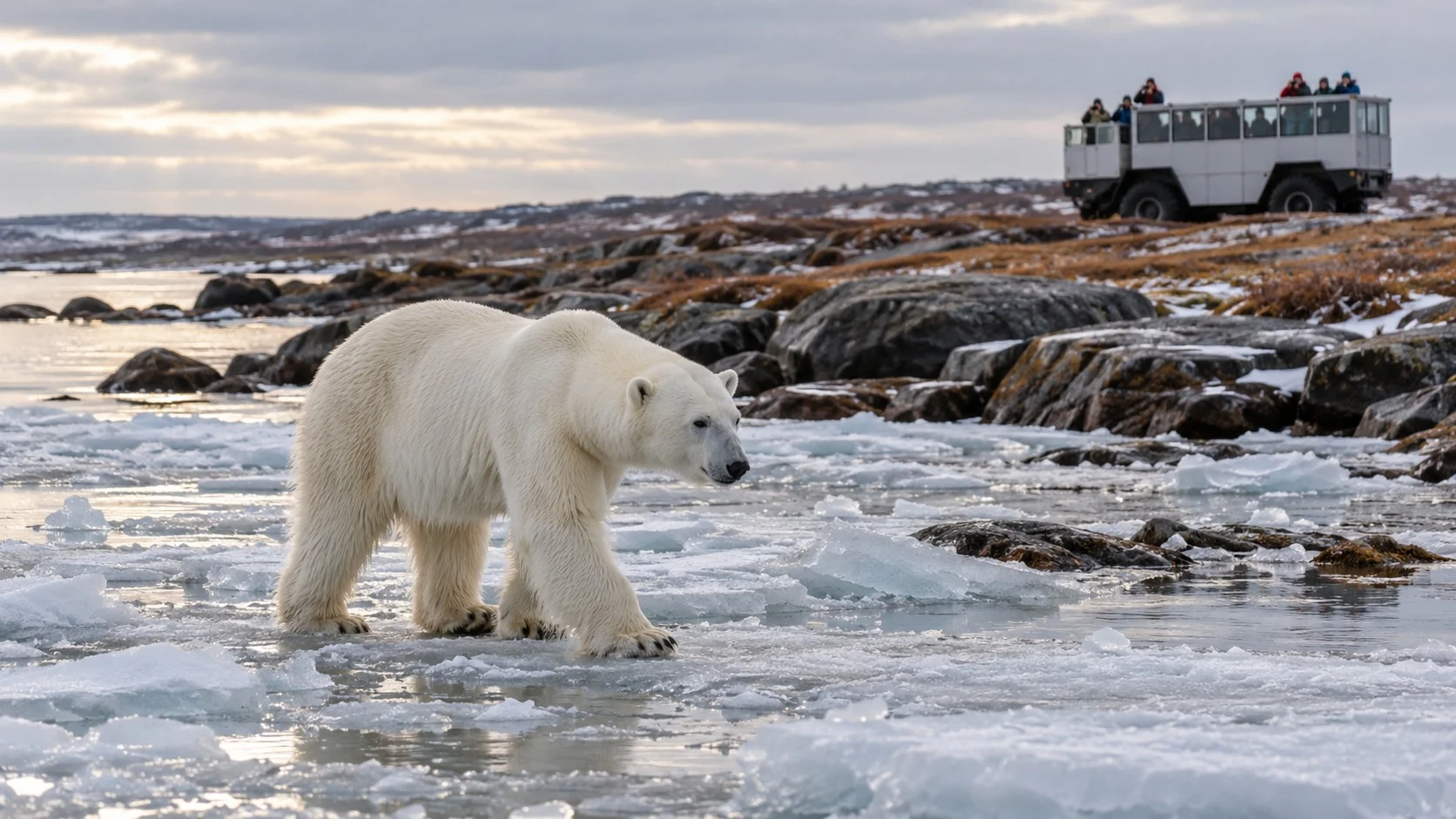
Because good intentions and bad outcomes are tangled together in it, last chance tourism is an especially contested topic in tourism studies.
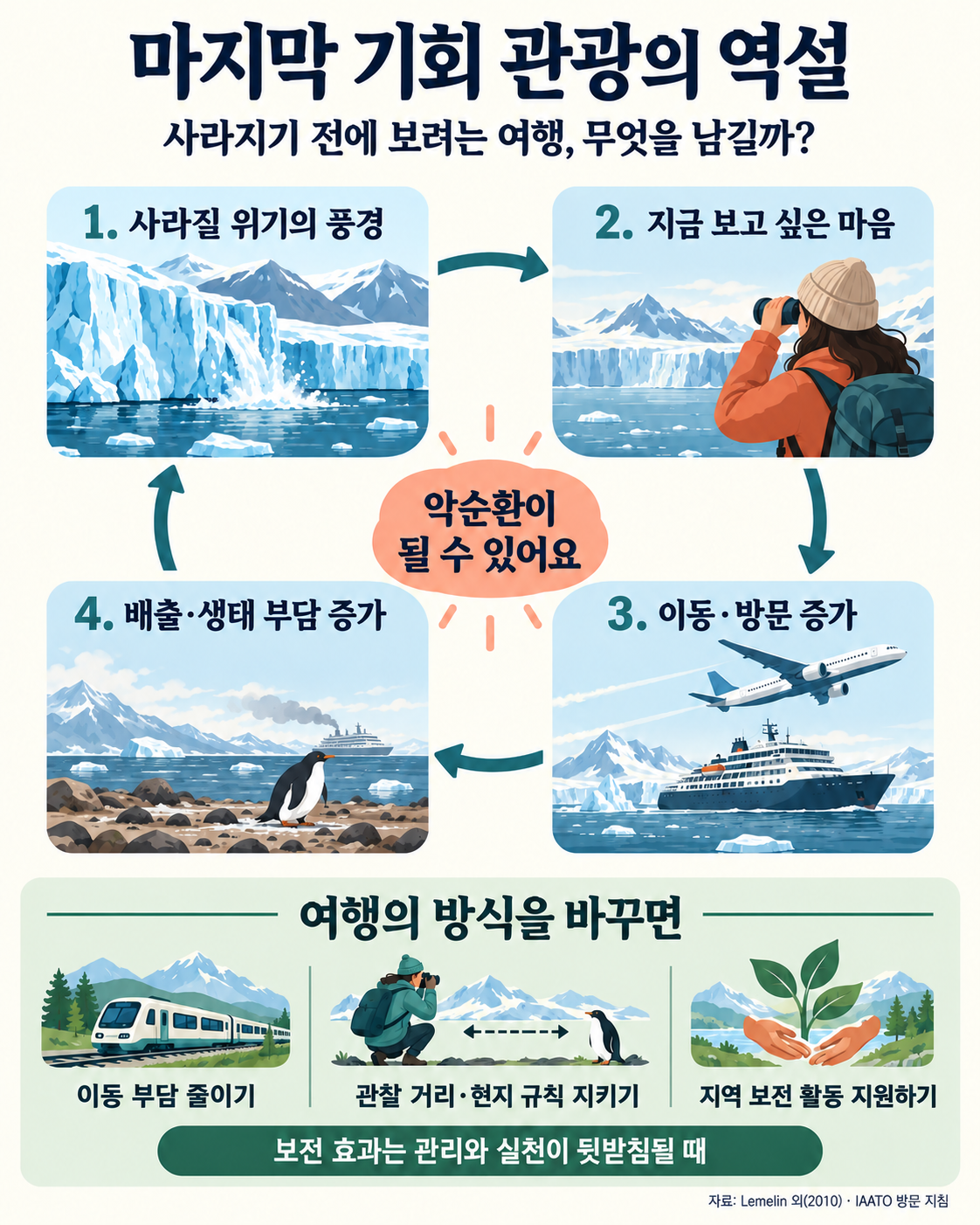
(1) The trip to see it hastens its disappearance
Getting to distant polar regions or remote islands takes long flights and boat rides, which release large amounts of greenhouse gases. Polar bear viewing trips to Churchill were estimated to use 6 to 34 times more energy than the average trip worldwide. Travel to see a vanishing landscape ends up adding to the very cause that threatens it.
(2) It can also be a force for conservation
On the other hand, tourists who see a site in crisis firsthand sometimes become interested in environmental issues and come to support conservation work. Tourism revenue can help pay for managing protected areas.
(3) Local communities face hard questions
Regions that draw visitors because of disappearance see their income rise for now, but if that resource truly vanishes, the tourism industry collapses with it. Rather than relying on a short-term boom, they need to find a tourism model that can last.
(4) Responsible travel is needed
It must go hand in hand with efforts to control visitor numbers, follow local rules and ecological guidelines, and reduce the carbon burden of travel. It is telling that in surveys in Churchill in 2008 and 2018, most tourists accepted climate change as fact, yet few connected the plane they had flown on to its causes.
Last chance tourism starts from caring about what is disappearing, but that very care can make us lose precious landscapes even faster. In the end, what matters is not how quickly we go to see them but how we make the trip.
Thinking together about how we travel, so that the landscapes we want to see are still there for the next generation, is the first step toward sustainable tourism.