If you have ever collected the stickers tucked into snack packets, you probably remember feeling at first that you would finish the set in no time, since almost every packet you opened held a new sticker. But once the album is nearly full, you keep getting stickers you already have, and the last one or two just won’t turn up. This isn’t bad luck; it is simply how probability behaves. The mathematical explanation of this phenomenon is known as the “Coupon Collector’s Problem.”
Simply put, the coupon collector’s problem is a probability question that asks, “When one of several types comes out at random, how many draws does it take on average to collect every type at least once?” The key point is that the answer is far larger than you might expect, and most of those draws are spent waiting for the last few types.
In this article, we will look in turn at what the coupon collector’s problem is, the principle behind calculating the average number of draws, concrete examples in numbers, and where the problem is used in everyday life and technology, along with points to keep in mind.
The Last One Costs the Most: The Coupon Collector’s Problem
What Is the Coupon Collector’s Problem?
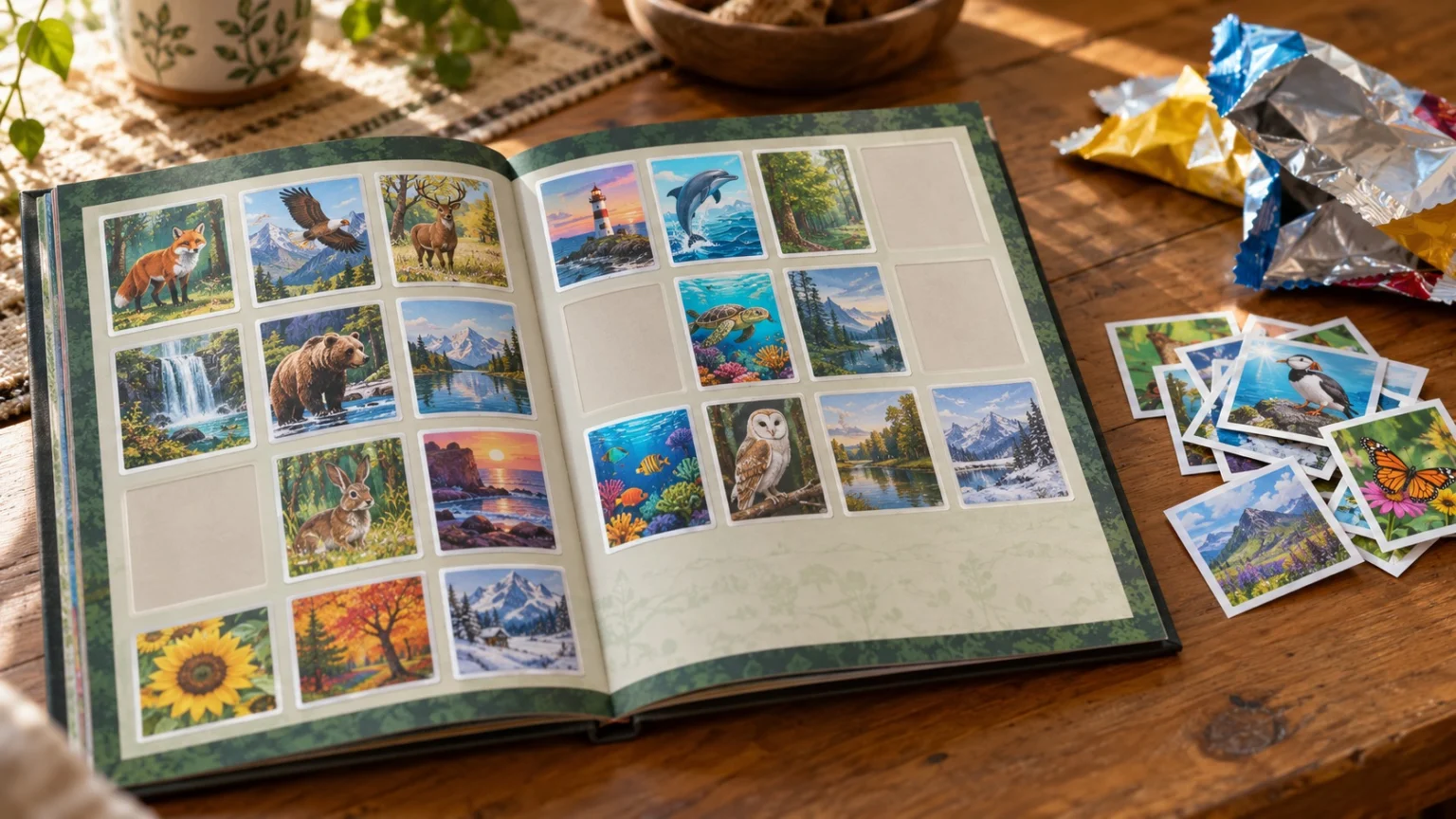
The problem takes its name from promotions in which a coupon was placed in every cereal box and a prize was given to anyone who collected every type. Mathematically, it rests on the following conditions.
(1) The number of types is fixed
There are n types of coupons to collect in total, and the collector knows this number in advance.
(2) One comes out at a time, at random
Each time you buy a box, one of the n types comes out with equal probability, and what came out before has no effect on the next result.
(3) Duplicates occur
A coupon you already have can come out again. Receiving the same coupon several times is exactly what makes collecting take so long.
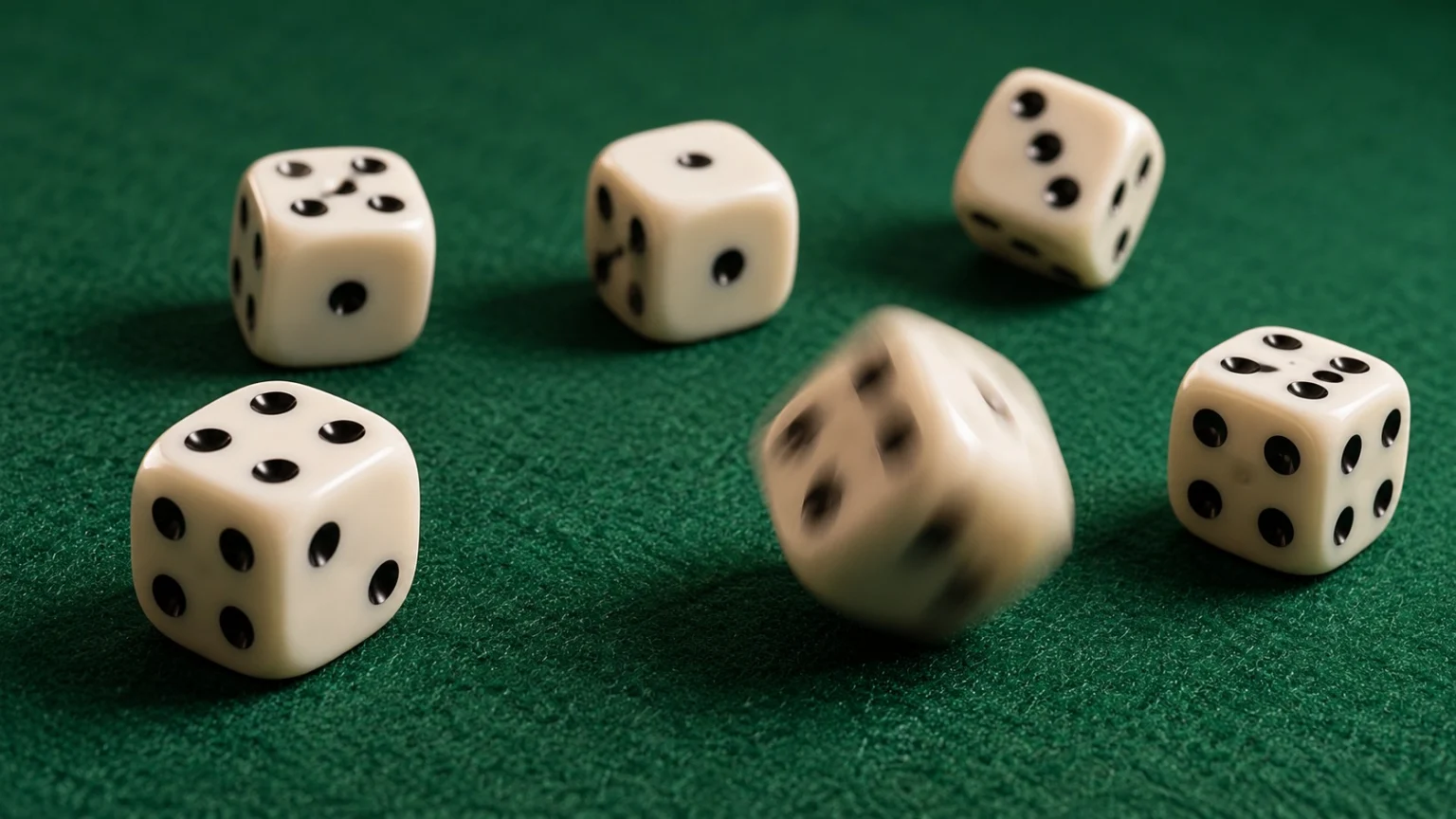
Put in terms of a die, it is the same as asking, “On average, how many times must you roll a die before all six faces have come up at least once?”
How Is the Average Number of Draws Calculated?
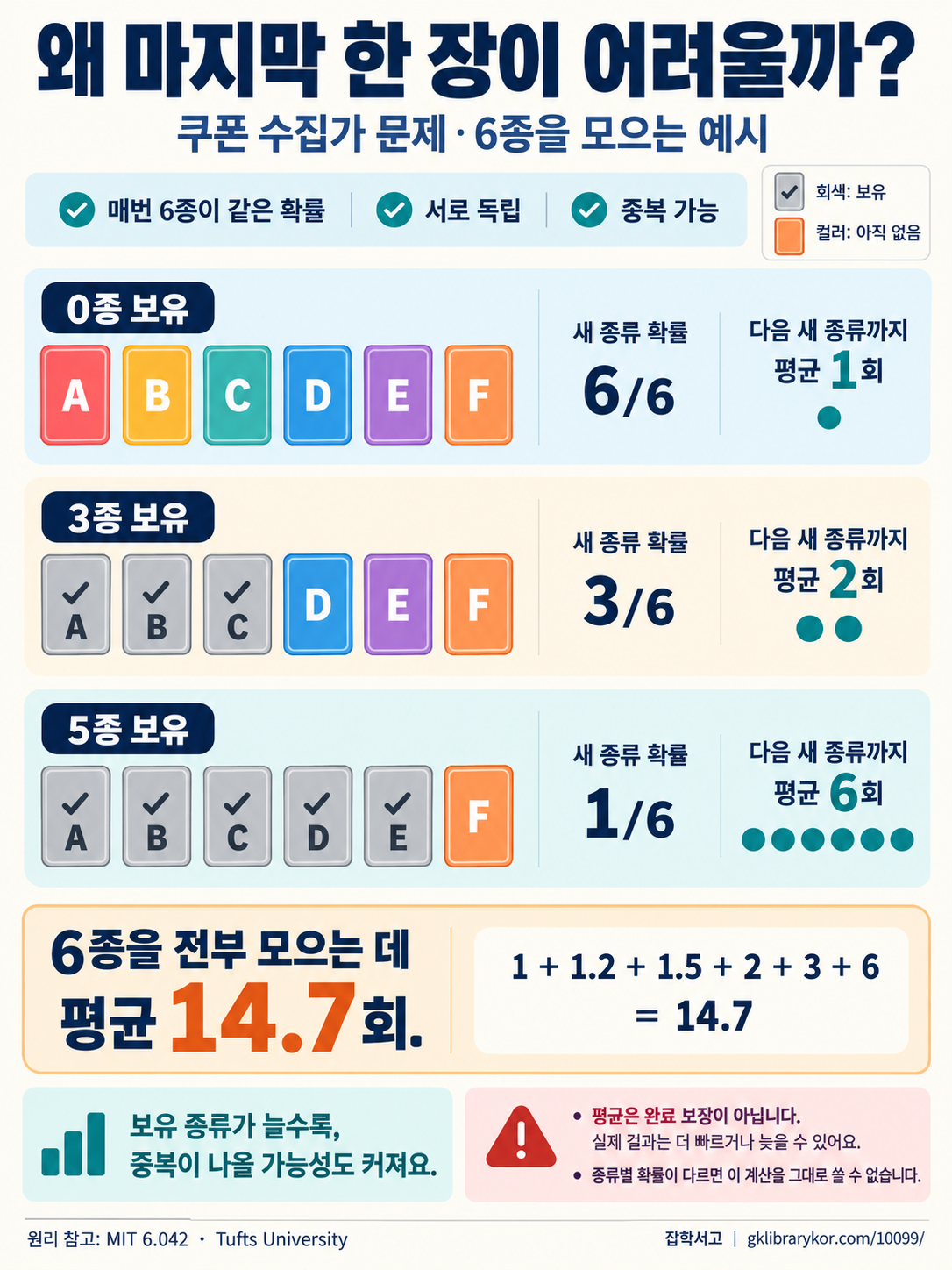
The calculation becomes easier if you divide the collecting process into stages, each lasting “until you get one new type.”
(1) At first, everything is new
When you have nothing, the first draw is always a new type, so one draw is enough.
(2) The more you collect, the lower the chance of something new
If you already have k types, the probability that a new type comes out is (n – k) / n. Repeating something with a success probability of p until it succeeds takes 1 / p tries on average, so this stage requires n / (n – k) draws on average.
(3) Add up all the stages
Adding the averages of all the stages gives an overall average of n × (1 + 1/2 + 1/3 + … + 1/n). The sum in parentheses is called a harmonic number, and as n grows, the total increases to roughly n × (the natural logarithm of n) + 0.577 × n. The French mathematician Pierre-Simon Laplace also dealt with this problem in his 1812 book on probability theory.
Working it out with a die makes it easy to understand. On average, the first face takes 1 roll, the second new face 6/5 rolls, the third 6/4, the fourth 6/3, the fifth 6/2, and the final, sixth face 6/1 rolls. Adding them all up gives about 14.7 rolls, of which an average of 6 are spent just waiting for the last face.
As this formula shows, in the final stage—when only one type remains—you have to wait n draws on average for that one alone. The more types you have already collected, the harder it becomes to find a new one, and this structure is what stretches out the collecting period.
The Reality of Collecting, in Numbers
Seeing the results as concrete numbers makes it clear how different they are from intuition.
- Die: As calculated above, you need about 14.7 rolls on average to see all six faces. It might seem like six rolls would do, but it is more than twice that.
- Ten Coupons: About 29.3 draws are needed on average.
- Fifty Coupons: About 225 draws are needed on average. Collecting the first 25 types takes only about 34 draws, but collecting the remaining 25 types takes about 191.
- One Hundred Coupons: About 519 draws on average—more than five times the number of types.
These figures are only averages, so in reality many people take much longer. And if some types are deliberately included in smaller numbers as “rare cards,” the expected number of draws becomes larger than when all types are equally likely.
Where the Coupon Collector’s Problem Is Used, and Points to Keep in Mind

This problem is used in many fields beyond sticker albums.
(1) Promotions and consumer design
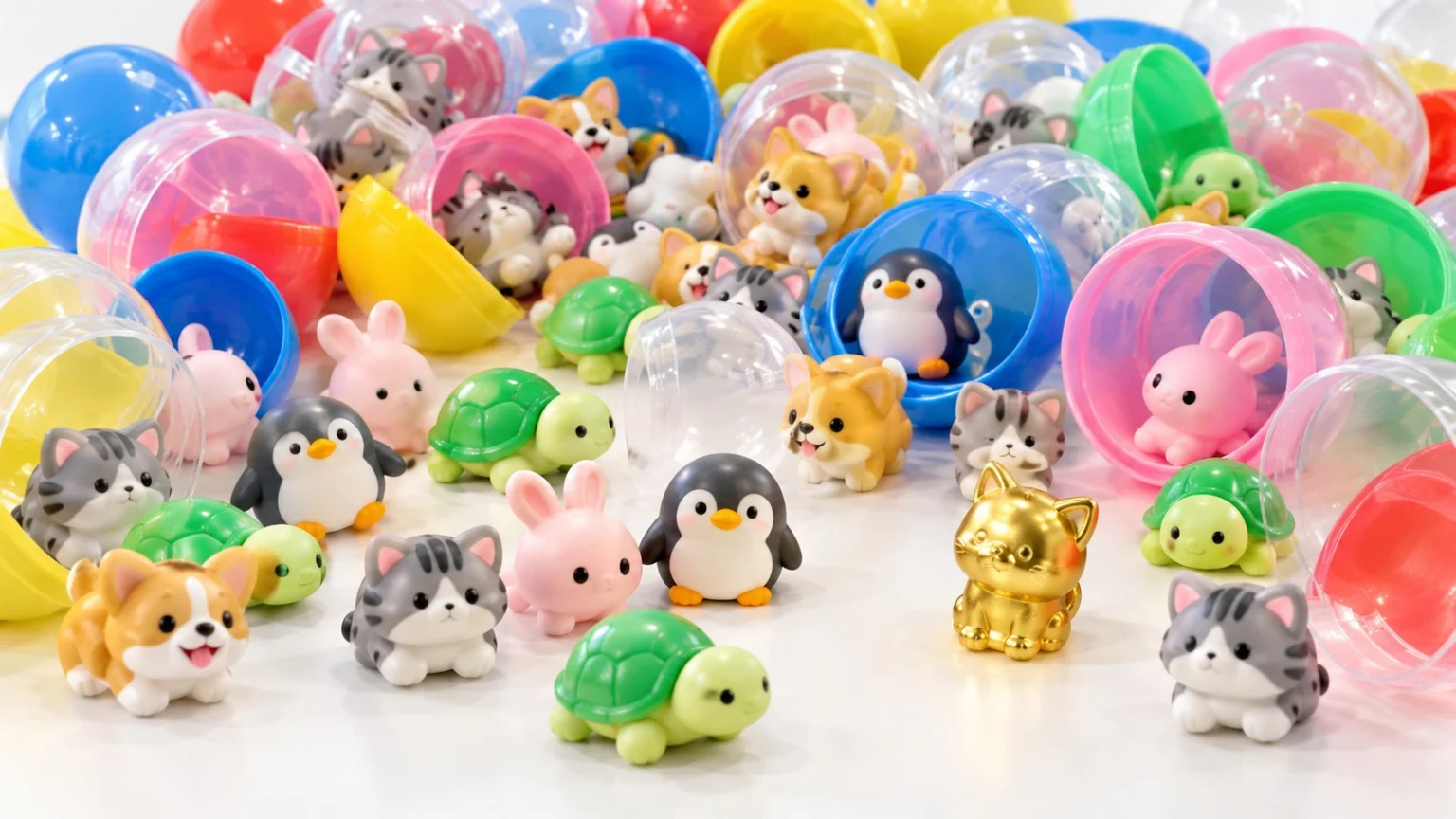
Collectible products that come out at random are structured to make people buy the same product over and over to get the last few types. As a consumer, simply calculating the expected cost in advance can help reduce impulse buying.
(2) Computer science and algorithms
This calculation is used to estimate how long it takes for randomly chosen elements to cover every case at least once, and it appears as a classic example in textbooks on randomized algorithms.
(3) Trading can be the answer
When several people collect together and swap their duplicates, the amount each person has to buy drops sharply compared with collecting alone. That is because a leftover duplicate can be the one card someone else needs.
(4) A yardstick for how many draws remain
If you have already collected several types, you only need to apply the same calculation to the remaining types. For example, if you have collected 49 of 50 types, it means you need to draw 50 more times on average to get the last one.
However, real products often have different rates for each type, or the rates are not disclosed, so the calculation should be treated only as a starting point.
The coupon collector’s problem shows how big a difference one simple fact makes: the more you collect, the harder it becomes to get something new. When the last card stubbornly refuses to appear, it is not bad luck but the path probability has laid out.
Before you start collecting, try calculating how many draws you might need, and look for friends to share your duplicates with—that is the first step toward collecting wisely.