
Whenever you study anything related to surveys, such as statistics, marketing, or opinion polling, two terms always come up as important: reliability and validity. Textbooks usually say that reliability is a necessary condition for validity, and that validity is a sufficient condition for reliability.
But no matter how many times you read that sentence, it is not easy to grasp. What exactly is necessary, and what is sufficient? Fortunately, reliability and validity become easy to understand once you look at them in pictures.
Reliability generally refers to consistency, the ability to do something the same way every time, while validity refers to accuracy, how well you produce the result you intended.
This material includes two examples. One uses the idea of shooting, which may be a bit more familiar to men, and the other uses makeup, which is part of the daily routine for most women.
Reliability and Validity (Shooting Example)
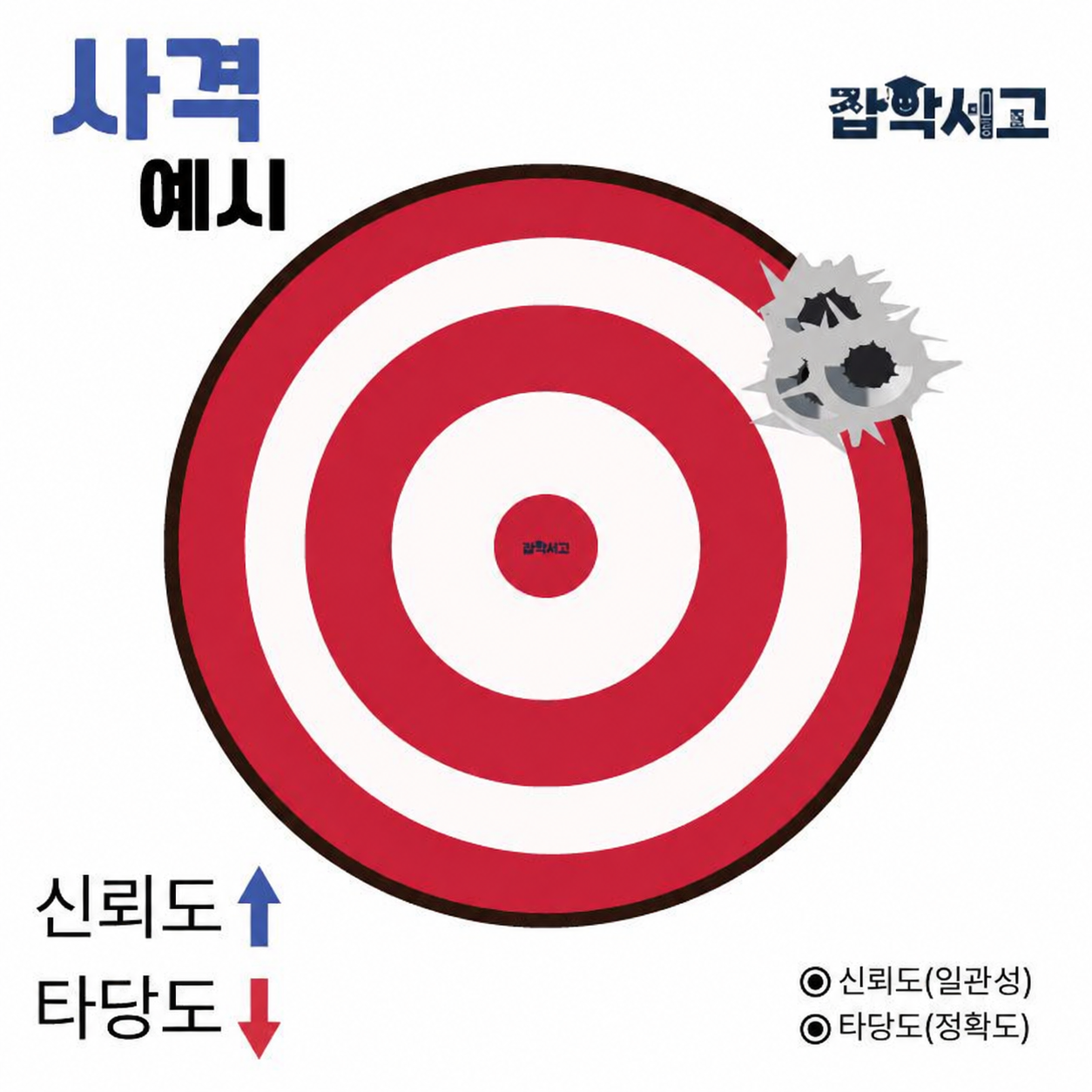 High reliability / low validity
As mentioned earlier, reliability means how consistent the results are when an action is repeated under the same conditions. In the picture above, look at how closely the bullet impacts are grouped together.
A tight group of bullet impacts indicates more consistent results, while a widely scattered group indicates less consistency. Zeroing aligns the position of an existing shot group with the point of aim, so it should be distinguished from producing a tight group.
In the picture above, the impacts form a tight group, so reliability is high. However, the group is away from the intended target center, so validity is low in this analogy.
Shots can cluster in one place without hitting the intended target. Likewise, results can be consistent yet differ from the goal, so high reliability alone does not establish high validity.
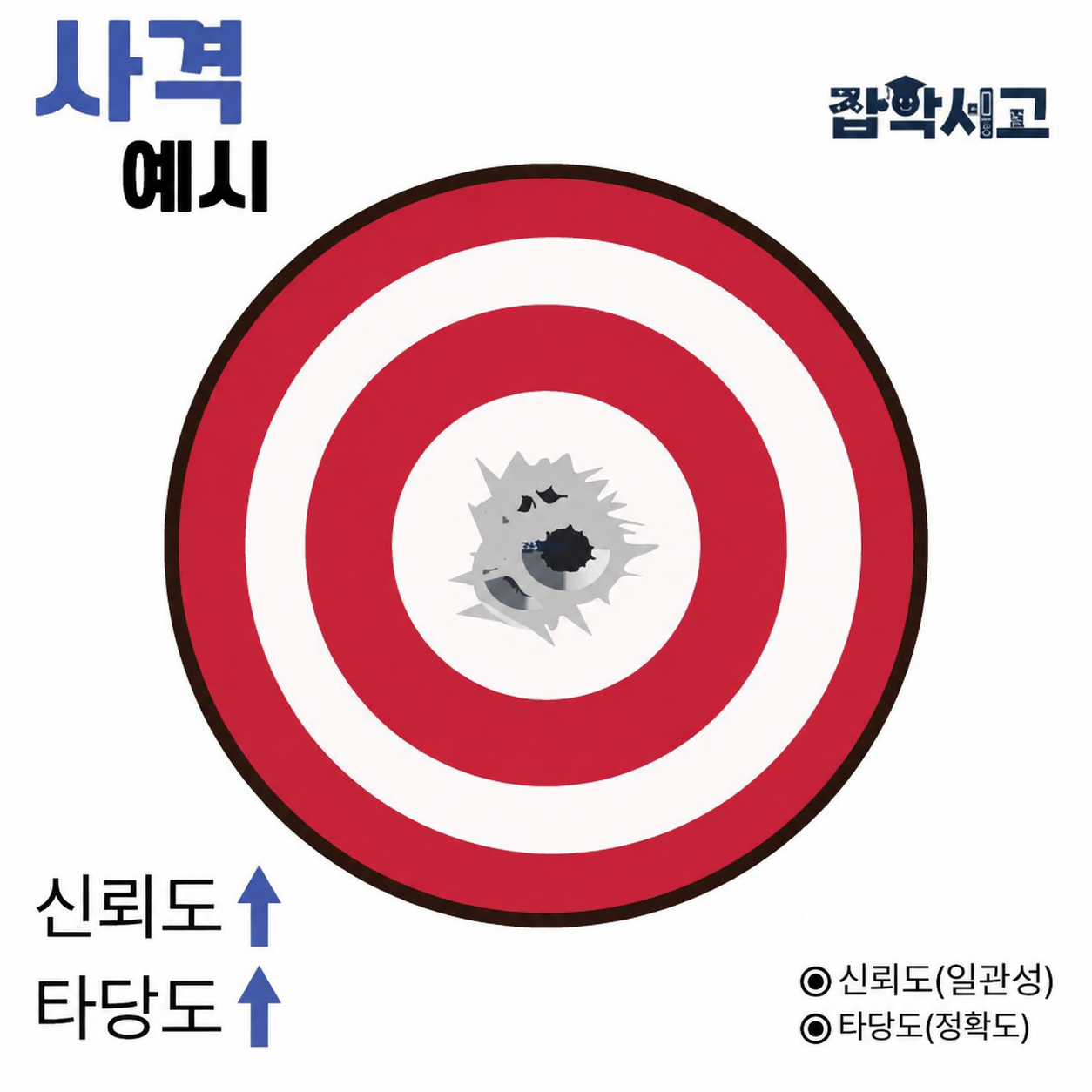 High reliability / high validity
In the picture above, every shot hit the dead center that was the intended target. Since all the shots landed in the same spot, reliability is high, and since they hit the intended center, validity is high too.
In this picture, the repeated shots are close to the target center and also tightly grouped together, illustrating both a close match to the goal and consistent results.
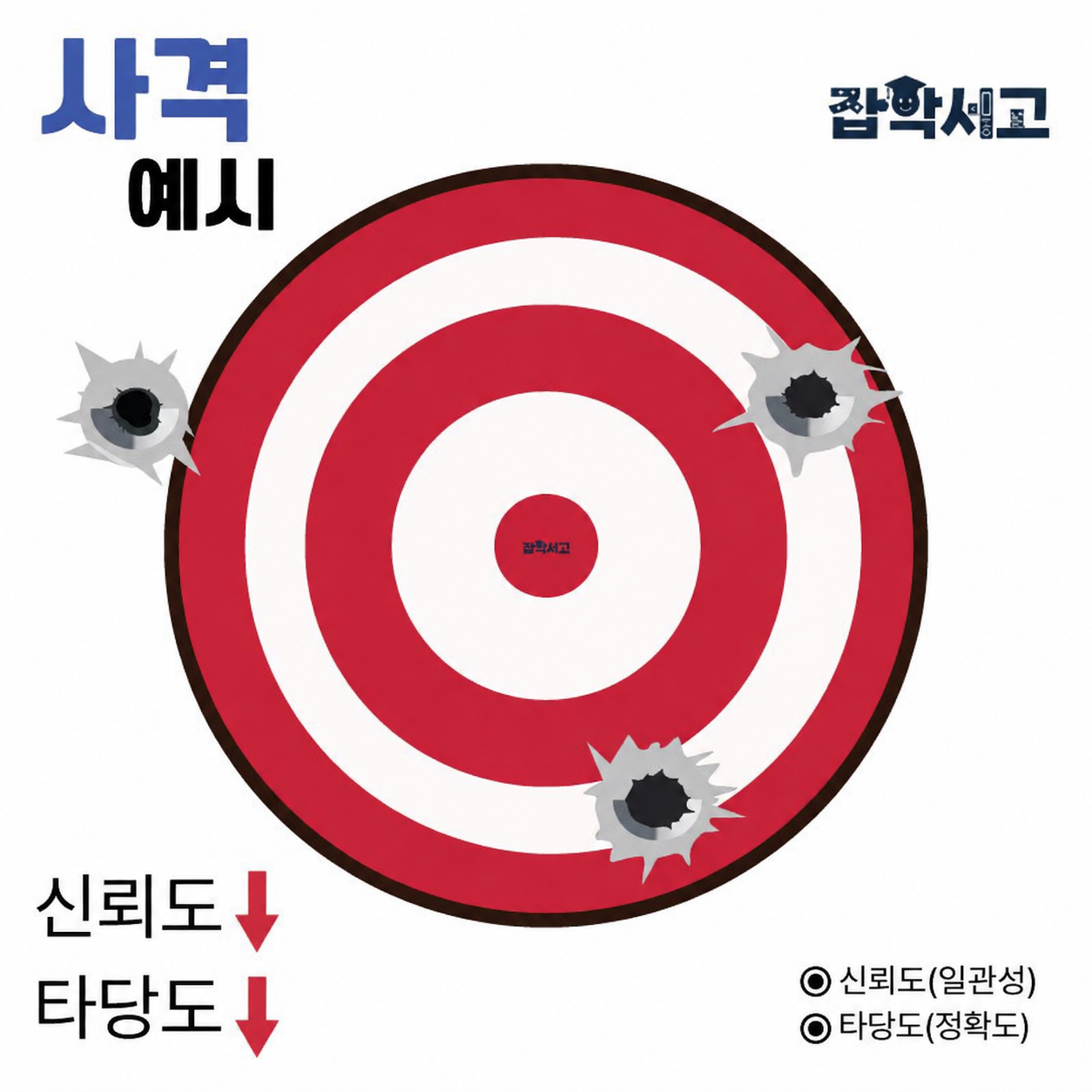 Low reliability / low validity
In the picture above, the bullet impacts are scattered and lie away from the target center. In this analogy, both reliability and validity are low.
Reducing the spread of the results and bringing them closer to the target center are two separate aspects to consider.
Reliability and Validity (Makeup Example)
This time, let's compare the concepts with makeup, a part of many women's daily routine.
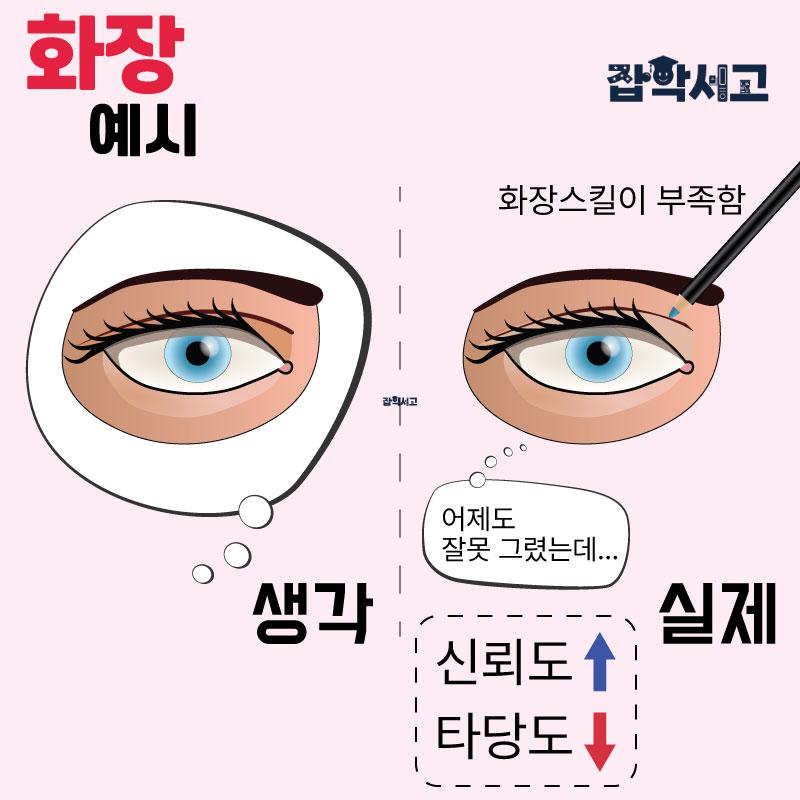 High reliability / low validity
In the picture above, the person has planned in their head how to do their makeup, but once they actually apply it, it does not come out as imagined. They want clean lines, but every time the lines come out crooked in exactly the same way. One or two days would be fine, but the makeup keeps failing to turn out as planned. Their skill falls short of their vision, so their hands cannot keep up.
Because the makeup turns out differently from what was intended every time, validity is low. But since the same result is repeated consistently, reliability (consistency of results) can be said to be high.
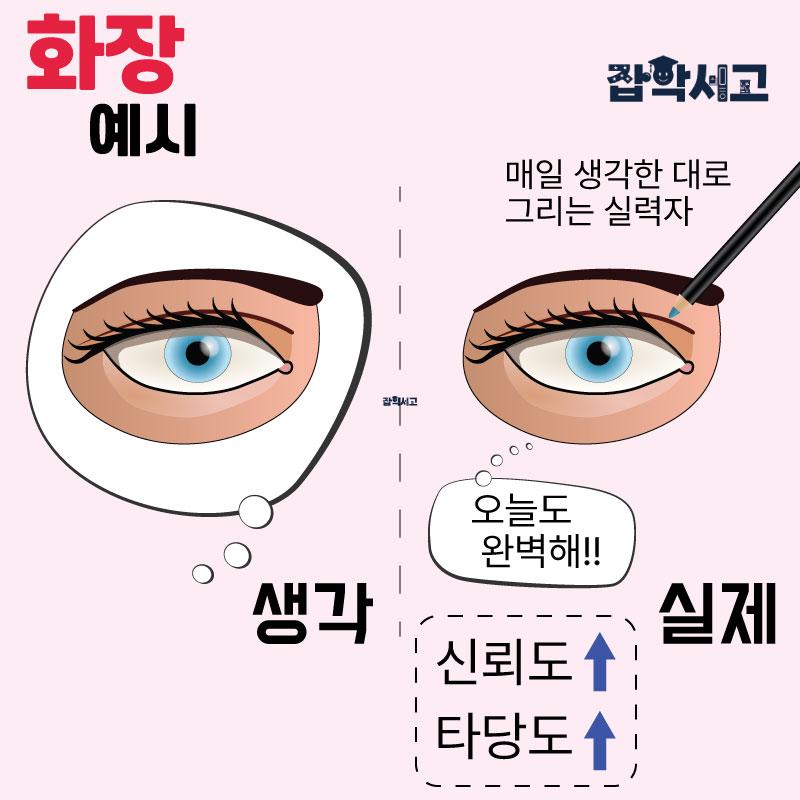 High reliability / high validity
This time, it is the case of a makeup expert who does their makeup exactly as they want every single day. They create the look they had in mind, so validity is high, and because they repeat the same result every day, reliability (consistency of results) is also high.
In this example, the actual result matches the intended look, and that result is repeated consistently every day.
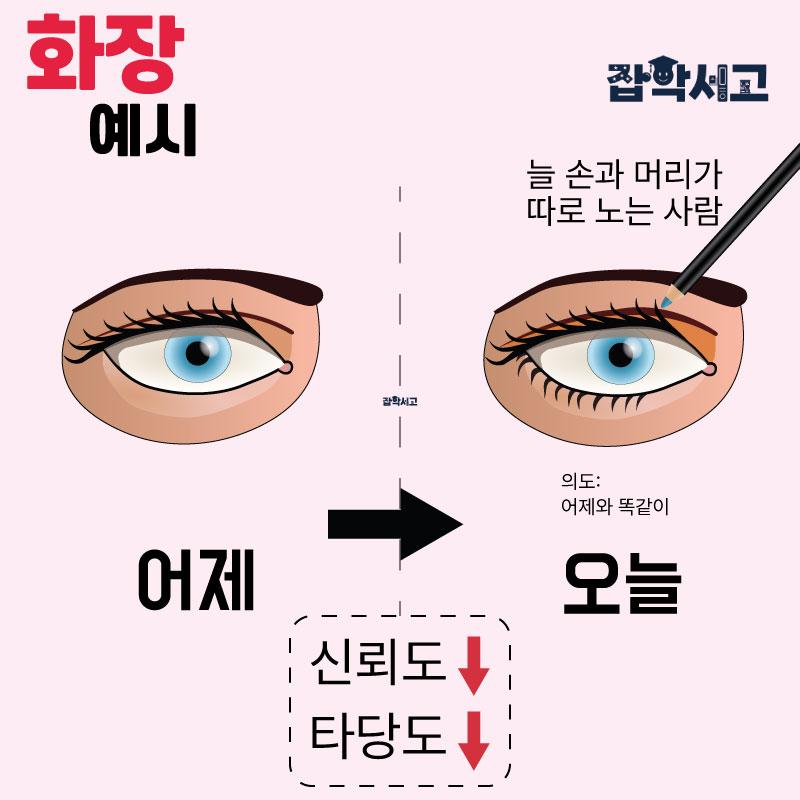 Low reliability / low validity
In this case, the person has an ideal look in mind and works hard to achieve it, but the result is different every time. It is disappointing enough not to be able to do makeup as imagined, and on top of that, some days it seems to go well while other days are a letdown... Their skill is all over the place.
Since they cannot achieve the look they want, validity is low, and since the results differ each time, reliability (consistency of results) is also low.
We have now looked at the concepts of reliability and validity. If you remember that reliability means consistency and validity means accuracy, and refer to the pictures above, they should be a little easier to understand. These are important concepts for surveys and tests, so I hope this has helped you understand them clearly.