Waves are a natural phenomenon commonly seen at the beach, but their formation and behavior involve highly complex and varied processes. Understanding waves plays an important role beyond simply understanding ocean movement, encompassing energy transfer, changes in landforms, and even solutions to various technological problems facing humanity.
This material will explain in detail how waves form and what their characteristics are, and explore in depth the dynamics of ocean waves, their effects on coastal landforms, and how they can be applied in various fields.
Wave Formation and Characteristics

Wave Formation and Principles
Waves form mainly under the influence of wind, and as wind pushes against the sea surface, its energy is transferred through ripples. Small ripples form initially, but over time, these ripples grow into waves. Wind strength, duration, and the distance over which the wind has blown (wind-speed distance) are important factors that determine wave size and period. Wave formation is not a simple process; physical factors interact in complex ways to produce waves of various forms.
Wave formation results from complex interactions involving energy between Earth's atmosphere and oceans. Atmospheric movement affects the sea surface, forming waves, and through this process, wind energy is transferred to the ocean. Wave growth is thus a product of dynamic interactions between the atmosphere and the ocean.
Wave Structure and Period
Wave structure is broadly described in terms of height, period, and wavelength. Wave height refers to the vertical distance from the top of a wave (the crest) to its bottom (the trough), and is an important indicator of wave energy. A wave's period refers to the time it takes for a wave at a given point to return to that same point, and is closely related to the wave's speed of travel. The longer the period, the more energy a wave contains, allowing it to produce powerful wave motion.
Wavelength refers to the horizontal distance between wave crests. Wavelength indicates how broad an area a wave affects, and its length determines the range over which the wave propagates. In general, longer wavelengths can transmit energy farther, making wavelength an important factor in ocean wave activity.
Wave Characteristics and the Marine Environment
Wave characteristics are greatly influenced by the marine environment. Conditions such as seawater density, temperature, and salinity change the speed and direction of waves, giving each marine region different wave characteristics. For example, cold seawater in polar regions and warm seawater near the equator exhibit different wave patterns. Ocean temperature differences have a substantial influence on wave size and propagation speed, which is also why wave properties differ between marine regions.
In particular, as climate change alters the marine environment, wave characteristics may also vary accordingly. If sea surface temperatures rise because of global warming, wave size and travel paths are also likely to change. These changes affect marine ecosystems as well and serve as important factors in marine transportation and weather forecasting.
Applications and Roles of Waves
Understanding wave characteristics has applications in various fields. The dynamic characteristics of waves occurring in the ocean help with weather forecasting, providing important information for planning marine activities. Marine transportation and navigation also require predictions that account for wave period and height, which directly affect the safety and efficiency of vessel operations.
Technological applications that harness wave energy are also being actively pursued. Marine energy is attracting attention as a sustainable energy source, and research into converting wave energy to generate electricity is becoming increasingly active. As wave prediction and management become more sophisticated, these technological applications will expand further.
The Importance of Wave Research
Wave research can contribute not only to understanding the marine environment but also to solving various practical problems. For example, wave characteristics play an important role in predicting and responding to changes in the ocean caused by climate change. Environmental problems such as coastal erosion can also be addressed more effectively by understanding wave activity.
Continued research into waves will also contribute to improving how humans interact with the ocean. Research exploring various aspects of waves, including the efficient use of marine resources, the use of waves as a future energy source, and the protection of marine ecosystems, will become increasingly important.
The Mechanics of Ocean Waves: Energy Transfer and Transformation

The Energy Transfer Process of Ocean Waves
Ocean waves receive energy mainly from wind and travel along the sea surface. During this process, energy exists in the forms of kinetic energy and potential energy. Wave size and speed are important factors that determine the amount of energy, and the greater a wave's energy, the farther it can spread. The stronger the wind blows, the larger the waves become and the more powerful their energy becomes. This wave energy affects not only the sea surface but also the marine environment as a whole.
Wave Energy Dispersion and Oscillatory Motion
Waves gradually disperse their energy as they travel across the sea surface. The movement of waves causes seawater particles to oscillate, and this oscillation occurs at right angles to the direction in which the waves propagate. In other words, seawater particles transmit wave energy while oscillating up and down and back and forth. This complex oscillatory motion makes the ways in which waves transfer energy more varied, allowing waves to spread energy in different directions while moving along the sea surface.
Wave Transformation According to Water Depth and Topography
Wave speed and size vary with water depth and seabed topography. In deep water, waves travel quickly and maintain a relatively consistent size, but when they reach shallow water, their speed decreases sharply and their height increases. This occurs because their energy is compressed as the waves approach the seabed. This phenomenon concentrates powerful energy when waves reach the coast, substantially affecting coastal erosion. Depending on the shape of the coastline or the slope of the seabed, waves may become more concentrated or dispersed, directly affecting changes in coastal landforms.
Wave Refraction and Diffraction
Waves undergo refraction and diffraction according to the shape of the coastline or seabed topography. Wave refraction is the phenomenon in which waves bend to one side according to the shape of the coastline, concentrating wave energy on coastal landforms and creating strong waves in specific areas. Conversely, wave diffraction is the phenomenon in which waves are dispersed by coastal structures or islands, spreading out their energy and sometimes providing a buffering effect in specific areas. These refraction and diffraction phenomena are important factors in coastal management and structural design, and are essential to developing ways to disperse or concentrate wave energy effectively.
Wave Mechanics Under Extreme Weather Conditions
Under extreme weather conditions such as storms or typhoons, wave energy is maximized, resulting in powerful waves. These waves contain far more energy than ordinary waves and can cause serious damage to coastal areas. In addition to eroding the coastline, they have an enormous impact on coastal infrastructure and ecosystems. Understanding and preparing for wave mechanics under extreme conditions plays an important role in disaster prevention and response, and this research can provide important information for weather forecasting and the development of marine disaster prevention measures.
The Mechanical Characteristics of Waves and Marine Ecosystems
Wave mechanics extend beyond a simple physical phenomenon and have a major influence on marine ecosystems and human activities. Marine organisms determine their habitats and migration routes according to the flow of wave energy, and variations in waves can change the structure of marine ecosystems. In human activities, waves also serve as an essential consideration in the use of marine resources and the design of marine structures. Understanding the mechanical characteristics of waves provides an important starting point for protecting the marine environment and using the ocean sustainably.
Analyzing the Effects of Waves on Coastal Landforms
The Effects of Waves on Coastal Landforms
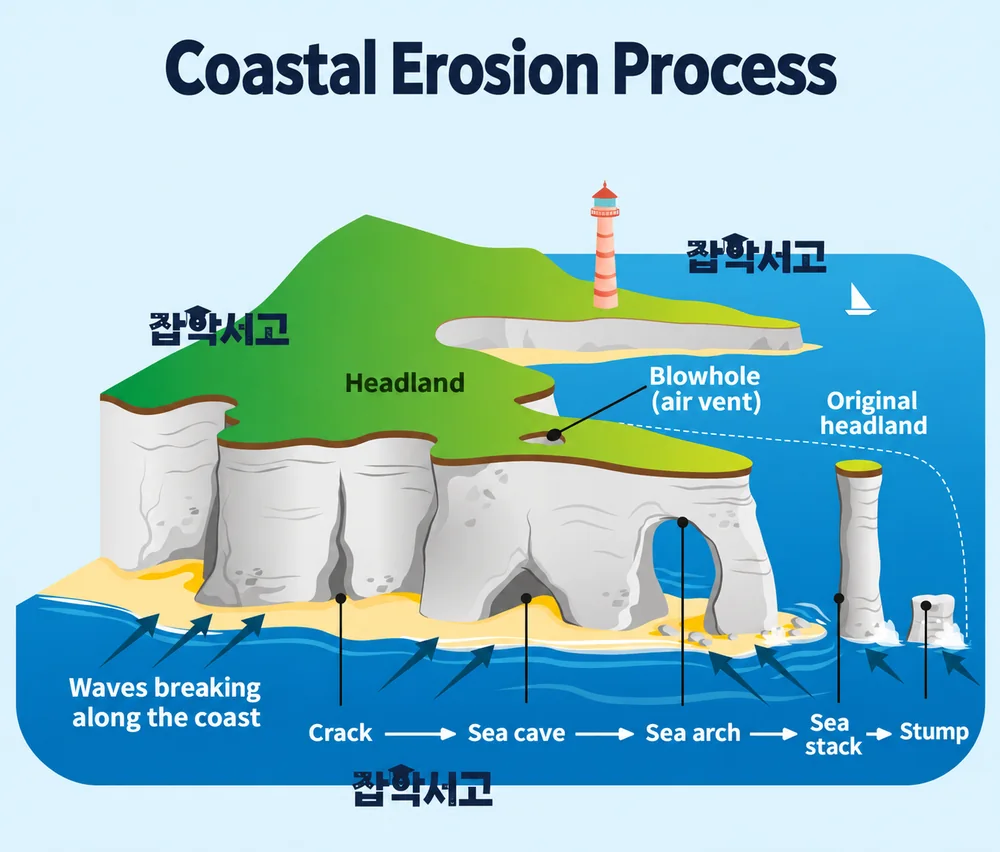
Waves are a major factor that continuously changes coastlines and landforms. When wave energy reaches the coast, its force shapes and alters the coastline, causing long-term changes in landforms. These changes manifest as the two main phenomena of coastal erosion and subsidence. In particular, landforms change rapidly in areas where powerful wave energy is concentrated, affecting marine ecosystems and human activities as well.
Coastal Erosion: Changes in Landforms Caused by Wave Forces
Coastal erosion is the process in which powerful wave energy removes soil and rock from the coastline. As a result, the coastline retreats, and landforms change over time. Waves particularly concentrate their erosion on weak ground in coastal areas, accelerating coastline retreat. This process affects marine ecosystems and can lead to habitat loss or change. If erosion continues, it can also damage buildings and infrastructure in coastal areas, significantly affecting human society.
The erosive power of waves varies according to wave size and period, the angle of the coastline, and the coastal geological structure, which serve as major factors determining the intensity and speed of erosion. In particular, during extreme weather events such as storms or typhoons, wave energy increases sharply, further raising the risk of coastal erosion.
Coastal Subsidence: New Landforms Created by Waves
Coastal subsidence is the process in which waves transport sediment to the coast and deposit it, playing an important role in forming new landforms. Sediments such as sand and gravel carried by moving waves accumulate along the coastline, creating new landform structures, and this interacts with rising sea levels to cause changes in coastal areas. This depositional activity is particularly pronounced in depositional environments such as estuaries and river mouths, producing distinct changes in coastal landforms over time.
Coastal subsidence can also have positive effects on marine ecosystems. Sediments carried by waves provide new habitats for marine organisms and supply coastal areas with abundant nutrients. However, if subsidence becomes excessively rapid, existing ecosystems may change or be destroyed, so the subsidence process also requires careful management.
Interactions Between Waves and Coastal Ecosystems
Waves play an important role in maintaining coastal ecosystems. Wave movement supplies the coast with nutrients and oxygen from the surrounding marine environment, providing marine organisms with the conditions they need to survive. However, excessive wave energy can destroy the habitats of coastal organisms and threaten biodiversity. For example, birds and marine animals living near the coastline may experience habitat changes caused by strong wave erosion or deposition.
Because wave variability can produce diverse effects on coastal ecosystems, continued observation and research are necessary. In particular, changes in wave characteristics caused by climate change are likely to accelerate changes in coastal ecosystems, requiring comprehensive management measures that account for these effects.
Predicting and Managing Changes in Coastal Landforms
Various modeling techniques are used to predict the effects of waves on coastal landforms. These techniques analyze wave energy transfer and the resulting changes in landforms, playing an important role in predicting coastline changes and the ecosystem fluctuations they cause. In particular, simulations using the latest technology can analyze wave energy distribution and changes in landforms more precisely, making them useful for developing coastal development or conservation policies.
Based on data obtained through modeling techniques, it is important to predict the rate of change in coastal landforms and develop measures to respond to it. In situations where waves continuously erode the coastline or cause it to subside, human activities should move toward minimizing these effects and coexisting with nature.
The Importance of Sustainable Coastal Management
The effects of waves on coastal landforms involve not only physical changes but also significant impacts on ecosystems and human society. It is therefore important to understand and manage these changes comprehensively. Coastal erosion and subsidence each change the coastline in different ways, and their consequences are highly complex. Addressing these issues requires precise predictions of wave energy transfer and changes in landforms, followed by the development of sustainable coastal development and conservation strategies based on those predictions.
To protect the natural environment of coastal areas while making human activities sustainable, efforts to accurately understand and manage the dynamics of waves are important.
Applications of Waves: Renewable Energy and Wave-Based Technologies
Wave Energy: A Source of Sustainable Renewable Energy
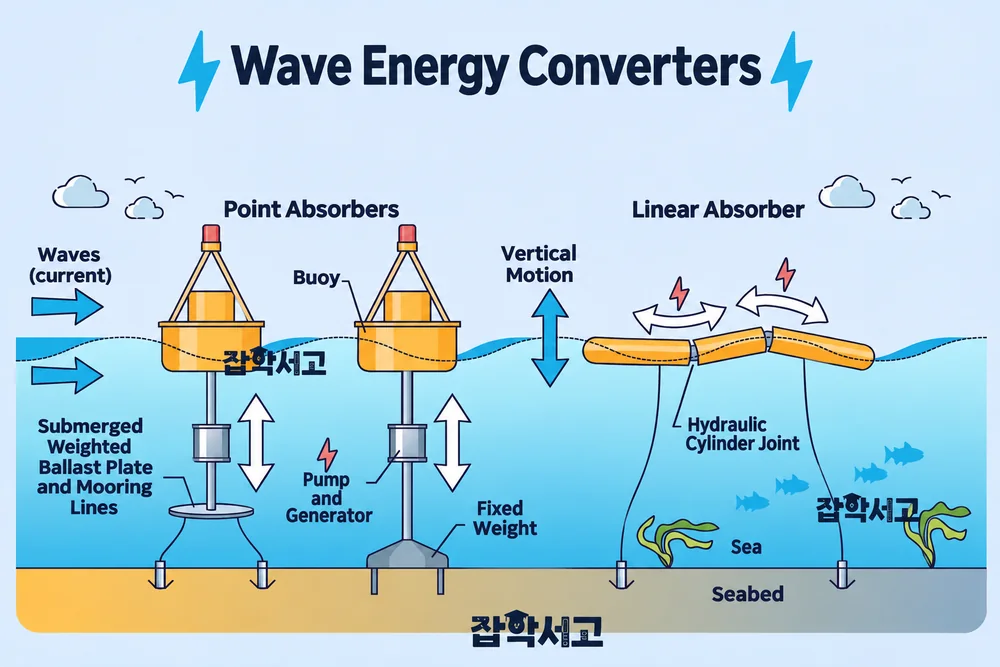
Waves are attracting attention as an important source of renewable energy. Technologies that convert the kinetic energy of waves into electricity have the potential to provide sustainable energy while minimizing negative environmental impacts. In particular, energy production using ocean wave motion is regarded as a clean energy source that can replace conventional fossil fuels, and it will play an increasingly important role.
Wave Power Generation: Converting the Kinetic Energy of Waves into Electricity
Wave power generation is a leading technology that produces electricity by converting the kinetic energy of waves. This technology extracts energy based on wave height and period, collecting energy mainly at power generation facilities installed near the coastline. The greatest advantage of wave power generation is that wave energy is supplied continuously, allowing energy to be obtained reliably without depending heavily on the weather, unlike wind or solar energy.
Wave power generation technology is regarded as a clean energy source suited to the marine environment, and it could become an important part of addressing climate change and transitioning to sustainable energy. Wave power plants must be designed to suit the marine environment, and measures to minimize their effects on marine ecosystems during installation must also be considered.
Marine Structure Design Based on Waves
The efficient use of wave energy applies not only to energy production but also to the design of marine structures. Designs that absorb or avoid wave forces can greatly improve the durability and safety of marine structures. In ports, breakwaters, and coastal protection facilities, designs that account for wave mechanics are essential to preventing damage or erosion that waves may cause.
Such marine structure design plays an important role in protecting coasts from natural disasters and maintaining the stability of port facilities. Breakwaters and wave attenuation structures that effectively disperse wave forces help protect infrastructure from the ocean's destructive forces.
Wave Energy That Contributes to Marine Ecosystem Restoration
Waves can play an important role not only in providing energy but also in restoring marine ecosystems. Wave movement promotes the circulation of materials within the ocean and helps maintain ecosystem balance by regulating sediment movement. Technologies are being developed to restore and protect marine ecosystems by using these natural circulation processes.
For example, technologies for restoring artificial coral reefs using wave forces can contribute to coral reef growth and the restoration of habitats for marine organisms. They can also be used as a means of preventing marine pollution and improving habitat conditions for marine organisms by regulating sediment movement.
Industrial Applications of Wave-Based Technologies
Technologies that use wave characteristics also have applications in various industries. Equipment and systems that use wave characteristics are being developed for marine sports and recreational activities as well, helping improve safety and support efficient activities. For example, technologies that predict wave movement have a major influence on the success of marine recreational activities such as surfing or yacht racing.
Sensor technologies for collecting marine data are also advancing by using wave characteristics. Sensors that detect wave movement and changes play an important role in monitoring the marine environment, and the data obtained through them can be useful for marine protection and management.
The Future Potential of Wave-Based Technologies
Waves offer various possibilities for technological applications beyond being a simple natural phenomenon. Their applications span a very broad range, from renewable energy technologies that harness wave energy to marine structure design, ecosystem restoration, and marine sports. These technologies can become important tools for sustainable development and are expected to play a major role in addressing climate change and future energy problems.
The development of wave-related technologies therefore serves as an important key to environmental protection and energy transition, and future research and advances will reveal even broader possibilities for their application.
Waves are beautiful and mysterious in themselves, and the scientific principles and possibilities for practical use hidden within them are even more fascinating. From their formation and dynamics to their effects on coastal landforms and their technological applications, waves provide an important key to understanding interactions between nature and humanity.
A deep understanding of waves can also make a substantial contribution to the sustainable use of marine resources and to solving future energy problems. When this research and these efforts yield results, waves will offer greater value and meaning beyond being a simple natural phenomenon.