Typhoons are among the most powerful weather phenomena created by nature, and their impact is great across the entire globe. Every year, countless people directly experience the force of typhoons and the damage they cause, which has an enormous effect on our lives.
This material aims to help you gain a comprehensive understanding of typhoons, from their basic concept to their causes, structure, and classification, as well as the various names used depending on the region where they form and the criteria for selecting typhoon names.
We hope this material will improve your overall understanding of typhoons and give you an opportunity to explore more deeply how typhoons affect our lives.
The Concept and Causes of Typhoons
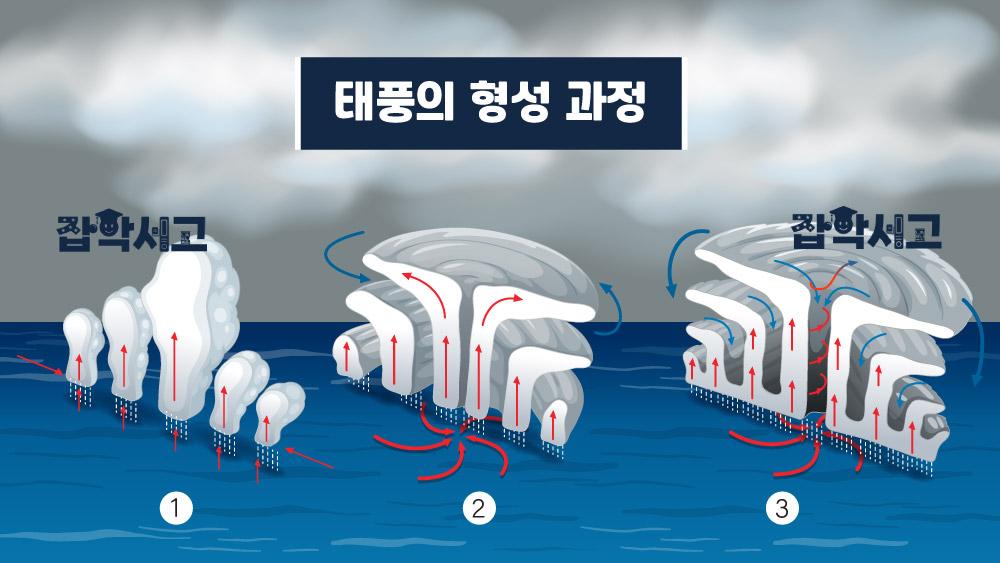 How does a typhoon form?
The Concept of a Typhoon
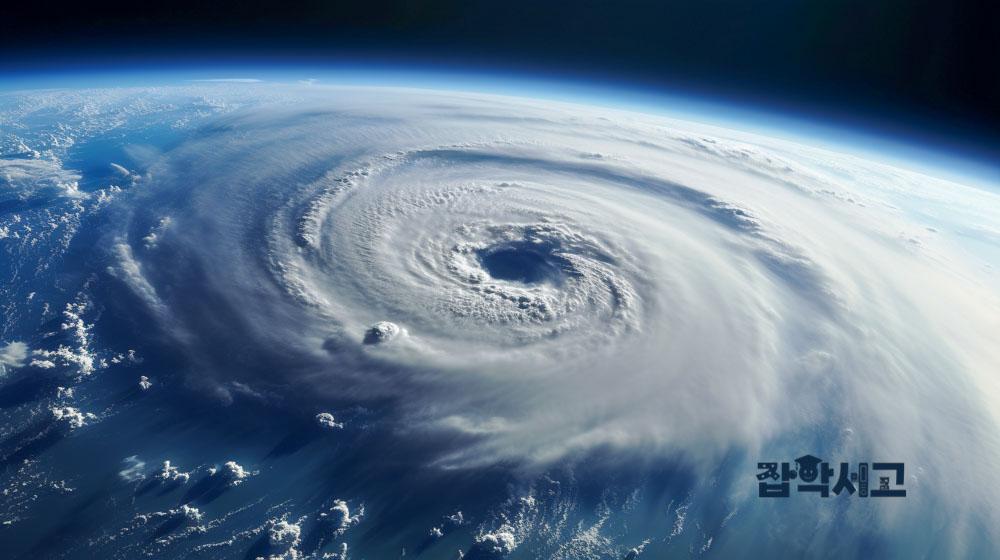
A typhoon is a type of tropical cyclone and refers to a powerful storm system that forms in the Northwest Pacific region. The term 'typhoon' is used in the Northwest Pacific, while in other regions such storms are called hurricanes or cyclones, among other names.
Typhoons have extremely fast winds and bring heavy rain, so they can cause great damage. At the center is a relatively calm area called the 'eye,' around which strong winds and rain rage.
Causes of Typhoons
Typhoons mainly form when the following conditions are met.
1. Warm Sea Surface Temperatures
Typhoons form when the sea surface temperature is 26 degrees Celsius or higher. As warm seawater evaporates, a large amount of water vapor rises into the air, and this becomes the typhoon's source of energy.
2. Formation of Low Pressure
As water vapor evaporated from the sea surface rises, it forms an area of low pressure. This low-pressure area draws air toward its center, and in the process, rotation begins.
3. Atmospheric Instability
The greater the temperature difference between the upper and lower atmosphere, the more atmospheric instability intensifies. As a result, air rises more quickly, forming strong updrafts.
4. The Coriolis Effect
Typhoons rotate due to the Coriolis effect, which is caused by the Earth's rotation. This effect is zero at the equator and grows stronger at higher latitudes, so typhoons mainly form over sea areas at latitudes of 5 degrees or higher, where it can give the air enough rotational force.
5. Favorable Conditions in the Upper Atmosphere
For a typhoon to form, the winds in the upper atmosphere must not blow strongly, and conditions must remain relatively stable. Strong upper-level winds can hinder the formation of a typhoon.
When these conditions work together, water vapor evaporated from the sea surface rises and forms a low-pressure area, where the air rotates rapidly and a typhoon develops. Through this process, a typhoon gains energy and can grow even more powerful as it moves.
The Structure of a Typhoon
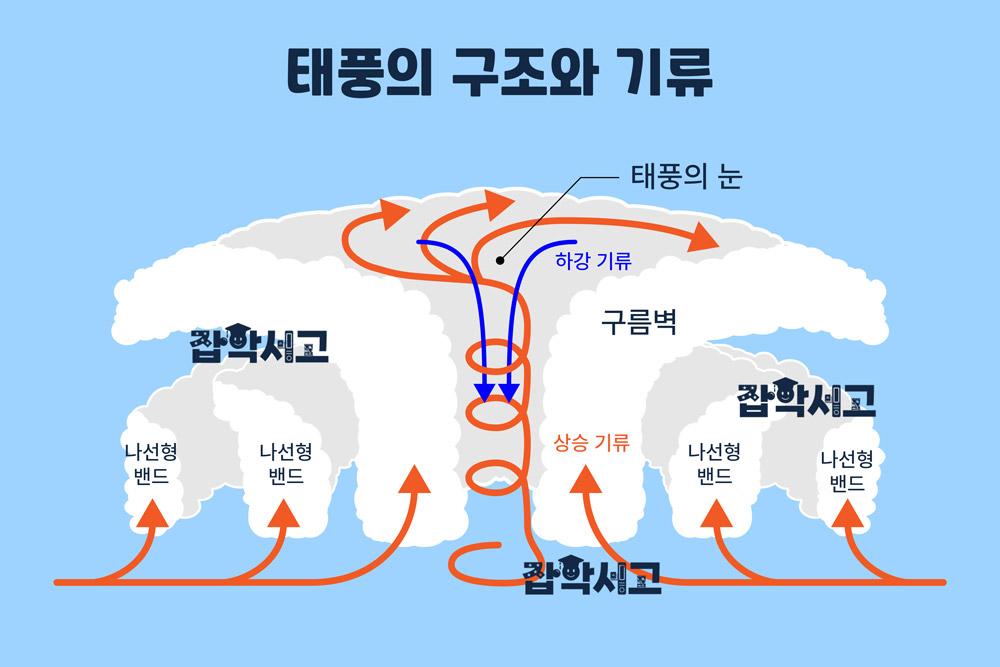 The internal structure of a typhoon
A typhoon is a weather phenomenon with a complex and organized structure, and its interior can be divided into several parts. Understanding the structure of a typhoon is important for predicting its intensity and behavior. The following are the main components of a typhoon.
1. The Eye
The eye of a typhoon is a relatively calm area located at the center of the typhoon. It is generally about 20–50 km in diameter and may be smaller in very strong typhoons. In this area there is almost no wind, the sky is clear, and the temperature is high. The strong updrafts around the eye form the eye; as a result, air rises and then descends at the center, maintaining the calm conditions of the eye.
2. The Eyewall
The eyewall (cloud wall) is a band of intense storms surrounding the eye of a typhoon. This area experiences the strongest winds and heaviest rain and is the most destructive part of the typhoon. The thickness and intensity of the eyewall are important factors that determine the typhoon's strength. The updrafts in the eyewall are extremely powerful, lifting large amounts of water vapor upward, which produces strong rain and wind.
3. Spiral Rainbands
Spiral rainbands exist on the outer edges of a typhoon. These rainbands are bands of rain and clouds surrounding the eye and the eyewall, arranged in a spiral pattern. Spiral rainbands intermittently bring strong rain and wind and can cause considerable damage even in the outer areas of the typhoon. These rainbands play an important role in maintaining the typhoon's strength by drawing in surrounding air and water vapor as the typhoon moves.
4. Upper-Level Structure
The upper-level structure of a typhoon is related to the flow of the upper atmosphere. In the upper levels, air circulates clockwise (in the Northern Hemisphere) and spreads outward, which plays an important role in the development and maintenance of the typhoon. In addition, part of the upper-level air descends toward the center of the typhoon, forming a downdraft that creates the eye, while the strong updrafts surrounding the eye form the eyewall.
5. Middle- and Lower-Level Structure
In the middle and lower levels, air converges toward the center and updrafts occur. As warm, moist air rises from the sea surface, it forms clouds, and a great deal of heat is released in the process. This heat becomes the typhoon's source of energy and serves to increase its intensity.
These structural features of a typhoon provide important clues for predicting its strength and path. When a typhoon approaches, identifying the location and intensity of the eyewall and spiral rainbands provides important information for minimizing damage.
Classification of Typhoons (Korean Standards)
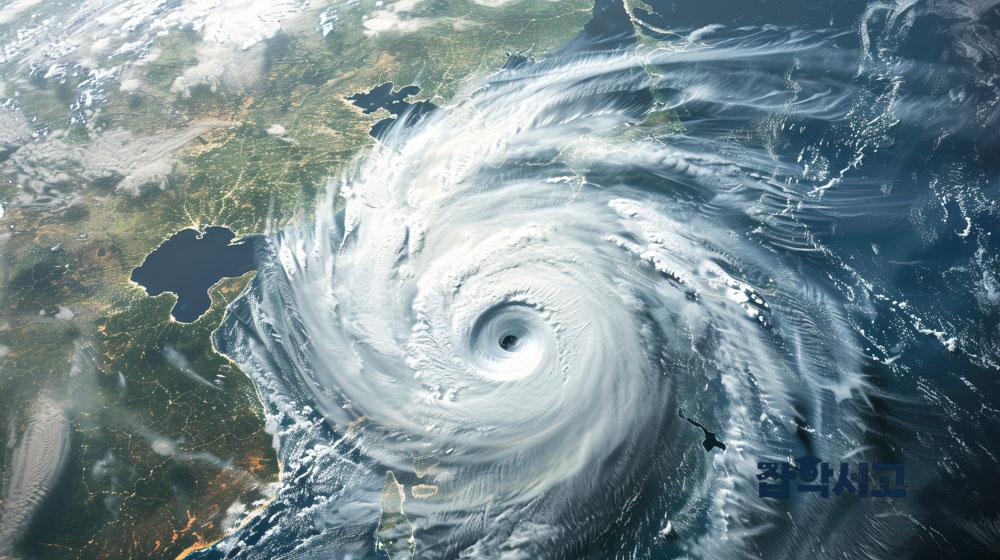 What are Korea's typhoon classification criteria?
In Korea, typhoons are classified mainly by wind speed, and a classification system has been established according to the typhoon's strength. According to the standards of the Korea Meteorological Administration (KMA), typhoons are classified as follows.
1. Tropical Depression
- Criterion: A tropical low-pressure system with a maximum sustained wind speed near the center of less than 17 m/s.
- Characteristics: At this stage, winds are weak, and clouds and rain are not highly concentrated. It mainly forms and moves over the sea, and in many cases it does not have a significant impact when it reaches land.
2. Tropical Storm
- Criterion: When the maximum sustained wind speed near the center is at least 17 m/s but less than 25 m/s.
- Characteristics: At the tropical storm stage, winds become stronger and areas of concentrated clouds and rain begin to appear. Even at this stage, it can bring considerable rainfall and wind, so caution is required.
3. Severe Tropical Storm
- Criterion: When the maximum sustained wind speed near the center is at least 25 m/s but less than 33 m/s.
- Characteristics: A severe tropical storm brings stronger winds and rain and can cause damage to coastal areas when it approaches land. Structurally, it also takes on the characteristics of a typhoon.
4. Typhoon
- Criterion: When the maximum sustained wind speed near the center is at least 33 m/s but less than 44 m/s.
- Characteristics: A typhoon is the most powerful type of tropical cyclone, bringing extremely strong winds and torrential rain. An eye forms at the center, and extreme weather occurs in the eyewall around the eye. A typhoon gains energy and strength over the ocean and can cause enormous damage when it reaches land.
5. Very Strong Typhoon
- Criterion: When the maximum sustained wind speed near the center is at least 44 m/s but less than 54 m/s.
- Characteristics: A very strong typhoon brings not only powerful winds and torrential rain but also high waves and storm surges. Both coastal and inland areas can suffer severe damage, so thorough preparation is necessary.
6. Super Typhoon
- Criterion: When the maximum sustained wind speed near the center is 54 m/s or higher.
- Characteristics: A super typhoon is the most powerful level of typhoon and has extreme destructive power. Casualties and property damage can be very large, and it can have serious effects over a wide area.
This classification system makes it possible to assess the intensity and potential danger of a typhoon so that appropriate preparation and response can be taken. Typhoon classification plays an important role in raising public awareness and minimizing damage caused by typhoons.
What Are Typhoons Called in Different Regions of the World?
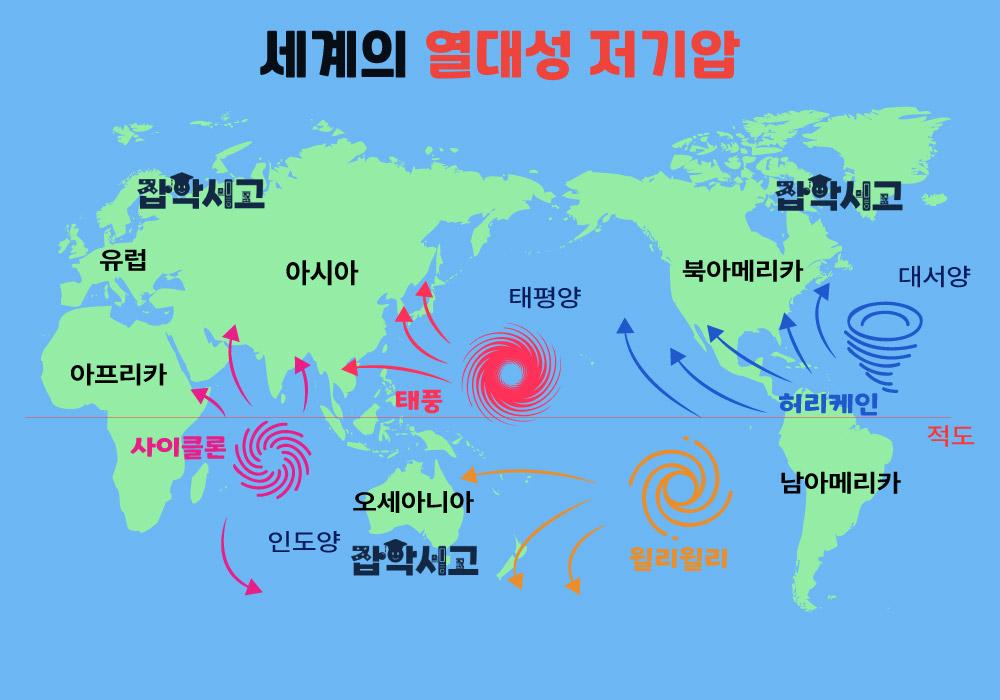 Names of tropical cyclones around the world
Typhoons occur in many regions of the Earth, and they are called by different names in each region. This stems from differences in where the storms form and in regional languages and cultures. The following are the various names for typhoons used in major regions of the world.
1. Typhoon
- Region of occurrence: Northwest Pacific (Korea, Japan, the Philippines, etc.)
- Characteristics: Tropical cyclones that form in this region are called 'typhoons.' Typhoons form over the ocean in this region and have a major impact on surrounding countries.
2. Hurricane
- Region of occurrence: North Atlantic, Caribbean Sea, Northeast Pacific (the United States, Canada, Mexico, etc.)
- Characteristics: Tropical cyclones that form in the North Atlantic and Northeast Pacific are called 'hurricanes.' Hurricanes mainly form in the Caribbean Sea and the Gulf of Mexico and move toward the North American continent.
3. Cyclone
- Region of occurrence: Southwest Indian Ocean, South Pacific, North Indian Ocean (India, Australia, Madagascar, etc.)
- Characteristics: Tropical cyclones that form in the Indian Ocean, the South Pacific, and the Southwest Indian Ocean are called 'cyclones.' Cyclones that form in these regions have a major impact on places such as India and Australia.
4. Willy-Willy
- Region of occurrence: Australia
- Characteristics: This is a term referring to tropical cyclones that occur in Australia, where the name 'willy-willy' is used. They mainly occur in Australia's northern coastal areas and bring powerful winds and rain.
In this way, tropical cyclones, the same natural phenomenon worldwide, are called by various names depending on the region where they form, and their impact and danger are very great wherever they occur. Understanding these differences in names helps us more accurately grasp the weather phenomena of each region and their effects.
Criteria for Selecting Typhoon Names (Korean Standards)
 How are typhoon names selected?
In the Northwest Pacific region, including Korea, the selection of typhoon names is managed by the Typhoon Committee, which is part of the World Meteorological Organization (WMO). The following are the process and criteria for selecting typhoon names.
1. The Typhoon Committee
The Typhoon Committee manages typhoon names for the Northwest Pacific and South China Sea regions. Fourteen countries, including Korea, Japan, China, and the Philippines, participate in the committee.
2. Submitting Names and Compiling Lists
- Name submission: Each member country submits 10 typhoon names, providing a total of 140 names.
- Name lists: The submitted names are divided into 5 lists, each containing 28 names. These lists are used in sequence.
- Names from South and North Korea: South Korea and North Korea submitted names such as 'Gaemi,' 'Nabi,' 'Jangmi,' 'Maemi,' 'Sonamu,' 'Noru,' 'Mujigae,' 'Doksuri,' 'Goni,' and 'Megi.'
3. Use and Reuse of Names
- Sequential use: Each time a typhoon forms, it is given the next name on the list. When one list is finished, the next list is used.
- Reuse of names: The names of typhoons that did not cause major damage remain on the list and are used again when the lists cycle around.
4. Permanent Retirement of Names
- Highly damaging typhoons: The names of typhoons that cause serious damage or heavy loss of life are permanently retired. In this case, the name is removed from the list and replaced with a new name.
- Example: 'Maemi,' submitted by North Korea, was removed from the list after causing major damage in 2003 and was replaced with the new name 'Mujigae.'
5. Selecting New Names
- Proposals by member countries: In place of a retired name, a new name is submitted and added to the list. New names are reviewed and approved by the Typhoon Committee.
6. The Meaning of Names
- Diverse languages and cultures: The submitted names come from the languages and cultures of each country. They reflect a variety of themes, such as natural phenomena, animals and plants, flowers, and mythological figures.
- Meaningful names: Each country selects words that are familiar and meaningful to it for use as names.
Typhoon names are selected according to systematic and organized criteria, which make typhoons easy to identify and remember. In addition, the names of typhoons that caused serious damage are not reused, so that they are remembered as historical events. This can help reduce damage caused by typhoons and strengthen preparedness.
Typhoons are natural phenomena that greatly affect our lives, so understanding them is very important. Through this material, we have explored the concept, structure, classification, names, and naming criteria of typhoons.
This knowledge will help raise awareness of typhoons and enable us to prepare for them more effectively. Understanding and preparing for the power of nature is the first step toward keeping ourselves safe.
Continued interest in and research on typhoons will be needed in the future, and through this, we will be able to build a safer future.