In modern society, the media plays a central role in delivering information and has a profound influence across various fields, including politics, the economy, and society. Amid this rapidly changing media environment, the need to amend media law is becoming increasingly apparent.
This article discusses the need to amend media law and examines the social effects that can be expected from such reform. To this end, it systematically analyzes the background and need for reform, the problems with current legislation and directions for improvement, and the positive and negative effects that reform could bring.
Examining the Background and Need for Media Law Reform
Changes in the Media Environment and the Need for Legal Reform
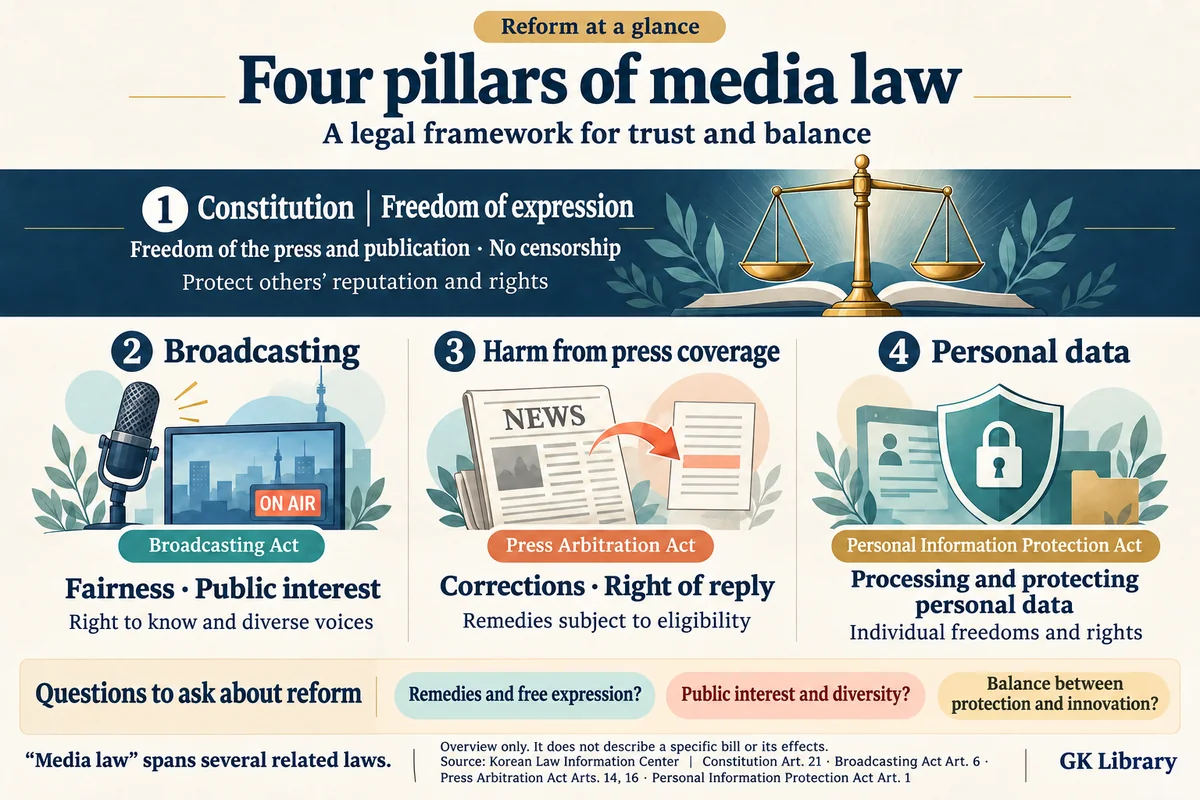
The rapid development of digital technology has brought sweeping changes to the media environment. Traditional print media has gradually declined, while digital media has become mainstream, transforming how information is produced and distributed. However, existing media law has not adequately responded to these changes. Legislation unsuited to the digital age has limitations in addressing new problems, which can create legal gaps. Amending media law to suit the new environment is an essential task.
Information Problems in the Digital Age and the Role of the Media
Digital media has made the immediate distribution of information on a large scale possible, but it has also raised concerns about the authenticity and quality of information. The spread of false information and fake news causes social confusion and risks seriously undermining the credibility of the media. The media must maintain its role as a provider of accurate information, and legal mechanisms to support this role are essential. Media law reform will be a key means of addressing these problems.
Balancing Privacy Protection and Freedom of Expression
As the media produces and distributes various types of content, the values of privacy protection and freedom of expression often clash. How to maintain harmony between these values is a very important issue. Media law must protect individuals' privacy while guaranteeing freedom of expression to the greatest extent possible, and legal mechanisms related to personal information protection, in particular, need to be strengthened further. These measures should promote stability in the media environment and strengthen the framework of legal protection.
Creating a Fair Competitive Environment and Ensuring Media Diversity
As the influence of large platform companies continues to grow, fair competition within the media industry is under threat. Companies with monopolistic positions can create structures that make it difficult to represent diverse voices. Legal regulations that promote fair competition are needed to prevent this and ensure diversity in the press. Media law reform should help correct these imbalances and ensure that various participants in the market have equal opportunities.
Legal Support to Strengthen the Competitiveness of Domestic Media
Legal support to strengthen the competitiveness of domestic media in the global media market is also important. Excessive dependence on foreign media can weaken the ability of the domestic content industry to sustain itself. To prevent this, legal mechanisms must be established to promote improvements in the quality of domestic content and enable it to compete in international markets. This will play an important role in securing competitiveness on the international stage while maintaining cultural autonomy.
Major Problems with Current Media Law and Directions for Improvement
The Limitations of Current Media Law and the Challenges of the Digital Age
Current media law does not adequately reflect the rapidly changing digital environment. Although the transition from traditional media structures to digital platforms has been rapid, legal mechanisms have failed to respond appropriately to these changes, creating legal gaps. In particular, the lack of clear provisions on problems involving information distribution on digital platforms is highly likely to cause various social problems. Legal reform suited to the digital age is urgently needed.
The Problem of False Information and Fake News
The spread of false information and fake news is a serious problem that can erode social trust and cause political and economic instability. Current media law does not effectively address these problems, and legal mechanisms to ensure the distribution of accurate information are inadequate. Alongside strong regulation of false information, specific legal improvements are needed to ensure that only trustworthy information can circulate. This will be an important task in strengthening the media's fundamental role.
Privacy Protection and Personal Information Issues
In the digital media environment, the risk of indiscriminate violations of individuals' privacy is increasing. Personal information is collected on a large scale and used for various purposes, yet the corresponding legal protection is insufficient. Current media law fails to address weaknesses in personal information protection, making legal mechanisms suited to the digital age urgently necessary. Personal information protection will play an important role in safeguarding individual rights while restoring and strengthening trust throughout society.
Unfair Competition in the Media Industry
The market dominance of large media companies threatens the survival of independent news outlets. Current law fails to provide appropriate regulation of large companies' monopolistic positions, making it difficult to represent diverse voices. Legal improvements to ensure fair competition among media companies and secure diversity in the press are urgently needed. Creating a fair competitive environment will allow a greater variety of perspectives to be conveyed through the media.
Strengthening Competitiveness in the Global Media Market
There are concerns that the global competitiveness of domestic media may weaken because of insufficient support under current law. More systematic and proactive legal support is needed for domestic content to become competitive in the global media market. Legal mechanisms should go beyond protecting the domestic market and establish a foundation for successful competition in the global market as well. This could promote improvements in the quality of domestic media and its expansion into global markets.
The Need for Media Literacy Education
Current media law provides insufficient support for media literacy education. An educational foundation that enables citizens to engage critically with media and avoid being misled by false information is important. Media literacy education plays an important role in helping citizens become responsible media consumers by developing their ability to determine whether information is true. This could strengthen social stability and create a healthier media environment.
The Positive Effects of Media Law Reform on Society

Ensuring the Distribution of Trustworthy Information
Media law reform plays an important role in ensuring the distribution of trustworthy information. In a digital environment flooded with false information and fake news, amended media law can help secure the accuracy and truthfulness of information. This reduces social confusion, encourages the development of a culture of trust in information, and ultimately helps restore social trust. The distribution of trustworthy information strengthens the media's public role and enables citizens to make decisions based on more accurate information.
Strengthening Personal Information Protection and Digital Safety
If personal information protection is strengthened through media law reform, citizens can use the digital environment more safely. With mechanisms in place to prevent the indiscriminate collection and use of personal information and protect individual rights, citizens will be able to use digital media with confidence. This reduces anxiety in digital spaces and contributes to the development of a social culture that respects individual privacy. Ultimately, personal information protection promotes social trust and provides reassurance when consuming information through the media.
Promoting Media Diversity Through Fair Competition
Media law reform helps prevent monopolies by large media companies and create a fair competitive environment. Fair competition promotes diversity and creativity in the media industry, establishing a foundation for diverse voices to be reflected in society. This creates a democratic media environment, while diverse media content helps broaden individuals' perspectives and enrich social discourse. Media diversity is an essential element of healthy social development, supporting the process of reaching social consensus by providing more opinions and information.
Strengthening Competitiveness in the Global Market
Media law reform helps the domestic media industry strengthen its competitiveness in the global market. Systematic and proactive legal support promotes improvements in the quality of domestic content and provides a foundation for establishing a stronger presence on the international stage. Through this, domestic media companies gain opportunities to grow in the global market, which will contribute to creating economic synergies. The development of the media industry has a positive effect on the national economy as a whole and strengthens cultural self-reliance through the international spread of content.
Expanding Media Literacy Education
Media law reform plays an important role in strengthening media literacy education. Citizens need to develop the ability to engage critically with information, and systematic education is necessary for this. Media literacy is essential for citizens to avoid being misled by false information and grow into responsible information consumers. Critical thinking and autonomy in engaging with information are fundamental elements of a democratic society, and an educational foundation that cultivates these abilities plays an important role in strengthening social responsibility.
Strengthening Social Stability
Media law reform can ultimately contribute to strengthening social stability. By increasing the trustworthiness of information, it helps prevent social conflict and create a stable social environment. Trustworthy information reduces unnecessary misunderstandings and conflicts, and social anxiety decreases when information is conveyed transparently and accurately. Such stability is essential for sustainable social development, and media law reform will be an important first step toward it.
The Negative Effects of Media Law Reform and Measures to Address Them

Concerns About Restrictions on Freedom of Expression and Measures to Protect It
Media law reform carries the risk of excessively restricting freedom of expression. This can undermine the diversity and creativity of information, and it may also lead to abuses of power. Since freedom of expression is one of the core values of democracy, legal mechanisms to protect it must be established. The reform process requires careful review to avoid infringing on freedom of expression and must include specific provisions that guarantee it.
The Potential to Hinder Industry Development and the Need for Balanced Regulation
Excessive regulation can hinder the development of the media industry. Overly strict legal regulations can obstruct media companies' efforts to create new content or innovate in technology. Balanced regulation is particularly essential in the media industry, where creativity and autonomy are important. To achieve this, input from the industry must be gathered, and legal improvements are needed to ensure that regulation and development do not conflict. Regulation must be carefully designed so that it does not hinder industry development.
Balancing Personal Information Protection and Service Convenience
Strengthening personal information protection is essential, but there are concerns that service convenience may decline in the process. If the user experience becomes excessively inconvenient, service use may decrease, and technological development may also be hindered. It is therefore important to strike an appropriate balance between personal information protection and service convenience. To achieve this, legal mechanisms must be established that protect users' personal information while ensuring that they do not experience inconvenience. A balanced approach is needed to ensure that technological innovation and personal information protection are not mutually exclusive.
Increased Administrative Burdens on Small Media Companies
Media law reform can increase administrative burdens on small media companies. Complying with new legal regulations requires additional resources and staff, which can place a heavy burden on small companies with relatively fewer resources than large companies. Government financial and technical support is needed to address these problems. The government must provide sufficient assistance so that small companies can meet legal requirements.
The Potential for Conflict Due to a Lack of Social Consensus
A lack of social consensus during the media law reform process can undermine the law's practical effectiveness and cause social conflict. In particular, if the views of various stakeholders are not adequately reflected, the result can undermine legal stability. It is therefore important to gather a wide range of views thoroughly during the reform process and build social consensus on that basis. A bill that has gained consensus can secure greater social trust and stability.
Concerns About Legal Disputes Arising from Complex or Ambiguous Legal Provisions
If media law is excessively complex or ambiguous, difficulties in legal interpretation can arise. This can undermine consistency in the application of the law and increase the risk of legal disputes. It is therefore essential to establish clear and consistent provisions when amending media law. Legal ambiguity must be reduced, and clear provisions that everyone can understand should promote consistent application of the law and prompt resolution of disputes. This is an important element in strengthening legal stability.
Media law reform is one of the tasks that modern society must address, and various positive effects can be expected from it. However, the negative effects that may arise during the reform process must also be fully considered, and measures to address them are essential.
When a sustainable media environment can be created through balanced regulation and social consensus, the media will be able to fully perform its public-interest functions.