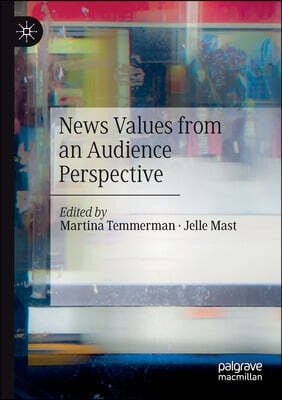
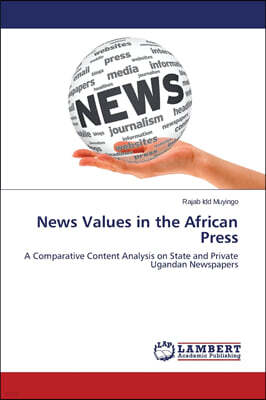
When you open your phone in the morning, countless news stories pour out, yet only a tiny fraction of what happens in the world becomes an article. Even among accidents on the same day, some take over the front page while others don’t get a single line. Reporters and editors decide every day which of these many events to pick and report. The criteria that guide this choice are what we call “News Values.”
Put simply, news values mean “the criteria that decide which events are selected as news and how they will be reported.” You can think of them as the qualities we usually sum up as being newsworthy, broken down one by one and given names.
In this article, we will look in turn at the study by Galtung and Ruge that became the starting point of news values research, the main types of news values, the criteria that changed in the digital age, and how to read the news with these criteria in mind.
What Makes an Event News, and Its Shadow
The Starting Point of News Values Research

The first study to systematically organize news values was a paper published in 1965 by Norwegian peace researchers Johan Galtung and Mari Holmboe Ruge. The two analyzed how four Norwegian newspapers reported the crises in the Congo, Cuba, and Cyprus in the 1960s.
They argued that an event passes through three steps before it reaches readers. First, events with many news factors are selected; then, in the selected events, those factors are emphasized even more; and this process is repeated at every step from the event to the reader. They also put forward the hypothesis that the more factors an event has, the more likely it is to become news, and that events with hardly any factors do not become news.
This study showed that news selection, long seen as a matter of editors’ experience and instinct, follows certain rules, and it has remained a classic that no journalism textbook leaves out. However, since this list was built mainly on Western media, it is also worth remembering that the weight of each criterion can differ by country and outlet.
What Makes the News?

Galtung and Ruge proposed 12 news factors in all. Among them, the criteria still often mentioned today can be summarized as follows.
- Negativity: Bad news such as accidents, disasters, and crimes becomes news more easily than good news. It is often counted as the most basic news value.
- Proximity: The closer an event is to readers geographically, or the more similar its place is in language and culture, the bigger the coverage.
- Eliteness: Events involving powerful nations, celebrities, or people in power get more coverage even when the event itself is the same.
- Unexpectedness: Rare and unexpected events draw more attention than routine, predictable ones.
- Personalization: Events that can be told through a particular person’s actions or story become articles more easily than abstract trends.
Other factors also come into play, such as whether an event happens within a short time that fits the media’s reporting cycle, whether it is large enough in scale, whether its meaning is clear, and whether it connects to a story already being covered. Because page space and airtime are limited, the balance with other stories is also considered.
For example, a traffic accident on a road in your own neighborhood gets bigger coverage than a similar accident in a faraway country, and even the same accident becomes the talk of the day if a celebrity is involved. In this way, the more factors overlap, the more likely an event is to become news, and the longer it stays near the top.
Criteria That Changed in the Digital Age

News values have changed over time. British journalism scholars Tony Harcup and Deirdre O'Neill analyzed British newspapers in 2001 and re-examined Galtung and Ruge’s list.
(1) The Rise of Celebrities and Good News
Stories about famous celebrities increased greatly, and not only bad news but also moving or welcome news emerged as important news values. Agendas that the newspapers themselves wanted to push also influenced story selection.
(2) The Arrival of Shareability
In a 2017 study, the two revised their work again and added, as a new news value, how likely a story is to be shared and to get reactions on social media. As click and share counts became visible in real time, the influence of these numbers on editorial decisions also grew.
The Shadow That News Values Cast
The more faithfully the news follows news values, the more easily it tilts toward the negative and the sensational. Problems that are important but not dramatic, such as long-running hunger in a faraway country or slowly progressing climate change, can get pushed to the back. Galtung himself later pointed out that the media had become overly negative and sensational.
Reading the News with News Values in Mind

Understanding news values lets you look at the news from one step back. The starting point is to remember that a story splashed across the front page is not necessarily the most important event, but rather one that meets many of the news value criteria.
When reading the news, it helps to make a habit of asking yourself why this story was chosen now and which elements are being emphasized. When bad news keeps coming, ask whether you are feeling the world is more dangerous than it really is, and look for news on less-covered topics in other media or expert sources to keep your balance. Before sharing an article, it is also a good idea to check the facts in its content first rather than reacting to the punch of its headline.
Reading the selection criteria hidden behind the news on your screen—that is the first step toward balanced news reading.