Effective video production plays a very important role in modern digital marketing and content strategy. Simply picking up a camera and filming is not enough to create successful content; a more complex and systematic approach is needed.
The video production process requires software selection, equipment use, creative idea development, and various technical elements to work together cohesively. Only when these elements are properly balanced can high-quality videos be produced. This article will take an in-depth look at the strategies and techniques required throughout this process.
Basic Principles of Video Production: Essential Elements for Success
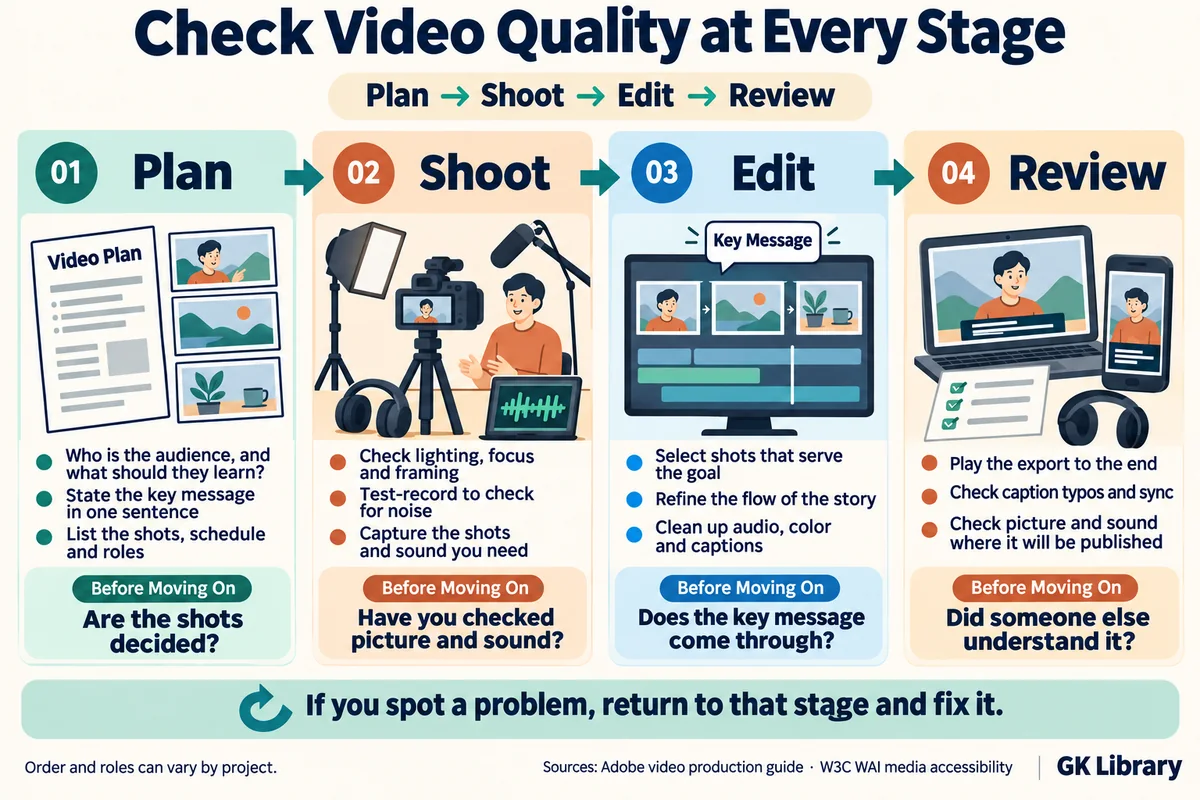

Setting Clear Goals: The First Step in Video Production
Successful video production begins with setting clear goals. It is important to clearly define the message the video aims to convey and the audience who will watch it. Clear goals can reduce confusion that may arise during production and establish a clear direction for the content. The target audience's age range, gender, interests, and other characteristics should be analyzed in detail, and the message should be tailored accordingly. This helps the video remain consistent and increases the likelihood of achieving its goals.
Thorough Planning and Preparation: The Key to Success
The planning stage plays a very important role in video production. The overall flow of the video should be planned through a storyboard, and the necessary resources should be prepared in advance. Thorough preparation requires considering even detailed matters ahead of time, such as securing filming locations, renting equipment, and assigning personnel. This preparation helps prevent unexpected situations on the day of filming and enables a smooth response when problems occur. The better the advance preparation, the more efficiently filming can proceed.
Using Appropriate Equipment: A Factor That Determines Quality
Equipment selection plays an important role in video production. Various types of equipment, including DSLR cameras, microphones, and lighting, greatly affect video quality. The latest equipment is not always necessary, but the equipment chosen should at least ensure a basic level of video quality. If the budget is limited, buying used equipment or renting it can also be a good option. Learning how to use the equipment in advance can also minimize problems that may arise during filming.
Time Management: An Essential Element for Efficient Production
Time management is essential because video production is a time-consuming task. Filming and editing schedules need to be clearly planned and followed. Time management serves as a tool for preventing project delays and efficiently coordinating the overall schedule. It is important to plan a schedule with sufficient flexibility and allow time to resolve unexpected problems.
Teamwork and Communication: Conditions for Successful Collaboration
Video production is a process that requires collaboration among people performing various roles. Smooth communication between departments such as the filming, editing, and planning teams is necessary to maximize work efficiency. All team members need to clearly understand their roles and be willing to work together when necessary. In particular, when unexpected situations arise, it is important to resolve problems through prompt communication. Clear communication is an essential element in improving video quality.
Accepting Feedback: A Process for Better Results
The final stage of video production requires a process of accepting feedback. Showing a draft version of the video to several people and listening to their opinions is a very important task. Feedback from different perspectives can help address shortcomings and produce a more polished result. Accepting and incorporating opinions from an outside perspective can improve the quality of the video.
Discovering Creative Ideas: The Starting Point for Distinctive Content

Researching Viewers' Interests: The Starting Point for Distinctive Ideas
To uncover creative ideas, it is important to first study viewers' interests in depth. You need to understand what kinds of content interest viewers of different ages, genders, and cultural backgrounds. To do this, it is helpful to identify the most popular topics at present by analyzing trends or using various surveys and data analysis tools. In particular, finding topics that viewers can relate to is the first step toward successful content.
Analyzing Different Platforms: Expanding Creative Ideas
Analyzing various content platforms, such as YouTube, Instagram, and TikTok, is also useful for uncovering creative ideas. Because popular content styles and trends differ across platforms, it is important to understand and make use of these differences. New ideas can take shape through the process of analyzing successful content on each platform and developing it into your own style. Insights gained from different platforms are a great help in content planning.
Brainstorming: A Collection of Ideas
Creative ideas can emerge naturally through brainstorming sessions that allow team members to exchange ideas freely. During this process, it is important to create an atmosphere that respects all ideas and welcomes as many opinions as possible. When no idea is dismissed and ideas reflecting team members' diverse perspectives are combined, more innovative content can emerge.
Finding Inspiration in Everyday Life: A Source of Ideas
Everyday experiences are also an important source of creative ideas. Inspiration drawn from small events or conversations encountered in daily life can develop into major ideas. Recording this inspiration in notes or photographs creates material that can be used later. Developing the habit of looking at everyday situations from a creative perspective will be a great help in developing ideas.
Content Analysis and Improvement: Continuous Development
Analyzing existing content and identifying areas for improvement is also a great help in uncovering creative ideas. Analyzing not only your own content but also other people's content to assess what worked and what was lacking plays an important role in generating new ideas. Through this process, you can establish a better direction and create more polished content.
Continuous Learning and Personal Development: The Secret to Improving Creativity
Creative ideas develop further through continuous learning and personal development. Fresh ideas can emerge while learning new technologies or trends, and studying a variety of fields can provide new perspectives on content creation. You need to continually develop yourself by participating in online courses, seminars, workshops, and similar activities, and maintain an attitude of constantly uncovering new ideas through these experiences.
Storytelling Techniques: Building an Emotional Connection with Viewers

A Clear Story Structure: The Foundation of a Story That Is Easy to Understand
The most important element in storytelling is a clear story structure. A story with a clearly defined beginning, middle, and end helps viewers easily understand the content and become immersed in it. The story can gradually build tension and reach a climax, leaving a strong impression on viewers. This structure transforms the story from something that simply unfolds into a narrative that viewers can focus on.
Character Development: A Key Element in Encouraging Empathy
For viewers to become immersed in a story, it needs characters they can empathize with. Characters should be portrayed as realistic, vivid individuals rather than simply fulfilling roles. Viewers see themselves reflected in the characters and naturally empathize with the emotions and situations those characters experience. To achieve this, the characters' personalities, backgrounds, motivations, and other attributes should be clearly established to add depth to the story.
Emphasizing Emotional Elements: Building an Emotional Connection with Viewers
Emotional elements in storytelling play an important role in capturing viewers' hearts. Scenes or dialogue that evoke a variety of emotions, such as laughter, tears, and anger, make the story more immersive and leave a deep impression on viewers. Emotional elements need to be placed appropriately to give the story a strong emotional impact. Through this, viewers move beyond being mere spectators and become individuals emotionally connected to the story.
Visual Storytelling: Making Use of the Strengths of Video
The greatest advantage of video as a medium is visual expression. Visual elements can also be used in storytelling to convey the story's atmosphere and emotions more vividly. Camera angles, lighting, color, and scene transitions can leave a strong visual impression on viewers. Visual elements are powerful tools for conveying a story even without dialogue or explanations, and using them well can make the story even more immersive.
Narrative Consistency: A Logical and Natural Flow
A story should develop logically while maintaining a consistent flow. It is important to organize the narrative structure logically so that viewers can easily follow the story and to reduce unnecessary confusion along the way. However, an overly predictable flow can diminish viewers' interest, so appropriate twists and tension need to be maintained. This allows the story to hold viewers' attention through to the end.
Communicating with Viewers: Maintaining a Connection After the Story
It is important to sustain the connection with viewers even after the story ends. Communication with viewers can continue by receiving their feedback through comments or social media and producing follow-up content that incorporates it. This communication plays an important role in encouraging viewers' continued interest and making them feel that they are helping create the story together rather than simply watching it.
Optimizing Technical Elements: Secrets to High-Quality Video Production

Making the Best Use of Filming Equipment: The Foundation of High-Quality Video
To produce high-quality videos, optimizing filming equipment is an essential first step. Appropriate use of a high-resolution camera, a stable tripod, and various lenses can greatly improve video quality. It is important to thoroughly understand the camera's functions and choose settings suited to the situation. For example, scenes with a lot of movement require adjustments such as enabling image stabilization and changing lenses according to the filming environment. Making full use of the equipment's capabilities is the first step toward improving video quality.
Optimizing Lighting: A Factor That Determines a Video's Atmosphere and Image Quality
Lighting is an important factor in determining a video's overall atmosphere and image quality. If the environment allows the use of natural light, make the most of it, but when it is insufficient, artificial lighting needs to be positioned appropriately to supplement it. Adjusting the brightness and color temperature of the lighting allows you to shape the video's atmosphere in detail, and the placement of lights can make people or objects stand out more. In particular, lighting in dark scenes makes a significant contribution to increasing visual focus.
Improving Audio Quality: Enhancing Overall Quality with Clear Speech
Audio quality is one of the important factors that determine a video's overall quality. Using a high-quality microphone is essential for obtaining clear sound, and it is important to create a recording environment that minimizes background noise. Audio mixing and noise reduction techniques in post-production can also produce clearer sound. Auditory elements are important in video alongside visual elements, because unclear audio greatly reduces the video's overall quality.
Editing Techniques: Creating a Smooth Video Flow and Improving Overall Quality
Editing plays a very important role in the final stage of video production. Editing can make the video flow naturally and improve its overall quality by adding various visual effects as needed. It is necessary to understand and use the features of the editing software you frequently work with to smooth scene transitions and remove unnecessary sections. It is also important to adjust the overall tone and atmosphere through color correction. Maintaining a consistent atmosphere and texture throughout the video during this process is necessary for an excellent final result.
Graphics and Subtitles: Balancing Visual Interest and Information Delivery
Graphic elements and subtitles are important tools for improving a video's ability to convey information and generate visual interest. Subtitles help viewers understand the content more easily and are especially useful for people with hearing impairments or those watching in noisy environments. Subtitles should be concise and clear, and adding animation effects as needed is also a good way to increase visual interest. Graphic elements also help emphasize the core of the story or convey information more effectively.
Setting File Formats and Resolution: The Finishing Touch for an Optimal Viewing Experience
After video production is complete, it is important to choose the optimal file format and resolution when saving the result. This allows the video to play at the best possible image quality on various devices and platforms. Because recommended resolutions and file formats differ across platforms such as YouTube, Instagram, and Netflix, settings suited to the relevant platform should be selected. This allows viewers to enjoy the video under optimal conditions on the devices they use.
Effective video production requires a multifaceted approach that combines not only basic production principles but also creative ideas, storytelling, and technical elements. High-quality content can only be produced through careful planning and thorough preparation at every stage.
We hope you will do your best to achieve successful results in the video production process by drawing on the strategies and techniques presented in this article.