If you have ever lifted your phone to take a picture while walking along a riverside at sunset, you have probably noticed how ordinary faces and scenery come out unusually warm and soft. Even with the same place and the same camera as a photo taken at midday, the mood is completely different. On film sets, dozens of crew members sometimes wait all day just to catch this brief moment.
This short period just after sunrise or just before sunset, when the light becomes red and soft, is called “magic hour.” In photography it is also widely known as “golden hour,” and put simply, it means “the time of day when the light is most beautiful.”
In this article, we will look in turn at why light changes during magic hour, a landmark example from film history, shooting strategies that make the most of this short window, and finally ways to capture magic hour in everyday life.
The Most Beautiful Light of the Day: Magic Hour
Why the Light Changes During Magic Hour
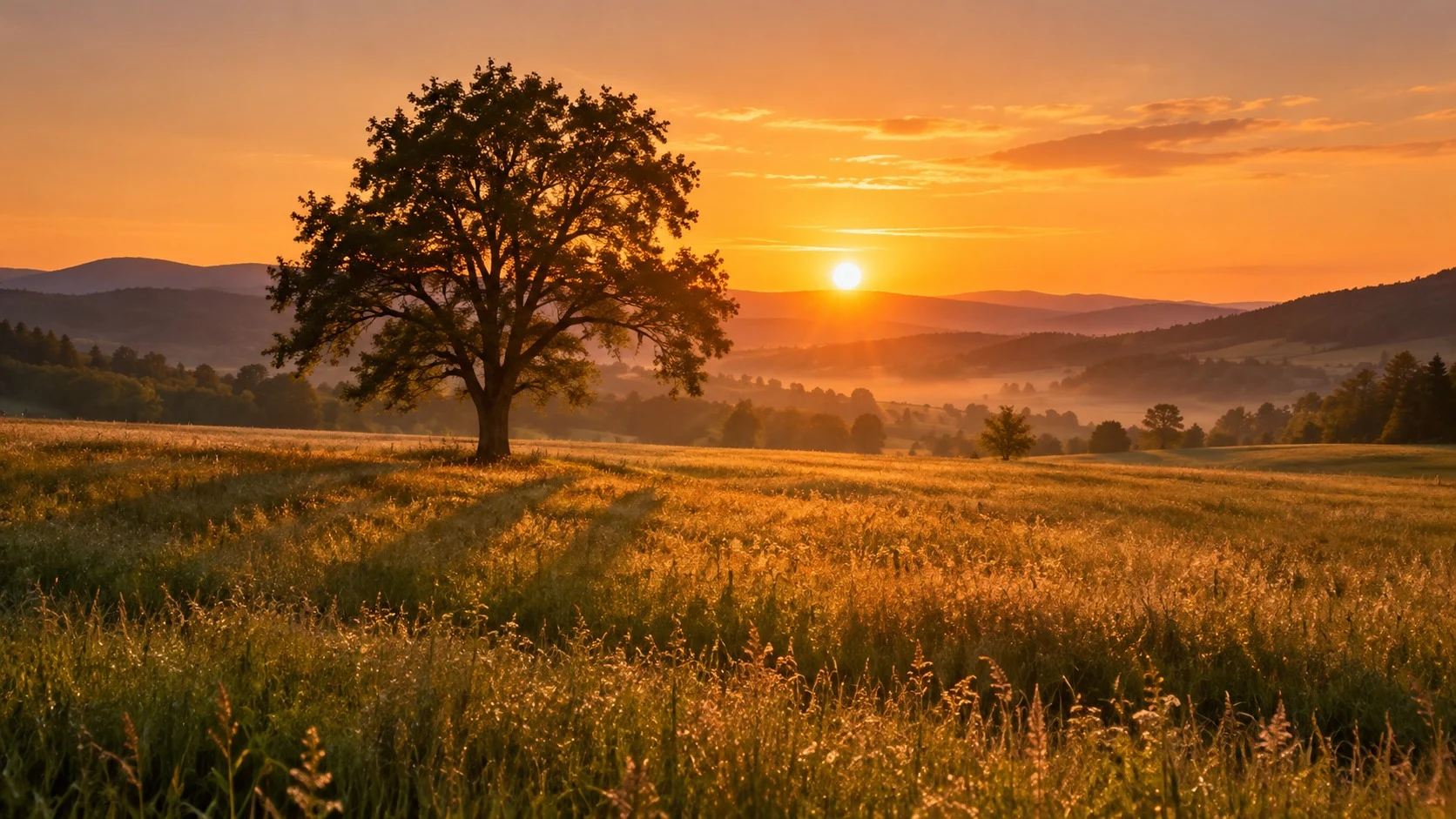
When the sun comes down close to the horizon, sunlight has to pass through a much thicker layer of atmosphere than at midday before it reaches us. Along the way, blue light, which has a short wavelength, collides with air molecules and scatters in all directions, while red and orange light, which have longer wavelengths, remain in relatively large amounts. That is why sunlight during magic hour takes on warm colors.
(1) Color temperature
The color of light is expressed as color temperature, measured in kelvins (K). Midday sunlight is about 5,500K and looks white, but during magic hour it drops to about 3,500K, and right around sunrise or sunset it falls as low as about 2,000K, giving it a strong reddish tint.
(2) Soft shadows and low contrast
Because direct sunlight weakens and a larger share of the light comes diffused from the sky, the difference between bright and dark areas shrinks. Faces are less likely to get the deep shadows or blown-out white highlights they do at midday. That is also why it is the time of day portrait photographers like best.
(3) Long shadows
With the sun sitting low, shadows stretch out long. These shadows bring out the three-dimensional shape of objects and add depth to the frame.
Magic Hour in Film History
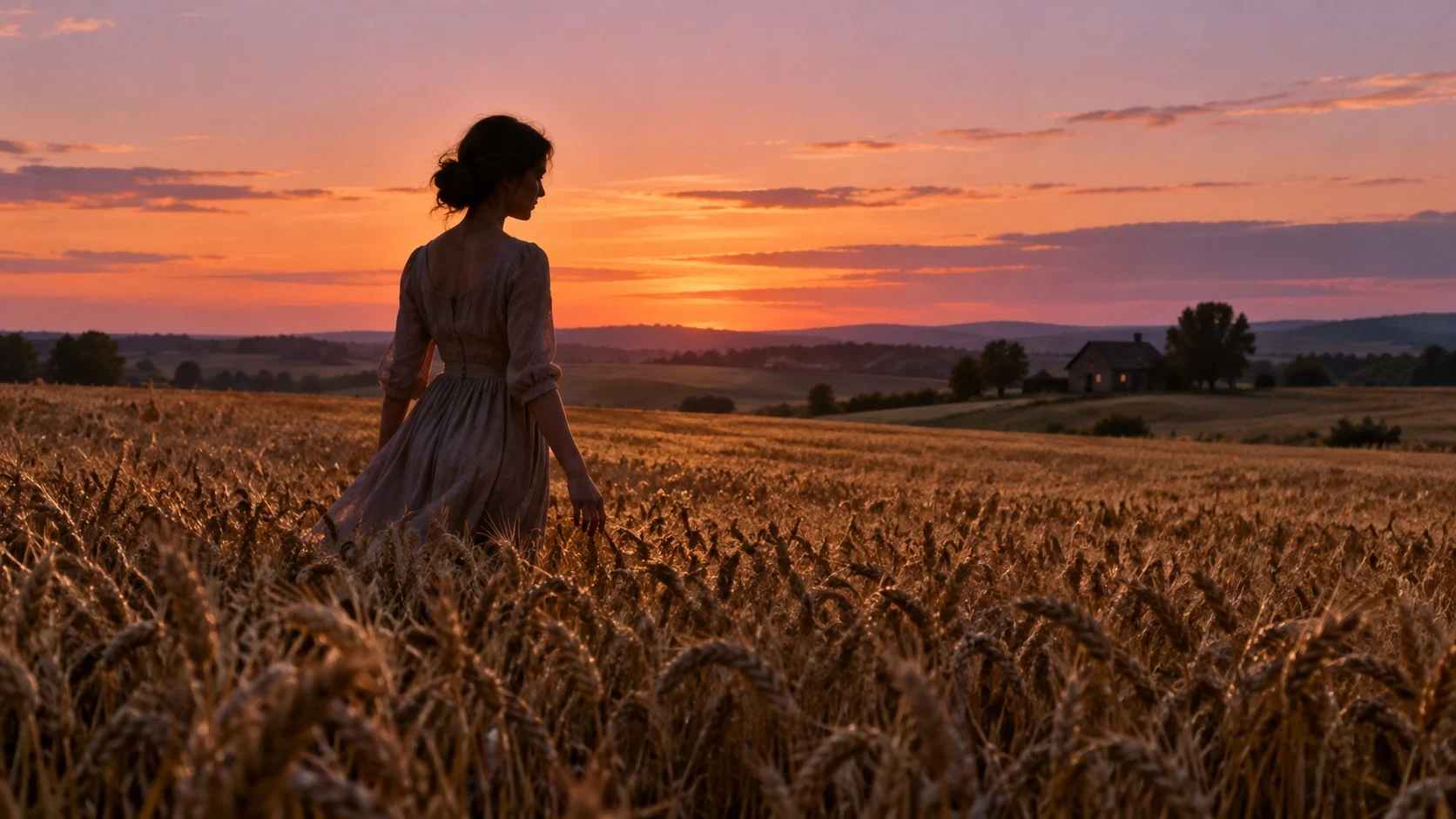
One film that always comes up in any discussion of magic hour is director Terrence Malick’s 1978 film Days of Heaven. Cinematographer Néstor Almendros kept artificial lighting to a minimum and shot many scenes around sunset and just after the sun went down.
The two drew inspiration from the look of silent films, which mostly relied on natural light, and from paintings by artists such as Johannes Vermeer and Edward Hopper. On set, Almendros often asked the crew to turn off the lights they had prepared, and some crew members used to elaborate lighting grew frustrated. The scenes in which figures appear as silhouettes against the sky after sunset came out of this insistence.
Almendros said that the term magic hour was something of a euphemism, because in reality it lasts not an hour but 25 minutes at most. The time they could shoot each day shrank to a little over 20 minutes, but the result was scenes in which the wheat fields and sky look like paintings. The film won the Academy Award for Best Cinematography and is still counted among the most beautifully photographed films ever made.
Shooting Strategies for Catching a Short Window
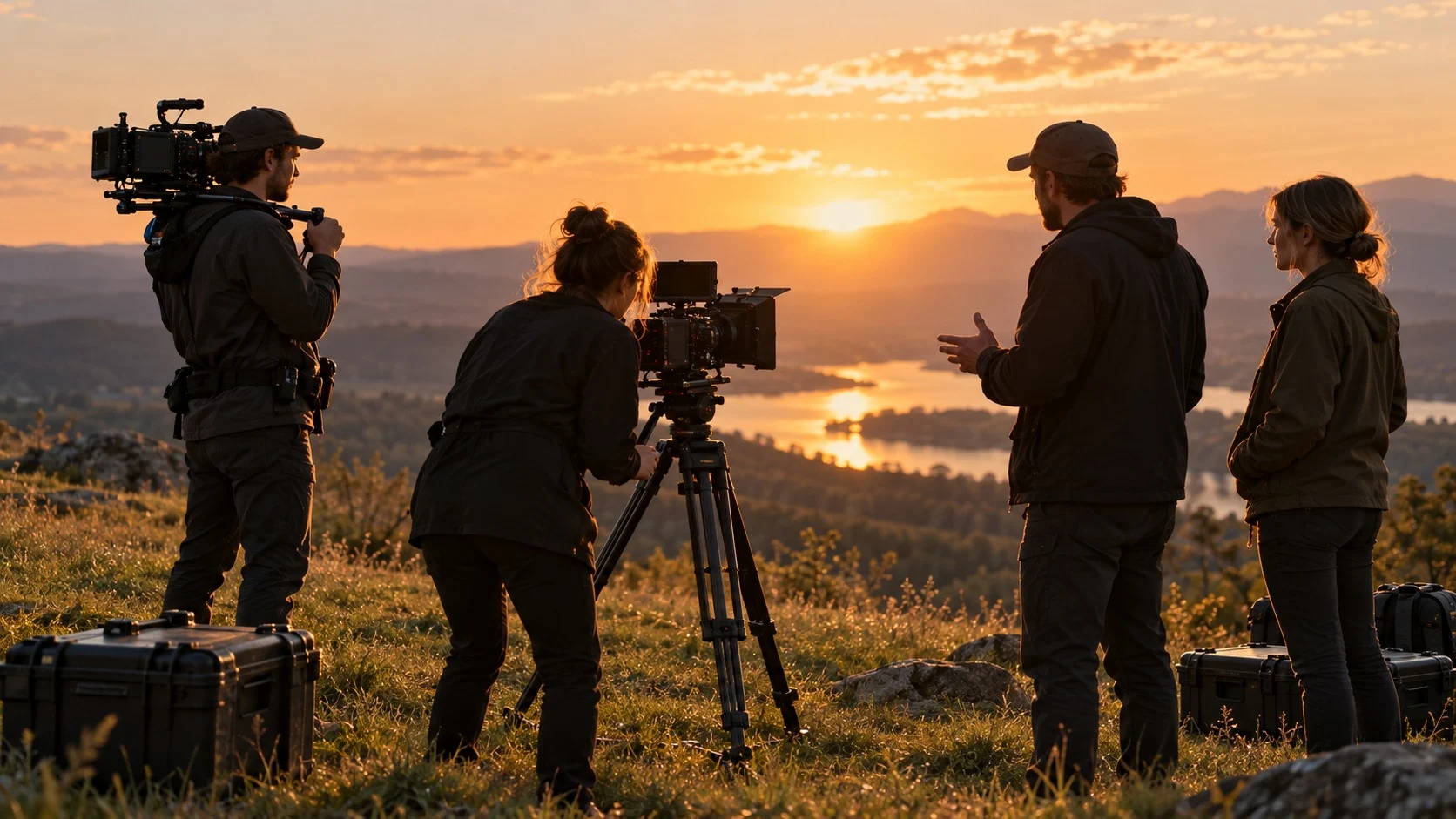
How long magic hour lasts depends on the season and latitude. The closer you are to the equator, the faster the sun passes through and the shorter the window; the closer you are to the poles, the longer it lasts. To avoid missing such brief and fickle light, film crews use several methods.
- Thorough rehearsal: Actors’ movements and camera moves are worked out before the light arrives, and shooting begins the moment it does.
- Sunrise and sunset calculations (sun tracking): The times and directions of sunrise and sunset are calculated in advance to decide on shooting locations and camera directions.
- Multiple cameras (multi-camera setup): Because there are few chances for a retake, the scene is captured from several angles at once.
- Shooting over several days (split shooting): If a scene cannot be finished in one day, it is shot in pieces at the same time of day over several days, and the colors are matched in editing so the shots can be joined together.
The time after the sun has fully set, when the sky is tinged a deep blue, is called “blue hour.” At this time the brightness of the sky becomes similar to that of streetlights and lit building windows, which makes it a good time for capturing a city’s night view naturally.
How to Capture Magic Hour in Everyday Life
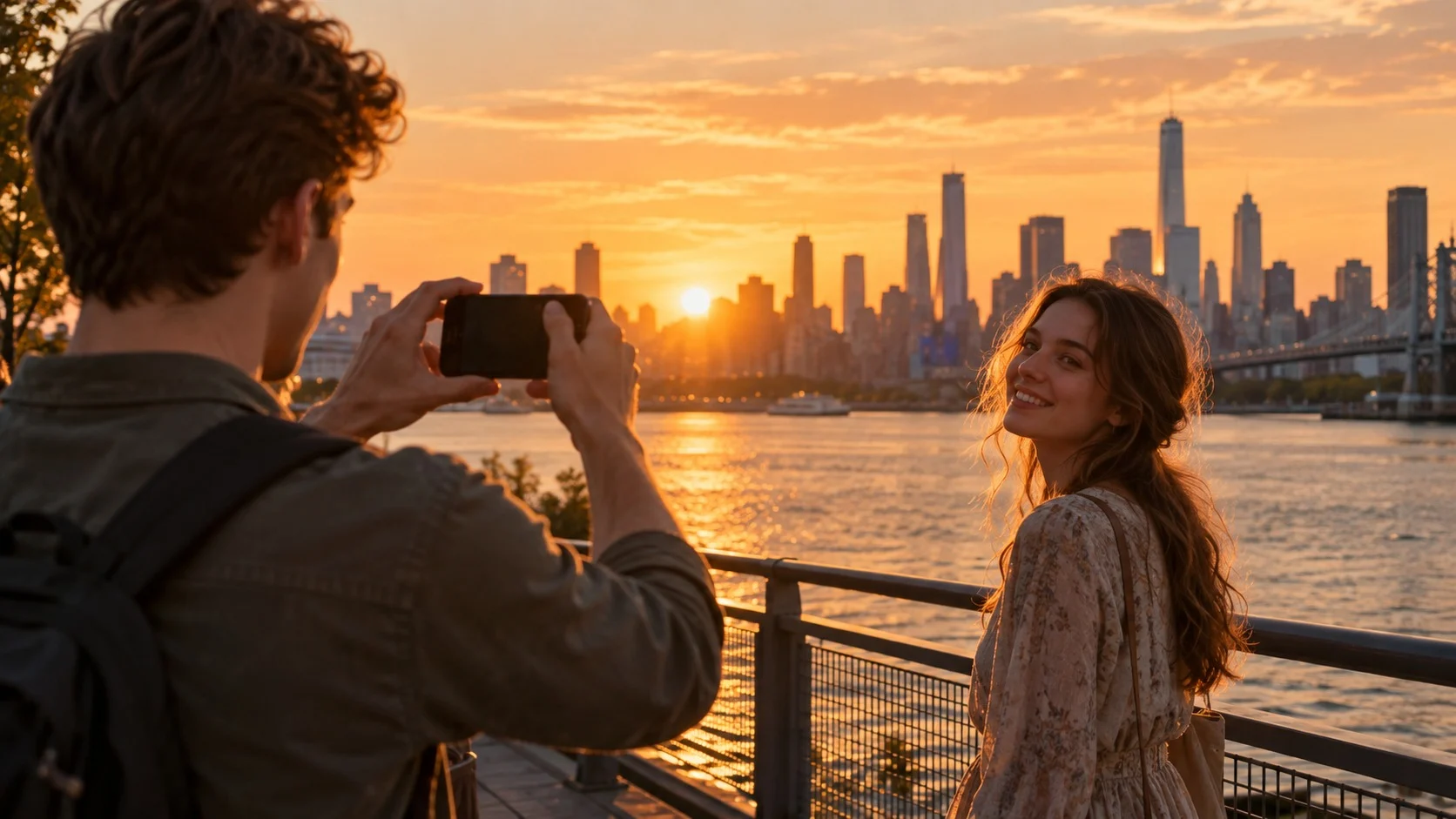
Magic hour is not just for film crews. Even with nothing more than a phone, you can enjoy its effects to the full.
(1) Check the time in advance
Look up the sunset time in a weather app or map app, and arrive at the location about 30 minutes to an hour earlier.
(2) Use the direction of the light
If you shoot with the sun behind you, faces glow evenly in golden light; if you shoot facing the sun, you can get backlit photos in which the edges of the hair glow, or silhouette photos.
(3) Cut back on automatic correction
If you leave white balance on auto, the camera may turn warm colors white. Lowering the exposure slightly keeps the colors of the sky richer.
(4) Keep waiting after the sun goes down
Even after the sun has dropped below the horizon, the sky keeps changing for a while, from orange to pink to purple. Instead of leaving as soon as the sun sets, try capturing the changing colors one after another right through to blue hour, and you can get several photos with completely different moods from the same spot.
Magic hour is the time that shows most clearly that light creates stories. The same place can convey completely different feelings depending on when you photograph it.
Good scenes sometimes come less from expensive equipment than from the patience to wait for the right moment. Recognizing and waiting for the briefest moment of light in the day is the first step toward images that move people.