Fog is a weather phenomenon frequently encountered in everyday life and an important factor that limits visibility and greatly affects transportation safety. In particular, fog can lead to fatal accidents during activities such as driving or aircraft operations, making caution necessary. However, fog does more than simply cause inconvenience; it affects the natural environment and human activities in various ways.
This material aims to analyze these various aspects of fog in depth and serve as a foundation for minimizing its effects and exploring better ways to respond.
The Definition of Fog and Its Environmental Importance

The Definition of Fog
Fog is a phenomenon in which water vapor condenses near the Earth's surface, leaving small water droplets suspended in the air. This phenomenon occurs when moisture in the atmosphere reaches a supersaturated state, and it forms as water droplets or ice particles float in the layer of air near the surface. Fog varies in thickness and density depending on weather conditions and is defined as fog when visibility is less than 1 km. This serves as a very important indicator for weather observations and transportation safety.
Fog's Environmental Role and Effects on Climate
Fog plays an important role in atmospheric conditions and climate change. It contributes to local climate regulation and acts as a source of atmospheric moisture, helping stabilize the climate in certain areas. The frequency and duration of fog are used as useful indicators for detecting climate change, providing important data for long-term climate change predictions. Fog also affects the energy balance in the atmosphere, causing temporary temperature changes by regulating the amount of solar radiation that reaches the Earth's surface.
Fog and Air Pollution
Fog also affects the movement and distribution of air pollutants. Pollutants in the atmosphere can be absorbed by or condense onto fog particles and be deposited on the Earth's surface, which can help improve air quality. At the same time, however, pollutants may become concentrated by fog and have harmful effects on the environment. These processes can inhibit or promote the spread of air pollution and are important factors in understanding fog's environmental effects.
Fog and Ecosystems
Fog also has important effects on ecosystems. For example, some plants can survive by obtaining moisture from fog, which is an important survival strategy, particularly in dry regions. Fog can also contribute to maintaining biodiversity in certain areas and plays a role in ensuring ecosystem stability. However, frequent fog can also negatively affect the structure and functioning of ecosystems.
Fog's Effects on Human Activities
Fog also directly affects people's daily lives and economic activities. In transportation in particular, fog limits visibility and increases the risk of accidents, potentially causing safety problems in various fields, including aircraft operations, maritime transport, and road traffic. Fog also affects agriculture and can have positive or negative effects on crop growth. For these reasons, understanding how fog forms and what effects it has is essential to improving the efficiency and safety of human activities.
Fog is more than a weather phenomenon that limits visibility; it is an important factor with various effects across Earth science, ecology, and human activities. By gaining a deeper understanding of fog's formation and effects, we can explore ways for people and the natural environment to coexist harmoniously. This will play an important role in responding to climate change, protecting the environment, and creating safe living environments.
How Fog Forms and Its Main Formation Conditions
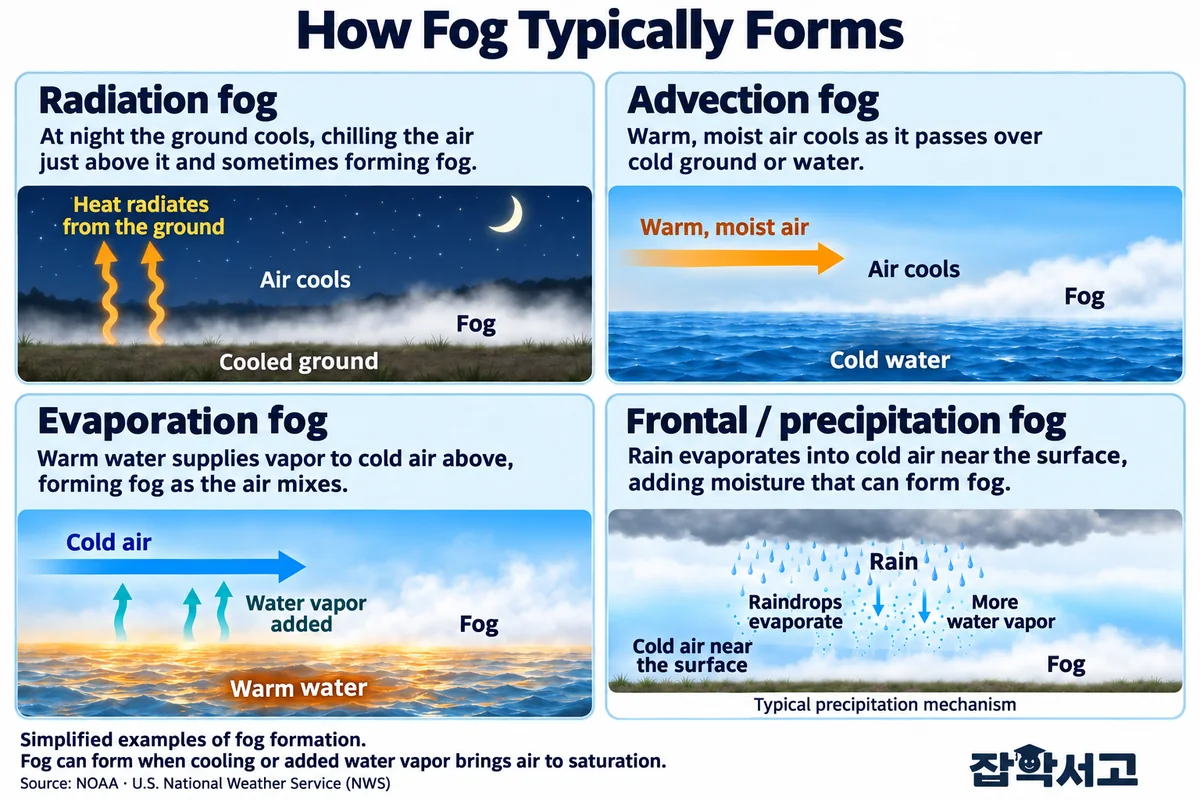
How Fog Forms
Fog forms when water vapor in the atmosphere condenses into small water droplets. This process mainly occurs when air cools and reaches its dew point. The dew point is the temperature at which air becomes saturated and water vapor begins to condense into water droplets. When air becomes saturated, water vapor in the atmosphere turns into water droplets, forming fog. This phenomenon occurs frequently at night, especially when temperatures drop rapidly.
Humidity and Fog
Humidity is one of the main conditions for fog formation. The higher the relative humidity, the more easily air becomes saturated, increasing the likelihood of fog forming. In particular, relative humidity rises as temperatures fall at night, causing fog to occur frequently. Fog is difficult to form when relative humidity is low, but in highly humid environments, water vapor in the air readily condenses to form fog.
The Roles of Wind and Terrain
Wind strength also has an important effect on fog formation. Light winds reduce air mixing and allow air near the Earth's surface to become saturated more quickly. Strong winds rapidly mix the air and hinder fog formation, while light winds allow air near the surface to remain stable, making fog more likely to occur.
Terrain and surface conditions also have a major effect on fog formation. For example, in mountainous regions, air rises along the foothills and cools, causing fog to occur frequently. Fog that forms as moist air rises along a slope and cools in this way is called “upslope fog.” In coastal areas, by contrast, air over a warm sea surface moves toward cold land and cools, forming 'coastal fog.'
Temperature Inversions and Fog
Temperature inversions also play an important role in fog formation. A temperature inversion is a phenomenon in which temperature rises with increasing altitude, contrary to the usual atmospheric conditions in which temperature generally falls as altitude increases. This phenomenon mainly occurs as the Earth's surface cools rapidly at night, causing air near the surface to become cold while the air above it remains relatively warm. Under these conditions, air near the surface readily becomes saturated, making fog more likely to form.
Air Pollution and Fog
Pollutants in the atmosphere can also affect fog formation. When many fine particles are present in the atmosphere, these particles act as nuclei on which water vapor condenses, increasing the likelihood of fog forming. This is associated with 'smog,' which mainly occurs in urban areas. Smog is fog combined with air pollutants and can have harmful effects on health. This smog phenomenon results from the combined effects of fog and air pollution.
Seasonal Changes and Fog
Seasonal changes also have a major effect on fog formation. Fog occurs frequently in autumn and winter because of low temperatures and high humidity, whereas in summer, high temperatures lower relative humidity and fog occurs less often. These seasonal changes are also closely linked to the climate characteristics of particular areas, and fog occurrence patterns vary from region to region.
Various factors interact in the formation of fog. The condensation of atmospheric water vapor, relative humidity, wind strength, terrain, temperature inversions, air pollution, and seasonal changes all play important roles in fog formation. Understanding these factors together allows us to gain a deeper understanding of how fog forms and the conditions under which it forms. This can provide an important foundation for weather forecasting and the creation of safe living environments.
Examples of Fog in Different Environments

Fog in Urban Areas
In urban areas, air pollution caused by traffic and industrial activities has a major effect on fog formation. Pollutants such as fine particulate matter act as condensation nuclei for water vapor, increasing the frequency and density of fog. This fog is called 'smog' and appears in a form combined with air pollutants, having very harmful effects on health. Smog is a particularly serious problem in large cities and can cause various health problems, including respiratory diseases and cardiovascular problems. In addition, reduced visibility caused by smog increases the risk of traffic accidents.
Fog in Mountainous Regions
In mountainous regions, temperature inversions occur frequently, leading to fog formation. Cold air descends along the foothills while warm air remains at higher elevations, creating a temperature inversion. This phenomenon is known as 'mountain fog' and greatly affects hiking and traffic on mountain roads. Mountain fog can vary in density and thickness depending on altitude, and visibility becomes extremely limited when the fog is dense, increasing the risk of accidents. Mountain fog also acts as a source of moisture for mountain ecosystems.
Fog in Coastal Areas
In coastal areas, 'coastal fog' frequently occurs because of temperature differences between the sea and the land. Air over a warm sea surface moves toward cold land and cools, forming fog. Coastal fog mainly occurs in the morning and evening and greatly affects marine ecosystems and fishing activities. By blocking solar radiation, coastal fog regulates the ecological environment of marine organisms and helps maintain a consistent sea temperature. At the same time, however, it can limit visibility during navigation and increase the risk of maritime accidents.
Fog in Rural Areas
In rural areas, 'radiation fog' mainly occurs because of radiative cooling. As the Earth's surface cools rapidly at night, air near the surface reaches its dew point and fog forms. Radiation fog affects agricultural activities, and fog can reduce crop quality, particularly during the harvest season. However, fog can also benefit crops by maintaining soil moisture. In addition, fog in rural areas mainly occurs in the morning and, together with dew, supplies moisture to crops.
Fog Around Lakes and Rivers
Around lakes and rivers, 'water-surface fog' occurs when the water surface temperature is lower than the air temperature. Warm air passing over a cold water surface cools, causing water vapor to condense and form fog. This fog greatly affects water transport and can increase the risk of accidents by limiting visibility. Water-surface fog can also cause inconvenience during activities such as fishing and water sports. Water-surface fog is closely associated with changes in water quality and plays an important role in the evaporation of water from lakes and rivers.
Fog in Desert Regions
Although rare, fog can occur in desert regions under certain conditions. It mainly forms because of rapid nighttime temperature drops and light winds and is called 'desert fog.' Desert fog is associated with low humidity and can act as a water source for desert ecosystems. However, fog in deserts is very rare, and even when it occurs, it dissipates within a short time, limiting its effects. Desert fog can be an important source of moisture for desert organisms, but its infrequent occurrence means that its ongoing influence is minimal.
Fog in different environments varies greatly depending on local climate conditions and terrain characteristics. In urban, mountainous, coastal, rural, lake, river, and desert environments, fog has distinctive formation conditions and characteristics, resulting in various effects on local communities and ecosystems. Understanding the occurrence and characteristics of this fog can provide important information for regional climate predictions and environmental management.
Fog's Effects on Ecosystems and Human Activities
Effects on Ecosystems
Fog plays an important role in ecosystems. In particular, fog acts as an essential source of moisture for plants. In dry regions, fog supplies the water essential for plant survival, and this is especially pronounced in mountainous and desert regions. Moisture supplied by fog reduces plant transpiration, helping improve plant growth and survival rates. Fog also forms water droplets directly on plant leaves and stems, serving as an important survival resource in environments where water is scarce.
Fog is also an important factor in animal survival. Many animals obtain water from fog; insects and small mammals in particular obtain moisture from water droplets condensed from fog. This plays an important role in helping animals survive in water-scarce regions. In addition, fog regulates habitat humidity, providing an environment in which various animals can adapt and survive.
Effects on Transportation
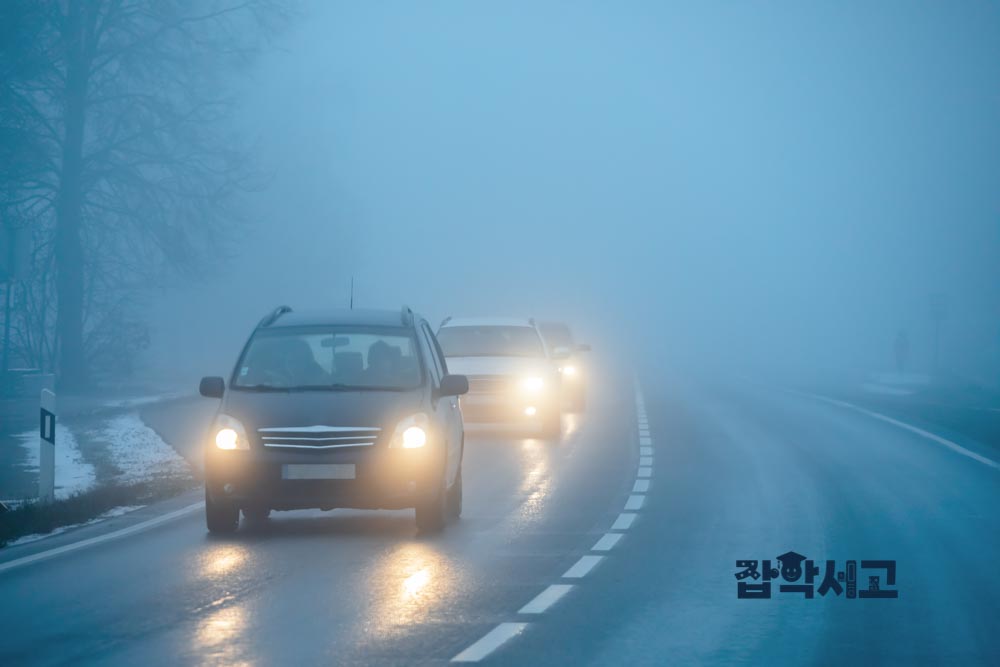
Fog greatly affects human life and activities, particularly transportation. Fog limits visibility, causing serious disruptions to road traffic, aviation, and maritime transport. Limited visibility increases the risk of traffic accidents, making additional measures necessary for safe operations. Traffic management and safety measures are essential, especially in areas where fog occurs frequently. In these areas, fog warning systems, lighting equipment, and various measures to ensure visibility should be considered.
Effects on Agriculture
Fog is also an important variable in agriculture. While fog supplies the moisture needed for crop growth, excessive moisture can promote diseases and pests. Management measures to minimize the effects of fog are therefore important in agriculture. For example, establishing appropriate ventilation and drainage systems can prevent crop damage caused by excessive moisture. In areas with frequent fog, productivity can also be maintained by adjusting crop variety selection and cultivation methods.
Effects on Architecture and Urban Planning
Fog also has important effects on architecture and urban planning. In areas where fog occurs frequently, building design and placement should be considered carefully. For high-rise buildings, it is necessary to limit building height to reduce the loss of visibility caused by fog. Appropriate lighting and signs should also be installed on roads and transportation facilities to ensure safe operations when fog occurs. Urban planning requires designs that prioritize traffic flow and safety while taking the frequency of fog into account.
Effects on Health
Fog can also affect human health. In particular, polluted fog such as smog can cause respiratory diseases, posing a significant risk to children, older adults, and people in poor health. Air quality management and health protection measures are essential in areas where fog occurs frequently. For example, using air purifiers, limiting outings, and policy efforts to reduce air pollutant emissions are required. These measures can help protect health and improve overall quality of life.
Fog is an important weather phenomenon with various effects on ecosystems and human activities. In ecosystems, it plays an important role in the survival of plants and animals, while in human society, it affects various fields, including transportation, agriculture, architecture, and health. It is therefore necessary to understand fog's effects in depth and develop effective measures based on that understanding. These efforts will provide an important foundation for responding to climate change, creating safe living environments, and achieving sustainable development.
Fog is more than a weather phenomenon that limits visibility; it is an important factor with various effects across Earth science, ecology, and human activities. By understanding its formation and the conditions involved, we can minimize fog's negative effects and explore ways for nature and people to coexist harmoniously. Research into and understanding of fog will provide an important foundation for responding to climate change, protecting the environment, and creating safe living environments.