Earthquakes are among the most unpredictable and destructive natural disasters. Originating within the Earth, earthquakes have caused immense loss of life and property throughout human history and continue to have serious impacts in many regions today.
This article will examine in depth the causes and mechanisms of earthquakes, their key elements, countries where they frequently occur, the earthquake situation in South Korea, and methods of earthquake prediction and preparedness.
We hope that gaining a better understanding of earthquakes and learning appropriate ways to prepare will help you stay safe.
The Causes and Mechanisms of Earthquakes
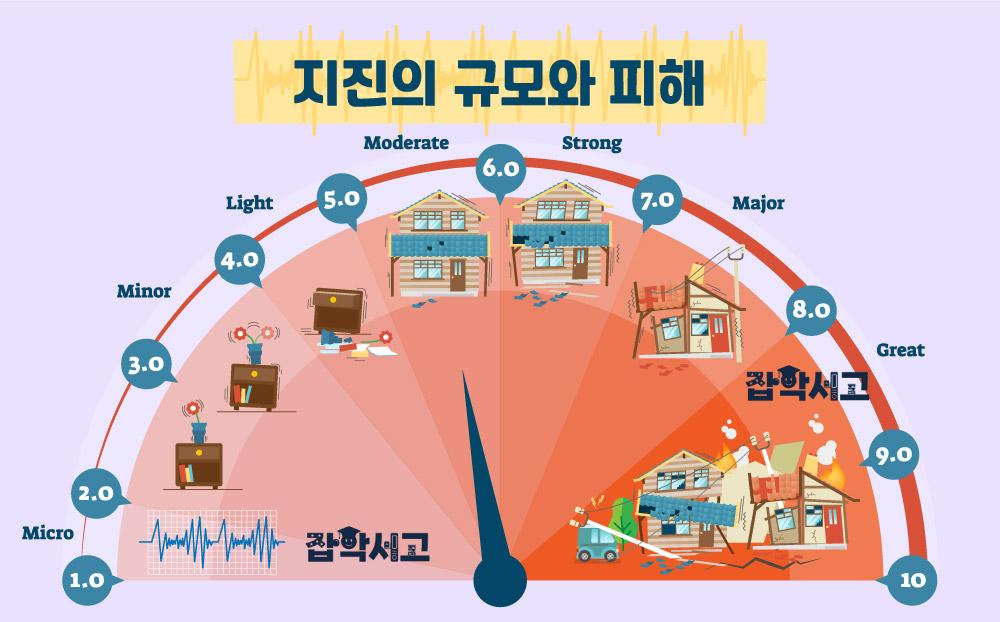 Earthquake Magnitude and Damage
Earthquakes are natural phenomena that occur within the Earth, primarily caused by movements of the Earth's crust. The main causes of earthquakes are as follows.
1. Plate Tectonic Theory (Plate Tectonics)
The Earth's surface consists of several enormous plates (tectonic plates), which move while in contact with one another. Collisions, separation, and sliding at plate boundaries are the main causes of earthquakes. Strong earthquakes occur particularly during the buildup and release of stress at plate boundaries.
2. Fault Activity (Fault Activity)
A fault is a fracture in the Earth's crust, and an earthquake occurs when the two sections of the crust move relative to each other along this fracture. Faults are broadly classified into transform faults (transform fault), reverse faults (reverse fault), and normal faults (normal fault), and earthquake characteristics vary according to the type of fault.
3. Volcanic Activity (Volcanic Activity)
Earthquakes can occur because of pressure changes when a volcano erupts or magma rises toward the surface. These earthquakes occur mainly around volcanoes and are closely related to volcanic activity.
4. Human-Caused Factors (Induced Seismicity)
Human activities can trigger earthquakes. For example, large-scale dam construction, the extraction of underground resources, groundwater extraction, and geothermal power generation can cause earthquakes by altering stress in the Earth's crust.
How Earthquakes Work
Earthquakes occur when energy within the Earth is suddenly released. This process unfolds as follows.
1. Stress Buildup (Stress Accumulation)
As the Earth's crust moves, stress accumulates around plate boundaries or faults. This stress increases over time.
2. Stress Release (Stress Release)
When accumulated stress exceeds a critical threshold, the Earth's crust suddenly moves and releases energy. This energy propagates in the form of seismic waves (seismic waves).
3. Seismic Wave Propagation (Propagation of Seismic Waves)
The released energy is converted into seismic waves that propagate through the Earth's interior and along its surface. The main seismic waves include P waves (Primary wave), S waves (Secondary wave), and surface waves (Surface wave), each with different speeds and characteristics.
4. Earthquake Occurrence (Seismic Event)
As seismic waves reach the Earth's surface, the ground shakes, causing various forms of earthquake damage, including building collapses and cracks in the ground.
Thus, earthquakes result from complex processes occurring within the Earth, and understanding these processes allows us to better grasp the mechanisms that cause earthquakes.
What Are the Elements of an Earthquake?
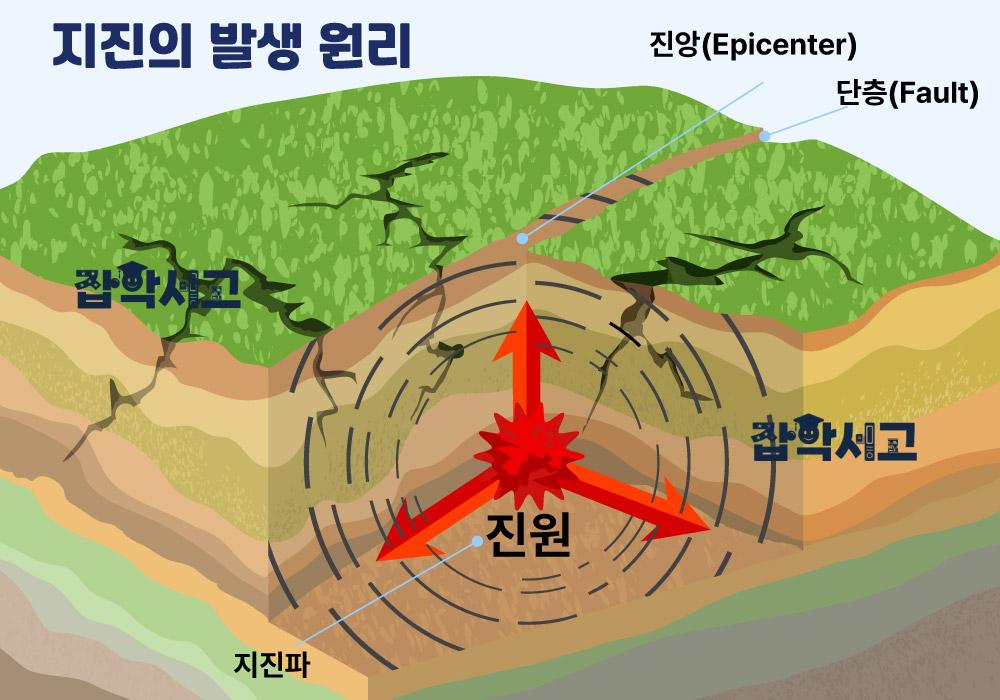 How Earthquakes Occur
Earthquake elements refer to the various components that are important for understanding how earthquakes begin and unfold. These elements are essential for identifying earthquake characteristics and assessing their strength and impact. The main earthquake elements are as follows.
1. Focus (Point of Origin) and Epicenter (Epicenter)
- Focus (Hypocenter): The underground point where an earthquake actually occurs. It is the location within the Earth's crust where seismic waves originate, and earthquakes are classified by depth as shallow-focus earthquakes (0-70 km), intermediate-focus earthquakes (70-300 km), or deep-focus earthquakes (300-700 km).
- Epicenter (Epicenter): The point on the Earth's surface directly above the focus. It is the first point affected by an earthquake, and the location of an earthquake is commonly expressed in terms of its epicenter.
2. Magnitude (Magnitude)
Magnitude is a quantitative measure of an earthquake's size or the amount of energy it releases. The most widely used magnitude scales are the Richter scale (Richter Scale) and the moment magnitude scale (Moment Magnitude Scale). For every increase of 1 in magnitude, the amount of energy released increases by approximately 32 times.
3. Intensity (Intensity)
Intensity is a measure of the degree of shaking produced by an earthquake at a particular location. It varies according to not only the size of the earthquake but also the distance from its location and the conditions of the Earth's surface. A representative intensity scale is the Mercalli intensity scale (Mercalli Intensity Scale).
4. Seismic Waves (Seismic Waves)
The energy released during an earthquake propagates in the form of waves, which are mainly divided into P waves (Primary wave), S waves (Secondary wave), and surface waves (Surface wave).
- P waves: The fastest-propagating compression waves, which can pass through both solids and liquids.
- S waves: These propagate more slowly than P waves and can pass only through solids.
- Surface waves: These propagate along the Earth's surface and are primarily responsible for severe damage. Representative surface waves include Rayleigh waves (Rayleigh wave) and Love waves (Love wave).
5. Faults (Fault)
A fault is one of the main causes of earthquakes and refers to a location where the Earth's crust breaks or slips. Faults are classified as transform faults, normal faults, or reverse faults according to their movement. Fault characteristics are closely related to the mechanisms that cause earthquakes.
6. Periodic Recurrence and Aftershocks (Aftershocks)
Smaller earthquakes that occur after a main earthquake are called aftershocks. Aftershocks occur as the Earth's crust seeks a new equilibrium following the main earthquake, and their magnitude and frequency decrease over time.
Thus, earthquake elements play an important role in understanding and analyzing the occurrence and effects of earthquakes. These elements are closely interconnected, and a comprehensive analysis allows us to accurately identify earthquake characteristics and impacts.
Which Countries Frequently Experience Earthquakes?
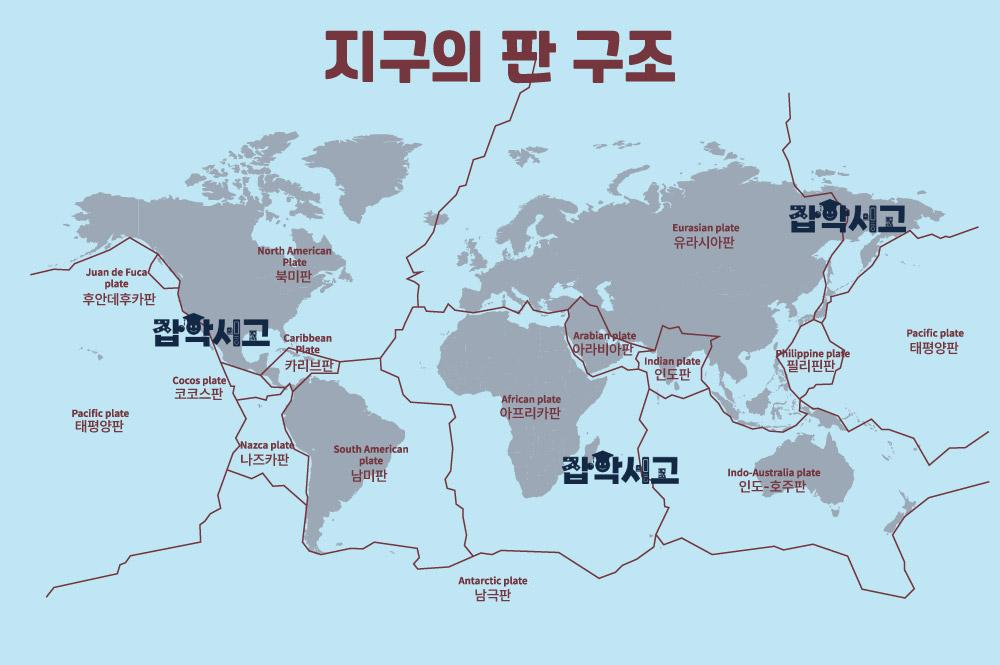 The Earth's Plate Structure
Countries where earthquakes occur frequently are closely associated with the Earth's plate structure. These countries are located at major plate boundaries and therefore experience frequent seismic activity. The main countries with active seismic activity are as follows.
1. Japan
Japan is located at the boundaries of the Pacific Plate, North American Plate, Eurasian Plate, and Philippine Sea Plate, so earthquakes occur very frequently. In particular, the “Japan Trench” and “Nankai Trough” are known as major earthquake zones. Japan has experienced numerous large earthquakes throughout its history and actively uses the latest technology for earthquake prediction and preparedness.
2. Indonesia
Indonesia is located in the circum-Pacific seismic belt, known as the “Ring of Fire,” and has very active seismic and volcanic activity. Located where several plates collide, it is a region that has experienced large earthquakes such as the Aceh earthquake on Sumatra (2004).
3. Chile
Chile is located at the boundary where the South American Plate and the Nazca Plate collide. The Valdivia earthquake (1960), one of the strongest earthquakes in the world, occurred in Chile, and this region continues to experience powerful earthquakes.
4. Mexico
Mexico is located at the boundary between the North American Plate and the Cocos Plate, resulting in frequent seismic activity. Mexico City is an area where geological characteristics can make earthquake damage more severe, with the great Mexico City earthquake of 1985 being a representative example.
5. New Zealand
New Zealand is located at the boundary between the Indo-Australian Plate and the Pacific Plate, resulting in frequent earthquakes. The Christchurch earthquake (2011) is one of the representative large earthquakes that have occurred in New Zealand.
6. Turkey
Turkey is located at the boundary between the Anatolian Plate and the Eurasian Plate, so earthquakes occur frequently. In particular, the North Anatolian Fault is a very active fault, and the Izmit earthquake of 1999 caused extensive damage.
Additional Regions with Frequent Earthquakes
- New Zealand: Located in the circum-Pacific seismic belt, it has active seismic activity on both the North Island and the South Island.
- Italy: Located at the boundary between the Eurasian Plate and the African Plate, it experiences frequent earthquakes and volcanic activity.
- Haiti: Located at the boundary between the Caribbean Plate and the North American Plate, it suffered extensive damage from the earthquake of 2010.
Most countries where earthquakes occur frequently are located at plate boundaries, and these regions often experience powerful earthquakes. These countries have thorough earthquake preparedness and disaster management systems in place and continue to conduct research and develop preparedness measures to reduce earthquake risks.
Characteristics of Earthquake-Prone Countries
As earthquake-prone countries, these nations each have different geographical and social characteristics, and each adopts distinctive preparedness methods as follows.
- Japan: Establishes infrastructure with advanced earthquake detection systems and excellent seismic design. Japan's education system conducts thorough earthquake evacuation drills from an early age.
- Indonesia: Develops earthquake-resistant buildings by combining traditional construction techniques with modern technology. Community-centered disaster response training is actively conducted.
- Chile: Invests heavily in earthquake-related scientific research and education so that its citizens can respond quickly when an earthquake occurs.
- Mexico: Encourages rapid evacuation through earthquake notification systems and pursues policies that strengthen seismic design, particularly for high-rise buildings.
- New Zealand: Establishes a framework for cooperation between the government and the private sector to enable rapid recovery after earthquakes. It also runs ongoing public education programs to prepare for natural disasters.
Thus, countries where earthquakes occur frequently strive to minimize earthquake damage through various preparedness methods suited to their characteristics. The examples of these countries can deepen our understanding of the importance of earthquake preparedness.
Earthquakes in South Korea
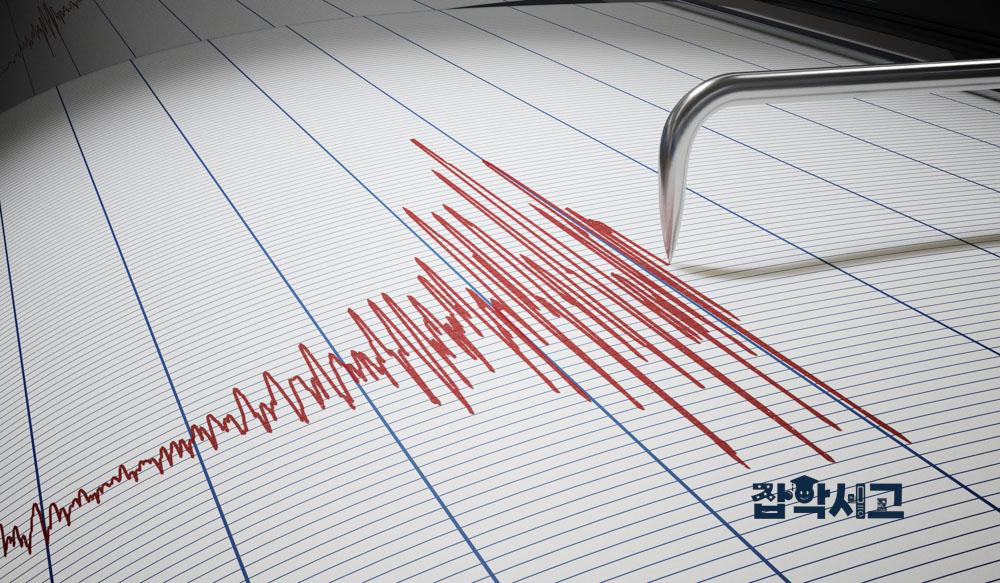 What Is the Earthquake Situation in South Korea?
South Korea is known as a region with a relatively low frequency of earthquakes, but the recent increase in their occurrence has heightened interest and the need for preparedness. Earthquakes in South Korea can be examined from the following perspectives.
1. Geological Background
South Korea is located within the Eurasian Plate, so it experiences relatively few earthquakes originating at plate boundaries. However, several fault zones exist within South Korea, and earthquakes can occur along these zones.
2. Major Earthquake Examples
- Gyeongju earthquake (2016): A magnitude 5.8 earthquake recorded as one of the largest ever observed in South Korea. This earthquake caused considerable damage in Gyeongju and the surrounding areas.
- Pohang earthquake (2017): A magnitude 5.4 earthquake that caused building damage and human casualties. The possibility that this earthquake was influenced by a geothermal power plant was raised, sparking considerable controversy.
3. Earthquake Monitoring and Research
South Korea is building a nationwide seismometer network to monitor earthquakes. The Korea Meteorological Administration and the Korea Institute of Geoscience and Mineral Resources (KIGAM) serve as the main earthquake monitoring and research institutions, collecting and analyzing earthquake data.
4. Seismic Design and Building Standards
Following the Gyeongju earthquake, seismic design standards for buildings were strengthened. South Korea's current seismic design standards are set to withstand earthquakes of up to magnitude 6.5 and apply to major public buildings and key facilities such as schools and hospitals.
5. Earthquake Preparedness Education and Training
The government and local authorities conduct various educational programs and evacuation drills for earthquake preparedness. For example, “Earthquake Safety Week” is held in the 9th month of each year to teach the public how to respond to earthquakes.
6. Geothermal Power Generation and Human-Induced Earthquakes
Following the Pohang earthquake, discussions about the possibility that human activities such as geothermal power generation can trigger earthquakes became more active. Accordingly, regulations and safety management for geothermal power plant operations are being strengthened.
7. Public Awareness and Response
Public awareness of earthquakes is increasing, and more households are preparing earthquake emergency supplies. The government also promptly delivers information when earthquakes occur through its earthquake disaster text message service.
Thus, earthquakes in South Korea have begun to attract attention in recent years, and related preparedness efforts and research are being actively pursued. These efforts play an important role in minimizing damage when earthquakes occur and protecting public safety.
Earthquake Prediction and Preparedness Methods
 How Should We Respond When an Earthquake Occurs?
Earthquake prediction and preparedness are very important factors in minimizing earthquake damage. Although earthquakes are natural disasters that are difficult to predict, various methods are being developed through scientific research and technology to reduce their risks. The following are key points concerning earthquake prediction and preparedness.
1. Earthquake Prediction
- Short-term prediction: Accurate short-term earthquake prediction is currently difficult. Technology that can precisely predict when and where an earthquake will occur has not yet been developed. However, signals indicating an increased likelihood of an earthquake, such as chemical changes in groundwater, small foreshocks (foreshocks), and changes in animal behavior, are being studied.
- Long-term prediction: Considerable progress has been made in predicting areas where earthquakes are likely to occur over the long term. Geological research and historical data are used to assess earthquake risks in specific regions, and the probability of an earthquake is calculated on that basis.
- Real-time monitoring: Seismic activity is monitored in real time through seismometer networks installed worldwide. These data play an important role in providing rapid warnings immediately after an earthquake occurs.
2. Earthquake Preparedness
- Seismic design: Seismic design for buildings is essential for reducing earthquake damage. Designing and constructing buildings and infrastructure to meet seismic standards prevents structural collapse when an earthquake occurs. Seismic design takes into account a building's shape, materials, and structural characteristics.
- Disaster response plans: The government and local authorities develop plans for responding rapidly when earthquakes occur and conduct regular drills. These plans include establishing evacuation routes, preparing emergency supplies, and providing emergency medical services.
- Education and training: Earthquake preparedness education is very important for improving the survival of individuals and communities when an earthquake occurs. Schools, workplaces, and local communities conduct regular earthquake evacuation drills and teach people how to respond to earthquakes.
- Warning systems: Warnings are issued promptly when earthquakes occur to give people time to evacuate. Some countries, such as Japan, have well-developed earthquake early warning systems that issue warnings before seismic waves arrive, allowing time for evacuation.
- Preparing emergency supplies: It is important for individuals and households to prepare emergency supplies for survival when an earthquake occurs. These include drinking water, food, first aid kits, flashlights, batteries, and radios.
3. Cooperation with Local Communities
- Community response: It is important for local communities to cooperate in preparing for and responding to earthquakes. Efforts are needed to develop evacuation plans with neighbors and address vulnerabilities in the community.
- Cooperation between the government and the private sector: Government agencies, private businesses, and nonprofit organizations work together to systematically prepare for earthquakes and recovery operations. This enables a rapid and efficient response when an earthquake occurs.
Thus, earthquake prediction and preparedness are achieved through scientific research, technological advances, and community cooperation. These efforts can minimize earthquake damage and protect lives and property.
Earthquakes are natural phenomena that greatly affect our lives, but their damage can be minimized through proper understanding and preparation. It is very important to understand the causes and mechanisms of earthquakes, identify their elements and the regions where they frequently occur, and become familiar with the earthquake situation in South Korea and methods of prediction.
In addition, preparation by individuals and local communities is an important way to protect our safety from earthquakes. We hope this article helps you gain a better understanding of earthquakes and thoroughly prepare measures to stay safe from them.