Lightning is one of the most remarkable electrical phenomena produced by nature. The moment lightning flashes is not only visually beautiful but also conceals complex scientific processes.
This article aims to provide an in-depth analysis of the scientific background of lightning formation, its various forms, the relationship between thunder and lightning, and lightning's effects within natural phenomena and the associated safety measures. We will also examine the progress humans have made in understanding and predicting this phenomenon.
The Scientific Background of Lightning Formation: The Role of Electric Fields
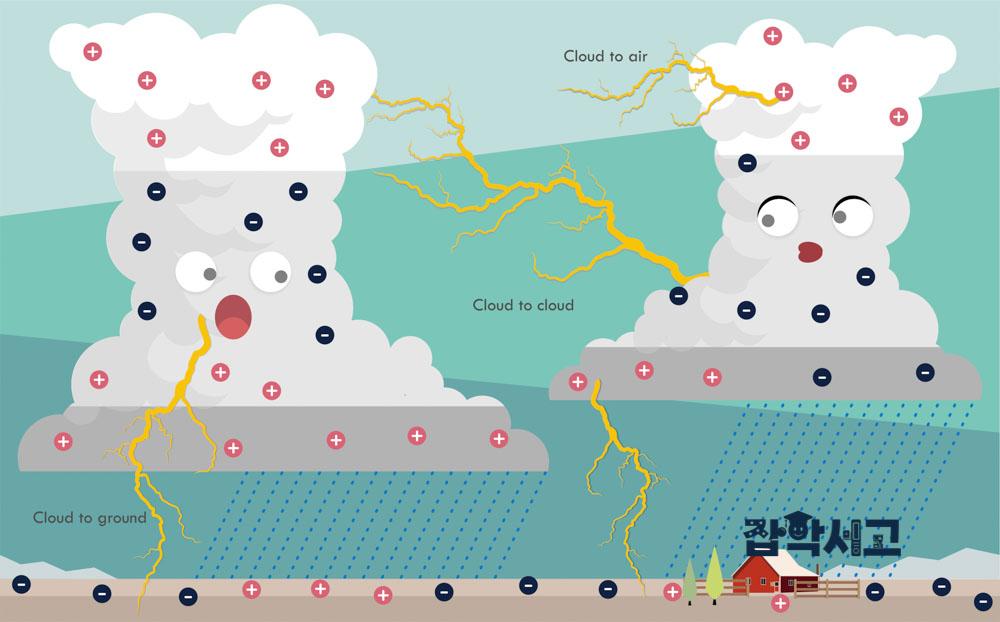 How does lightning form?
Formation of Electric Fields
Lightning occurs mainly when electric fields in the atmosphere become strong. An electric field is a region of space that transmits force from a location containing a charge to other charges. When water vapor and ice particles in the atmosphere collide and charges begin to separate, an electric field forms. This electric field plays an important role in the initial stages of lightning formation.
Atmospheric Instability
Several conditions are necessary for lightning to occur, and one of them is atmospheric instability. Atmospheric instability creates updrafts that allow water vapor and ice particles to collide more easily. These collisions promote the exchange of charges between particles, strengthening the electric field.
The Role of Cumulonimbus Clouds
Lightning also occurs mainly within clouds, particularly in cumulonimbus clouds, which are a type of cumulus cloud. Cumulonimbus clouds contain both strong updrafts and downdrafts, providing an environment where charges can readily separate. These clouds occur most frequently in tropical regions or during summer.
Electrical Discharge
As the electric field strengthens, the electrical potential within a cloud reaches its maximum. This potential eventually ionizes molecules in the atmosphere, causing an electrical discharge. This electrical discharge is lightning. Lightning instantaneously releases an electric field of thousands of volts, accompanied by tremendous energy.
Determining the Path of Lightning
In addition to forming lightning, the electric field is an important factor in determining its path. Lightning travels through regions where the electric field is strongest, sometimes taking a path toward the ground or toward another cloud. These paths vary depending on the distribution and strength of the electric field.
In conclusion, charge separation in the atmosphere and electric fields play important roles in lightning formation. This formation results from the combined effects of atmospheric instability, cloud characteristics, and the process by which electrical potential reaches its maximum.
The Relationship Between Atmospheric Charge Separation and Lightning
 What is the relationship between charge separation and lightning?
The Importance of Charge Separation
Charge separation in the atmosphere is one of the key processes involved in lightning. This process occurs mainly within clouds and provides the foundation for lightning formation. Charge separation occurs as water vapor and ice particles collide within clouds, and these collisions play an important role in separating charges.
The Mechanism of Charge Separation
The process of charge separation within clouds is very complex. Basically, water vapor and ice particles carry different charges. When they collide, charges move, creating an electrical imbalance within the cloud. This imbalance becomes the driving force behind lightning.
Air Currents and Charge Separation
Charge separation is also closely related to air currents within clouds. Updrafts carry water vapor and ice particles upward, leading to more collisions. Downdrafts, meanwhile, pull these particles downward, and the interaction between upward and downward air currents accelerates charge separation within clouds.
Electric Field Formation and Discharge
Within clouds where charge separation occurs, the electrical imbalance reaches its maximum, strengthening the electric field. An electric field is a region of space that transmits force from an area where charges are concentrated to other charges, and the stronger this field becomes, the more likely an electrical discharge is to occur. This electrical discharge is lightning.
Forms of Lightning
Charge separation also affects the form lightning takes. For example, the more strongly charges separate within clouds, the more likely cloud-to-cloud lightning is to occur. By contrast, strong charge separation between the ground and clouds produces cloud-to-ground lightning.
In conclusion, charge separation in the atmosphere is an essential process for lightning to occur. It takes place through collisions within clouds, air currents, and electrical imbalances, strengthening the electric field and promoting lightning.
The Various Forms of Lightning: Cloud-to-Ground and Cloud-to-Cloud Lightning
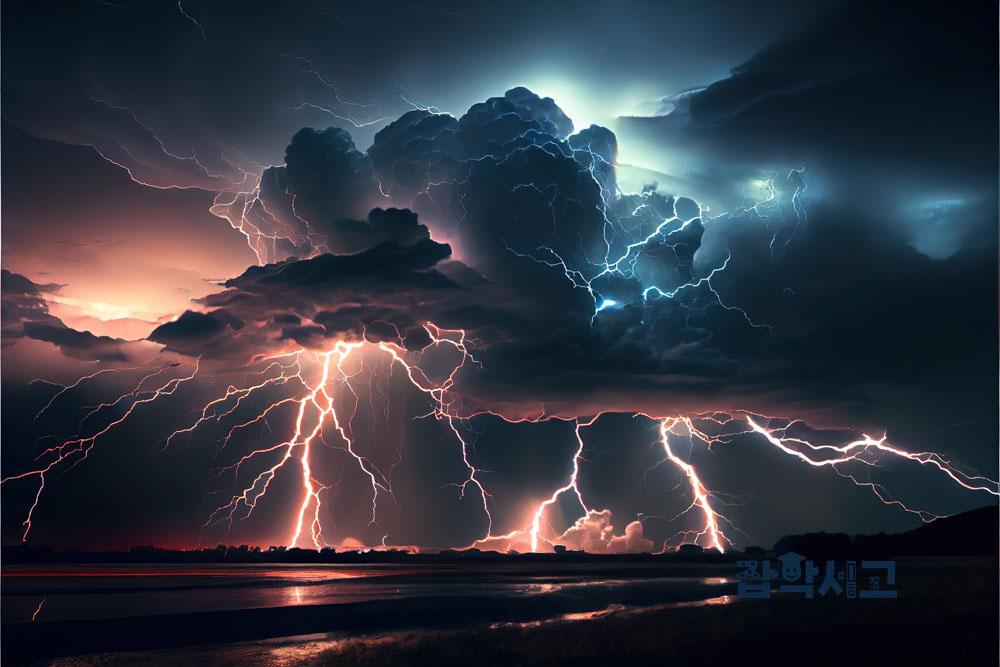 What forms of lightning are there?
Characteristics of Cloud-to-Ground Lightning
Lightning can take various forms, and the two most common are cloud-to-ground lightning and cloud-to-cloud lightning. Cloud-to-ground lightning travels from a cloud toward the ground and occurs mainly in cumulonimbus clouds where strong updrafts and downdrafts coexist.
Conditions for Cloud-to-Ground Lightning
Cloud-to-ground lightning occurs when electrical imbalances in the atmosphere reach their maximum. This type of lightning appears mainly when the atmosphere is unstable and charge separation within clouds is strong. As the electric field strengthens, charges within a cloud discharge toward the ground, appearing as lightning. Cloud-to-ground lightning is usually accompanied by loud thunder, a sound produced as atmospheric molecules become ionized during the discharge process.
Characteristics of Cloud-to-Cloud Lightning
Cloud-to-cloud lightning, on the other hand, occurs through electrical discharge between clouds. This type of lightning occurs mainly when two or more clouds are close to one another and is caused by electrical imbalances between them. Unlike cloud-to-ground lightning, cloud-to-cloud lightning interacts less with the ground, so it can occur relatively quietly.
Conditions for Cloud-to-Cloud Lightning
Cloud-to-cloud lightning occurs when electric fields in the atmosphere become strong, mainly during the movement of charges from one cloud to another. Charge separation and electrical imbalances within clouds play important roles in this type of lightning. Cloud-to-cloud lightning can take various forms, and its discharge sometimes extends over very long distances.
Comparing the Dangers of Lightning
The danger posed by lightning varies with its form. Cloud-to-ground lightning carries greater danger because it directly affects the ground. Cloud-to-cloud lightning, meanwhile, occurs mainly in the atmosphere and is therefore relatively safe. However, it can still affect aircraft operations or communications equipment.
In conclusion, lightning is divided into cloud-to-ground lightning and cloud-to-cloud lightning, with each form differing in its conditions of occurrence, path, and dangers. Understanding these various forms of lightning provides important information for predicting lightning and developing safety measures.
How Thunder Works and Its Relationship with Lightning
 How does thunder occur, and how is it related to lightning?
The Relationship Between Lightning and Thunder
Thunder is a phenomenon closely related to lightning. When lightning occurs, a powerful electrical discharge takes place in the atmosphere, instantly heating the air to a very high temperature. During this process, the air expands rapidly, producing a shock wave. This shock wave is heard as thunder.
Air Expansion and Shock Waves
Lightning instantly heats the air to thousands of degrees, causing it to expand rapidly. As this expansion collides with the surrounding air, it generates a pressure wave that travels as sound and becomes thunder. This sudden temperature change and expansion produce an effect similar to an explosion, making thunder loud.
The Sound of Thunder and Distance
Thunder sounds different depending on the distance from the location where lightning occurs. Although lightning and thunder occur simultaneously, light travels much faster than sound, so the flash of lightning is seen first and thunder is heard later. The time delay before thunder is heard can be used to roughly estimate the distance to the location where lightning occurred. Each 3 seconds of delay represents a distance of roughly 1 km.
Types of Thunder
Thunder varies in loudness and form depending on the type of lightning and the environment. For example, cloud-to-ground lightning produces more powerful thunder, often because the lightning occurs close to the ground. Cloud-to-cloud lightning, meanwhile, can occur farther away, and its thunder may be relatively quiet.
In conclusion, thunder is a shock wave caused by lightning, arising from the rapid heating and expansion of air at the moment lightning occurs. Thunder is an important signal of the presence and intensity of lightning, allowing its location and intensity to be estimated. Understanding the relationship between thunder and lightning is an important part of understanding natural phenomena.
Lightning's Effects in Nature and Safety Measures
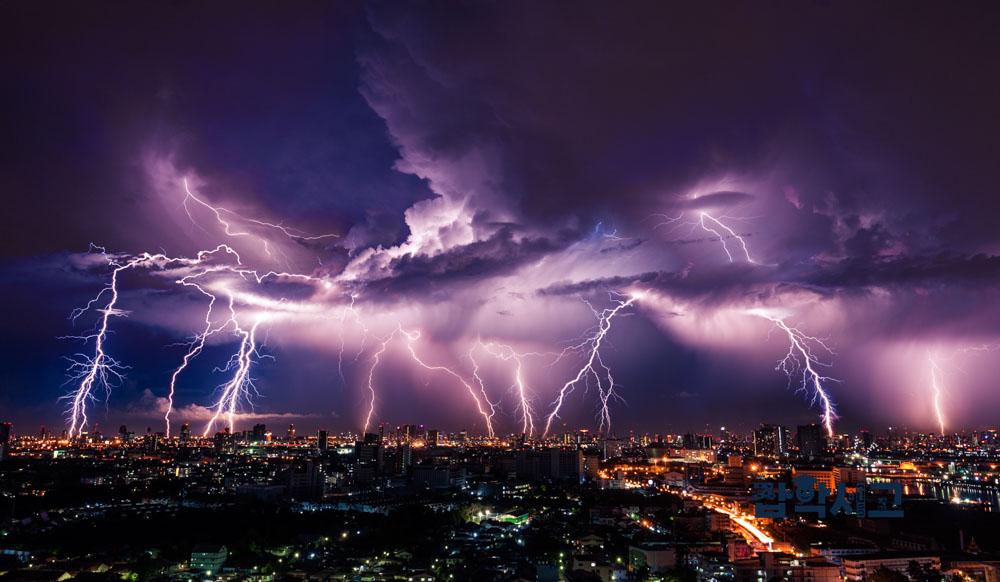 What are the effects and dangers of lightning?
Lightning's Effects on Nature
Lightning has a particularly significant impact among natural phenomena. Lightning is a sudden and powerful electrical discharge whose shock wave is accompanied by a loud sound in the atmosphere, heard as thunder. Lightning also produces various compounds in the atmosphere, affecting the composition of Earth's atmosphere. For example, lightning can cause atmospheric nitrogen and oxygen to react, producing nitrogen oxides.
Lightning's Effects on Ecosystems
Lightning also has important effects on ecosystems. Fires caused by lightning can burn forests or grasslands, leading to major changes in ecosystems. However, these fires can also promote the emergence of new life. For example, new plants grow after a fire, playing an important role in maintaining ecosystem diversity.
Lightning's Threat to Humans
Lightning can pose a major threat to humans. It can directly damage everything on the ground, including buildings, trees, and people. Being struck by lightning can cause severe burns or disrupt the heart's rhythm, threatening a person's life. Thorough safety measures are therefore necessary in environments where lightning may occur.
Taking Shelter from Lightning
The first measure for staying safe from lightning is to find shelter. When lightning occurs, taking shelter indoors is safest. Standing beneath high-rise buildings or trees should also be avoided. These locations provide paths through which lightning can easily discharge to the ground.
Limiting the Use of Electronic Devices
It is also advisable to avoid using electronic devices when lightning occurs. Lightning can travel easily through electrical conductors and can discharge through electronic devices. Any disconnection, such as unplugging equipment, should be completed before a thunderstorm arrives. During a thunderstorm, do not touch cords, plugs, or equipment connected to electrical power, and do not unplug equipment.
In conclusion, lightning has a major impact within natural phenomena, and thorough safety measures are necessary. In environments where lightning is likely to occur, it is important to find shelter and limit the use of electronic devices. These measures can minimize the dangers of lightning and help maintain safety.
Lightning is a complex and beautiful natural phenomenon, and the process of understanding it scientifically provides a great deal of knowledge. The role of electric fields, the process of charge separation, and the various forms of lightning are important factors in understanding how lightning occurs.
Natural phenomena caused by lightning, its effects on the human body, and the safety measures taken in preparation also demonstrate the practical importance of lightning research. We hope that research into lightning will continue, allowing more of nature's secrets to be revealed.