The art of photography and video is a complex process that involves understanding and applying various techniques and principles, rather than simply pressing a button to capture an image. Among these, focus and depth of field are key elements that determine the quality and expressive power of photographs (videos).
This material aims to explore in depth the definitions and roles of focus and depth of field, the relationship between them, and photographic strategies that make use of them.
The Definition and Role of Focus: Understanding the Basic Principles of Photography
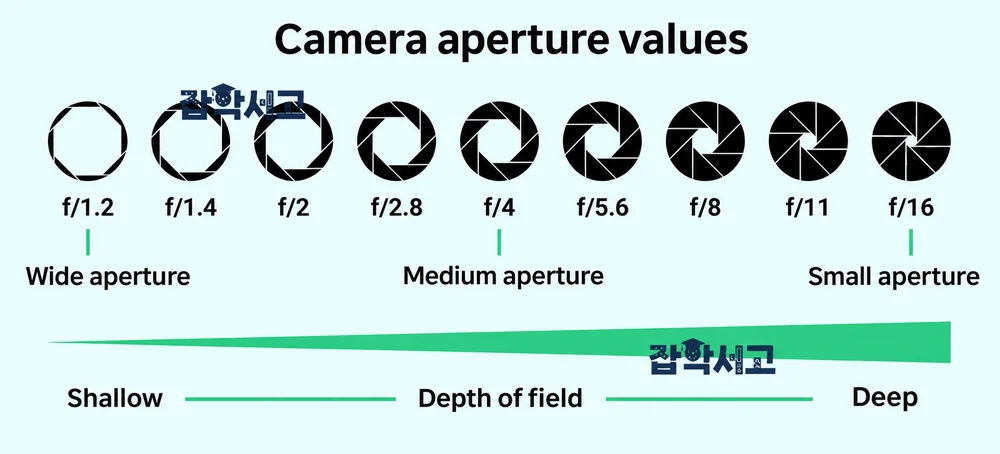 Camera Aperture Settings and Focus
The Importance of Focus
Focus is one of the most important elements in photography and an essential technique for capturing subjects clearly. An out-of-focus photograph becomes blurry and indistinct, making it difficult to convey the intended message. To achieve focus, you must be able to adjust the lens's focal length to photograph the subject clearly.
The Role of Focus
The role of focus goes beyond simply making the subject sharp. Focus can emphasize the theme of a photograph and guide the viewer's gaze toward the desired area. This can make the photograph's intended message clearer and increase its visual interest.
Autofocus and Manual Focus
Autofocus and manual focus each have their advantages and disadvantages. Autofocus is convenient because it can achieve focus quickly and accurately, but it may sometimes focus on an unintended area. Manual focus, on the other hand, allows users to adjust focus themselves for finer control, but it takes longer and can be challenging for those unfamiliar with focusing.
Focus Peaking Technology
One technique used to improve focusing accuracy is 'focus peaking.' It highlights in-focus areas with color, helping users recognize them easily. It can be particularly useful for macro photography or portrait photography.
Using Different Focus Modes
It is also important to understand different focus modes and use them appropriately. Single autofocus (AF-S) mode is suitable for stationary subjects, while continuous autofocus (AF-C) mode is effective for moving subjects. In addition, tracking focus (AF tracking) mode provides a function that continuously tracks and focuses on moving subjects.
Choosing Appropriate Focus Settings for the Environment
Finally, an important aspect of focusing is choosing appropriate focus settings for the environment. For example, focusing can be difficult in low-light environments, so it is necessary to achieve focus through methods such as using additional lighting equipment or adjusting the lens's aperture setting.
The Concept of Depth of Field: An Element for Controlling a Photograph's Background
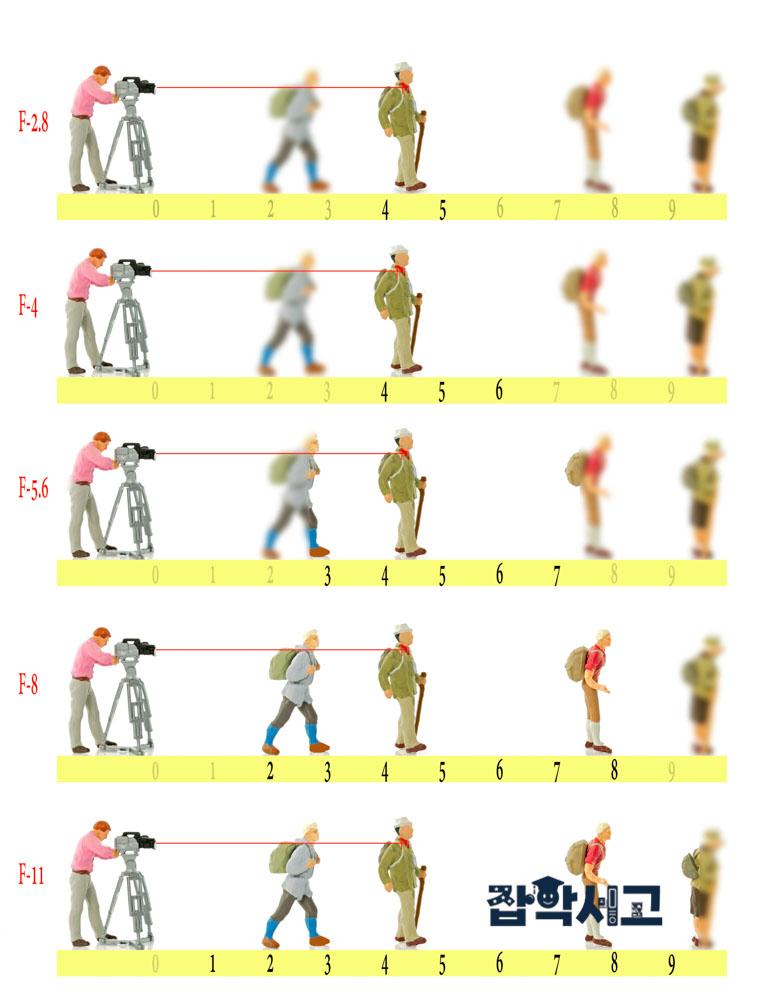 What Is Depth of Field?
The Definition of Depth of Field
Depth of field (Depth of Field, DoF) refers to the range within a photograph that is in focus. It serves as an important element in making the background blurry or clear. A shallow depth of field blurs the background, while a deep depth of field keeps even the background sharp.
Factors That Determine Depth of Field
Depth of field is determined by aperture (f-stop), focal length, and distance to the subject. The wider the aperture is opened (f/1.4, f/2.8, etc.), the shallower the depth of field becomes and the blurrier the background appears; the more the aperture is stopped down (f/11, f/16, etc.), the deeper the depth of field becomes and the sharper the background appears. These settings are important factors in determining a photograph's mood and message.
Depth of Field in Portrait and Landscape Photography
For example, in portrait photography, it is common to emphasize the subject by blurring the background. To achieve this, the aperture is opened wide to obtain a shallow depth of field. In landscape photography, by contrast, the aperture is stopped down to establish a deep depth of field so that even the background is captured clearly.
Focal Length and Depth of Field
Another way to control depth of field is through focal length. The longer the focal length (telephoto lens), the shallower the depth of field becomes; the shorter the focal length (wide-angle lens), the deeper the depth of field becomes. It is therefore important to choose an appropriate lens to achieve the desired photographic effect.
Distance to the Subject
Distance to the subject also affects depth of field. The closer you are to the subject, the shallower the depth of field becomes and the blurrier the background appears; the farther you move from the subject, the deeper the depth of field becomes and the sharper the background appears. Understanding and applying this principle appropriately allows you to create effective photographs in various shooting situations.
Hyperfocal Distance
Finally, the concept of 'hyperfocal distance' offers a technique for controlling depth of field. It is used to obtain the greatest possible depth of field at a particular focal length and aperture setting. Focusing at the hyperfocal distance allows nearby subjects to be photographed sharply while maintaining clear lens focus all the way to infinity.
The Relationship Between Focal Length and Depth of Field
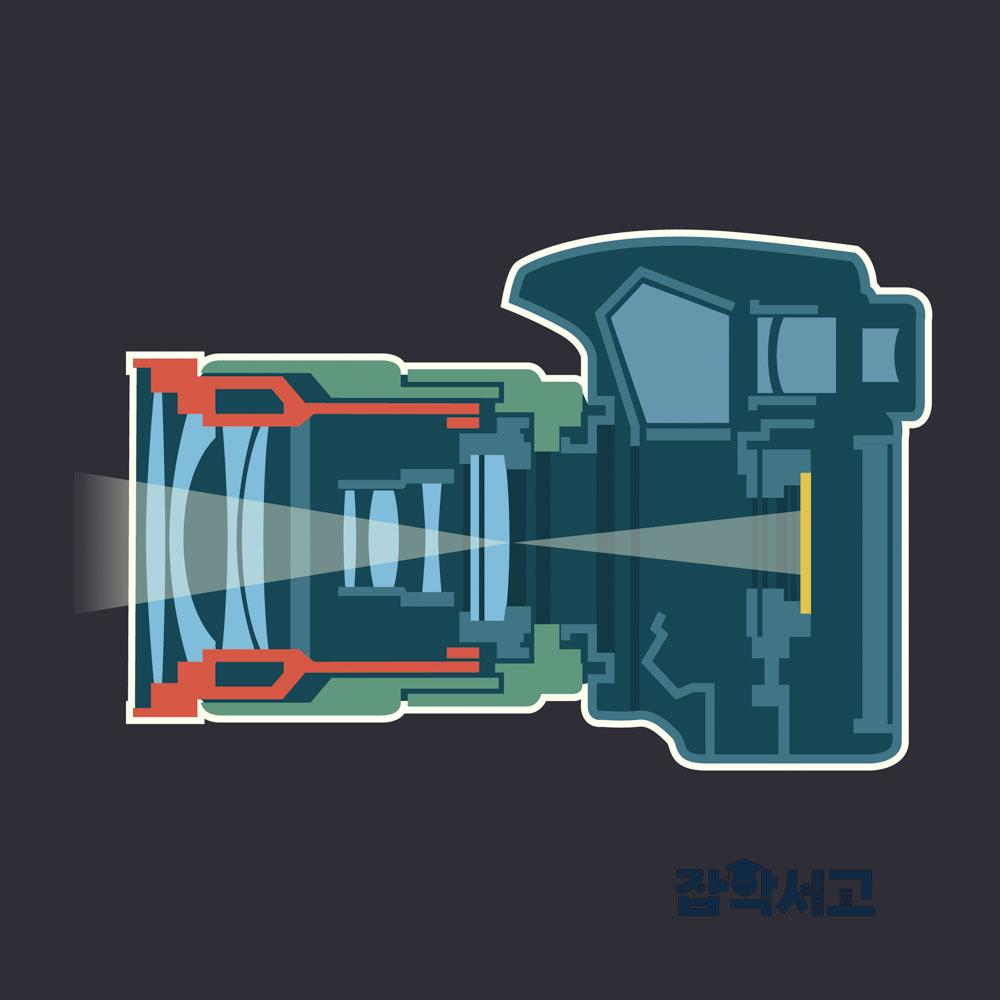 What Is the Concept of Focal Length?
The Definition of Focal Length and Its Effect on Depth of Field
Focal length and depth of field are closely related. Focal length refers to the distance from the center of the lens to the image sensor, and it greatly affects a photograph's composition and depth of field. For example, a wide-angle lens with a short focal length captures a broad area while producing a deeper depth of field, whereas a telephoto lens with a long focal length captures a narrow area while producing a shallower depth of field.
Wide-Angle Lenses and Depth of Field
Lenses with short focal lengths tend to produce a deeper depth of field, making them advantageous when you want to capture a broad area sharply, as in landscape or architectural photography. This allows the entire scene to be shown clearly, conveying more information to viewers. These lenses are also effective at emphasizing the breadth of a space.
Telephoto Lenses and Depth of Field
In contrast, lenses with long focal lengths produce a shallower depth of field, making them effective at emphasizing the subject. This is useful for portrait photography or when you want to highlight a particular subject. The blurred background makes the subject stand out, allowing the photograph's theme to be conveyed clearly.
Focal Length and Lens Selection
Understanding the relationship between focal length and depth of field allows you to choose an appropriate lens for various shooting situations. For example, portrait photography commonly uses telephoto lenses of 85 mm or longer to obtain a shallow depth of field and emphasize the subject. Landscape photography, by contrast, uses wide-angle lenses of 24 mm or shorter to obtain a deep depth of field and capture the entire scene sharply.
Focal Length and Distortion
In addition, focal length affects distortion in photographs. Wide-angle lenses produce a deeper depth of field but tend to distort the edges of the image. Telephoto lenses, on the other hand, have less distortion but produce a shallower depth of field. It is therefore important to choose a lens with an appropriate focal length for the purpose and circumstances of the shoot.
Understanding Through Experimentation and Practical Photography
Finally, to understand the relationship between focal length and depth of field through experimentation, it is helpful to try different lenses and aperture settings. This allows you to experience firsthand how each lens and setting affects depth of field, which will be very helpful in practical photography.
Strategies for Using Focus and Depth of Field to Emphasize the Subject
 How Can Focus and Depth of Field Be Used?
Separating the Subject from the Background
Using focus and depth of field effectively to emphasize the subject is an important technique in the art of photography. To do this, it is first necessary to clearly distinguish the subject from the background. For example, using a shallow depth of field to blur the background while capturing the subject sharply can concentrate the viewer's attention on the subject.
The Bokeh Effect
The 'bokeh' effect is one strategy for emphasizing the subject in portrait photography. Bokeh refers to the phenomenon in which the background becomes softly blurred because of a shallow depth of field, and it is highly effective at highlighting the subject. To achieve this, it is advisable to open the aperture wide (f/1.4, f/2.8, etc.) and use a lens with a long focal length (for example, 85 mm or longer).
Emphasizing a Specific Part
Another strategy is to shift focus to emphasize a specific part of the subject. For example, focusing on the eyes in portrait photography directs the viewer's gaze toward the subject's eyes and further emphasizes the emotion and expression in the photograph. This is an important factor in strengthening a photograph's ability to convey emotion.
Using Depth of Field in Landscape Photography
In landscape photography, it is important to set a deep depth of field to capture the entire scene sharply. To achieve this, it is common to stop down the aperture (f/11, f/16, etc.) and use a wide-angle lens. This preserves detail in the photograph and provides viewers with more visual information.
The Frame-Within-a-Frame Technique
The 'frame within a frame' technique can also be used to emphasize the subject. This method concentrates attention by creating a natural or artificial frame around the subject. For example, placing the subject within a frame formed by a window or doorway naturally draws the viewer's gaze toward the subject.
Building Experience Through Practice
Finally, it is important to build experience by practicing adjustments to focus and depth of field in various situations. This greatly helps you choose appropriate settings and effectively emphasize the subject in different shooting situations. Keep in mind that focus and depth of field are important tools for conveying a photograph's message and emotion, and try using them actively.
Focus and depth of field are very important elements in the art of photography, and understanding and using them appropriately is key to creating high-quality photographs (videos). By clearly emphasizing the subject through focus and controlling the background through adjustments to depth of field, you can effectively convey a photograph's theme and mood.
Having examined the principles and uses of focus and depth of field in detail through this material, we hope you will use this knowledge to take richer, more professional photographs.