As modern digital display technology has advanced rapidly, resolution has emerged as an important factor in improving users' visual experience.
Resolution is a key factor that determines the sharpness and detail of video, and it is used to measure the quality of digital displays and video content.
In this article, we will explain everything from the basic concept of resolution to various types of resolution such as SD (Standard Definition), HD (High Definition), FHD (Full High Definition), and UHD (Ultra High Definition).
We will also look at the difference between pixels and dots (DPI), the types and characteristics of aspect ratios, how video resolution has changed from the past to the present, and the emergence and characteristics of ultra-high-definition resolution.
What Is Resolution?
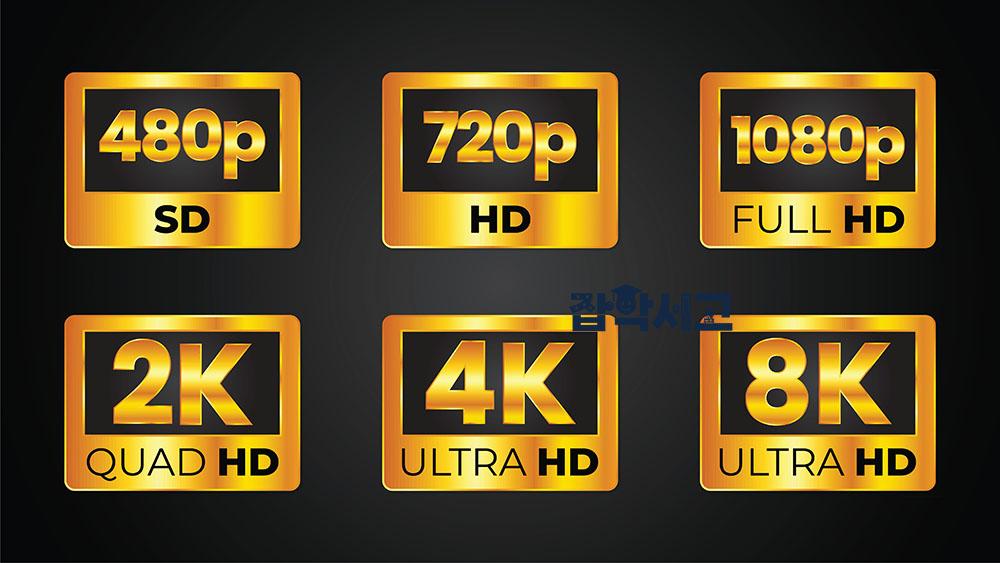 Various types of resolution
Resolution is a concept that indicates the level of detail that a digital display or image can represent.
It is measured by the number of pixels across the width and height of the screen, and the more pixels there are, the more detail can be represented.
Resolution is usually expressed in the format of horizontal pixels x vertical pixels. For example, a resolution of 1920x1080 indicates that the screen is 1920 pixels wide and 1080 pixels high.
Types of Resolution
Resolution can be classified into various levels, including standard definition (SD), high definition (HD), and ultra high definition (UHD). Each resolution class indicates the number of pixels on the screen and the level of detail. For example, HD is 1280x720 pixels, FHD is 1920x1080 pixels, and 4K UHD is 3840x2160 pixels.
Resolution and Picture Quality
Resolution has a major influence on picture quality. Higher resolution provides more detail, making images and videos look sharper and cleaner. However, resolution is not the only factor in picture quality; color accuracy, contrast, and brightness are also important.
Resolution and Screen Size
Resolution and screen size both affect the overall picture quality of a display. On a large screen, high resolution is more important, while on a small screen, a lower resolution may be sufficient.
Resolution is an important factor in digital media and display technology, and higher resolution means a better viewing experience and a more premium product. However, not all media require high resolution, and sometimes a lower resolution can be more efficient or appropriate.
Pixels and Dots per Inch
A pixel is the basic unit of a digital image or display, and each pixel represents a specific color. On the other hand, dots per inch (DPI) indicates the number of dots per inch and is mainly used to measure the resolution of print media.
Pixel
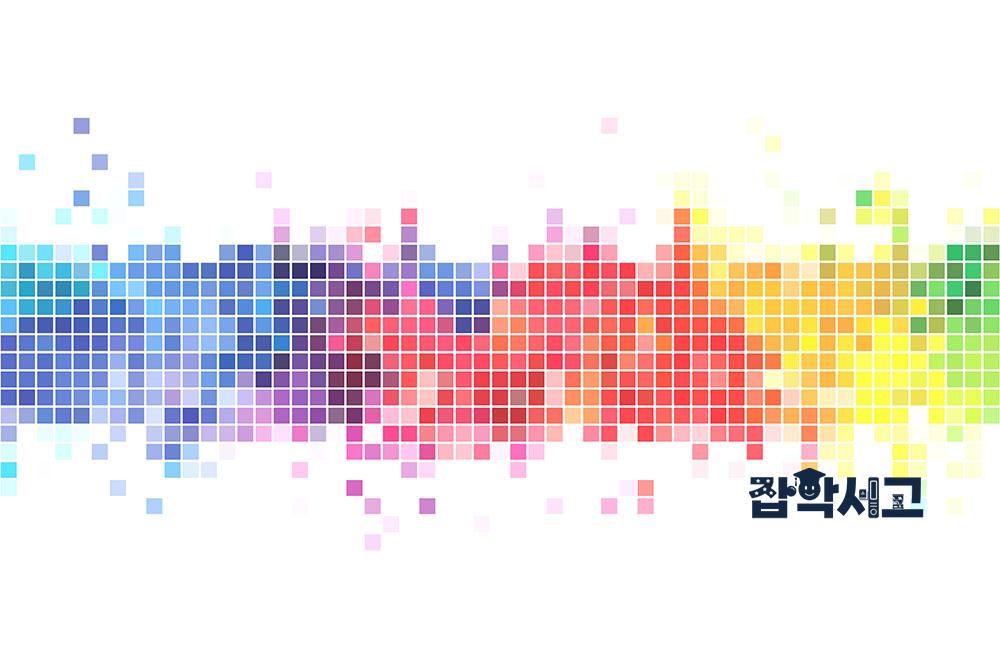 Pixels used in digital screens
Pixel is short for "Picture Element" and is the basic unit of a digital image or display. Each pixel has a specific color, and these pixels come together to form the whole image.
A digital screen is made up of countless pixels, and each pixel can create a wide range of colors by combining three primary colors: red, green, and blue (RGB).
Resolution indicates the total number of pixels across the width and height of a screen, and a high-resolution screen has more pixels, so it can provide sharper images and greater detail.
Dots per Inch (DPI)
 DPI used in print media
DPI is a unit that indicates the number of dots per inch and is mainly used in the field of printing. DPI measures the resolution of a printed image, and a higher DPI value means higher print quality.
The sharpness and detail of printed materials depend heavily on the DPI value, and a higher DPI produces sharper and more refined prints.
Comparing Pixels and DPI
Use: Pixels are used in digital displays and images, while DPI is used to measure resolution in the field of printing.
Unit of measurement: A pixel represents an individual color unit on a digital screen, while DPI indicates the number of dots per inch, which represents the resolution of a printed material.
Color creation: Pixels create colors using the RGB color model, while printing mainly uses the CMYK (cyan, magenta, yellow, key black) color model.
Picture quality and detail: A higher pixel count means higher resolution and better digital picture quality, while a higher DPI means higher print quality and better detail in printed materials.
Both units are important for measuring and expressing picture quality and detail in their respective fields, and pixels and DPI are essential for understanding the quality of digital media and print media.
Types and Characteristics of Aspect Ratios
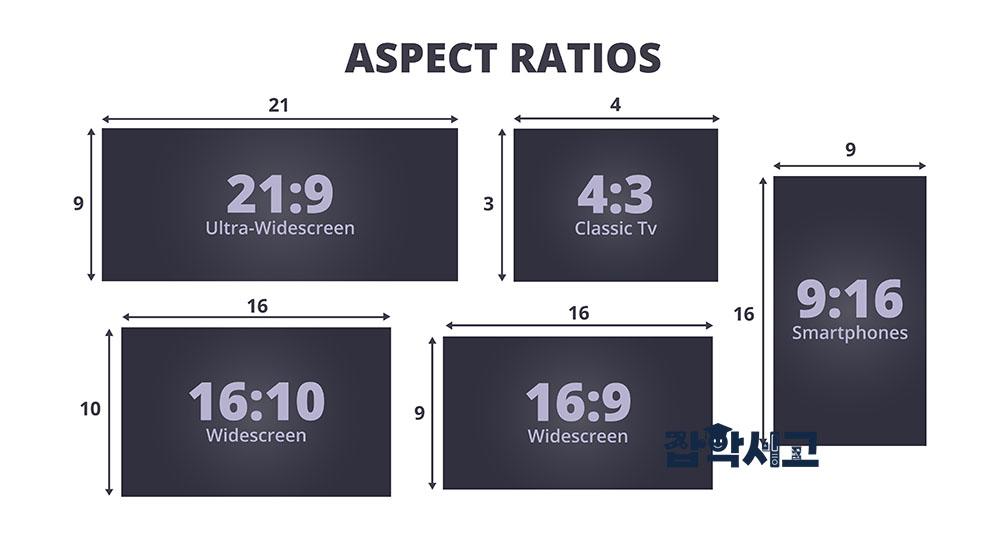 Various types of aspect ratios
Aspect ratio refers to the ratio of a screen's width to its height and is used for various formats of displays and video content. Aspect ratio has a major influence on how a video looks and how it feels.
Below is a summary of several aspect ratios and their characteristics.
4:3 (standard aspect ratio): This is the aspect ratio of old CRT TVs and some tablets and monitors. A 4:3 aspect ratio means that the width is 4/3 times the height. This ratio was commonly used in older TVs and monitors, and the image looks relatively close to a square.
16:9 (widescreen): This is the ratio used in modern TVs, monitors, laptops, and smartphones. The 16:9 aspect ratio is the modern standard, meaning that the width is 16/9 times the height. This ratio is suitable for most video content, including movies, TV programs, and YouTube videos, and provides a wider field of view.
21:9 (ultra-widescreen): This aspect ratio is used in ultra-wide monitors and some premium smartphones. The 21:9 aspect ratio provides a wider screen and a wider field of view. It is ideal for multitasking, watching movies, and playing games, and it offers a more immersive experience.
1:1 (square): This aspect ratio is mainly used for images and videos on some social media platforms (e.g., Instagram). A 1:1 aspect ratio has equal width and height, providing a square screen. This ratio is popular on some social media platforms.
Aspect ratio has a major influence on the user's viewing experience and how video is presented. Different aspect ratios can be chosen depending on the purpose of viewing and the user's preferences, and they play an important role in the design and production of digital displays and video content.
Video Resolution, Past and Present
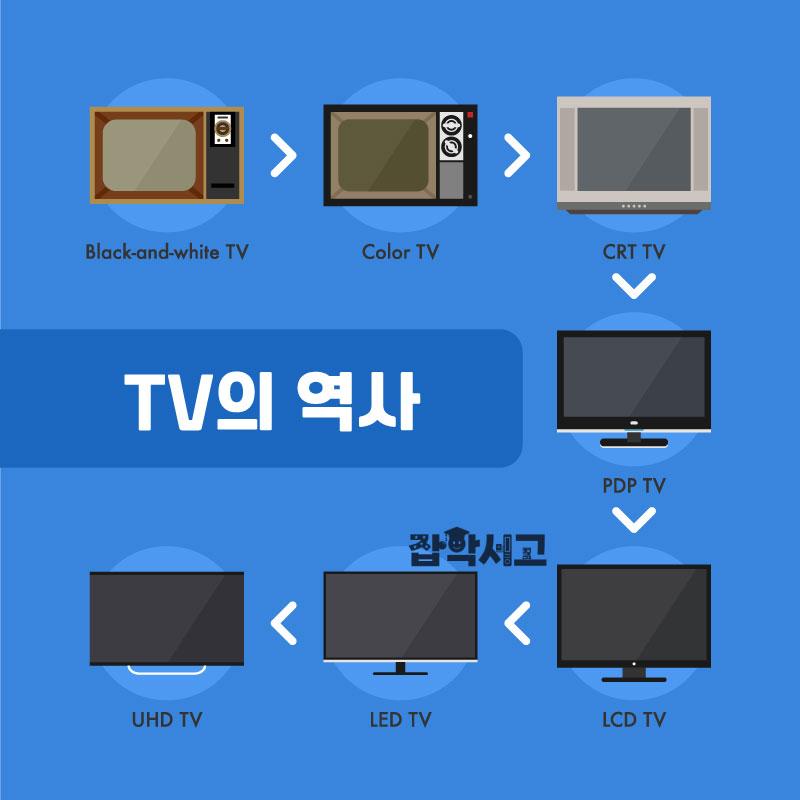 The history of TV
To understand the difference between past and present video resolutions, it is important to look at how resolution has developed. The development of resolution is closely related to technological progress, and over time, higher-resolution video has become possible.
This development has greatly improved the sharpness and detail of video, enhancing users' visual experience. Below is a summary of how resolution has developed.
Video resolution in the past
Standard Definition (SD): In the past, standard definition (SD) was common. For example, TVs in the 1990s mainly used the SD format with a resolution of 720x480 pixels. This resolution was relatively low, so the sharpness and detail of the image were limited.
Video resolution today
High Definition (HD): With technological advances, HD resolution emerged. HD resolution is 1280x720 pixels and provides much higher-quality video than SD resolution.
Full HD (FHD, Full High Definition): FHD has a resolution of 1920x1080 pixels and provides higher resolution and sharpness than HD.
Ultra HD (UHD, Ultra High Definition): UHD includes 4K resolution (3840x2160 pixels) and 8K resolution (7680x4320 pixels), which provide even higher resolution and amazing sharpness.
The development of resolution has greatly improved the sharpness and detail of video, enhancing users' viewing experience. In addition, the introduction of high resolution has had a positive impact on various industries, such as film, TV broadcasting, video games, and online streaming services.
These developments make the future of digital video and display technology even brighter, and resolution is expected to keep advancing in the future.
Ultra-High-Definition Resolution
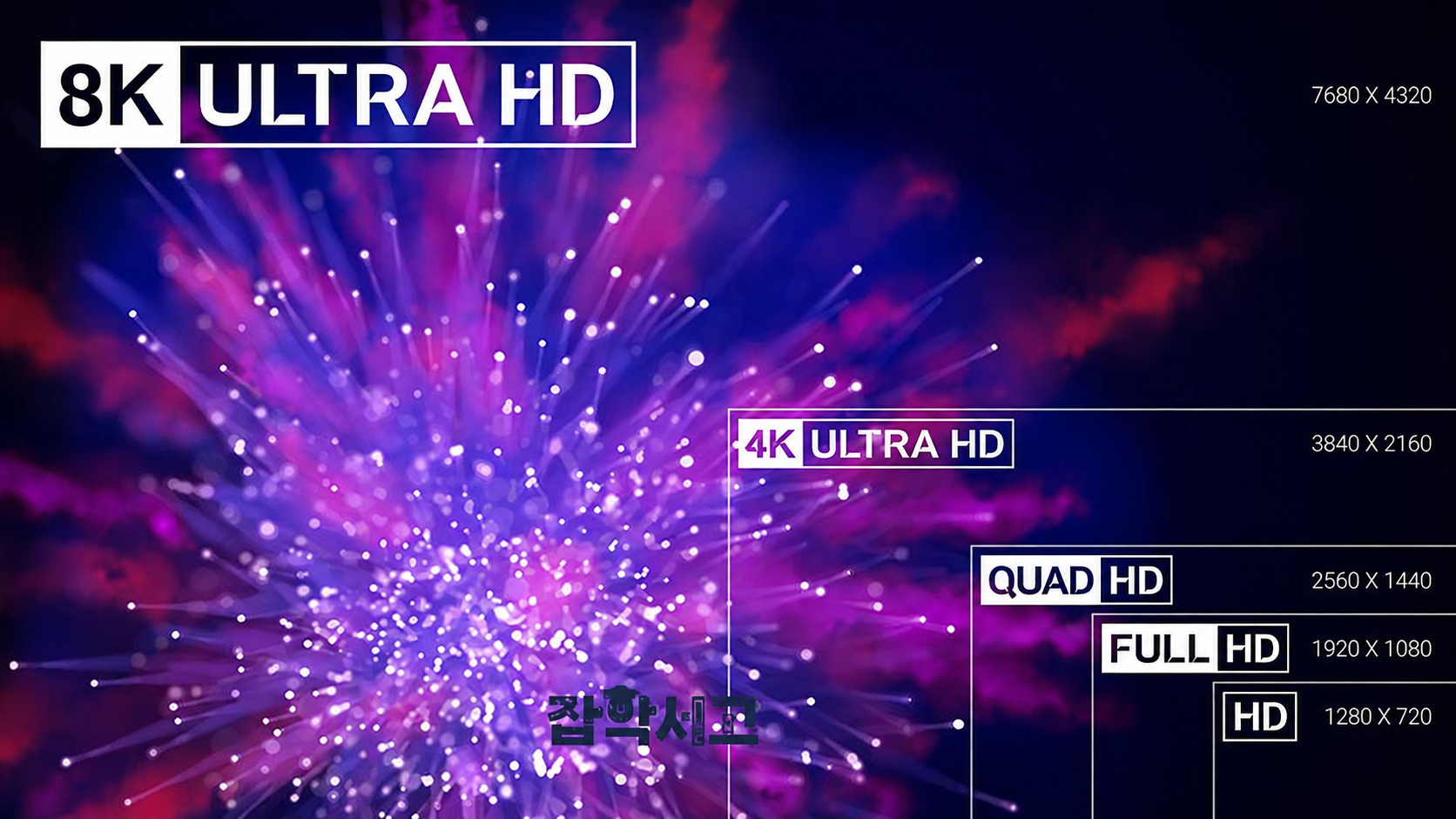 Comparison of HD to UHD screen resolutions
Ultra High Definition (UHD) resolution represents the highest level of current video and display technology, offering outstanding sharpness and amazing detail.
It mainly includes 4K and 8K resolutions, which have 3840x2160 pixels and 7680x4320 pixels, respectively.
4K Resolution
4K resolution offers four times the resolution of Full HD (Full High Definition, 1920x1080 pixels). This means the screen is 3840 pixels wide and 2160 pixels high. This high resolution provides outstanding sharpness and more refined detail, and it allows high picture quality to be maintained even on larger screens.
8K Resolution
8K resolution offers four times the resolution of 4K and 16 times that of Full HD, with a screen width of 7680 pixels and a height of 4320 pixels. This provides even greater sharpness and amazing detail, and it allows high picture quality to be maintained even on large screens.
Advantages of Ultra-High-Definition Resolution
High sharpness: UHD resolution provides high sharpness, making text look clearer and images look more lifelike.
Better color representation: Higher resolution can store more color information, providing better color accuracy and richer colors.
Flexibility in zooming in and out: High-resolution video can retain more detail when zoomed in or out, which is an advantage in post-production.
Disadvantages of Ultra-High-Definition Resolution
Requires high data transfer speeds: UHD video contains more data, so it requires higher data transfer speeds.
Requires expensive equipment: Displays and playback equipment that support UHD resolution are relatively expensive.
Applications
Ultra-high-definition resolution is used in a variety of fields, including film production, TV broadcasting, video streaming services, the gaming industry, and digital billboards. The importance of high resolution is also growing in commercial and professional applications.
Ultra-high-definition resolution is a key part of current and future video and display technology, providing a more realistic and immersive viewing experience, and it is expected to continue evolving along with technological progress.
Resolution is a key element of digital video and display technology, and higher resolution provides a sharper and more amazing viewing experience.
The various types of resolution, from SD to UHD, continue to evolve along with technological progress, enriching our digital visual experience.
The development of resolution will continue, and it will make the future of digital video and display technology even brighter.