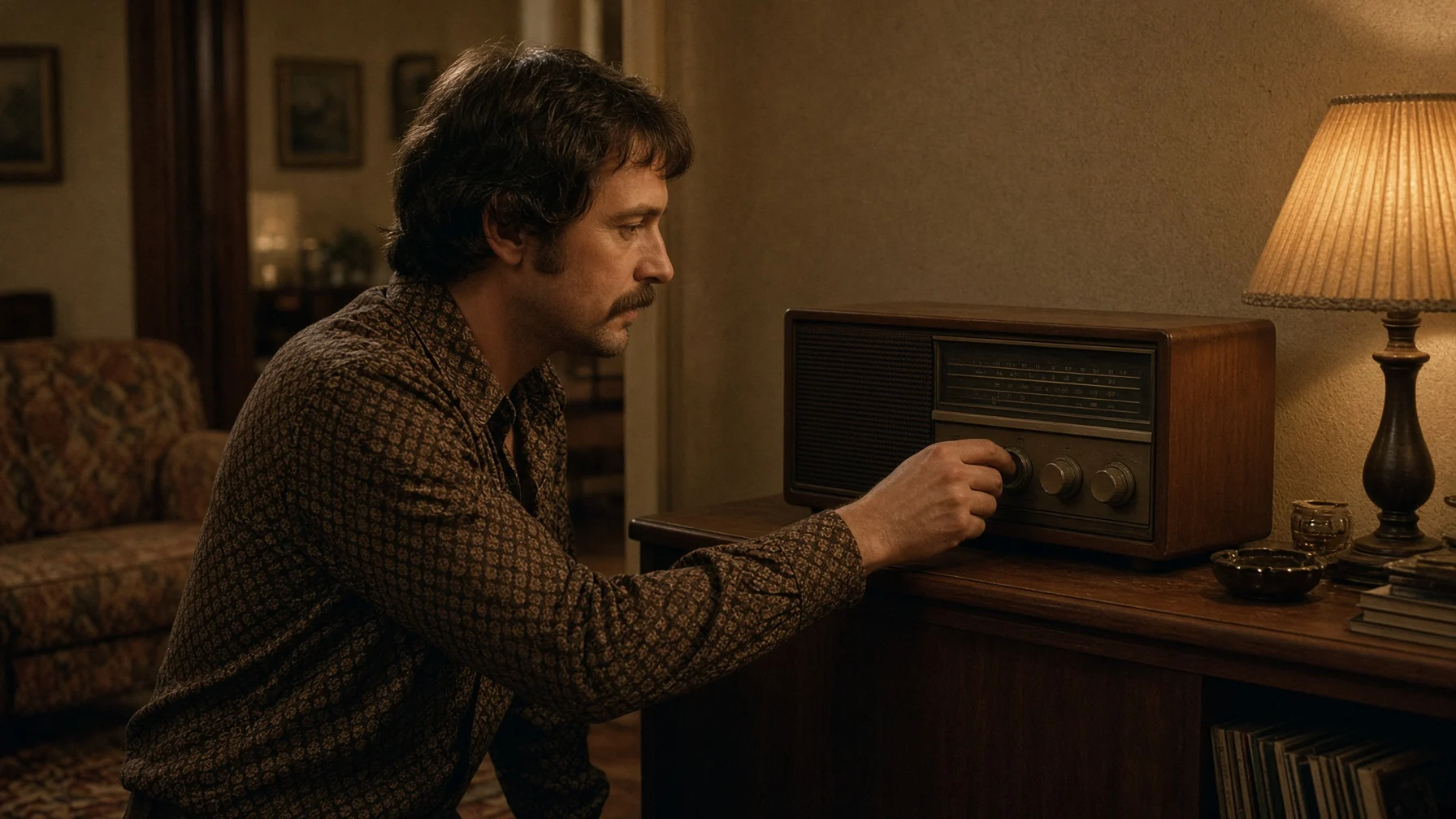
A film’s hero switches on a radio and a song starts to play; a little later, in a tense scene, a sweeping orchestra rises from somewhere. Both sound the same to our ears, yet the hero hears the first song while only the audience hears the second piece of music. The yardstick that tells whether a sound comes from “inside” the story world or has been laid on from “outside” it is Diegetic Sound.
Put simply, diegetic sound means “a sound whose source we accept as being inside the story world where the characters live.” Dialogue, footsteps, a door slamming, and music from a radio in the story all belong here. On the other side is non-diegetic sound, such as background music or narration, which is heard from outside the story world.
In this piece we will look in turn at where the word diegesis comes from and how the two kinds of sound differ, at examples that cross the boundary between them, and at practical tips for designing sound when you actually make a video.
The Grammar of Sound That Divides the Inside and Outside of the Story World
What Is Diegetic Sound?
“Diegesis” comes from a Greek word meaning “narration, telling,” and Plato also used it when he distinguished narration from imitation. In film theory, the French aesthetician Étienne Souriau defined the “diégèse” in 1951 as the fictional world a film depicts, that is, the world viewers picture when they accept the story as real.
Once the concept was applied to sound, it became a basic yardstick for sorting film audio. David Bordwell and Kristin Thompson’s introductory film textbook Film Art defines diegetic sound as any voice, music, or sound effect presented as coming from a source within the story world. What matters is not how the sound was actually recorded but where the audience takes its source to be. Even footsteps created separately in a studio count as diegetic sound if they are heard as belonging to a character on screen.
Diegetic and Non-Diegetic: Telling the Two Sounds Apart

The easiest question for telling the two apart is: “Can the characters in the story hear this sound too?” If they can, it is diegetic; if only the audience can, it is non-diegetic.
- Diegetic Sound: sound whose source is inside the story world, such as dialogue, footsteps, rain, or a band performing within the story.
- Non-Diegetic Sound: sound added from outside the story world, such as background music that sets the mood, off-screen narration, or sound effects that emphasize a scene.
- Meta-Diegetic Sound: sound that exists within the story but is heard by only one person, such as memories, auditory hallucinations, or an imagined song echoing only inside a character’s head.

(1) On-screen and off-screen sound
The source of a diegetic sound may or may not be visible on screen. Footsteps heard from a hallway off screen are still sounds from inside the story world.
(2) A third layer called meta-diegetic
In her 1987 book Unheard Melodies, Claudia Gorbman analyzed film music within this framework and, borrowing Gérard Genette’s terminology, set apart sounds that come from a character’s inner world.
Understanding Diegetic Sound Through Easy Examples
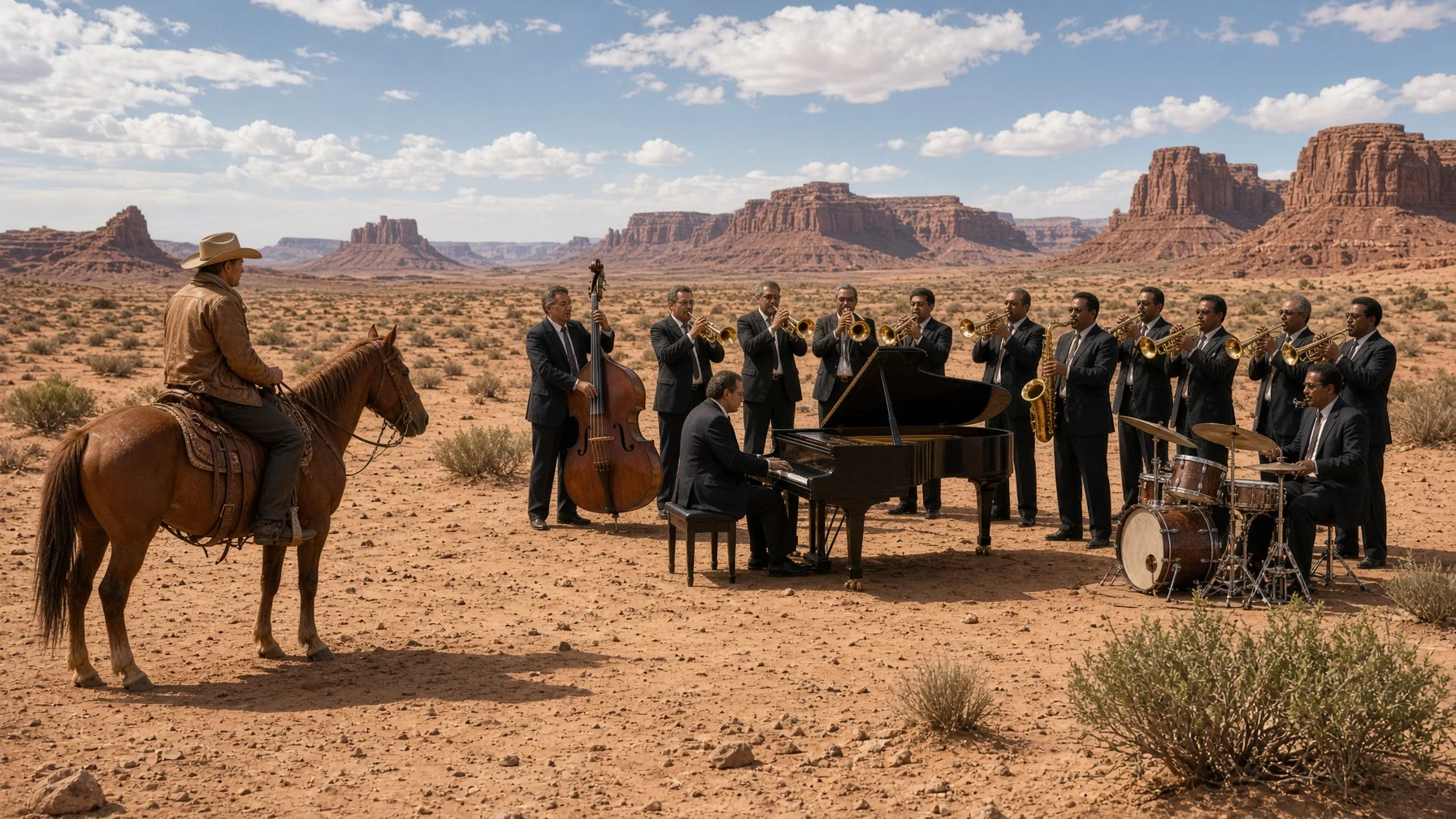
[Example 1] A band in the middle of the desert, Blazing Saddles
In Mel Brooks’s 1974 comedy Blazing Saddles, a jazz tune plays while the sheriff rides his horse across the desert. The audience naturally assumes it is background music, but soon Count Basie and his orchestra appear in the middle of the desert playing that very tune. It is a famous scene that overturns the audience’s expectations by revealing that a sound they believed was non-diegetic was diegetic all along.
[Example 2] A mixtape in a Walkman, Guardians of the Galaxy
In 2014’s Guardians of the Galaxy, the hero Peter Quill listens on his Walkman to “Awesome Mix Vol. 1,” a cassette tape his mother left him. Because the songs come from an object within the story, they are diegetic music, and the tape becomes a story device linking him to his mother and to Earth. Yet the audience hears it not as a tiny sound from earphones but in full, rich quality, which has the effect of making us hear it the way the character feels it.
Practical Tips for Designing the Boundaries of Sound

The distinction between diegetic and non-diegetic is more than a theoretical term; in the editing room it becomes a tool for controlling a scene’s emotion and immersion. The moment you decide which side a sound belongs on, the distance between the audience and the scene changes.
(1) Build realism with diegetic sound
Bringing out ambient noise and the reverberation of a space makes the audience feel as if they are right there.
(2) Guide emotion with non-diegetic sound
Background music can tell the audience about a danger or a hidden feeling before the character knows it.
(3) Link scenes by crossing the boundary
When a radio song in the story carries over into the next scene as background music, time and space connect naturally.
(4) Use deliberate confusion sparingly
Intentionally blurring a sound’s source can create laughter or tension, but if it happens too often, the audience may lose track of the story.
Diegetic sound is sound whose source we accept as being inside the story world, while non-diegetic sound is played only for the audience from outside that world. The same song can become a sense of reality or a commentary on emotion, depending on where we feel it is coming from.
Asking of every sound you hear, “Who can hear this?”: that is the first step in reading the sound of moving images.