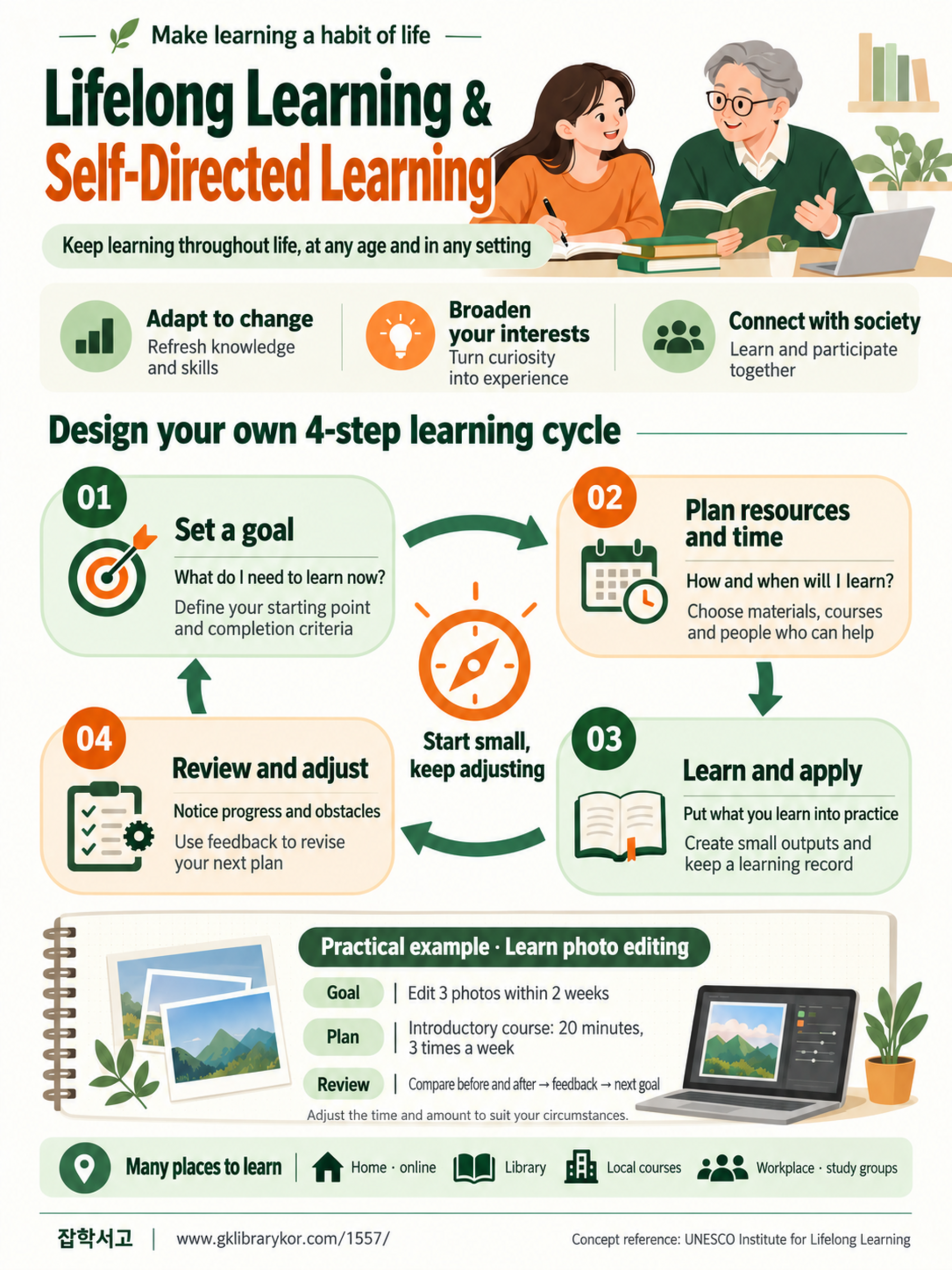
Lifelong learning plays an important role in continuous personal development and adaptation to personal and societal changes. It enables individuals to acquire new knowledge and skills at different stages of life and respond proactively to a changing world.
Self-directed learning is a key element of lifelong learning, helping learners achieve greater learning effectiveness and satisfaction by designing and managing their own learning processes.
This article will explore the concept and importance of lifelong learning, how to develop self-directed learning strategies, and the environments and programs that support lifelong learning.
What Is Lifelong Learning?

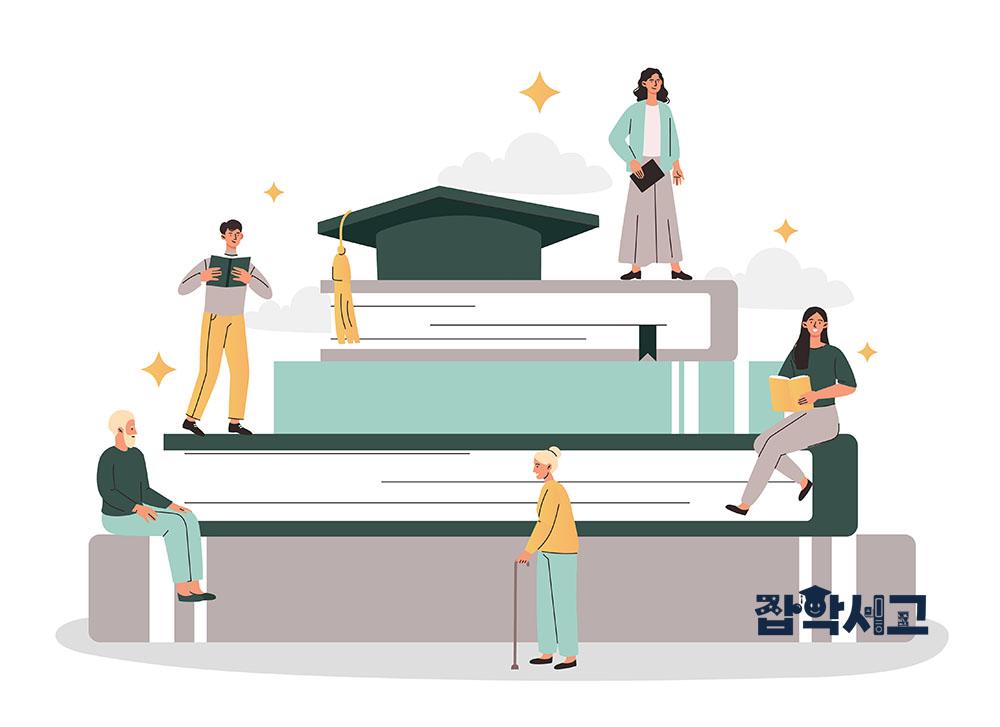 Lifelong learning across all age groups
Lifelong learning refers to the process through which learners continually learn and develop at every stage of life. It continues even after formal education ends and aims to improve their understanding of and capabilities in their personal, professional, and social roles.
Lifelong learning plays an important role in helping learners respond proactively to a changing world, continually update their abilities and knowledge, and improve the quality of their personal and social lives.
The Importance of Lifelong Learning
 Why Should We Engage in Lifelong Learning?
Lifelong learning offers various benefits to individuals and society, and its importance has several dimensions, as outlined below.
Personal Development
Lifelong learning enables individuals to expand and update their knowledge and skills. This increases confidence, encourages the exploration of new opportunities, and enhances personal satisfaction.
Career Opportunities
Continuous learning improves professional skills, creates new career opportunities, and supports career advancement. It also enables individuals to adapt to rapidly changing workplace environments and respond to technological advances and changes in industry.
Social Participation
Lifelong learning enables individuals to better understand social issues and problems and develop the abilities needed to fulfill their roles as citizens in a democracy.
Improved Quality of Life
Consistent learning improves quality of life and supports a rich cultural life and the development of social networks.
Maintaining Intellectual Curiosity
Lifelong learning helps individuals maintain their intellectual curiosity and spirit of inquiry and promotes openness to new ideas and approaches.
Economic Stability
Lifelong learning helps individuals maintain economically stable lives and adapt to a rapidly changing economic environment.
Adapting to Technological Advances
As technology advances rapidly, lifelong learning is important for developing individuals' ability to understand and use new technologies and tools.
Social Responsibility and Global Awareness
Lifelong learning helps individuals develop a sense of social responsibility and global awareness and promotes an understanding of diverse cultures and values.
Learning Throughout the Life Cycle
It enables individuals to develop and update their knowledge and abilities at different stages of the life cycle.
For these reasons, lifelong learning is important in many areas of an individual's life and is a key element in becoming an active and productive citizen in a knowledge-based society.
How to Develop Self-Directed Learning Strategies
 How Should You Plan for Self-Directed Learning?
Self-directed learning strategies are methods through which individuals independently create and implement learning plans to achieve their learning goals. Several steps are needed for this, as follows.
Self-Assessment
Assess your learning style, existing knowledge, strengths, and weaknesses to clearly understand your learning needs and goals.
Setting Learning Goals
Define the learning goals you want to achieve in specific terms. Goals are set according to the "SMART" criteria, with each letter having the following meaning.
S (Specific, Specific): Learning goals should be clearly defined. For example, "I want to learn English so that I can have basic conversations in English in 3 months" is a more specific goal than "I want to learn English."
M (Measurable, Measurable): Learning goals should be measurable. This enables learners to measure and evaluate their progress toward achieving their goals. For example, when setting a goal to improve English conversation skills, a specific test or assessment can be used to determine whether the goal has been achieved.
A (Achievable, Achievable): Learning goals should be achievable. They should be set with consideration for the learner's existing knowledge, abilities, resources, time constraints, and other factors. For example, it may be impossible for a beginner to speak fluent English within a month.
R (Relevant, Appropriate): Learning goals should be meaningfully related to the learner's overall educational or career goals. For example, an English learning goal is appropriate for someone who needs to use a foreign language professionally.
T (Time-bound, Time-Bound): Learning goals should have a time limit. Setting a clear deadline for achieving a goal motivates learners and enables them to monitor their progress. For example, "Learn English so that I can have basic conversations in English in 3 months" is a time-bound goal.
Selecting Resources and Tools
Select the resources and tools needed to achieve your learning goals. These may include textbooks, online courses, learning apps, library resources, and more.
Time Management
Set aside time for learning activities and manage your schedule. Create a schedule to plan when, how, and where you will learn.
Designing Learning Activities
Design a variety of learning activities to explore and understand knowledge in different ways. These may include reading, discussion, online learning, project-based learning, and other approaches.
Monitoring and Evaluation
Monitor and evaluate your learning progress. Check your progress toward achieving your learning goals and adjust your learning strategies as needed.
Gathering Feedback
Gather feedback from other learners, teachers, mentors, or peers and use it to improve your learning strategies.
Reflection and Improvement
Reflect on the learning process and outcomes, determine what works well and what needs improvement, and continually improve your learning strategies.
These steps and methods provide the structure and guidance individuals need to develop and implement self-directed learning strategies. They help learners optimize their learning experiences and achieve their learning goals effectively.
Environments and Programs for Lifelong Learning
 What Environments and Programs Are Available for Lifelong Learning?
Environments and programs for lifelong learning refer to facilities and activities that support learners in studying various topics and fields relevant to their lives.
Lifelong learning is a process that takes place not only at school but also continues in everyday life.
Through lifelong learning, learners can strengthen their knowledge and abilities, discover new interests and hobbies, expand their social networks, and improve their quality of life.
In South Korea, the Ministry of Education and the National Institute for Lifelong Education support various environments or operate programs that support lifelong learning. Examples include the following.
Lifelong Learning Cities
Municipalities across the country are designated as Lifelong Learning Cities to help develop lifelong learning programs suited to the characteristics of each region. A cumulative total of 180 Lifelong Learning Cities have been selected to date, and each city offers lifelong learning activities in various fields, including culture and the arts, sports, the environment, careers, and languages.
Neulbaeum
This lifelong learning portal, operated by the National Institute for Lifelong Education, provides an overview of lifelong learning information and resources from across the country. On Neulbaeum, users can search for and sign up for various learning opportunities, including online courses, in-person courses, reading groups, and study groups. It also provides a community where learners can communicate and share their experiences.
In addition, various places and institutions, including public libraries, cultural centers, citizens' colleges, and private educational institutions, provide environments and programs for lifelong learning. Learners can select and participate in suitable learning opportunities according to their needs and interests.
Lifelong learning is essential for individuals' continuous growth and society's sustainable development. Self-directed learning plays a central role in the practice of lifelong learning, enabling individuals to actively explore and develop their own learning paths.
Furthermore, environments and programs that support and promote lifelong learning benefit both individuals and society and are necessary for successful adaptation and development in a knowledge-based society.
Practicing lifelong learning and self-directed learning will improve individuals' quality of life and contribute to building a better future.