Many people sigh at the mere thought of group projects. It is all too common for one or two members to do all the work while the rest simply add their names. But there is a way to design a lesson so that every student holds an essential piece, and the picture cannot be completed if even one person is missing. It is called the Jigsaw Classroom.
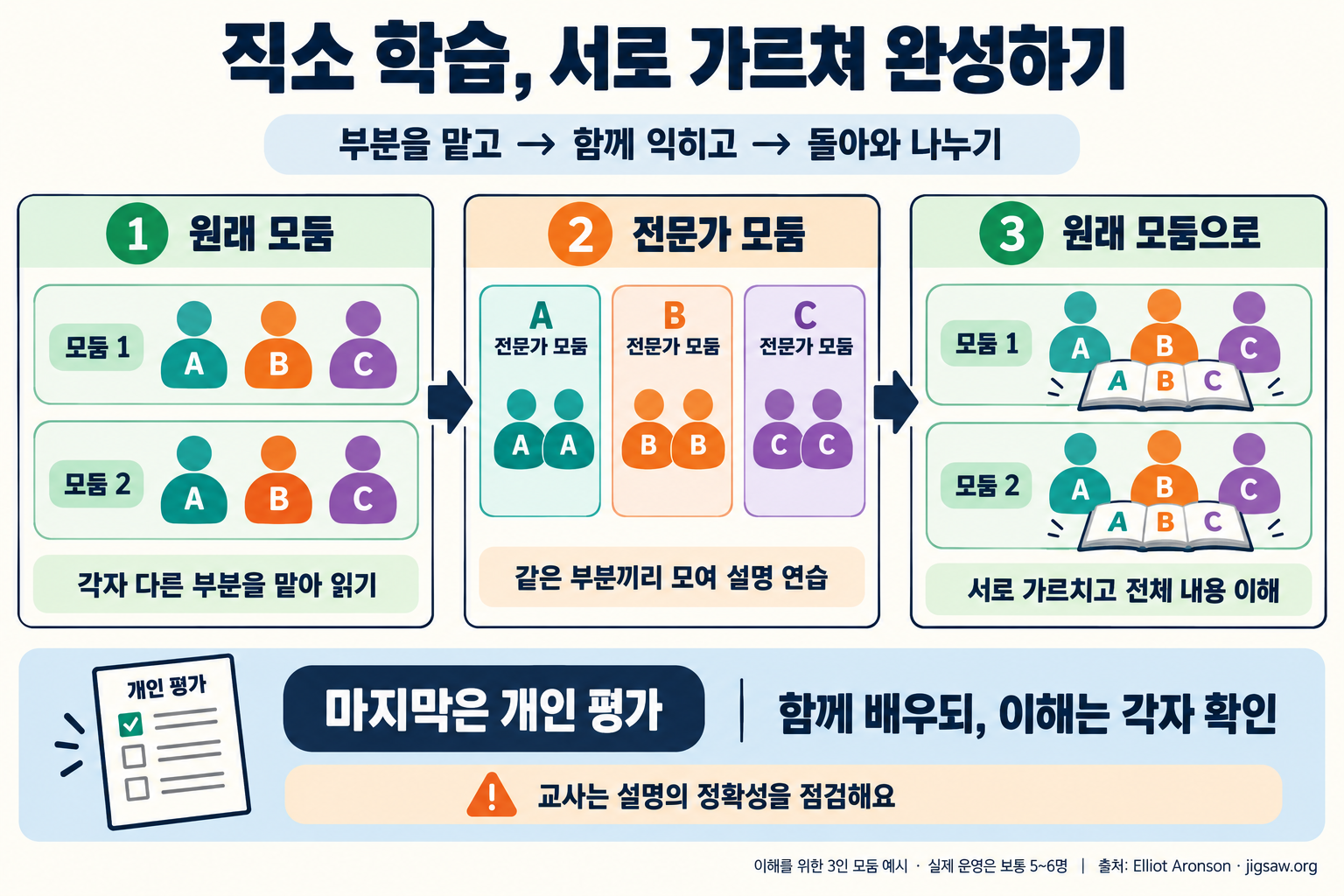
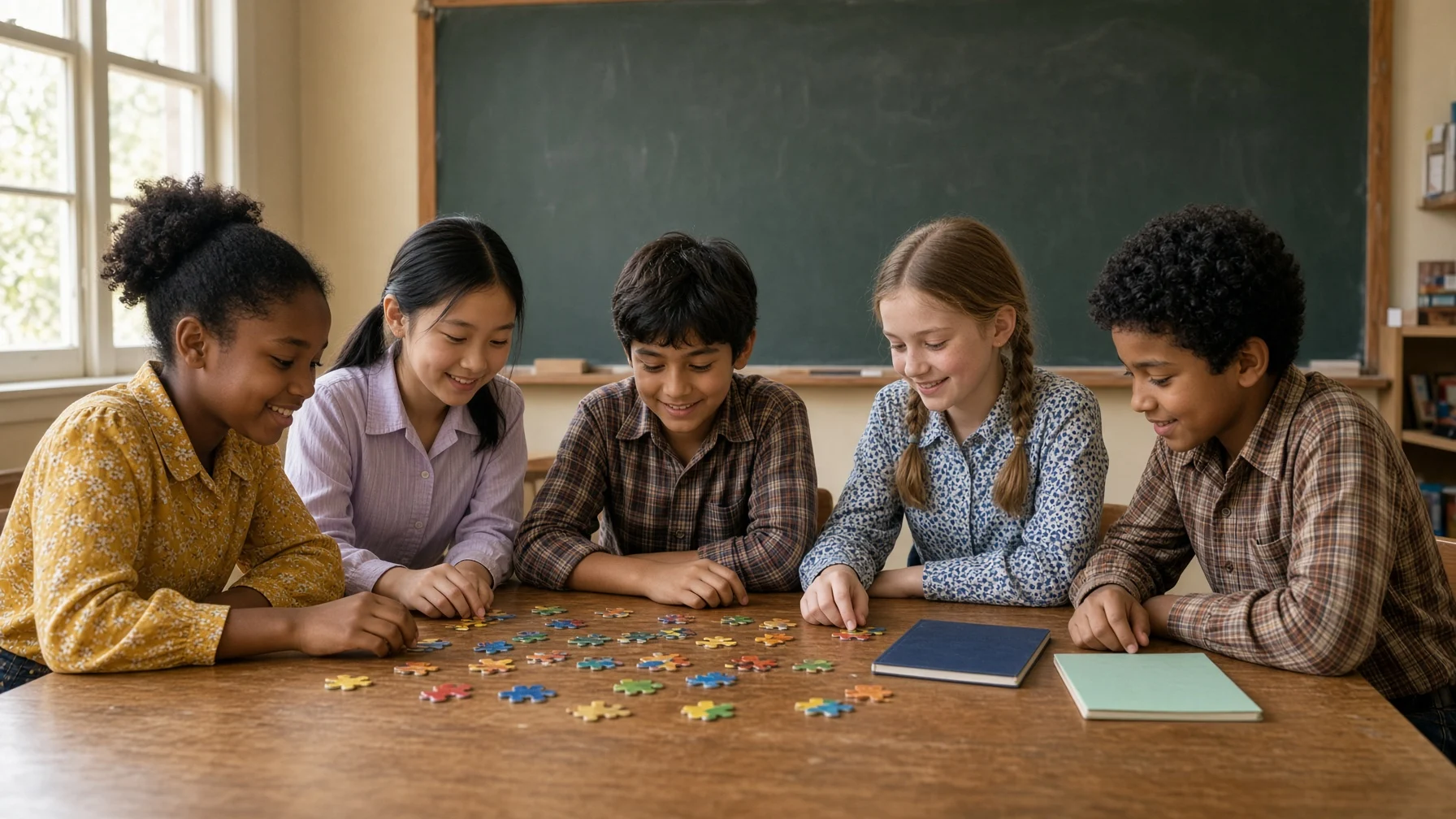
Put simply, the jigsaw classroom is a cooperative learning method in which the material to be learned is divided into pieces, each student takes charge of one piece, and the students complete the whole by teaching one another their parts. The name comes from the jigsaw puzzle, in which many pieces fit together to form a single picture.
In this piece we will look in turn at how the jigsaw classroom came about and the steps of a jigsaw lesson, the changes the method brought to classrooms, and finally its limitations and how to run it in practice.
A Classroom Where Everyone Is Someone Else’s Missing Piece
What Is the Jigsaw Classroom?
The jigsaw classroom was created in 1971 in Austin, Texas, by the social psychologist Elliot Aronson and his graduate students. Austin’s schools had just been desegregated, and white, African American and Hispanic students were sitting in the same classrooms for the first time. As long-standing suspicion and distrust piled up, fistfights broke out one after another in corridors and schoolyards, and the school superintendent asked Aronson for help.
After observing classrooms for several days, Aronson concluded that the competitive style of teaching was fueling the conflict. When the teacher asked a question, a few students would race to raise their hands, while the rest kept their heads down, hoping not to be called on. In effect, it was a structure in which a classmate’s wrong answer made you look better. So instead of competition, he designed lessons in which students had no choice but to rely on one another.
The first lesson took place in a fifth-grade classroom. While learning about the life of Eleanor Roosevelt, the students were divided into small groups evenly mixed by race and gender, and each student was responsible for learning one part of her life.
- Interdependence: a relationship structured so that the whole content can only be understood when the knowledge of every group member is brought together.
- Individual Accountability: because each student takes the test separately, no one can get by by leaning on others.
The Five Steps of the Jigsaw Classroom
A jigsaw lesson usually proceeds in the following order. A group typically has five or six members, evenly mixed in gender, background and ability.
(1) Forming groups
Students are divided into diverse jigsaw groups. The material to be learned is also divided into as many pieces as there are group members.
(2) Assigning pieces
Each group member takes one piece and reads and learns the material on their own. For example, if the class is learning about a person’s life, different students take charge of their childhood, major achievements and later years.
(3) Meeting in expert groups
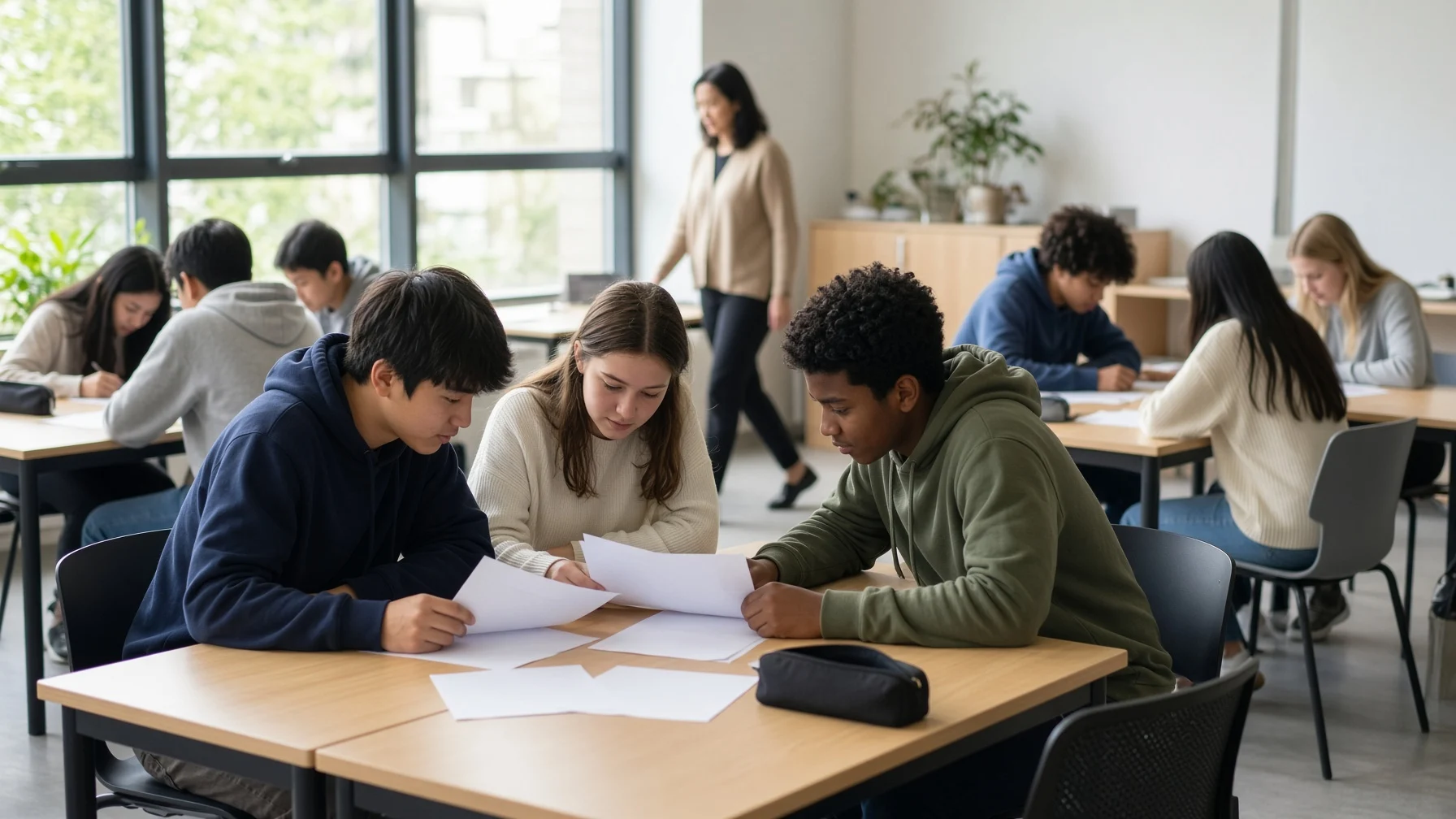
Students from different groups who have the same piece gather in an expert group to sort out the key points and practice together how they will explain them when they return to their original groups.
(4) Teaching one another
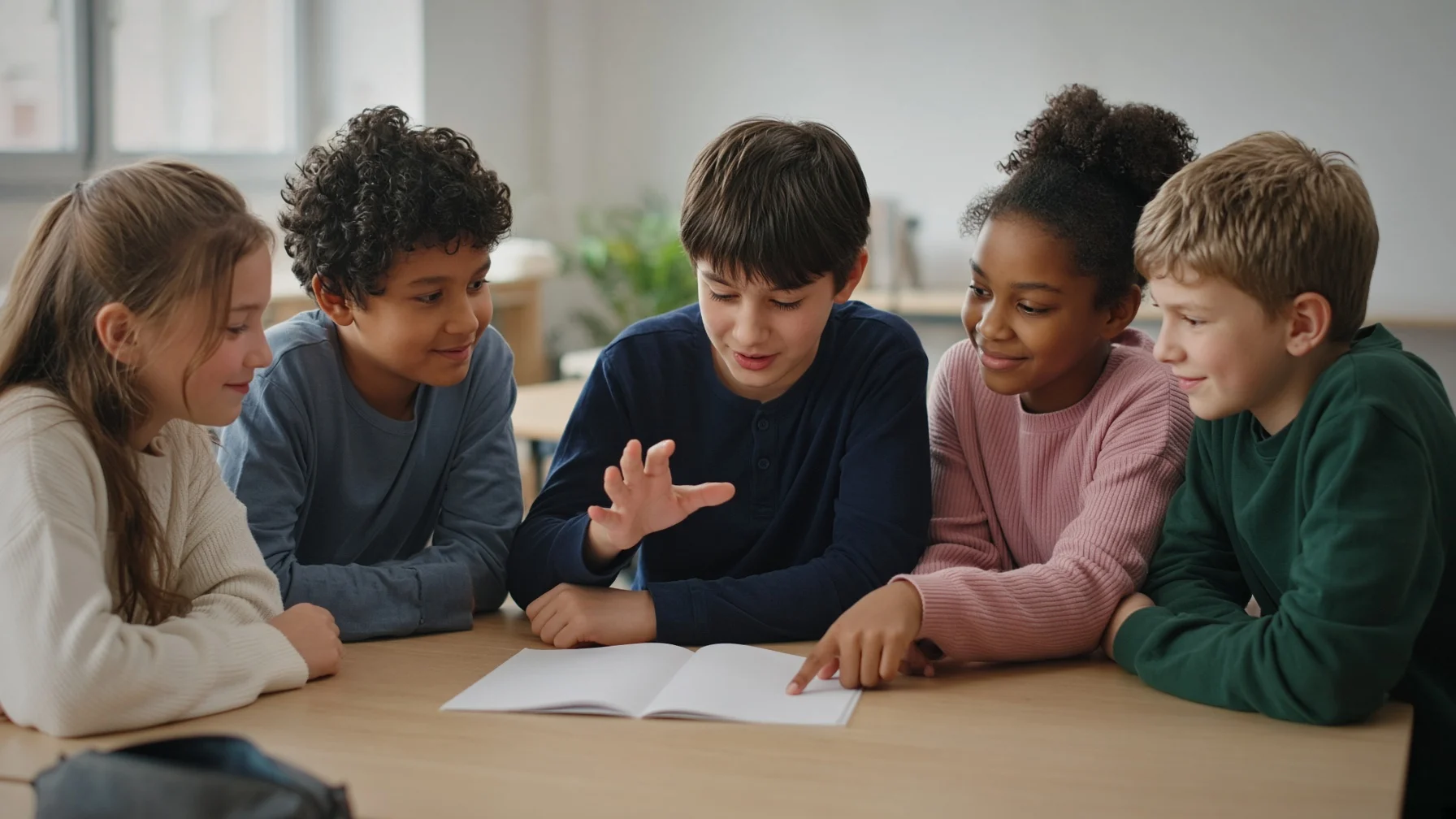
Back in their original groups, students take turns teaching the part they were responsible for. The other members ask questions to fill in the gaps.
(5) Individual assessment
Finally, each student takes a test covering all of the material. Because their own score depends on their classmates’ explanations, everyone listens closely to what the others have to say.
The Effects of the Jigsaw Classroom Through an Easy Example
The story of Carlos, told by Aronson, shows the power of the jigsaw classroom well.
[Case] How a Teased Student Became an Indispensable Group Member
Carlos, who was not yet comfortable in English and always held back, blushed and stammered when his turn first came, and his groupmates teased him. Instead of telling them to be nice, a research assistant said: “Teasing him like that might be fun, but it won’t help you learn anything that will be on the test.” The groupmates soon realized that putting Carlos down would only hurt them, and they changed their approach, asking him questions and helping him explain well.
When Aronson’s team compared classrooms that used jigsaw lessons with those that did not, clear differences appeared within a few weeks. Students in jigsaw classrooms showed less prejudice and stereotyping, became more self-confident, liked school more and were absent less often. Students who had been doing poorly saw their scores rise substantially, and students who had already been doing well did not see their grades drop.
Later, Diane Bridgeman reported that fifth graders who had spent two months in jigsaw lessons showed greater empathy, the ability to see things from another person’s point of view, than students in ordinary lessons. This is interpreted as the result of repeatedly listening to a classmate’s explanation all the way through and working out what they were struggling with.
The Limits of the Jigsaw Classroom and How to Run It in Practice
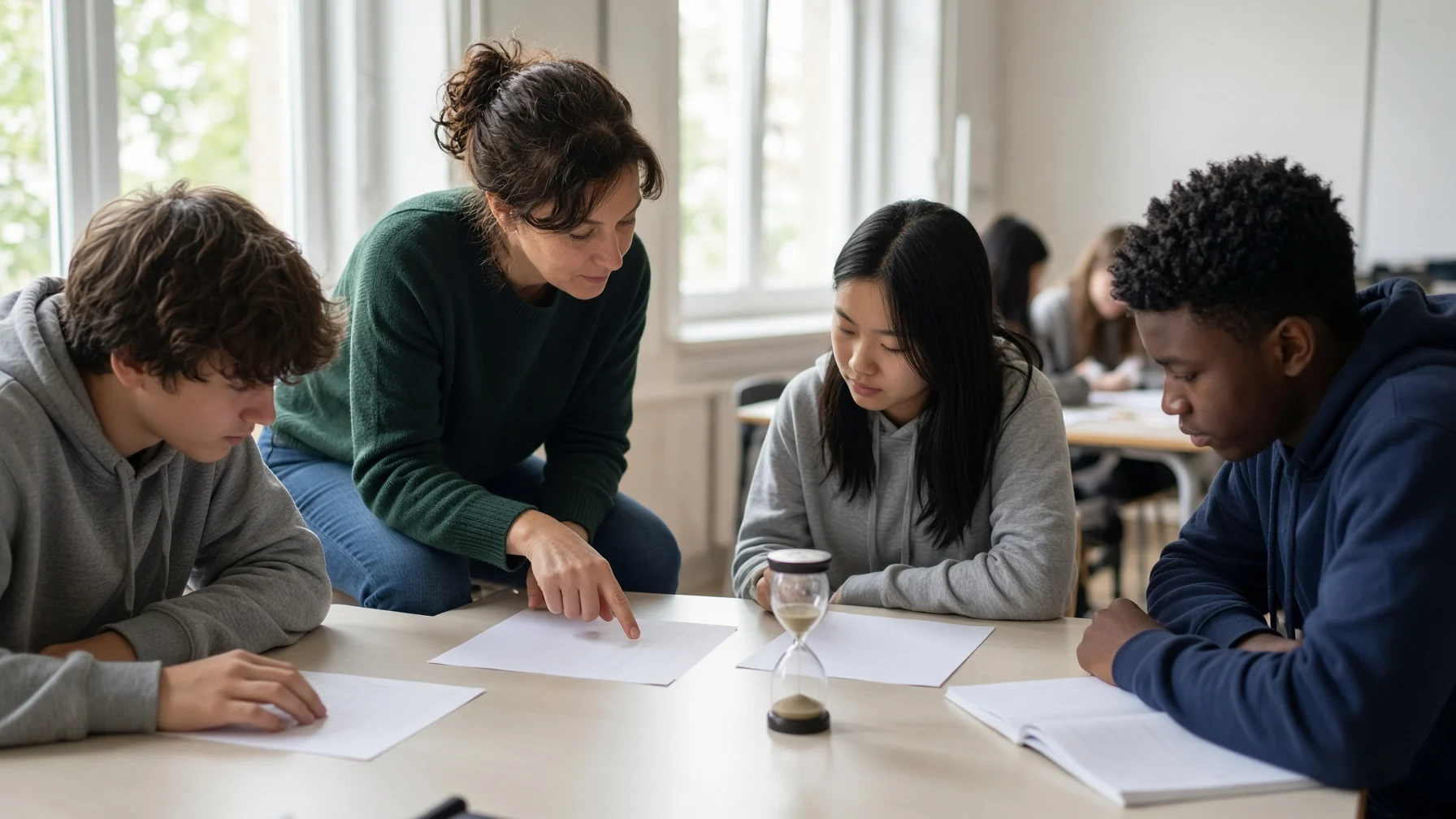
Not every study has produced the same results. A 2007 study comparing high school physics classes in Germany found that students who learned through jigsaw showed greater interest and motivation, but scored lower on the parts they had learned from classmates than students taught those parts directly by the teacher. A study published in Norway in 2008 found no evidence that the method reduced prejudice. Critics have also consistently pointed out that the quality of learning can vary depending on the ability of the student doing the explaining.
- Expert Group Check: the teacher should circulate among the expert groups and correct misunderstandings in advance so that wrong information does not spread.
- Segment Balancing: each piece should be similar in length and difficulty so that the burden does not fall on particular students.
- Role Assignment: appointing a group leader who keeps time and manages the speaking order prevents one person from dominating the conversation.
The jigsaw classroom is a cooperative learning method that divides the material into pieces, gives one to each student, and has students teach one another to complete the whole. Born in a classroom frozen by competition, this method turned studying from something you win alone into something you complete together.
Realizing that the classmate sitting next to you holds a piece you do not have: that is the first step toward a classroom where everyone grows together.