Suppose two foods are both labeled as having 20 g of protein. One, like eggs or milk, has the building blocks the body needs in good balance, while the other is short on certain ones. The two proteins would not do the same work in the body. The amount alone does not tell the whole value of a protein, because what it is made of, in what proportions, and how well the body takes it in all come with it.
The Protein Digestibility Corrected Amino Acid Score (PDCAAS) is a method that tries to express this difference as one number. In 1989 a joint expert consultation of the Food and Agriculture Organization of the United Nations (FAO) and the World Health Organization (WHO) recommended it as a way to evaluate protein quality, and for a long time afterward it was used as something like the standard for rating protein quality. The score runs from a top value of 1.0 down to values near 0.
This article covers, in order, the essential amino acids that PDCAAS is built on, how it is calculated, why scores differ by food, its limitations and the newer measure introduced to make up for them, and how to use the score at the table.
How to Read Protein Quality as a Score
The Essential Amino Acids That Decide Protein Quality
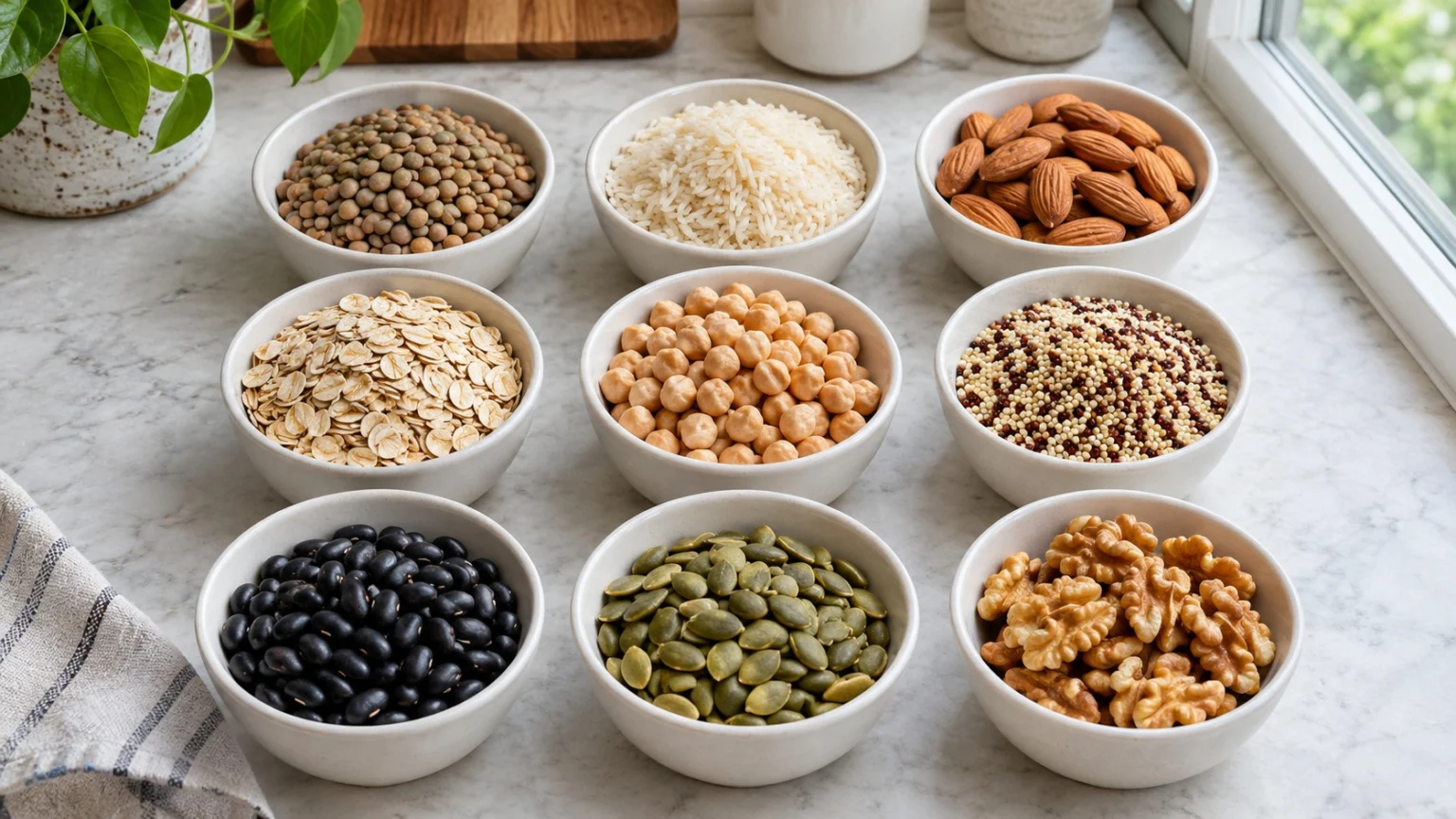
Protein is a substance made of amino acids strung together in long chains, and the human body cannot make nine of them in sufficient amounts on its own, so they have to come from food. These are called essential amino acids. When you eat protein, the body breaks it down into amino acids, absorbs them, and uses them to build the proteins it needs. If even one of the nine ingredients runs short, the work stalls at the level of that ingredient.
So the quality of a protein comes down to two questions. First, are the essential amino acids present in good balance relative to what the body needs? Second, how much of the protein you eat is actually digested and gets into the body? PDCAAS multiplies the answers to these two questions into a single score.
How Is PDCAAS Calculated?
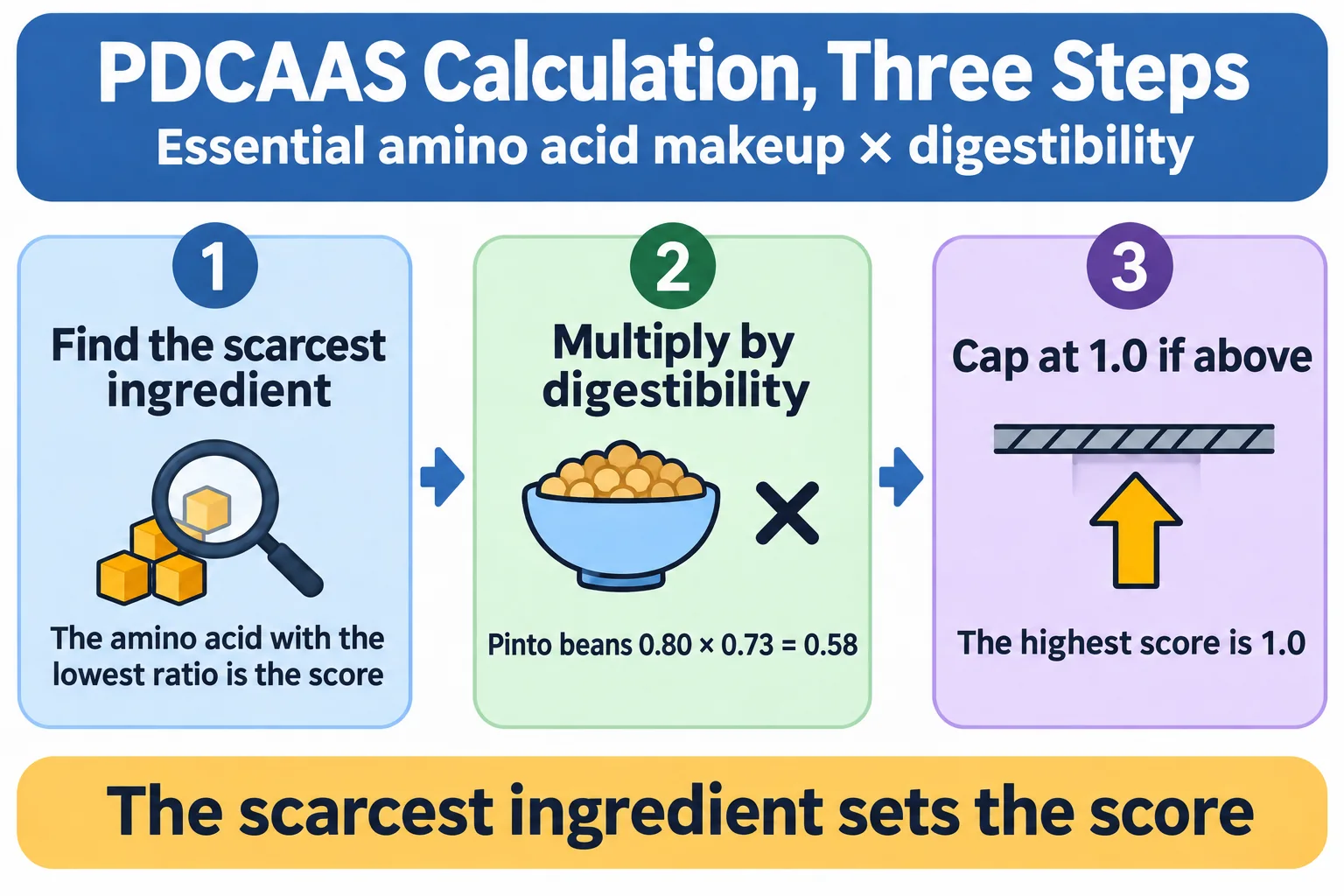
The calculation has three main steps. First, you compare the amount of each essential amino acid in 1 g of the food’s protein with the amount in a reference protein and work out a ratio. The reference is based on the amino acid requirement pattern of children aged 2 to 5, reportedly because a protein that suits children, who need more, was judged to be sufficient for other ages too. The lowest of these ratios is the amino acid score. Finally, you multiply this value by the protein’s true digestibility.
(1) Find the scarcest ingredient
The amino acid with the lowest ratio is called the limiting amino acid. Just as the water level in a wooden barrel is set by its shortest stave, a protein’s score is set by its scarcest amino acid.
(2) Correct for digestibility
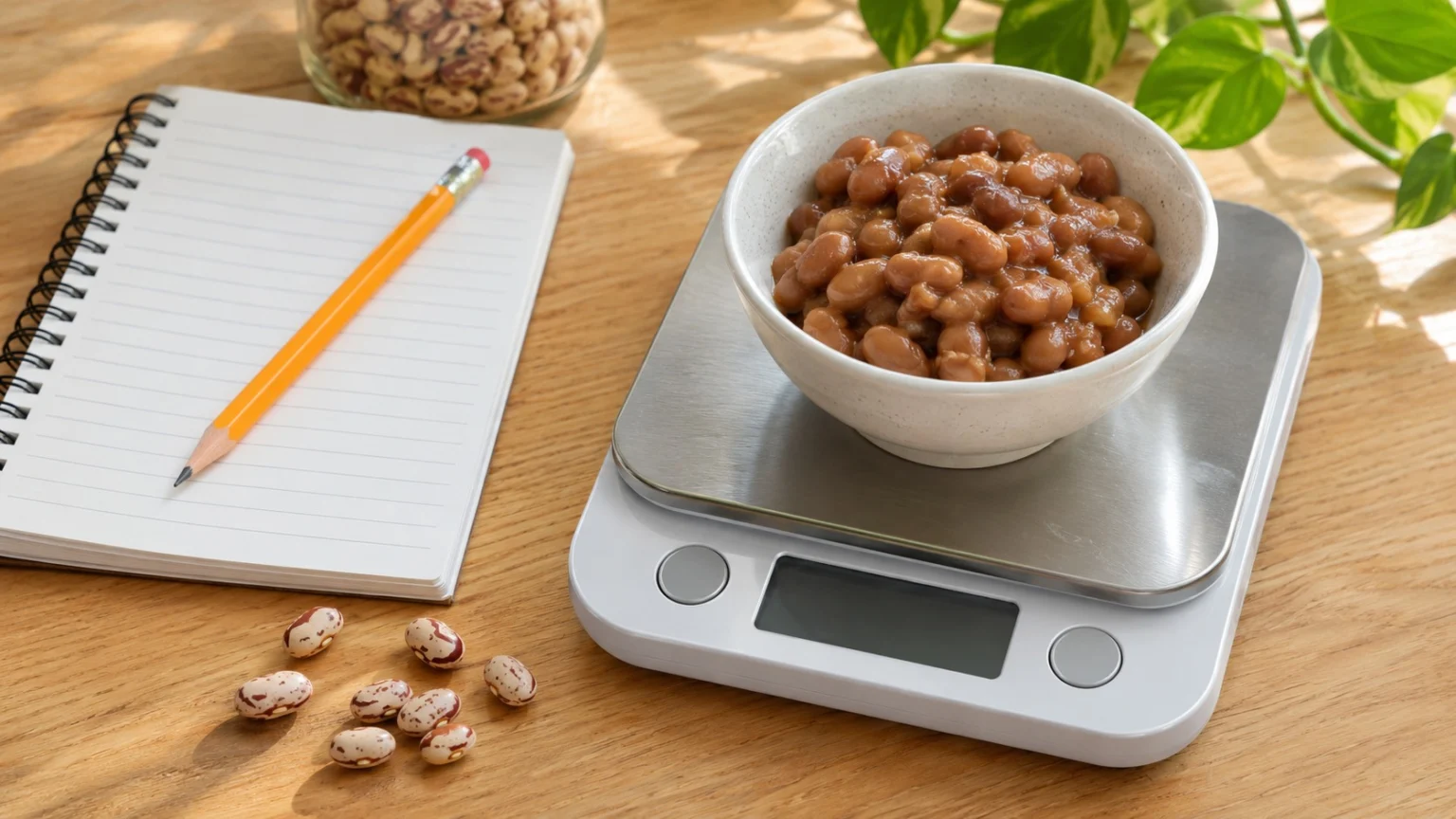
In an example given by Health Canada, pinto beans, a type of kidney bean, had a lowest ratio of 0.80 for tryptophan and a true digestibility of 73%. The score is therefore 0.80 times 0.73, which is 0.58. The example shows that even a fairly good amino acid makeup lowers the score if the protein is not well digested.
(3) Cap anything above 1.0 at 1.0
A protein whose result exceeds 1.0 is cut off and shown as 1.0, because amino acids beyond what is needed are considered unused.
Why Scores Differ from Food to Food
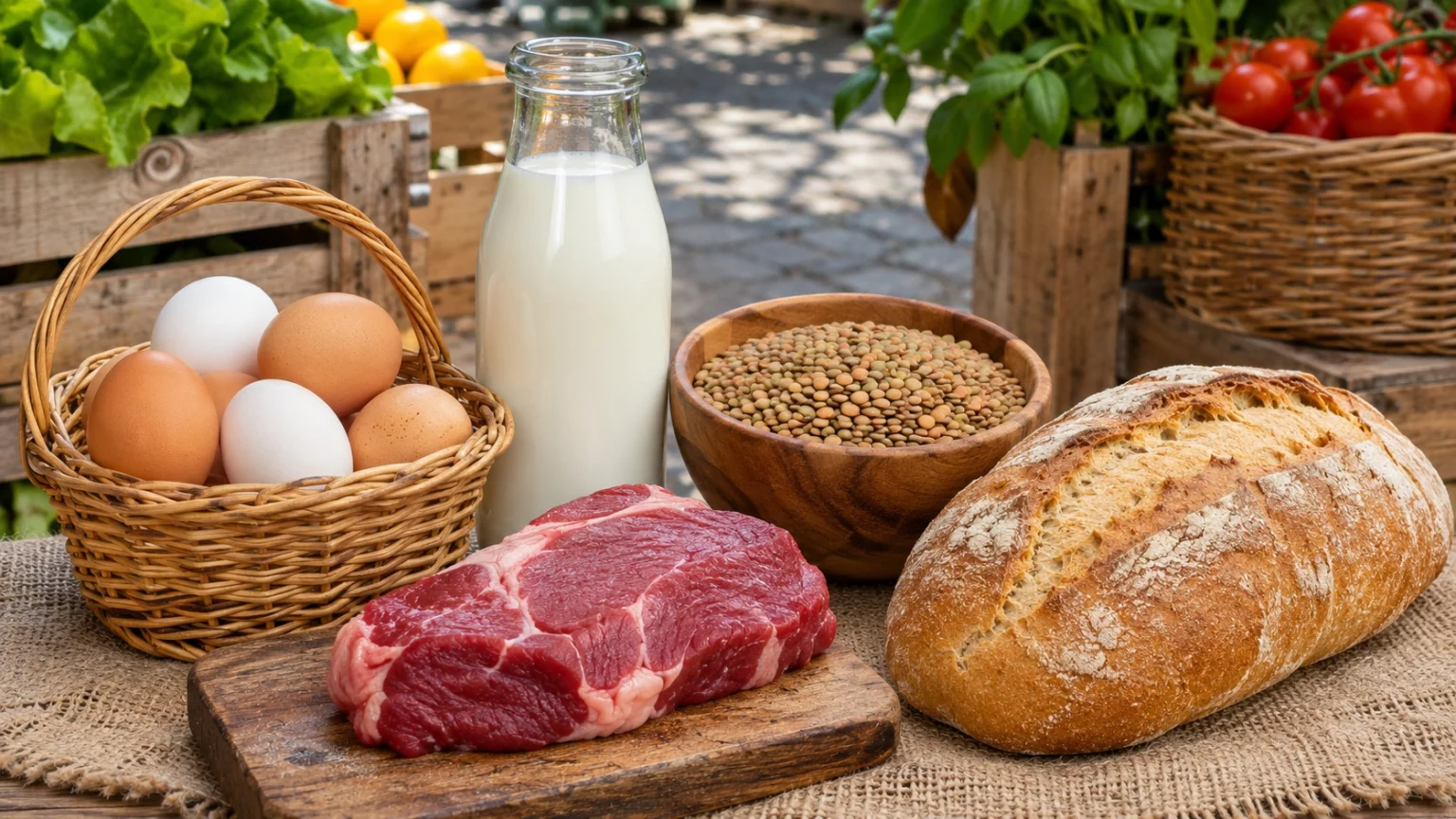
Typical foods that score 1.0 are casein (a milk protein), soy protein isolate, and egg white. Beef is known to be around 0.92, while wheat gluten is on the low side at 0.25. The main reason is that wheat gluten is badly short of an essential amino acid called lysine.
- Animal foods (Animal Protein): Eggs, milk and meat contain the nine essential amino acids close to what people need and are digested well, so they tend to score high.
- Cereal grains (Cereal Grains): They are low in lysine, so lysine often becomes the limiting amino acid.
- Legumes (Legumes): They are rich in lysine, but ingredients such as methionine or tryptophan tend to become the limiting amino acid, and their digestibility is on the low side compared with animal foods.
A low score does not mean the food is bad. Many foods, such as wheat-flour foods or rice, have low protein quality yet steadily supply energy and protein in our diets. Also, even for the same food, digestibility changes with processing and cooking, and reported scores differ somewhat depending on the study method and sample. So food scores are better read as rough levels than as precise points.
Limitations, a Newer Measure, and How to Use It at the Table
Several weaknesses of PDCAAS have been pointed out. It corrects digestibility with a single value for the whole protein, and because that value is measured from feces, it is said to be hard to reflect the amount of amino acids actually absorbed. Also, since everything above 1.0 is cut off, differences among very good proteins are hidden.
To fix these problems, in a 2013 report the FAO recommended the Digestible Indispensable Amino Acid Score (DIAAS) as a new measure to replace PDCAAS. It applies digestibility measured at the ileum, the end part of the small intestine, to each amino acid individually, and in principle does not cut off values above 1.0.
(1) Let ingredients make up for each other
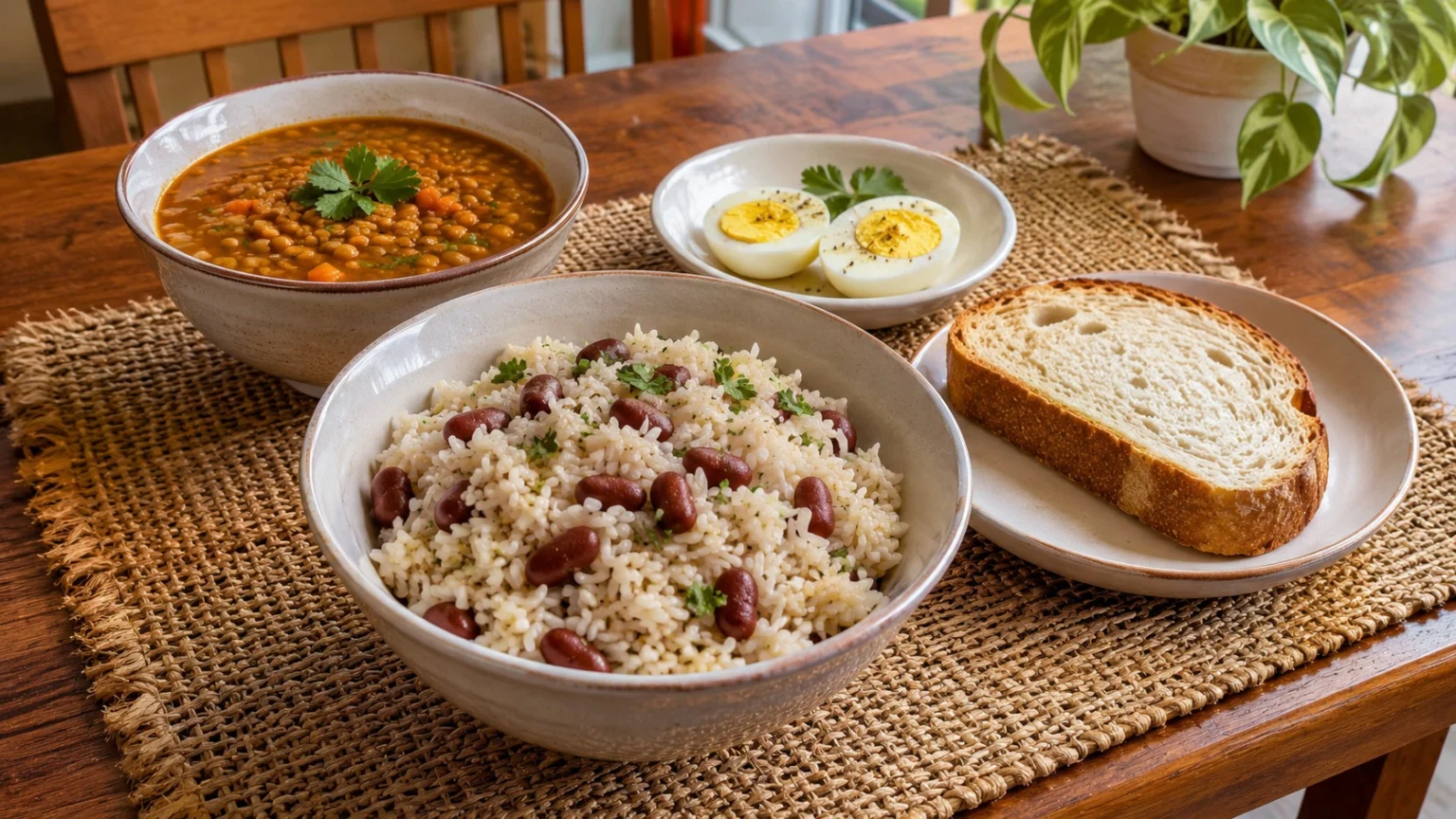
The lysine that cereals lack is supplied by legumes, and the methionine that legumes lack is supplied by cereals. Mixing them, such as adding beans to rice or serving lentil soup with bread, improves the protein makeup of a meal.
(2) Don’t judge by one score
Remember that protein quality is met across a whole day of eating rather than in a single meal, and that other nutrients such as fat and dietary fiber should be considered too.
The value of protein is set not only by how much you eat but also by what it is made of and how much the body takes in. Reading that difference as a score and letting foods complement one another at the table is the first step to using PDCAAS well.