For a long time, the sea floor thousands of meters down, where sunlight never reaches, was thought to be like a desert: cold, dark, and short on food. Then, in the late 1970s, a scene appeared before human eyes for the first time: chimneys standing in the middle of that darkness, belching black smoke, with clams and tube-shaped worms bearing bright red plumes packed densely around them. The source of a sight that even scientists found hard to believe was the hydrothermal vent.
A hydrothermal vent (Hydrothermal Vent) is a place where water heated by the Earth’s internal heat gushes out through cracks in the sea floor. Vents cluster mainly near mid-ocean ridges, where the plates that move the continents pull away from each other, and they exist because the Earth is geologically alive and has abundant water on its surface.
In this piece we will look, in order, at how these vents were discovered, how black chimneys grow, what the creatures that live without sunlight feed on, and the Lost City, which works in an entirely different way.
Another World Shaped by Hot Springs Beneath the Sea
1977: Unexpected Life Outside the Submersible’s Window
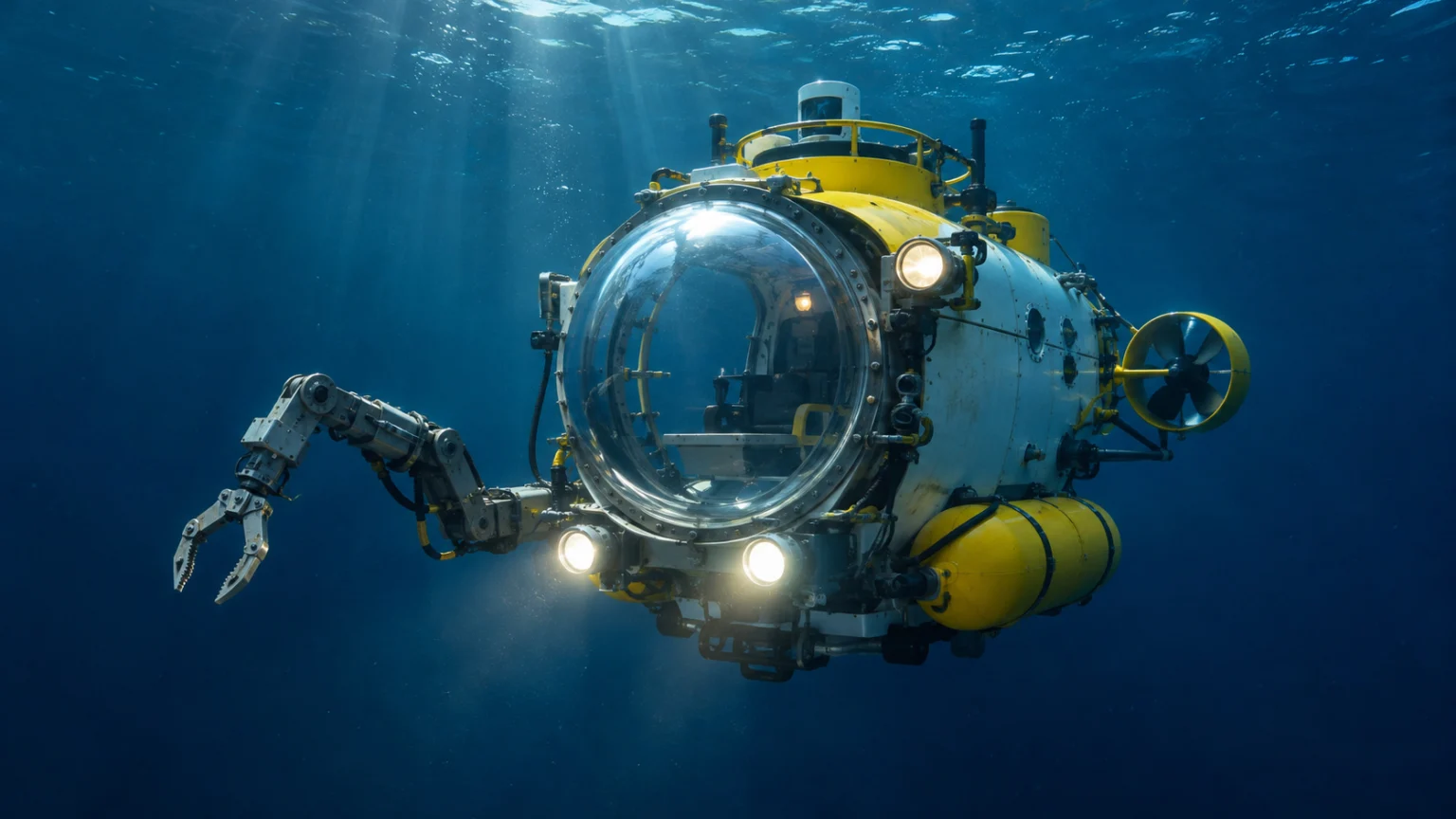
In February 1977, researchers aboard the American deep-sea submersible Alvin (Alvin) directly observed cracks venting warm water on the Galápagos Rift and the creatures crowding around them, and collected samples. Several geologists took part in the expedition, including Jack Corliss (Jack Corliss) of Oregon State University.
(1) A Discovery Foretold
In 1976, the Scripps Institution of Oceanography first picked up unusual signals with a camera towed through the deep sea, and the following year researchers returned to the same spot to confirm them with their own eyes.
(2) The Discovery of Black Smoke
In the spring of 1979, at 21 degrees north on the East Pacific Rise, Alvin found chimneys spewing black particles, which came to be called black smokers.
(3) An Unexpected Landscape
Even though there was no light at all, the place was teeming with life. The fact that this life runs on an energy source other than sunlight was gradually revealed by later research.
400-Degree Water That Doesn’t Boil, and Chimneys That Grow

The seawater around a vent is cold, about 2 degrees, but the water gushing out ranges from 60 degrees to, at its highest, more than 400 degrees. On the southern Mid-Atlantic Ridge, 464 degrees was even briefly recorded. The water still does not flash into steam because, at a depth of 2,500 meters, the pressure reaches about 250 atmospheres.
(1) The Moment Minerals Solidify
The hot water is loaded with metals and sulfur leached from the crust, and when it meets cold seawater, minerals settle out all at once and become the chimney walls.
(2) What Makes It Black
First anhydrite, a calcium sulfate mineral, builds up, and then sulfides of copper, iron, and zinc fill the gaps. The black smoke gets its color from these sulfide particles.
(3) Fast-Growing Towers
Chimneys have been recorded growing about 30 centimeters a day, and some reach 60 meters in height. In 1996, off the coast of Oregon, a 40-meter chimney nicknamed Godzilla even collapsed on its own. Cooler vents rich in barium, calcium, and silicon give off white smoke and are called white smokers.
Water leaving a chimney is lighter than the surrounding seawater, so it rises and spreads out, and the metals dispersed this way also play a part in the ocean’s iron cycle.
An Ecosystem That Eats Chemicals Instead of Sunlight

The density of life around vents is known to be 10,000 to 100,000 times higher than on the surrounding sea floor. Supporting this abundance are bacteria that draw energy from chemicals such as hydrogen sulfide to make nutrients. What photosynthesis does with light, chemosynthesis does with chemicals.
(1) A Worm With No Mouth and No Gut
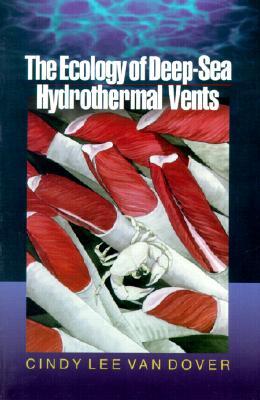
Among tube worms, Riftia (Riftia pachyptila) has no mouth or digestive tract; it lives on nutrients made by bacteria living in an organ in its body called the trophosome. This symbiosis was not uncovered until 1981.
(2) Red Plumes That Carry Poison
Hydrogen sulfide is poisonous to most living things, but the hemoglobin in a tube worm’s red plume carries both oxygen and hydrogen sulfide and delivers them to the bacteria.
(3) The Upper Levels of the Food Chain
Above the small crustaceans that graze on bacteria, the chain continues layer by layer through shrimp, crabs, sea snails, and even octopuses.
More than 300 new species have been discovered at vents so far. The scaly-foot snail, first reported in 2001 at the Kairei vent field in the Indian Ocean, wears armor made not of calcium but of iron sulfide. Still, it would go too far to say this ecosystem has nothing at all to do with the Sun, because the creatures here also depend on oxygen in seawater, produced by photosynthesis.
The Lost City and the Questions Still Open
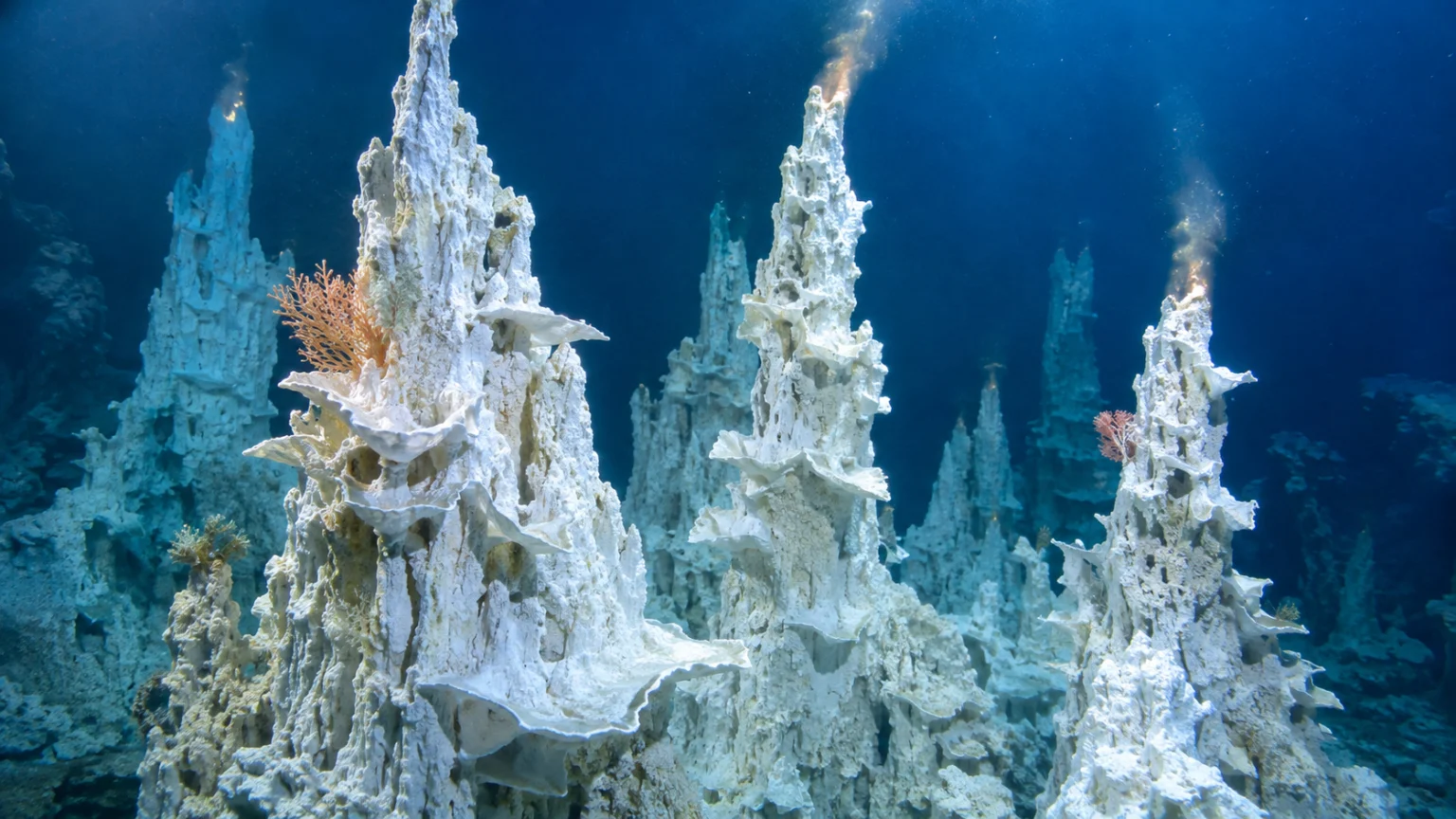
In December 2000, an entirely different vent field was discovered on the Atlantis Massif (Atlantis Massif), beside the Mid-Atlantic Ridge. Its name is the Lost City. It is driven not by volcanic heat but by the heat of chemical reactions that occur when mantle rock meets seawater; its water is cooler, at 40 to 90 degrees, and strongly alkaline. Traces of activity lasting at least 30,000 years have been confirmed here, so it is considered a place that has endured far longer than short-lived black chimneys.
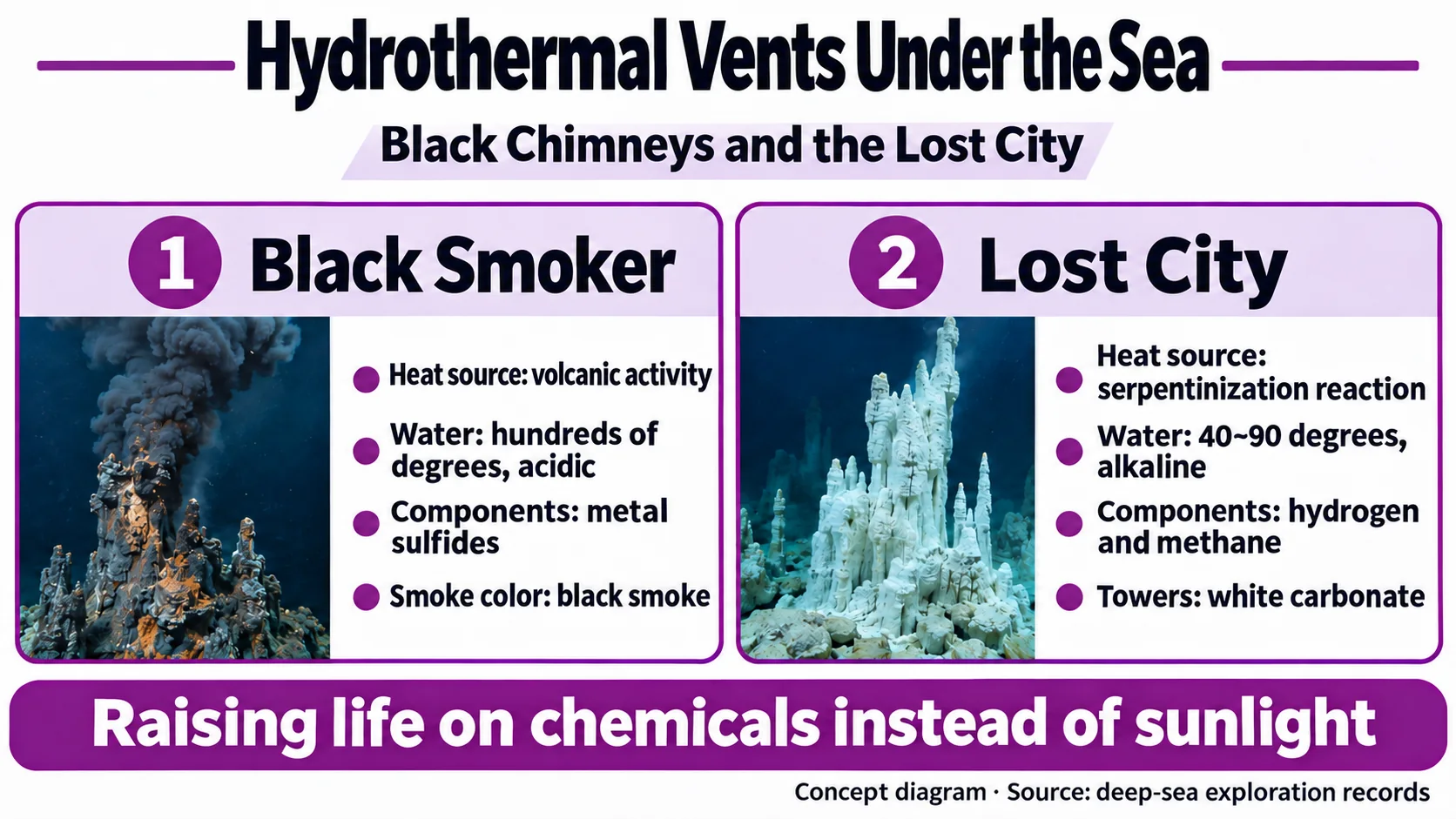
- Black Smoker (Black Smoker): Volcanic activity is the heat source, and its acidic water, at hundreds of degrees, is rich in metal sulfides.
- Lost City (Lost City): The serpentinization reaction of mantle rock is the heat source; it releases hydrogen and methane, and white carbonate towers rise there.
- Poseidon (Poseidon): The largest tower in the Lost City, reaching about 60 meters in height.
- Origin of Life (Origin of Life): There is a hypothesis that vents like these were the cradle of life, but the debate in the scientific community continues.
As of 2009, there were about 500 known active vent fields, and nearly half of them had not been seen directly but were only inferred from signals in the water. There is even an assessment that less than 1 percent of the sea floor is well known, so much remains to be explored. The deepest vent was confirmed in the Cayman Trough in the Caribbean Sea, at a depth of about 5,000 meters. The curiosity to keep asking what lies where we cannot see is the first step in exploring hydrothermal vents.