At the seafood counter of a large supermarket or a sashimi restaurant, you can enjoy olive flounder and rockfish all year round. Advances in aquaculture technology and innovations in frozen and refrigerated logistics have even blurred the sea's seasonal rhythms.
For marine organisms, however, being 'in season' means more than a simple change of seasons. For fish and other seafood animals, which cannot regulate their own body temperature, changes in water temperature are an absolute environmental variable on which survival and reproduction depend.
Seafood becomes particularly flavorful and nutritious in certain seasons primarily because of two biological mechanisms.
The first is 'the biological process of accumulating energy in the body ahead of the spawning season,' and the second is 'a defensive mechanism that increases body fat to withstand cold water temperatures.'
This material traces the biochemical changes marine organisms undergo amid seasonal changes in water temperature and spawning cycles, and analyzes the scientific benefits these changes offer human health and taste in the form of a 'Year-Round Seafood Nutrition Map.'
Biological Mechanisms and a Nutrition Map of Seasonal Seafood Throughout the Year
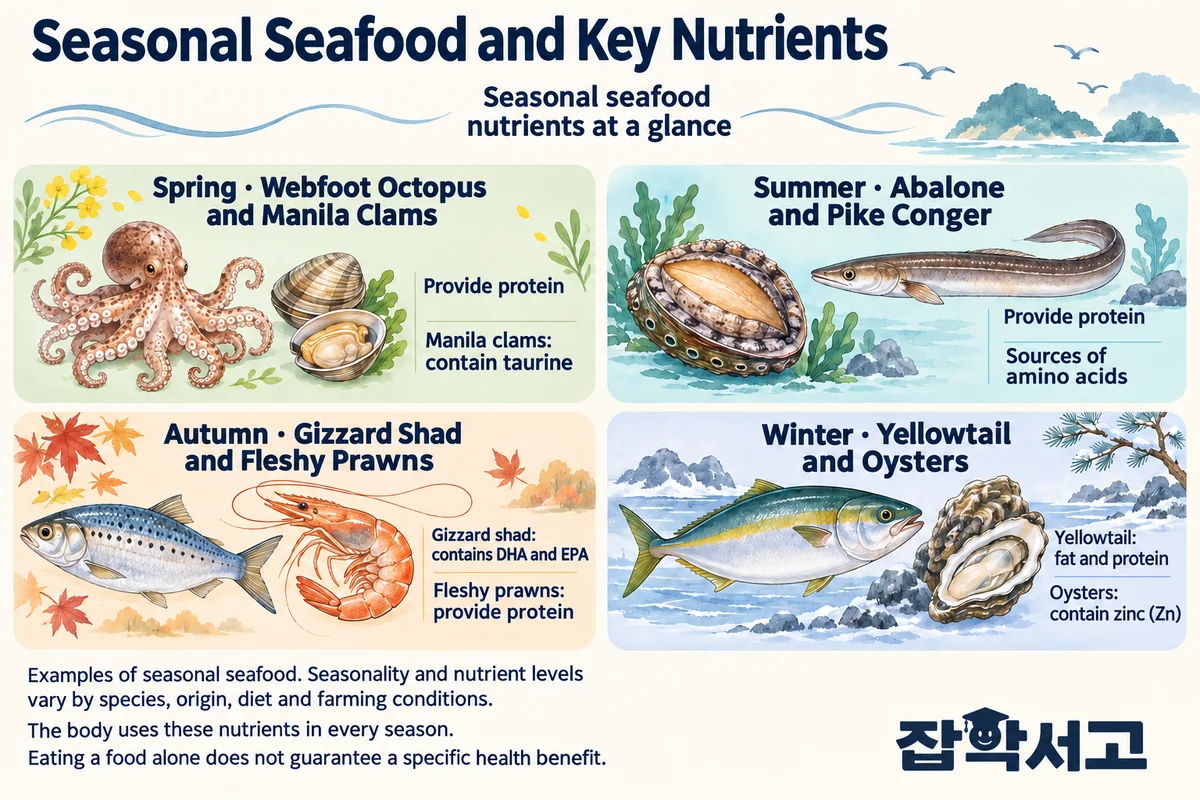
Spring: Concentrating Energy in Preparation for Spawning, Taurine and Organic Amino Acids
Spring is a time when rising seawater temperatures rapidly activate marine ecosystems. Many seafood organisms prepare to spawn in spring, accumulating nutrients in their bodies at their greatest density.
Representative Seafood: Webfoot Octopus, Ridged-Eye Flounder, Manila Clams, Sea Squirts
- Key Scientific Mechanisms
- Nutrient Accumulation Just Before Spawning and Taurine: Spring webfoot octopus and Manila clams develop eggs and grow larger ahead of the spring spawning season. At this time, they synthesize large quantities of taurine, an organic amino acid, to regulate osmotic pressure within cells and protect reproductive cells. The presence of taurine alone does not guarantee that eating the food improves liver function or relieves fatigue.
- The Umami of Chondroitin and Amino Acids: As the expression 'spring flounder' suggests, coastal gurnards and flounders that finish spawning in winter and put on flesh in spring develop a rich spectrum of collagen and amino acids in their flesh, producing a light yet deeply savory flavor.
An Easy-to-Understand Example
Spring webfoot octopus contains taurine. Eating a food cannot be equated with administering a fatigue-relieving drug to liver cells.
Summer: High-Protein Stamina and Water Metabolism for Withstanding High Water Temperatures
Rising seawater temperatures in summer make fish metabolism highly active. During this period, seafood reaches its maximum protein density through vigorous physical activity, rather than its fat content.
Representative Seafood: Pike Conger (Hamo), Sea Bass, Squid, Abalone
- Key Scientific Mechanisms
- High-Protein Muscle Tissue and Arginine: Summer pike conger and abalone feed vigorously in warm water, developing their muscle tissue. During this time, they accumulate large quantities of sticky protein components and arginine, an amino acid that helps dilate blood vessels. Arginine is involved in nitric oxide synthesis in the body, but its presence alone does not establish that eating the food improves blood flow and stamina.
- Glycine and Static Osmotic Pressure: To balance water within their bodies at high water temperatures, summer squid increase sweet-tasting amino acids such as glycine and betaine, giving them a fresh sweetness.
An Easy-to-Understand Example
Summer abalone and pike conger provide protein and various other nutrients. Eating them alone cannot be assumed to unblock blood vessels or rapidly restore energy.
Autumn: Accumulating Fat for Winter, an Explosion of Unsaturated Fatty Acids (DHA/EPA)

Autumn is the season when fish store the greatest abundance of high-calorie nutrients in their bodies to get through the cold winter. Their body fat percentage reaches its highest level of the year.
Representative Seafood: Gizzard Shad, Fleshy Prawns (Large Shrimp), Hairtail, Mackerel
- Key Scientific Mechanisms
- A Sharp Rise in the Fatty Acid Proportion and DHA/EPA: Autumn gizzard shad, said to be so delicious that 'even a daughter-in-law who has left home will return,' can accumulate as much as 3 times or more body fat than in spring. The fat fish accumulate contains a variety of fatty acids, including omega-3 fatty acids such as DHA and EPA. DHA and EPA are components of cell membranes, and consuming them does not guarantee lower blood cholesterol.
- Glutamic Acid and Organic Pigmentation Mechanisms: The astaxanthin in the shells of autumn fleshy prawns and the glutamic acid in their flesh are antioxidants that protect cells amid autumn temperature changes, as well as the substances responsible for a powerful umami flavor.
An Easy-to-Understand Example
Fat contributes to the rich, nutty flavor of autumn gizzard shad. Fat is a stored energy source, not an insulating oil that prevents blood from solidifying.
Winter: Firm Flesh and Antifreeze Glycoproteins Produced by Extremely Low Water Temperatures
The winter sea is a harsh environment for living organisms. To prevent their body fluids from freezing in water temperatures close to below freezing, winter seafood organisms pack their cells densely and maximize the concentration of organic substances.
Representative Seafood: Yellowtail, Oysters, Gwamegi (Herring/Pacific Saury), Maesaengi, Mussels
- Key Scientific Mechanisms
- Fat Distribution Within Muscles (Marbling) and Glycogen: Fat is distributed within the muscles of winter yellowtail and is stored as an energy source. Winter oysters also absorb nutrients from the sea, increasing their glycogen content—a carbohydrate stored in the body—to at least 10 times its summer level, giving them a creamy, sweet flavor.
- Zinc (Zn) and Immune Minerals: Zinc, which winter oysters contain in large quantities, is an essential mineral that helps immune cells divide in winter and promotes hormone synthesis.
An Easy-to-Understand Example
Winter oysters are called 'the milk of the sea' because, to withstand the cold, they have filled up the nutrient tank called 'glycogen' inside their bodies. Their white, plump flesh is a highly concentrated bundle of nutrients created by nature.
A Seasonal Seafood Lifestyle
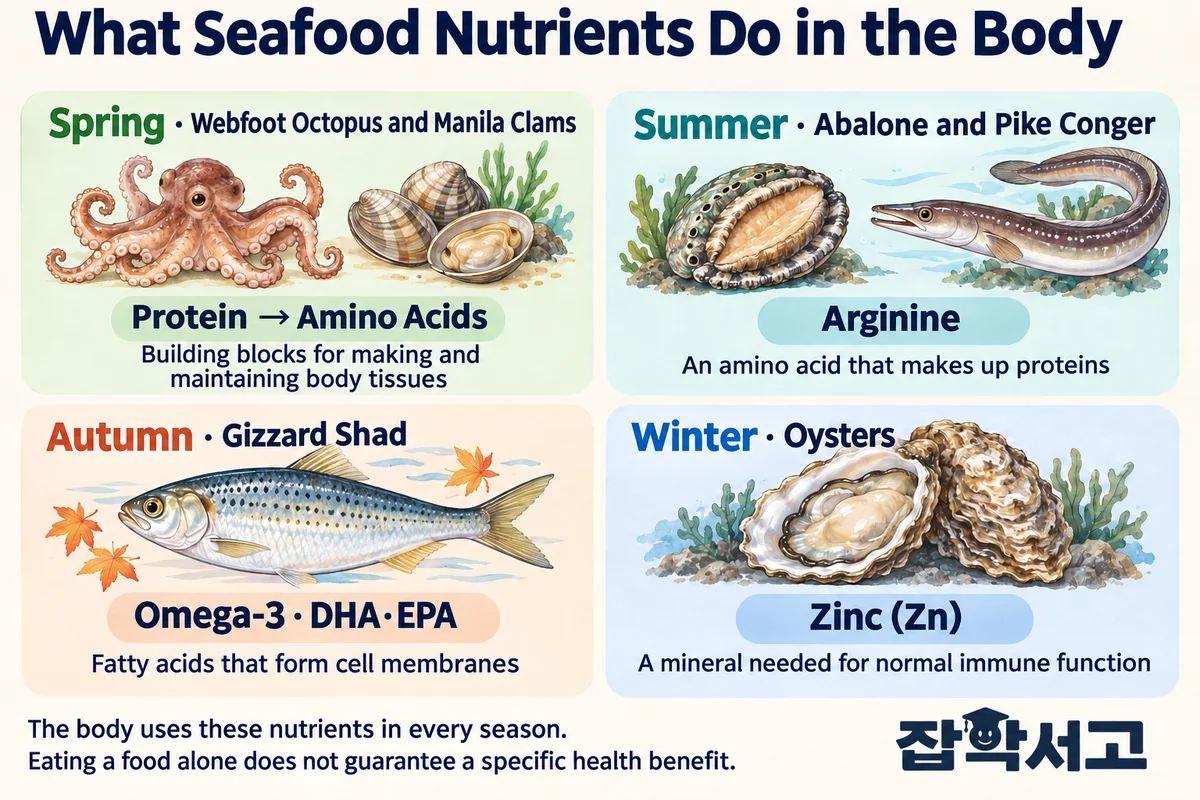
Choosing and eating the seafood the sea offers in each season goes beyond the simple pleasure of good food; it is the most scientific dietary habit for consuming nutrition optimized for changes in water temperature in the Earth's ecosystem.
- Differences in Fat Quality: The unsaturated fatty acids in autumn and winter seafood are the finest antioxidant oils for protecting blood vessel health.
- Synchronization of Taurine and Minerals: Seafood contains various nutrients that the human body needs regardless of the season. Eating seasonal foods does not guarantee recovery or enhanced function of particular organs.
Bring the sea's four seasons to your table with the Year-Round Seafood Nutrition Map. This will be the smartest general knowledge to accompany nature's biological clock.