The Michelin Guide has established itself as the most authoritative standard for assessing restaurant quality worldwide. Launched in 1900 as a promotional tool for a tire company, the guide gradually earned considerable trust among gourmets and food industry professionals, becoming more than a simple review publication and serving as an important yardstick that determines the quality and reputation of restaurants around the world.
Michelin is also rendered as "Miswerin" in Korean, though this form is closer to its English pronunciation. In French, "Michelin" is pronounced more like "Misyullaeng," and this French pronunciation, "Misyullaeng," is also more commonly used in Korea.
This article provides an in-depth analysis of the Michelin Guide's history and influence, the distribution of Michelin-starred restaurants worldwide, its evaluation criteria, and the impact of these assessments on the restaurant industry.
The History and Influence of the Michelin Guide
The Origins and Early Years of the Michelin Guide
The Michelin Guide was first published in France in 1900 by the Michelin tire company. At a time when motoring was just beginning, its aim was to provide drivers with useful travel information. Early editions included maps and information about tire repair shops and gas stations, with relatively little coverage of restaurants and hotels. However, as restaurant reviews grew in importance, a star-based rating system was introduced in 1926, marking the beginning of the Michelin Guide's rise to the global authority it holds today.
Global Expansion and the Promotion of Gastronomic Cultural Exchange
Initially published only in France, the Michelin Guide gradually expanded throughout Europe, and by the mid-20th century, its influence had extended beyond Europe to Asia and the Americas. Today, the Michelin Guide is published in major countries on each continent, reflecting the distinctive gastronomic cultures of different regions and encouraging global gastronomic cultural exchange. This provides opportunities for chefs around the world to learn different culinary styles and cooking methods, and for the gastronomic cultures of different countries to develop through mutual exchange.
The Symbolism of Michelin Stars and Their Impact on the Restaurant Industry
Michelin stars have become a symbol that goes beyond simple restaurant ratings. Restaurants awarded stars gain considerable prestige, which directly leads to attracting customers and increasing revenue. For this reason, many chefs and restaurant managers aim to be listed in the Michelin Guide, further intensifying competition throughout the restaurant industry. The Michelin Guide's assessments have an important impact not only on how restaurants operate but also on chefs' careers. Michelin stars have become an indicator symbolizing the artistic value of chefs and restaurants, rather than simply a restaurant's reputation.
The Michelin Guide and the Artistic Value of Gastronomic Culture
The Michelin Guide has moved beyond its role as a simple review publication to become an important means of recognizing the artistic value of food and dining spaces. Michelin-starred restaurants are seen not simply as places that serve delicious food, but as spaces that elevate gastronomic culture to the level of art. This demonstrates the influence of the Michelin Guide, which comprehensively evaluates not only the food itself but also a restaurant's interior, service, and atmosphere. This cultural value is also regarded as one of the important reasons the Michelin Guide has come to occupy a central position in global gastronomic culture.
The Michelin Guide's Contributions to the Development of Gastronomic Culture
The Michelin Guide's rigorous evaluation criteria have made a substantial contribution to the development of modern gastronomic culture. It has played an important role in discovering and spreading new culinary styles and techniques, and has encouraged reinterpretations of traditional dishes, offering gourmets a wide variety of choices. The Michelin Guide has inspired chefs who pursue innovation and creativity, making gastronomic culture richer and more diverse. This means that the Michelin Guide has become an important driving force in the development of gastronomic culture, extending beyond its role as a simple review publication.
The Future of the Michelin Guide and the Gastronomy Industry
The Michelin Guide continues to expand its influence, bringing about major changes in the gastronomy industry worldwide. It will continue to introduce original and diverse gastronomic experiences from around the world and maintain its role as an important indicator that leads gastronomic culture. By opening new horizons in gastronomy, it is expected to make an important contribution to guiding the global gastronomy industry in a more dynamic and innovative direction.
The Distribution of Michelin-Starred Restaurants Worldwide
The Current Distribution of Michelin-Starred Restaurants Worldwide
Michelin-starred restaurants are spread across countries around the world, reflecting each region's distinctive gastronomic culture. Europe, in particular, is the birthplace of the Michelin Guide and has traditionally been home to many Michelin-starred restaurants. Countries with deep culinary traditions, such as France, Italy, and Spain, have established themselves as major centers because their abundant ingredients and long-standing culinary cultures meet the Michelin Guide's high standards. European restaurants have developed gastronomic culture by combining traditional cuisine rooted in a long history with new approaches. As a result, Europe's Michelin-starred restaurants have earned renown among gourmets worldwide.
The Growth of the Michelin Guide in Asia
Asia is rapidly emerging as a major market for the Michelin Guide. Japan has the largest number of Michelin-starred restaurants in Asia, and Tokyo in particular is famous as the city with the most Michelin-starred restaurants in the world. Japan's meticulous and refined cooking techniques and standards of service are highly rated by the Michelin Guide, and these culinary approaches have a major influence on the global gastronomic world. Michelin-starred restaurants are also becoming increasingly numerous in other Asian countries, including Hong Kong, Singapore, and Korea. Asian countries are establishing themselves as an important pillar of global gastronomic culture by presenting not only traditional dishes but also a variety of dishes with modern interpretations.
North America's Innovative Culinary Culture
The presence of Michelin-starred restaurants is also gradually expanding in North America. New York and San Francisco in particular have established themselves as leading cities for Michelin-starred dining in North America. As a country where diverse ethnic groups and cultures come together, the United States has many restaurants that reinterpret culinary styles from around the world in modern and creative ways. These original and experimental dishes are attracting the Michelin Guide's attention, and many restaurants are earning Michelin stars. This is evidence that the Michelin Guide views America's innovative culinary culture positively.
The Increase in Michelin Stars in South America and Africa
Although South America and Africa still account for a relatively small share of the Michelin Guide, interest in them is gradually growing. South American countries such as Brazil and Mexico are earning Michelin stars for creative dishes that make the most of their distinctive local ingredients and culinary traditions. These dishes play an important role in introducing South America's unique gastronomic culture to the world and demonstrate the competitiveness of South American cuisine in the global market. In Africa, although the number of Michelin-starred restaurants is still small, it is gradually increasing, and efforts continue to gain worldwide recognition for its diverse gastronomic cultures.
The Global Influence of the Michelin Guide
The even distribution of Michelin-starred restaurants worldwide demonstrates that the Michelin Guide encompasses diverse gastronomic cultures around the world, rather than being confined to particular countries or regions. This reflects the Michelin Guide's commitment to respecting each country's culinary culture and introducing it widely to readers. Beyond being a simple restaurant review publication, the Michelin Guide serves as an important medium for presenting the diversity and richness of global gastronomic culture.
In conclusion, the worldwide distribution of Michelin-starred restaurants demonstrates the Michelin Guide's international influence and serves as an important standard for recognizing and respecting diverse gastronomic cultures. This gives gourmets around the world a wider range of choices and contributes to exchange and development among the cuisines of different countries.
Michelin Evaluation Criteria: Taste, Service, and Atmosphere

The Michelin Guide evaluates restaurants primarily on three elements: taste, service, and atmosphere. These three criteria play a central role in assessing the overall experience a restaurant offers and are important factors in determining its Michelin star rating.
The Michelin Guide's Most Important Criterion: Taste
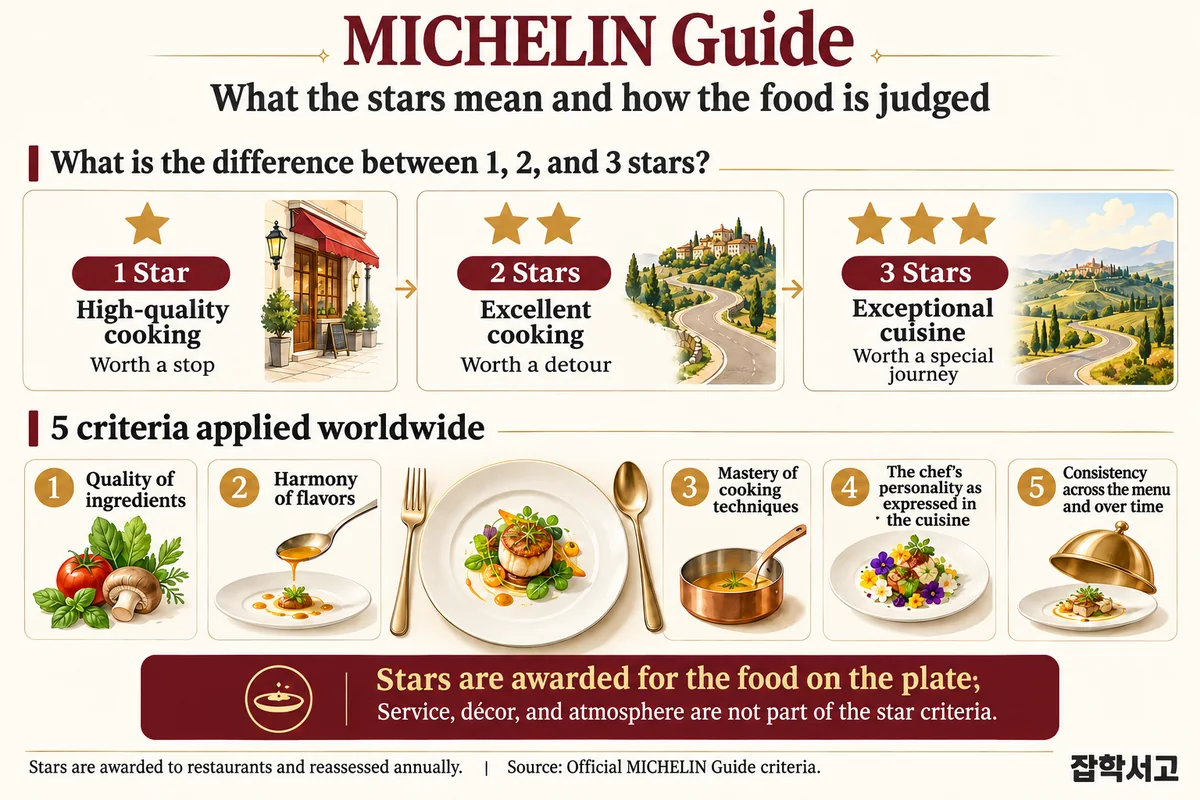
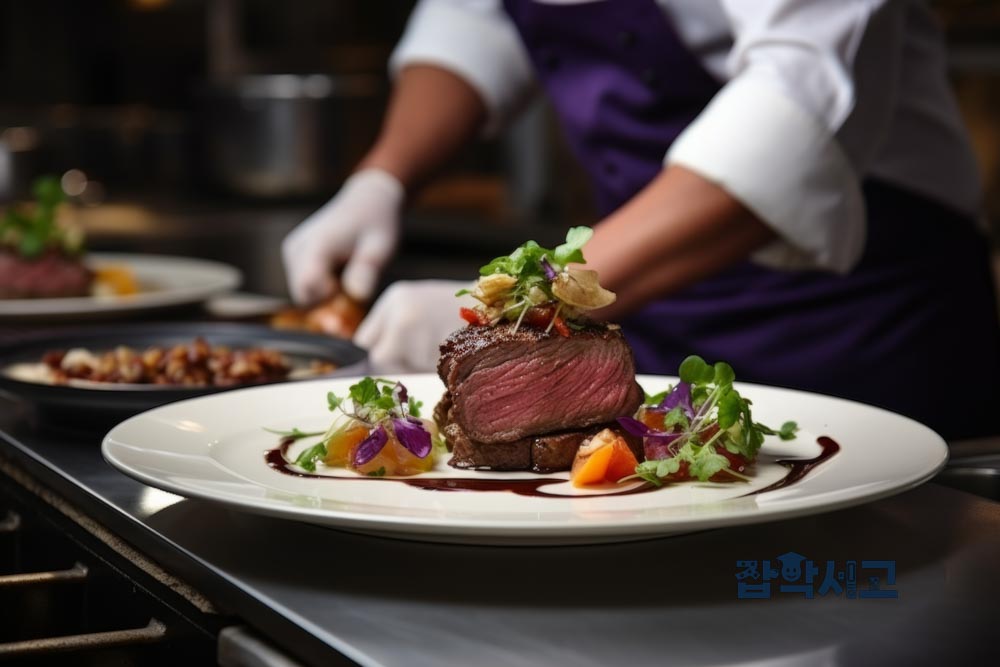
The most important element in Michelin's assessments is "taste." Michelin inspectors consider a number of detailed factors when evaluating the taste of a dish. Ingredients must be fresh, and key evaluation criteria include whether the ingredients complement one another and whether the chef's skill is clearly demonstrated in the cooking process. Creativity and culinary originality are also important factors. Beyond simply handling ingredients well, it is important to offer new flavor experiences that allow the food to leave a lasting impression on customers. The taste of the food reflects the essence of the gastronomic experience the Michelin Guide seeks.
Service That Determines Customer Satisfaction
"Service," together with taste, is an important part of completing the restaurant experience. Michelin inspectors look beyond the mere serving of food and closely evaluate restaurant staff's friendliness, responsiveness, and professionalism. Particularly important are how quickly and accurately staff respond to customers' needs and whether they can provide consistent service. Thoughtful service that allows customers to enjoy a comfortable and satisfying experience is one of the important criteria for earning Michelin stars.
A Distinctive Atmosphere That Completes the Gastronomic Experience
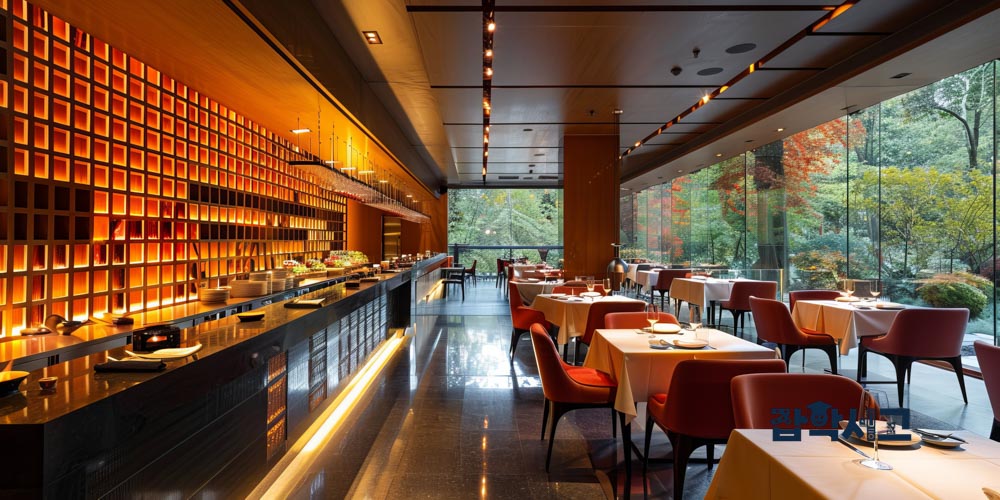
"Atmosphere" is also an important element in the Michelin Guide's assessments. A restaurant's interior, music, lighting, and spatial layout help customers enjoy their food more fully. Restaurants where these elements blend naturally to create a distinctive and special atmosphere are more likely to receive high scores from Michelin inspectors. This provides an important setting that goes beyond simply serving food to give customers a memorable experience.
The Meaning of Michelin Guide Stars
The Michelin Guide distinguishes restaurant standards through ratings ranging from 1 to 3 stars. The meaning of each star rating is as follows.
- 1 star means "an excellent restaurant in its area," indicating a place with a very high standard of cooking that is worth visiting.
- 2 stars mean "a restaurant offering excellent cuisine that is worth visiting even from far away." This rating requires recognition not only of the quality of the food but also of the chef's creativity.
- 3 stars mean "a restaurant where you can experience the finest cuisine, worth making a special journey for." Restaurants awarded 3 stars enjoy the highest prestige among gourmets worldwide, and their cooking has reached the level of art.
The Michelin Guide's Philosophy of the Gastronomic Experience
The Michelin Guide goes beyond simply evaluating delicious food. By comprehensively assessing taste, service, and atmosphere, it aims to provide customers with an unforgettable gastronomic experience. This reflects the Michelin Guide's philosophy of valuing not just an individual dish but the overall experience customers have when visiting a restaurant. Michelin's evaluation criteria also have a universality that allows them to assess diverse gastronomic cultures worldwide fairly, without being confined to a particular region. This has established the Michelin Guide as a trusted gastronomic review publication around the world.
The Michelin Guide's Impact on the Restaurant Industry
The Michelin Guide's Effect on Restaurant Reputation
The Michelin Guide confers considerable prestige that symbolizes a restaurant's quality. Receiving a Michelin star gives a restaurant brand value in its own right, attracting the attention of gourmets worldwide. This greatly helps attract customers and also leads to increased restaurant revenue. Chefs and restaurant managers aim for Michelin stars because gaining prestige is directly linked to financial success in this way. Michelin stars become a symbol that inspires customers' trust, acting like a guarantee of a restaurant's quality.
Changes in the Restaurant Industry Brought About by the Michelin Guide
The Michelin Guide also has a profound influence on restaurant management practices. Many restaurants strive to improve their food's taste, service, and atmosphere to meet the Michelin Guide's evaluation criteria, contributing to an overall improvement in standards across the restaurant industry. As a result, customers can enjoy better gastronomic experiences, and the restaurant industry provides higher-quality service. These changes show that the Michelin Guide is encouraging positive changes in the restaurant industry.
Discovering New Gastronomic Trends and Techniques
The Michelin Guide does more than assess established, outstanding restaurants. It plays an important role in discovering new culinary trends and cooking techniques and introducing them to the world. Restaurants selected by Michelin often present creative and innovative dishes, helping shape new trends throughout the gastronomy industry. These culinary developments spread quickly through the Michelin Guide, inspiring chefs and gourmets around the world. In this way, the Michelin Guide continually encourages culinary evolution and innovation.
The Michelin Guide's Influence and the Pressure It Creates
Meanwhile, the Michelin Guide's enormous influence sometimes becomes a subject of controversy. Not every restaurant can meet Michelin's standards, and earning Michelin stars requires considerable capital and effort. This pressure can often place an excessive burden on chefs and staff and create difficulties for restaurant management. Because it is difficult to sustain the high standards of service and food quality required to retain Michelin stars, the resulting stress is sometimes raised as a concern. This remains one of the challenges the Michelin Guide needs to address.
The Michelin Guide's Positive Impact and Future Outlook
Overall, many view the Michelin Guide as having a positive impact on the restaurant industry. It plays an important role in driving development and innovation in the restaurant industry, further advancing gastronomic culture worldwide. By providing customers with better gastronomic experiences and helping the restaurant industry continue to grow, the Michelin Guide will remain important in the future.
The Michelin Guide has established itself as an important indicator leading global gastronomic culture, extending beyond its role as a simple restaurant rating guide. Its history, evaluation criteria, and influence are closely connected to the development of today's gastronomic culture, and it will continue to play an important role in introducing original and diverse gastronomic experiences from around the world.
The world of gastronomy that unfolds through the Michelin Guide is an endless journey, and it will continue to open new gastronomic horizons.