Metabolism is an essential process that supports all physiological functions in living organisms, playing an important role in maintaining and regulating life activities through various chemical reactions within cells. These metabolic processes are responsible for the basic functions of living organisms, including the metabolism of substances, energy production, and cell growth and repair, and form complex pathways so that they can occur efficiently within cells.
Building on the basic concepts of metabolism, this material examines how chemical reactions within cells are interconnected and interact with one another, as well as how metabolic pathways are regulated in the process. Furthermore, it analyzes the effects of metabolic pathways on health and the mechanisms associated with the development of specific diseases to develop a deeper understanding of the importance of metabolism. Through this, it aims to provide important foundational material for research in life sciences and medicine and contribute to identifying future research directions for improving health and preventing disease.
Understanding the Definition and Basic Concepts of Metabolism

The Definition of Metabolism and Its Importance
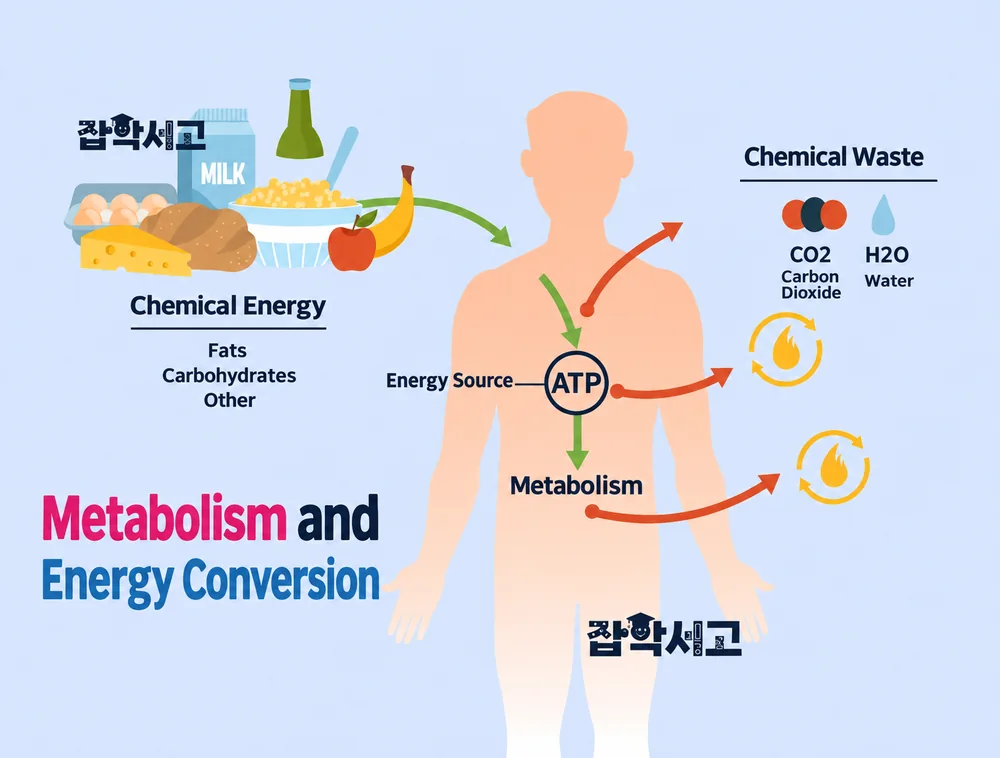
Metabolism is the sum of all chemical reactions that occur within a living organism and is essential for sustaining life. These reactions support various physiological functions, including growth, reproduction, and adaptation to the environment, and provide the energy that allows organisms to remain active. Metabolism is divided into catabolism and anabolism: catabolism breaks down large molecules to release energy, while anabolism synthesizes molecules from smaller ones to store energy. These two processes are essential for maintaining an organism's energy balance and sustain life activities through constant interaction.
The Roles of Catabolism and Anabolism
Catabolism and anabolism are complementary processes responsible for managing energy in living organisms. Catabolism releases energy as it breaks down complex molecules such as proteins, carbohydrates, and fats into smaller units, and cells either use this energy immediately or store it for later use. Anabolism, meanwhile, combines small molecules to synthesize new biological molecules, consuming energy and playing an important role in cell growth and repair. These two processes work together to provide a continuous supply of the energy needed within cells and help meet the body's physiological requirements.
ATP's Role in Carrying Energy
ATP (adenosine triphosphate) plays an important role as an energy carrier in living organisms and serves as an intermediary linking catabolism and anabolism. ATP stores and transfers energy within cells, helping metabolic processes proceed smoothly. The energy released when ATP is hydrolyzed drives various biochemical reactions that cells require, allowing them to continue functioning. ATP acts as an essential energy source for sustaining life activities, enabling organisms to adapt to and function in their external environment.
The Importance of Metabolic Pathways and Enzymes
Metabolism occurs along complex metabolic pathways, and enzymes play a very important role in this process. Metabolic pathways consist of a series of enzymatic reactions, with each enzyme binding to a specific substrate to catalyze a chemical reaction. Enzymes increase reaction rates while being regulated to function only under specific conditions, helping metabolic reactions occur efficiently under physiological conditions. Enzymes are important catalysts that determine the direction of metabolism and play a central role in enabling organisms to efficiently produce and break down the substances they need.
Maintaining Metabolic Balance and Homeostasis
Metabolic processes play an important role in regulating homeostasis by maintaining a balance in the metabolism of substances within cells. The balance between nutrient intake and energy expenditure directly affects cell function, and cells may be unable to function properly if an appropriate balance is not achieved. Metabolic pathways maintain homeostasis by supplying the substances needed within cells in appropriate amounts and removing or breaking down unnecessary substances. This metabolic balance is essential for maintaining the health of living organisms and plays a particularly important role when the body responds to stress or external changes.
Metabolic Adaptation to Changes in the External Environment
Metabolism plays an important role in enabling living organisms to adapt to changes in their external environment. Various external factors, including environmental stress, nutrient shortages or excesses, and climate change, can directly affect an organism's metabolic pathways. To respond to these changes, organisms readjust their metabolic pathways to optimize energy expenditure and use necessary resources efficiently. For example, when nutrients are scarce, metabolism shifts toward conserving and storing energy, while abundant nutrients encourage active energy use to promote growth. These adaptive mechanisms are essential for the survival and flourishing of organisms and give them the ability to respond flexibly to changes in the external environment.
The Importance of Metabolism and Health
Metabolism plays a very important role in the survival of living organisms and the maintenance of their health. If metabolic processes do not proceed smoothly, cell function declines, and disease may eventually develop. Metabolic imbalances are associated with various chronic diseases, including obesity, diabetes, and cardiovascular disease, and understanding metabolic processes is important for preventing and treating these conditions. Maintaining healthy metabolism requires appropriate nutrient intake and regular exercise, which activate metabolic pathways and help cells use energy efficiently.
Analyzing the Types and Roles of Chemical Reactions Within Cells
The Roles and Importance of Chemical Reactions Within Cells
The various chemical reactions that occur within cells play a central role in maintaining the physiological functions of living organisms. These reactions enable energy production, the synthesis of substances, and adaptation to changes in the external environment, and the complex processes that sustain life activities are closely interconnected. These reactions generate energy to help cells function and synthesize necessary substances to maintain the body's structure and functions. At the same time, they act as important mechanisms that support survival by enabling rapid adaptation to environmental changes. In this way, chemical reactions within cells are essential elements that support an organism's ability to adapt and continue functioning.
Oxidation–Reduction Reactions: The Core of Energy Production
Oxidation–reduction reactions are important processes that release or store energy through the transfer of electrons. These reactions are closely associated primarily with energy production and play an important role in physiological processes such as cellular respiration. In particular, oxidation–reduction reactions in the mitochondrial electron transport chain are essential for producing ATP. ATP acts as a major energy source within cells, and this process allows organisms to continuously obtain the energy they need. Oxidation–reduction reactions are central processes that enable cells to produce and use energy efficiently and are essential for the normal functioning of living organisms.
Oxidation–reduction reactions also use oxygen to generate energy, and the energy released in this process allows cells to perform various activities. For example, muscle contraction, nerve signal transmission, and cell division all use energy generated by these reactions. This energy conversion process is an important mechanism for maintaining the vitality of living organisms.
Hydrolysis Reactions: Nutrient Breakdown and Absorption
Hydrolysis reactions use water molecules to break down complex compounds and play an essential role primarily in the digestion and absorption of nutrients. These reactions help break down nutrients such as proteins, carbohydrates, and fats into small units that cells can use. For example, proteins are broken down into amino acids through hydrolysis, while carbohydrates are converted into monosaccharides such as glucose.
This process plays an important role in the digestive organs, and digested nutrients are absorbed through hydrolysis reactions and used by cells to produce energy or synthesize new substances. Hydrolysis reactions also contribute to removing or recycling unnecessary substances within cells, in addition to processing nutrients, and are important for maintaining normal cell function.
Dehydration Synthesis Reactions: The Synthesis of Biological Macromolecules
Dehydration synthesis reactions form new bonds through the removal of water molecules and play an essential role in the synthesis of biological macromolecules. These reactions are essential parts of important physiological processes such as protein synthesis, fat synthesis, and DNA replication. For example, during protein synthesis, amino acids join through dehydration synthesis reactions to form long polypeptide chains.
This process is very important for creating structural and functional components within cells. Proteins are major structural components of cells and also promote physiological reactions as enzymes. Fats are used to form cell membranes and store energy, while DNA plays an important role in storing and transmitting genetic information. Dehydration synthesis reactions help ensure that these important substances are properly synthesized and maintained.
Isomerization Reactions: Increasing the Efficiency of Metabolic Pathways
Isomerization reactions change the arrangement of atoms within a molecule to produce a new molecular form and play an important role in metabolic pathways. By altering existing molecular structures, isomerization reactions contribute to producing the intermediates or final products needed in metabolic processes. These reactions play an important role in increasing the efficiency of metabolic pathways and help ensure that necessary compounds can be produced quickly and efficiently.
For example, during glucose metabolism, isomerization reactions convert specific metabolic intermediates into other forms, maintaining the smooth flow of metabolic pathways. This helps cells quickly obtain the energy they need, minimize unnecessary byproducts, and use energy efficiently. Isomerization reactions also connect various metabolic pathways, supporting cells' ability to adapt quickly to changing environments.
The Role of Enzymes: Catalysts for Chemical Reactions
Enzymes act as important catalysts that accelerate chemical reactions within cells. Enzymes bind to specific substrates and lower the energy required for a reaction to occur, allowing the reaction to proceed quickly and efficiently. Enzymes act with high specificity by binding to particular substrates, helping regulate reactions within cells so that they occur at the appropriate time and only when needed.
Enzymes regulate the rates of physiological reactions and also ensure reaction specificity, preventing cells from carrying out unnecessary reactions. In addition, important enzymes in various metabolic pathways regulate individual reactions so that they proceed in coordination with one another. Without the action of enzymes in this process, organisms cannot function normally, and physiological reactions become extremely slow.
Regulating Metabolic Pathways and Maintaining Homeostasis
Chemical reactions within cells proceed along efficient metabolic pathways, allowing organisms to maintain homeostasis. Homeostasis is an important function that enables living organisms to respond appropriately to changes in the external environment and maintain a stable internal environment. To achieve this, metabolic pathways within cells are constantly regulated, with reactions adjusted according to nutrient availability and energy requirements.
For example, when nutrients are abundant, metabolic pathways are activated to actively produce energy and synthesize necessary substances when they are needed. When nutrients are scarce, however, metabolic pathways are regulated to conserve energy, causing cells to use only the minimum amount of energy needed for survival. These regulatory mechanisms help organisms sustain life activities in a stable manner.
Regulatory Mechanisms of Metabolic Pathways and Evaluation of Their Efficiency

The Importance of Metabolic Pathways and Their Regulation
Metabolic pathways form a complex network that regulates energy and the metabolism of substances within cells and are essential processes for the normal functioning of living organisms. These pathways are precisely regulated through interactions between enzymes and various regulatory factors, allowing organisms to adapt to environmental changes and maintain internal balance. If metabolic pathways are not properly regulated, problems with cell function may arise, potentially having devastating effects on an organism's health. Understanding the regulatory mechanisms of metabolic pathways is therefore very important for maintaining physiological functions.
Enzyme Regulation: A Central Element of Metabolic Pathways
Enzymes are among the most important regulatory mechanisms in metabolic pathways, determining and regulating reaction rates. Enzymes bind to specific substrates to promote reactions, and enzyme specificity plays an important role in this process. Enzyme activity is regulated by various factors, including temperature, pH, and substrate concentration, allowing cells to activate or inhibit metabolic pathways as needed. Enzyme regulation plays an important role in enabling organisms to use energy efficiently and preventing unnecessary metabolic pathways from being activated.
If enzyme regulation does not occur properly, specific metabolic pathways may become excessively activated or inhibited, potentially causing metabolic imbalances. The mechanisms that regulate enzyme function act as central factors in determining the direction and efficiency of metabolism.
Allosteric Regulation: A Feedback Mechanism for Enzyme Activity
Allosteric regulation is a form of enzyme regulation in which a regulator binds to a specific site other than the enzyme's active site to adjust its activity. This enables feedback regulation of metabolic pathways and helps prevent the excessive accumulation of specific intermediates. For example, the final product of a metabolic pathway can bind to an enzyme in an early step and inhibit its activity, thereby maintaining metabolic balance and maximizing efficiency.
Allosteric regulation is an important mechanism that helps cells respond quickly to changes in the external environment. Through this mechanism, metabolic pathways can reduce unnecessary energy expenditure and maintain an efficient system that produces needed substances at the appropriate time.
Conjugate Regulation: Responses to Hormones and Nerve Signals
Conjugate regulation activates or inhibits enzymes according to the presence of a specific substrate, helping metabolic pathways respond sensitively to external signals. It is regulated primarily by hormones or nerve signals and plays an important role in maintaining homeostasis in living organisms. For example, insulin and glucagon play important roles in regulating blood glucose levels and maintain energy balance by regulating glycolysis and gluconeogenesis pathways.
Conjugate regulation also enables cells to respond quickly to stress or changes in nutritional status, allowing metabolic pathways to adapt to changing environments. This mechanism increases the flexibility of metabolic processes, enabling organisms to maintain optimal physiological functions in various situations.
Evaluating the Efficiency of Metabolic Pathways
The efficiency of metabolic pathways is evaluated according to factors such as reaction rates, energy consumption, and the amount of products generated. Achieving the greatest results with the least energy is important for optimal efficiency, and metabolic pathways are constantly regulated to accomplish this. The efficiency of metabolic pathways varies according to an organism's physiological needs and environmental conditions, and cells maximize efficiency by activating or inhibiting pathways when necessary.
The efficiency of metabolic pathways is directly related to an organism's survival, and maintaining metabolic processes efficiently is important even when energy is scarce. This allows cells to function optimally even with minimal resources and is an important factor that enables organisms to survive in various environments.
Interactions Between Metabolic Pathways and Signaling Pathways
Metabolic pathways are closely connected to signaling pathways within cells, enabling cells to respond and adapt quickly to external signals. Cells receive signals from the external environment and regulate metabolic pathways accordingly to produce the energy or synthesize the substances they need. These interactions between signaling and metabolic pathways help cells respond sensitively to external stimuli and take appropriate action in changing environments.
Close coordination between signaling pathways and metabolic pathways is essential for the survival of living organisms, allowing cells to manage resources efficiently and use energy appropriately as needed. These regulatory mechanisms play an important role in enabling organisms to maintain their health and respond flexibly to the external environment.
Exploring the Importance of Metabolism in Health and Disease
The Relationship Between Metabolism and Health
Metabolism plays an essential role in enabling organisms to maintain normal physiological functions. Metabolic processes that produce energy, utilize nutrients, and remove unnecessary substances within cells are very important for maintaining health. When metabolic processes proceed smoothly, the body receives an appropriate supply of the energy it needs, and all organs function normally. However, if metabolism is not properly regulated, the body's balance is disrupted, which can be directly linked to the development of various diseases. Proper regulation of metabolic processes is therefore essential for maintaining health.
Metabolic Imbalance and Obesity
Obesity is a typical example of metabolic imbalance and occurs when energy intake exceeds energy expenditure. This causes excessive fat accumulation in the body, which can lead to various health problems, including insulin resistance, diabetes, high blood pressure, and cardiovascular disease. Obesity itself signifies more than simple weight gain: it indicates that the body's metabolic pathways are functioning abnormally. These metabolic diseases arise because the balance between energy use and storage is not properly maintained and have serious effects on health.
Obesity can also trigger inflammatory responses that weaken the immune system and adversely affect various organs in the body. In particular, insulin resistance leads to diabetes and causes long-term metabolic problems. Restoring metabolic balance is therefore important for preventing and treating obesity.
Cancer and Abnormal Metabolic Pathways
Cancer is a disease that grows rapidly by obtaining energy through metabolic pathways that differ from those of normal cells. Cancer cells require more energy than normal cells and regulate their metabolic pathways to promote rapid growth and metastasis. For example, cancer cells proliferate rapidly by excessively using an energy-producing pathway called glycolysis, contributing to tumor growth.
This abnormal functioning of metabolic pathways can serve as an important target in cancer treatment. Treatments that inhibit the metabolic processes of cancer cells to stop their growth or cause cell death are being studied. Understanding metabolic pathways therefore plays a very important role in cancer treatment and can support the development of more effective treatments.
Inherited Metabolic Diseases and Enzyme Deficiencies
Inherited metabolic diseases result from deficiencies or dysfunction of specific enzymes. This causes particular substances to accumulate or become deficient within metabolic pathways, potentially having serious effects on the body. These diseases arise because metabolic processes do not occur properly and can cause neurodevelopmental disorders, physical abnormalities, or even threaten life.
Early diagnosis and management are essential for most inherited metabolic diseases, and when a specific enzyme is deficient, replacement therapy can maintain normal metabolism. In addition, because these diseases often involve excessive accumulation of particular substances in the body, they can cause permanent damage if not properly managed. Early detection and appropriate treatment are the most important factors in managing these diseases.
The Relationship Between Aging and Metabolism
Metabolism is also closely related to the aging process, and metabolic efficiency naturally declines with age. If metabolism does not occur efficiently, cellular damage accelerates, which can contribute to the development of various degenerative diseases. For example, reduced metabolism in nerve cells can lead to degenerative brain diseases such as Alzheimer's disease, while reduced metabolism in muscle cells can cause diseases associated with muscle weakness.
Maintaining metabolic efficiency and appropriately regulating metabolic processes are therefore important for healthy aging. Nutrient intake and exercise can help prevent age-related diseases by activating metabolic processes, thereby making healthy aging possible.
The Importance of Metabolic Research and Disease Treatment
Research into metabolic pathways and their regulatory mechanisms plays an important role in disease prevention and treatment. Understanding how metabolic pathways work can identify the causes of specific diseases and provide a basis for developing tailored treatments. For example, drugs that target specific metabolic pathways may be effective in preventing or treating diseases related to metabolism.
Metabolic research can also be applied to personalized health management. Appropriate diet and exercise plans can be developed according to an individual's metabolic status, contributing to disease prevention and management. Metabolic research provides an important scientific foundation for maintaining a healthy life and reducing the burden of disease.
Metabolism is a complex network essential for the survival of living organisms, playing an important role in sustaining life activities by regulating chemical reactions within cells. This material has focused on the basic concepts of metabolism, the metabolic pathways formed through interactions among chemical reactions within cells, and how these pathways are regulated.
It has also explored in depth how these metabolic processes affect the maintenance of health and what role metabolism plays in the development of disease. This has confirmed that metabolism is a very important research topic in life sciences and medicine, and this material will serve as an important foundation for contributing to improvements in human health and disease prevention through continued research.