Medicinal chemistry is an important foundational field in modern medicine, playing an essential role in understanding the molecular structures and mechanisms of action of drugs used to treat diseases. This understanding makes new drug development possible and helps provide effective treatments for a variety of diseases.
Medicinal chemistry is a highly important multidisciplinary field that brings together biochemistry, molecular biology, organic chemistry, pharmacology, and other disciplines. This article will cover the subject in detail, beginning with the basic concepts of medicinal chemistry and continuing through drug design and synthesis, mechanisms of drug action, and clinical applications.
Basic Concepts of Medicinal Chemistry: Molecular Structure and Activity

One of the core concepts of medicinal chemistry is understanding how the structure of a drug molecule relates to its activity. A drug's molecular structure is an important factor that determines how it acts in the human body. The field that studies this relationship between structure and biological activity is called the structure-activity relationship (SAR), and it plays an essential role in new drug development.
Structural Characteristics of Drug Molecules and Binding to Target Proteins
Drug molecules generally bind to specific target proteins and regulate their functions. The structural characteristics of a drug have a decisive influence on binding strength and binding specificity. In particular, the stereochemistry of a drug molecule is an important factor that determines its binding affinity for a target protein, which can affect the drug's effects. For example, the spatial arrangement within a molecule influences how well it fits the active site of the target protein.
Chemical Properties and Drug Absorption, Distribution, Metabolism, and Excretion
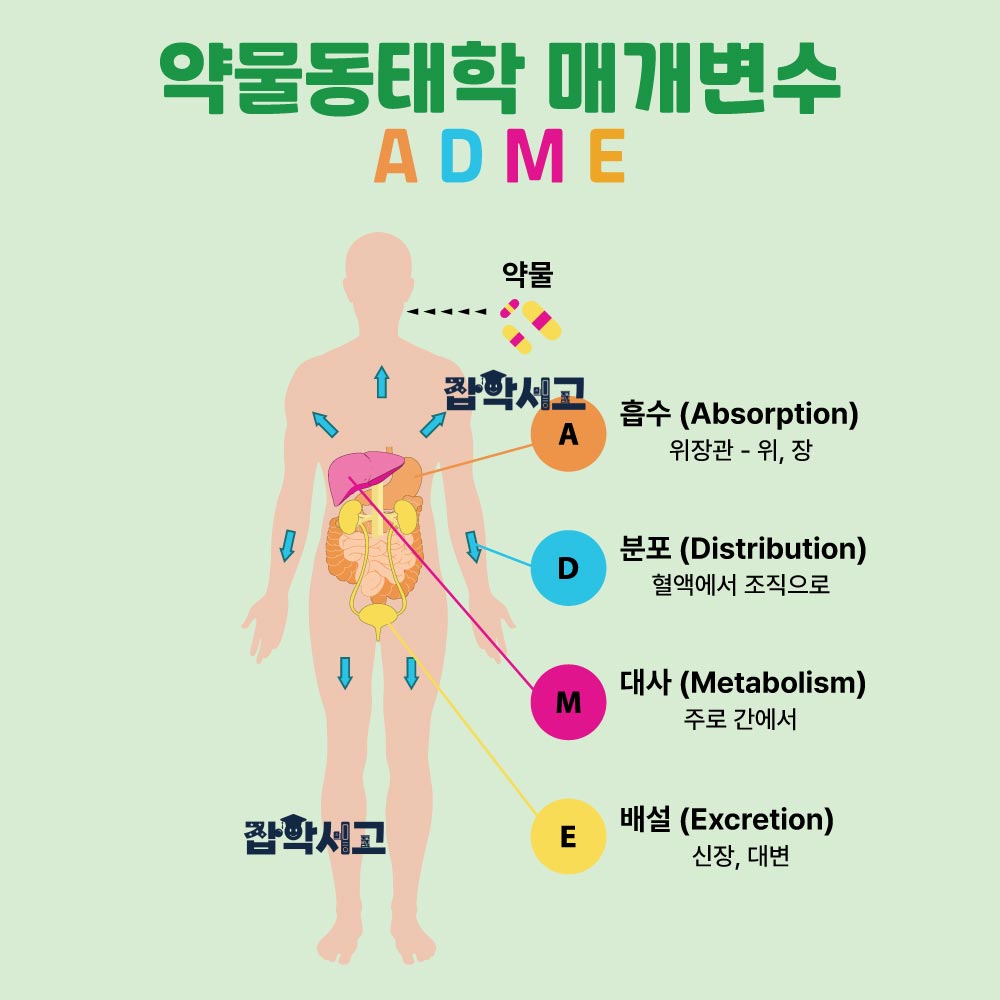
The chemical properties of a drug are also important factors that determine its activity. Properties such as polarity, hydrophobicity, and charge influence how a drug is absorbed, distributed, metabolized, and excreted in the human body. For example, a highly hydrophobic drug can pass through cell membranes more easily, but its low solubility in aqueous environments may limit its movement within the body. These properties are directly related to a drug's bioavailability and are important considerations in effective drug design.
SAR Analysis and New Drug Design
Medicinal chemists analyze SAR using various experimental techniques and computer simulations. This allows them to predict and design drug structures suitable for treating specific diseases. Computer modeling techniques are useful for identifying optimal drug structures by simulating interactions between drug molecules and target proteins. These predictive models help shorten drug development time and increase the likelihood of success.
Considering Drug Toxicity and Addressing Problems
Drug toxicity is another important consideration. A drug's structure may allow it to bind nonspecifically to certain biological molecules, or the drug may be transformed into toxic substances during metabolism. This can cause unwanted side effects, and various tests and analyses are needed to address these problems in advance. For example, toxicity assessments are used to identify a drug's effects on the human body beforehand, and structural modifications are used to minimize its toxicity.
Medicinal chemistry plays a central role in understanding the molecular structures and activities of drugs and using this knowledge to design effective new drugs. Efforts are needed to optimize drug efficacy and reduce toxicity by considering various chemical properties. This can improve the efficiency of new drug development and provide patients with safer, more effective treatment options. SAR analysis, computer modeling, and toxicity assessment are important tools in medicinal chemistry, and continued progress in this field will continue to contribute significantly to improving human health.
Drug Design and Synthesis: The First Step in New Drug Development

The Importance of Drug Design and Synthesis
Drug design and synthesis are the first step in new drug development and key stages in developing new drugs efficiently. This process includes designing a suitable drug for the target disease, synthesizing it, and experimentally validating it. Because drug design and synthesis play an important role in determining the efficacy and safety of new drugs, they require a highly precise and systematic approach.
Structure-Based Design and Ligand-Based Design
Drug design mainly follows two approaches: structure-based design and ligand-based design. Structure-based design uses information about the 3-dimensional structure of a target protein to identify a drug structure with optimal binding strength for that protein. This approach primarily uses protein structure data obtained through techniques such as X-ray crystallography or NMR, and employs computer modeling to simulate interactions between the drug and the protein. The results of these simulations provide important clues for predicting drug structures with optimal binding properties.
Ligand-based design is an approach to designing new drugs based on the structures of known active substances. After analyzing how existing active substances interact with target proteins, this approach is used to develop new drugs by modifying or improving those structures. Ligand-based design is well suited to screening drug candidates using large compound libraries, allowing promising candidates to be identified quickly.
Drug Synthesis: Producing the Designed Drug
Once drug design is complete, the next step is to synthesize the drug. Drug synthesis involves producing the designed molecule in a laboratory using organic synthesis techniques. This process requires great precision and involves multiple stages of chemical reactions to obtain the final drug molecule. Yield and purity must be carefully controlled at each reaction stage to ensure that the final drug has the desired structural characteristics and biological activity.
Validation and Optimization of Synthesized Drugs
The structures and activities of synthesized drugs are confirmed through various tests and analyses. At this stage, it is important to verify whether the drug activity predicted during design matches the activity observed in actual experiments. The drug's physical and chemical properties must also be assessed to determine whether it can be provided to patients in a practical form. These assessments include the drug's solubility, stability, and bioavailability.
The Optimization Process Through SAR Analysis
Structure-activity relationship (SAR) analysis is performed using data obtained during drug design and synthesis. SAR analysis refers to an iterative process of optimizing activity through structural changes to a drug. This can yield drug structures with greater activity, while further optimization is carried out to minimize side effects and improve drug safety. This iterative optimization process is central to new drug development and is ultimately an essential step in developing new drugs that are safe and effective in the human body.
Mechanisms of Drug Action: Interactions Within the Human Body
The Importance of Understanding Mechanisms of Drug Action
A drug's mechanism of action is an important concept that explains how the drug acts within the human body to produce therapeutic effects. Understanding this mechanism is essential not only for developing new drugs but also for optimizing existing ones. Knowing how a drug acts on a specific target to treat a disease makes it possible to design more effective and safer treatments.
Interactions Between Drugs and Target Proteins
Drugs primarily bind to specific target proteins and regulate their functions. Binding specificity between a drug and its target protein is an important factor in determining drug efficacy, and how well the drug binds to the target protein greatly influences its therapeutic effects. This binding is analyzed using molecular biology techniques, and drug structures are adjusted to optimize binding strength and specificity.
Structural Changes and Cellular Signal Transduction
When a drug binds to a target protein, it induces structural changes in the protein and thereby regulates its biological activity. These structural changes affect cellular signaling pathways and produce various physiological effects. For example, inhibiting or promoting the activity of a particular enzyme can eliminate the cause of a disease or alleviate its symptoms. This mechanism of action is an important process that determines the drug's ultimate therapeutic effects.
Techniques for Analyzing Mechanisms of Drug Action
Various experimental techniques are needed to understand a drug's mechanism of action. Techniques such as crystal structure analysis (X-ray crystallography) or nuclear magnetic resonance (NMR) can reveal the structure of a drug-protein complex in detail. Such structural analysis is essential for understanding how a drug interacts with its target at the molecular level. Physiological experiments using cell and animal models can also evaluate a drug's systemic effects and predict its action in actual treatment settings.
ADME Properties and Drug Effects
A drug's mechanism of action cannot be explained solely by its binding to a target protein. The so-called ADME properties—absorption, distribution, metabolism, and excretion—have a major influence on a drug's actual effects. These properties are analyzed in detail through pharmacokinetics and pharmacodynamics research and are important for understanding how a drug moves and acts within the body. Without considering ADME properties, even a drug expected to be effective in theory may fail to produce the desired effects in practice.
Developing Personalized Treatment Strategies
Clearly identifying a drug's mechanism of action makes it possible to develop strategies that maximize its efficacy and minimize side effects. This understanding also provides an important foundation for developing personalized medicine tailored to individual patients. A deep understanding of drug mechanisms enables the design of treatments that are more effective in specific patient groups and opens up new possibilities for maximizing therapeutic effects while reducing side effects.
These processes are very important in modern medicine, and a thorough understanding of mechanisms of drug action is essential to the success of new drug development.
Clinical Applications of Drugs: Therapeutic Efficacy and Side Effect Management

Clinical Applications of Drugs and Their Importance
Clinical application is the stage at which a new drug is actually used in patients, and therapeutic efficacy and side effect management play central roles in this process. During clinical application, it is important to confirm whether the new drug works as expected and can be used safely in patients. This determines whether the new drug can become an effective treatment option.
The Stages of Clinical Trials
Clinical trials proceed in stages to evaluate a drug's safety and effectiveness. This process is divided into Phase 1, Phase 2, and Phase 3 trials.
Phase 1 trials are the first stage of clinical trials for a drug and are conducted with a small group of healthy volunteers. At this stage, the drug's safety is confirmed and its pharmacokinetic properties are evaluated. In particular, the aim is to determine how the drug is absorbed, distributed, metabolized, and excreted in the body, and to establish an appropriate dose and an initial side effect profile. This is an important process that evaluates for the first time whether the drug can be safely administered to humans.
Phase 2 trials evaluate a drug's initial effectiveness and are conducted with a small group of patients. At this stage, the drug's therapeutic effects and safety are assessed in greater detail, and the dose-response relationship is established. Phase 2 trials collect initial data on how effective and safe the drug actually is for a particular disease.
Phase 3 trials are the stage in which a drug's effectiveness and safety undergo final evaluation in a large patient population. The data collected at this stage play an important role in determining whether the drug is approved. Phase 3 trials comprehensively evaluate a drug's efficacy and side effects in actual clinical settings, making this an important stage that must be completed before the drug is used widely.
Managing Side Effects After Drug Approval
Even after a drug passes Phase 3 trials and receives approval, managing side effects becomes an important task once clinical use begins. Unexpected side effects that were not detected in clinical trials may appear during actual use, and failure to manage them appropriately can pose serious risks to patients.
To address this, pharmacovigilance systems are introduced to continuously collect and analyze data on side effects that occur during drug use. These systems continuously evaluate drug safety and provide a framework for responding promptly when new side effects are discovered. When necessary, guidelines for using the drug may be revised, or its use may be discontinued in serious cases.
Clinical application is an essential stage of new drug development, with comprehensive evaluation of therapeutic efficacy and safety and the management of side effects at its core. It is important to verify the effects and safety of new drugs through clinical trials and to ensure drug safety through continuous monitoring even after approval. This allows drugs to be provided to patients as safe and effective treatment options and enables them to play an important role in delivering treatment tailored to individual patients.
Medicinal chemistry is an essential foundation of modern medicine. It serves to understand the molecular structures and activities of drugs, design and synthesize new drugs based on this understanding, identify their mechanisms of action within the human body, and maximize therapeutic efficacy while minimizing side effects through clinical application.
Advances in medicinal chemistry make important contributions not only to new drug development but also to improving the efficiency of existing drugs and pioneering new treatments. The importance of medicinal chemistry will therefore continue to grow, and the field is expected to contribute continuously to improving human health.