South Korea's broadcasting industry is changing rapidly and developing steadily. Amid these changes, broadcast scheduling plays an important role in attracting and retaining viewers' interest. A practical understanding of broadcast scheduling and a strategic approach are essential elements of successful program management.
This material examines a wide range of aspects in depth, from a basic understanding of broadcast scheduling in South Korea to strategic market analysis, program selection and placement strategies, and case studies of production and scheduling optimization.
Understanding the Fundamentals of Broadcast Scheduling Practice in South Korea
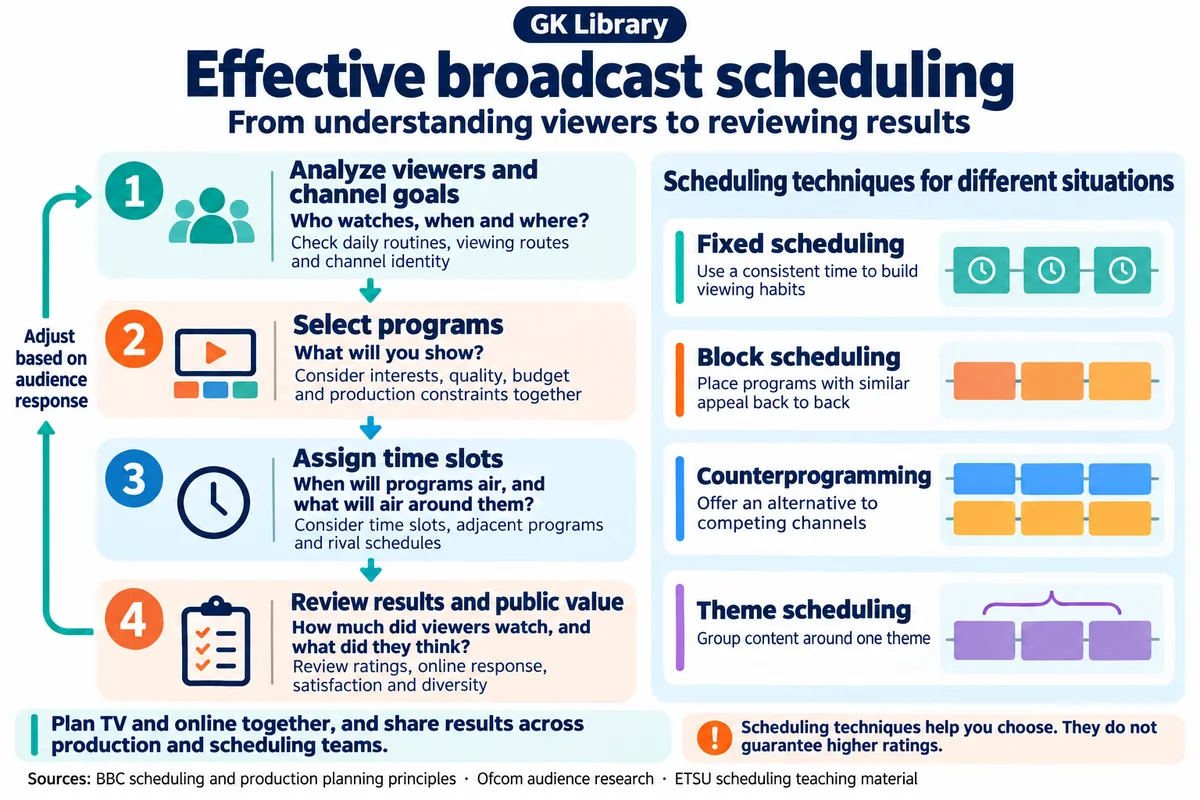

The Concept and Importance of Broadcast Scheduling
Broadcast scheduling is not simply the act of listing programs according to time slots. It is a strategic process for maximizing and sustaining viewers' interest and plays an important role in a channel's success. Viewers encounter vast amounts of content every day, and their reasons for choosing a particular channel depend heavily on its scheduling strategy. Such strategic scheduling analyzes viewers' preferences and viewing patterns to determine which programs should be placed in which time slots. In particular, broadcast scheduling serves as a key tool for increasing ratings and maximizing advertising revenue.
Audience Analysis and Scheduling Strategies
Successful scheduling requires a deep understanding of viewers' behavioral patterns. Detailed analysis is needed to identify the times when viewers primarily watch TV and the types of programs they prefer. For example, scheduling family-friendly programs on weekend afternoons is effective because many viewers watch as families during those hours. In addition, during prime time, when ratings are high, a strategy of concentrating popular dramas or entertainment programs is needed to prevent viewers from leaving. This kind of analysis enables broadcasters to do more than simply schedule programs: it allows them to build long-term relationships with viewers.
The Importance of Demographic Factors
Demographic factors are highly important criteria in broadcast scheduling. Viewers' age, gender, occupation, and education level have a major influence on program selection and placement. For example, programs aimed at younger generations may be more effective when placed in late time slots or on weekend evenings. By contrast, programs targeting older viewers benefit from being scheduled during the day or in the morning. Programs that reflect a particular region or cultural background are also more likely to attract greater interest from viewers in that region. Scheduling that does not consider these factors may fail to attract viewers' interest and lose its competitive edge.
Seasonal Factors and Special Events
Scheduling strategies must be adjusted to seasonal changes and special events. For example, TV ratings tend to decline in summer as outdoor activities increase. By contrast, ratings rise in winter as people spend more time indoors. Different scheduling strategies must be developed for each season with these seasonal factors in mind. In addition, special scheduling can attract viewers' attention during major sporting events such as the Olympics and the World Cup, or during special periods such as the year-end and New Year holidays. At such times, it is important to adjust existing scheduling plans flexibly and attract viewers' interest by placing special broadcasts or event programs in the schedule.
Changes in Broadcast Scheduling in the Digital Age
The spread of digital media has brought major changes to broadcast scheduling. Content is now consumed not only through TV but also through online streaming, mobile devices, and social media. These changes present broadcasters with new challenges. Because traditional TV scheduling alone has become insufficient to meet viewers' needs, broadcasters must consider their points of contact with viewers across various platforms. A representative example is airing a popular program on TV first and then making it available to watch again through online streaming. In addition, as mobile device use increases, new scheduling strategies involving short-form content or live streaming are required. Keeping pace with these changes requires an integrated strategy across various media that goes beyond the traditional concept of broadcast scheduling.
Case Studies of Successful Scheduling
Broadcasters should study successful scheduling cases and develop new strategies based on them. For example, if a drama or entertainment program broadcast in a particular time slot achieved high ratings, they can consider scheduling a similar program in the same time slot. Introducing and localizing a program format that has succeeded overseas can also provide a useful example. These successful cases serve as important reference material for broadcasters developing their own scheduling strategies. Above all, it is highly important for broadcasters to analyze a variety of data and use it to develop future scheduling plans.
Broadcasters' Long-Term Strategies and Scheduling
Broadcast scheduling aims not only to increase ratings in the short term but also plays an important role in determining a broadcaster's identity and direction from a long-term perspective. Through scheduling, broadcasters can establish a particular brand image and build viewers' trust. For example, a program that regularly airs in a fixed time slot gives viewers consistent expectations and helps retain them over the long term. A broadcaster's long-term strategy also plays an important role not only in ratings and advertising revenue but in improving content quality and fulfilling social responsibilities. In this way, broadcast scheduling goes beyond simply arranging programs and serves as an important factor in determining a broadcaster's successful future.
Market Analysis for Strategic Broadcast Scheduling

The Nature and Necessity of Market Analysis
Market analysis is an important tool for making strategic decisions in broadcast scheduling. As the broadcasting environment changes rapidly, broadcasters need to go beyond simply increasing ratings and gain a deep understanding of viewers' preferences and behavior. Through market analysis, broadcasters can establish a direction for program development as well as content placement. A broadcaster that accurately understands viewers' needs does more than simply schedule popular programs: it lays the foundation for securing loyal viewers over the long term. Such analysis is essential for adapting quickly to changes in the media environment and staying ahead of the competition.
Demographic Analysis of Viewers
Viewers' demographic characteristics are important criteria for developing scheduling strategies. Their age, gender, occupation, education level, and lifestyle patterns have a major influence on their content consumption preferences. For example, younger viewers may enjoy fast-paced developments and striking visual elements, while middle-aged and older viewers may prefer steady-paced programs that focus on substance. Based on such data, broadcasters can place programs suited to particular time slots and thereby maximize ratings. Broadcasters can also attract a more diverse audience by offering regional broadcasts or specialized programs tailored to age groups, regions, or cultural characteristics.
The Expansion of Digital Platforms and New Consumption Patterns
The way viewers consume content is changing rapidly. They now consume content not only through TV but through various digital platforms, including smartphones, tablets, and streaming services. Broadcasters must analyze consumption patterns on digital platforms in response to these changes. As mobile viewing increases, broadcasters are expanding their points of contact with viewers through short clips, highlight videos, and social media interactions. New program formats using digital technologies such as live streaming are also emerging, making strategies that reflect these trends necessary. Broadcasters must accurately understand digital consumption patterns and be able to optimize the viewing experience across various platforms.
Competitor Analysis and Differentiation Strategies
To succeed in a competitive environment, it is important to analyze competitors' strategies closely. If a competitor places a highly rated program in a particular time slot, a strategy is needed to attract viewers in that time slot with the broadcaster's own distinctive content. Differentiation involves more than simply scheduling a different program; it includes discovering topics or genres that competitors do not cover and developing new markets. For example, when a drama in a particular genre succeeds on a competing broadcaster, a broadcaster can establish a distinctive image by presenting content that modifies the genre slightly or adds new elements. This can provide viewers with a different experience and give the broadcaster an advantage in comparisons with its competitors.
Introducing Predictive Models Based on Big Data and AI
Predicting the future is a highly important part of broadcast scheduling. It is necessary to go beyond analyzing viewers' behavior based solely on past data and predict future changes. Big data and artificial intelligence (AI) make such predictions possible. They can analyze viewers' behavioral patterns and consider various variables to predict future changes in viewers' preferences. For example, a program's success or failure can be predicted in advance by comprehensively analyzing its ratings trends, social media reactions, and search trends. This enables broadcasters to prepare for changes in advance, provide appropriate content at the right time, and strengthen their ability to plan programs in the direction viewers want.
Understanding Viewers Through Various Data Sources
Using various data sources is important for accurately understanding viewers' behavior. Broadcasters must comprehensively analyze not only ratings data but also various other information, including social media reactions, search term trends, and viewing time on streaming services. This data can reveal which programs viewers are more interested in and what content they prefer in particular time slots. In particular, social media reactions are important data that reflect viewers' emotions and immediate feedback, and actively using them can help develop scheduling strategies that respond to viewers' needs in real time.
Strengthening Broadcasters' Long-Term Competitiveness Through Market Analysis
Market analysis plays an important role in securing broadcasters' long-term competitiveness. It enables broadcasters to schedule content that reflects viewers' needs efficiently and respond swiftly to changing market conditions. For example, broadcasters can maintain stable ratings through a strategy of predicting changes in viewers' interests, preparing new programs, and airing them at the appropriate time. Such analysis also helps strengthen a broadcaster's brand image and build trust with viewers. Audience-centered scheduling strategies provide a foundation for securing loyal viewers over the long term, enabling sustainable growth for broadcasters.
Future Prospects for Strategic Scheduling
Strategic broadcast scheduling based on market analysis will become even more important in the future. As the media environment grows more complex and viewers' choices expand, broadcasters will need more detailed analysis and forecasting. In addition, as artificial intelligence and big data analysis technologies advance, broadcasters will be able to identify changes among viewers in real time and quickly provide suitable programs. Strategies for integration with digital platforms, personalized content provision, and the ability to respond quickly will become essential elements of future broadcast scheduling. Broadcasters must adapt to these changes and continue developing audience-centered content strategies.
Program Selection and Effective Placement Strategies

The Importance of Program Selection
Program selection is one of the important decisions that determine a broadcaster's success and is the process of choosing content that reflects viewers' needs. Rather than simply choosing popular programs, broadcasters must select programs that align with the channel's brand image and long-term strategy. For example, if a particular channel identifies teenagers as its primary target audience, it is important to choose trendy content that can attract their interest or programs in genres they prefer. This enables broadcasters to maintain their unique channel identity while consistently attracting viewers' interest. In particular, choosing programs that reflect genres or topics popular during a particular period also allows flexible scheduling that responds to trends.
For example, the reality show genre has gained worldwide popularity in recent years. Reflecting this, many broadcasters have produced or imported reality programs and added them to their schedules. Such program selection reflects audience trends during that period and can be considered a strategic choice that can contribute to higher ratings.
Program Placement Strategies Tailored to Each Time Slot
Placing programs according to time slots is a process of analyzing viewers' lifestyle patterns and providing suitable content during the times they primarily watch. Because audiences differ by time slot, tailored strategies that take this into account are needed. For example, prime time from 8 p.m. to 10 p.m. is when the greatest number of people watch TV. Placing dramas or entertainment programs with broad popular appeal in this time slot is effective. Because many families gather to watch together during these hours, content that all family members can enjoy is suitable.
By contrast, in late-night time slots after 11 p.m., most viewers are adults. Content suited to adult tastes, such as late-night talk shows, documentaries, or movies, is more appropriate for these hours. Matching programs to each time slot in this way can meet viewers' needs and maximize ratings.
For example, SBS segments its audience by scheduling popular dramas in the 9 p.m. time slot and placing late-night talk shows or news analysis programs aimed at adults in later time slots. This strategy is a good example of concentrating broadly popular content in time slots with high ratings and providing late-night content aimed at adult viewers.
Adjusting Programs Based on Ratings Trends
Ratings are an important indicator of a program's success. By analyzing ratings data, broadcasters need to make adjustments that further strengthen popular programs and move poorly performing programs to different time slots or remove them from the schedule. For example, if a program aired in a particular time slot records lower ratings than expected, broadcasters should consider placing a program better suited to that time slot.
In particular, for programs with low ratings, it is effective to assess viewers' reactions in advance through a pilot broadcast and then decide whether to include the program in the regular schedule. For example, before airing a new drama series, the American broadcaster ABC produces a pilot episode, observes viewers' reactions, and then decides whether to schedule the drama regularly. Understanding viewers' reactions through advance testing in this way can reduce the risk of scheduling failure.
Popular programs can also achieve even greater success through special editions or extended scheduling. For example, more viewers can be attracted by producing the final episode of a popular drama as a 2-hour special or extending a popular series' schedule from weekdays into the weekend.
Maximizing Synergy Between Programs
In program placement, it is important to link programs strategically so that viewers can move naturally to the next program. This can keep viewers on the channel and minimize departures. Consecutive scheduling is one way to maximize this synergy, placing programs with similar genres or themes back to back to prevent viewers from switching to other channels.
For example, MBC uses a strategy of scheduling an entertainment or dating program with a similar atmosphere immediately after a popular entertainment program ends to prevent viewers from leaving. By encouraging viewers who have enjoyed an entertainment program to continue naturally to a similar entertainment program, it can increase overall ratings.
Thematic scheduling is also an effective strategy. By scheduling related programs consecutively around a particular topic or anniversary, broadcasters allow viewers to watch several pieces of content within a single continuous flow. Examples include scheduling Olympic specials consecutively during a sports season or scheduling themed year-end special programs throughout an entire week. This encourages viewers to maintain their interest in the channel during a particular period.
Developing Counterstrategies Through Competitor Analysis
In broadcast scheduling strategy, it is also important to analyze competitors' moves and develop appropriate counterstrategies. After carefully analyzing which programs other channels schedule in which time slots, broadcasters need to differentiate their own programs based on these findings. For example, they can attract viewers by scheduling a program in a different genre during the time slot when a competing channel airs a popular drama.
In particular, when a competing channel airs a news program, an effective strategy is for the broadcaster to schedule an audience-tailored documentary or entertainment show so that viewers have another option. This makes viewers less likely to find a reason to change channels and more likely to remain on the broadcaster's own channel.
For example, when SBS scheduled a drama during prime time, KBS scheduled a popular reality program in the same time slot to give viewers a variety of choices. It is important to retain viewers by analyzing competitors' strategies and providing suitable alternative content in this way.
Diverse Scheduling Strategies Using Various Platforms
In today's broadcasting environment, placing programs across various platforms beyond TV is essential. Viewers no longer consume content solely through TV; they enjoy content anytime and anywhere through smartphones, tablets, and streaming services. In response to these changes, broadcasters must use multiplatform strategies to expand their points of contact with viewers through various channels.
For example, broadcasters can attract viewers by airing key episodes of a program on TV and then uploading highlight videos to YouTube or online streaming services. They can also actively share program-related content through social media and sustain interest in the program through interactions with viewers.
In addition, broadcasters can reach viewers through various viewing channels by providing features that allow them to watch live broadcasts or reruns through mobile apps. For example, Netflix offers programs produced in partnership with broadcasters on its streaming platform, allowing viewers who missed them on TV to watch them again at any time. Such a multifaceted approach through various platforms is becoming an essential strategy in today's broadcasting environment.
Successful Strategies for Program Selection and Placement
Program selection and placement are a comprehensive process for meeting viewers' expectations and strengthening a channel's competitiveness, rather than simply arranging a timetable. Strategic program selection based on audience analysis and ratings data helps maintain a close connection with viewers. Placement strategies that incorporate competitor analysis and maximize synergy also prevent viewers from leaving and encourage sustained interest in the channel. Finally, providing programs in multiple ways through various platforms can improve viewers' access and enable the development of diverse strategies suited to today's broadcasting environment.
Ultimately, such strategic broadcast scheduling enables broadcasters' sustainable growth and plays an important role in increasing a channel's competitiveness in the market.
Case Studies of Production and Scheduling Optimization

The Importance of Production and Scheduling Optimization
Optimizing production and scheduling is a key factor in improving broadcasters' operational efficiency and strengthening their competitiveness. This requires more than simply producing programs well; it must be supported by strategic scheduling in appropriate time slots. Through this, broadcasters can maintain close relationships with viewers and pursue sustainable growth in the market. Successful scheduling strategies also lead to higher ratings and maximized advertising revenue.
Analyzing Cases of Successful Programs
Analyzing successful programs is an important starting point for developing optimization strategies. Various factors contribute to the success of popular programs, and analyzing them makes it possible to apply similar strategies to other programs. For example, dramas that achieve high ratings often succeed through a combination of a solid script, excellent casting, and appropriate marketing strategies. By considering these factors when producing other content, broadcasters can also create optimized programs. Successful cases are also highly useful reference material when planning new programs.
For example, tvN's drama series 'Reply' gained great popularity with the public through its nostalgic sensibility and relatable stories. The success of these dramas resulted from a combination of original storylines, strong performances by the actors, and elements that evoked a shared connection to the era, leaving these success factors as examples worth benchmarking in other programs.
Lessons Learned From Unsuccessful Programs
It is highly important to analyze unsuccessful programs as well as successful ones. Analyzing the causes of failure can help avoid similar mistakes and develop better program production and scheduling strategies. Failure may have various causes, including not only production quality issues but also scheduling in the wrong time slot, inappropriate marketing, or a mismatch with viewers' tastes.
For example, if a program aired in a particular time slot suffers from poor ratings, that time slot may not have suited its target audience. The entertainment program 'Mystery Music Show: King of Mask Singer' had low ratings in its early seasons because of a mismatch between its time slot and viewers' interests, but achieved a successful turnaround after changing its time slot and modifying parts of its format. Such cases reaffirm the importance of scheduling as well as the production stage.
Introducing New Insights From Overseas Cases
Studying overseas cases and adapting them to the local market is a highly effective strategy. Adjusting programs or scheduling strategies that have succeeded overseas to suit South Korean viewers' culture and preferences can provide both new ideas and opportunities for success. In particular, planning programs that reflect global trends can help attract new audience segments.
For example, the American reality program 'Survivor' was reinterpreted in South Korea as a program called 'Law of the Jungle.' The two programs share a similar format, but the Korean program features distinctive content that reflects South Korean viewers' cultural sensibilities. Such localization of overseas programs is a good example of an optimization strategy based on global success stories.
Developing Optimization Strategies Through Big Data Analysis
Data analysis has become an important technical tool in today's broadcasting environment. Big data used to analyze viewers' behavioral patterns, preferred content, and viewing times is a key resource for optimizing production and scheduling. By identifying viewers' preferences from this data and developing program production and scheduling strategies that reflect them, broadcasters can increase viewer satisfaction.
For example, Netflix analyzes the genres and topics viewers prefer based on vast amounts of viewing data and produces tailored content. Through such big data analysis, it provides content suited to viewers in each region and has achieved great success in the global market. South Korean broadcasters can also actively adopt this kind of analysis to schedule the most suitable programs for viewers' needs.
Strengthening Collaboration Between Production and Scheduling Teams
Success in production and scheduling does not come from data and strategies alone. Smooth collaboration between internal teams is also an important factor. Production and scheduling teams can maximize synergy through close communication and cooperation with each other. For example, the production team should create content with viewers' needs and scheduling strategies in mind from the program planning stage, while the scheduling team should cooperate by placing that content in the most appropriate time slot.
When collaboration runs smoothly, each team's expertise can be used to the fullest, helping improve both program quality and ratings. To achieve this, it is necessary to incorporate each team's views and strengthen communication through regular meetings or feedback processes.
Overall Conclusions From Optimization Case Studies
Production and scheduling optimization involves a combination of various factors. It is important to analyze both successful programs and failures, and to introduce new insights through overseas cases and big data analysis. Smooth cooperation between internal teams can also produce the best results. Through this multifaceted approach, broadcasters can increase viewer satisfaction and strengthen their competitiveness in the market. Ultimately, optimized production and scheduling will promote broadcasters' sustainable growth and contribute significantly to higher ratings and a stronger brand image.
A practical understanding of broadcast scheduling in South Korea and a strategic approach are becoming increasingly important in the changing media environment. This material covered a range of topics, beginning with a basic understanding of broadcast scheduling and extending to strategic scheduling based on market analysis, program selection and placement, and optimization case studies.
Such in-depth analysis is essential for broadcasters to strengthen their relationships with viewers and secure sustainable competitiveness. Ultimately, these strategic scheduling approaches will make an important contribution to broadcasters' successful future.