In the digital age, communication is an important element at the center of all information exchange. Smooth communication between devices or networks requires clear and precise rules, and these rules are protocols.
This material will explore the definition and purposes of protocols to understand the basic elements of communication, and examine the roles protocols play in data transmission and how important they are. It will also explore practical ways to use protocols through various protocol types, their functions, and examples of actual applications. Finally, it will present key criteria for efficient communication through the principles of protocol design.
The Definition and Purposes of Protocols: Understanding the Basic Elements of Communication

The Definition and Roles of Protocols
A protocol is a set of rules or standards that enables communication between different systems. In a digital communication environment, protocols enable systems to communicate with one another by specifying how information is sent and received. Without protocols, each system would process and interpret data differently, ultimately making communication itself impossible.
The core role of protocols is to ensure compatibility between heterogeneous systems. Even though different companies and manufacturers use various technologies and architectures, protocols enable different systems to send and receive data in a standardized way and operate smoothly. This establishes a foundation on which all devices can interact while following the same rules.
A Main Purpose of Protocols: Ensuring Data Integrity
Protocols play a role in ensuring data integrity. To prevent data from being damaged or altered while information is being transmitted, protocols include error detection and correction functions. These functions prevent or correct various problems that may occur during communication so that accurate data can be delivered.
Data integrity is particularly important because failed data transmission or the delivery of incorrect information can have a major impact on the entire system. Protocols prevent these situations and ensure reliable communication between systems.
Protocols for Efficient Data Transmission
Efficiency in communication is another important benefit that protocols provide. In modern network environments, where large amounts of data are constantly moving, optimizing data transmission to use bandwidth efficiently is essential. Through this optimization, protocols conserve network bandwidth, minimize data transmission delays, and ultimately improve network performance.
This allows users to experience faster and more stable internet connections, while efficient data transmission reduces network congestion. This is an important factor in various network environments.
The Role of Protocols in Strengthening Security
Security is a very important issue in communication today. Protocols provide various security functions, including data encryption, authentication, and integrity checks, to help users transmit sensitive information safely. These functions protect data from unauthorized access or hacking and enhance the trustworthiness of users and systems.
Security protocols play an essential role, particularly in fields that require a high level of confidentiality, such as financial services and healthcare services. Because data leaks in these fields can cause serious harm, the security functions of protocols are extremely important.
Ensuring Compatibility Between Systems Through Protocols
In today's technological environment, where many different devices and systems exist, compatibility between different systems is very important. Protocols overcome the differences between these heterogeneous systems and ensure mutual compatibility by providing a common language. This allows systems with different technological foundations to work together smoothly.
This plays a particularly important role in environments that use different operating systems or hardware devices, and accelerates technological development by providing globally accepted communication rules.
The Data Transmission Process: The Roles and Importance of Protocols

The Role of Protocols: Managing and Controlling Data Transmission
Data transmission is the process of delivering a message from a sender to a receiver, and protocols play an important role in managing and controlling this process. Protocols establish rules for the format in which data is sent and received, helping transmission proceed smoothly. Without these rules, data could be damaged or fail to be delivered, making communication between systems itself impossible.
Protocols manage data transmission efficiently and systematically control every stage, from data formatting and segmentation to transmission and reception. This enables stable and reliable data transmission even in complex network environments.
Data Segmentation: Maximizing Transmission Efficiency
The first stage of data transmission is 'segmentation,' which divides data into small units. Protocols divide large chunks of data into small packets for transmission, maximizing transmission efficiency through this process. Because large amounts of data can cause network congestion or increase the likelihood of transmission failure while in transit, the packetization process is very important.
Protocols standardize this packetization process so that all devices can process data in the same way. This allows various devices and systems to exchange data smoothly even in different environments.
Optimizing Data Transmission Routes: Ensuring Stability
Protocols also optimize transmission routes so that data can arrive accurately. Data transmission routes can vary depending on the network environment, and protocols select the optimal route by taking congestion into account. This minimizes delays and packet loss that may occur during data transmission.
In particular, protocols monitor various situations that may occur during transmission in real time and respond immediately when a problem arises to ensure that data reaches its destination safely. This is a key factor in improving network reliability and the user experience.
Data Reception and Reassembly: Ensuring Integrity
When data reaches the receiver, protocols perform the process of reassembling it. During this process, they check the order of each packet and inspect whether any packets are missing or the data has been damaged. Protocols ensure data integrity and include mechanisms that can detect and correct errors that occurred during transmission.
Without this data reassembly process, the receiver could receive information in the wrong order or damaged data, which could undermine the reliability of communication. Protocols therefore ensure accurate and complete data transmission through this process.
Error Detection and Correction: Improving Reliability
When errors occur during data transmission, protocols detect and correct them. For example, when a particular packet is damaged or lost during transmission, protocols include a process for identifying it and requesting it again. These mechanisms improve the reliability of data transmission and minimize data loss.
Because creating a communication environment in which no errors occur is practically impossible, these error detection and correction functions are very important elements of data transmission. They allow systems to resolve errors on their own and continue stable data transmission.
Strengthening Security: Maintaining Data Confidentiality
Protocols also include functions that strengthen security during data transmission. Particularly when handling sensitive data, they maintain data confidentiality and protect data from unauthorized access through security techniques such as encryption. During this process, protocols also perform authentication procedures for transmission routes so that transmitted data can travel along secure routes.
These security functions of protocols allow users to transmit data in a trustworthy environment and greatly reduce the risk of important information being leaked or tampered with.
Various Protocol Types and Their Importance
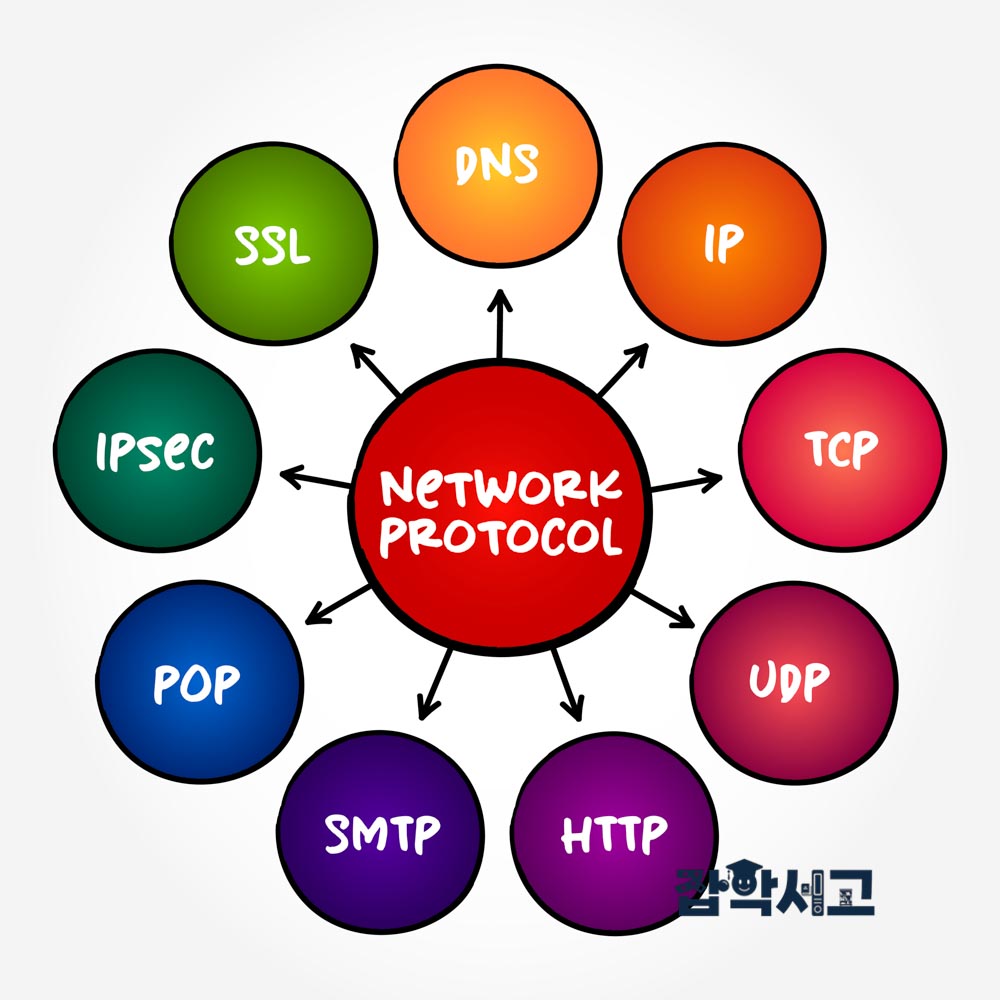
Protocols are divided into various types, each with specific functions and purposes that play important roles in network communication. They provide the basic rules and procedures that help the internet and networks operate smoothly, and are key elements in ensuring the reliability and efficiency of data transmission.
TCP/IP: The Foundation of Internet Communication
TCP/IP is one of the most important protocols forming the foundation of internet and local network communication. TCP divides data into packets for transmission and reassembles them so that the receiver can restore the original data. It also ensures their order so that packets are not lost during transmission, and includes functions that detect errors and request retransmission. IP establishes routes for sending data to its destination and ensures that each data packet reaches the correct location through the network.
TCP/IP is used in most communication over the internet and enables reliable data transmission. This allows various online activities, such as sending email, sharing files, and browsing the web, to take place safely.
HTTP: The Core of Web-Based Communication
HTTP is a protocol designed to transmit hypertext documents on the web, and it handles communication between web browsers and web servers. When a client requests a web page, the server delivers that page through the HTTP protocol, with data sent and received using a request-response structure.
HTTP plays an important role in allowing us to browse web pages on the internet, delivering web content to users. For example, users can visit websites and view text, images, and videos because the HTTP protocol is operating smoothly.
FTP: A Standardized Method of File Transfer
FTP is a standardized protocol for transferring files, mainly used to transfer large files or upload and download files to and from remote servers. FTP is optimized for quickly transferring large amounts of data and improves the efficiency of file management.
This protocol is very useful when businesses or individuals store large files on servers or share them with other users. FTP also enables stable file transfers when uploading files to web servers or performing backups.
SMTP: An Essential Element of Email Transmission
SMTP is a protocol responsible for email transmission and supports the transfer of messages between mail servers. When an email is sent, this protocol establishes the route for delivering the message from the sender's mail server to the recipient's mail server and manages its transmission status. It detects and corrects errors that may occur during the email sending process to ensure that messages are delivered accurately.
SMTP plays an essential role in email communication worldwide, helping users exchange messages quickly and reliably.
HTTPS and SSL/TLS: Essential Protocols for Secure Communication
HTTPS is a protocol that adds a security layer to HTTP, providing a means of transmitting data safely on the web. HTTPS encrypts transmitted data to prevent hackers from eavesdropping on or tampering with it. This protocol is essential, particularly on websites involving financial services, e-commerce, or the protection of personal information.
SSL/TLS is another important protocol that strengthens the security of network communication. This protocol ensures network security by encrypting data and verifying the communicating parties through certificates. This allows users to exchange sensitive information safely on the internet.
DNS (Domain Name System): Converting Domain Names to IP Addresses
DNS is a system that converts domain names that internet users can easily remember into numerical IP addresses. For example, when a user enters 'www.example.com' in a web browser, the DNS server finds the IP address of that domain and connects the user to the web server. Without this process, users would have to enter IP addresses, which are complex combinations of numbers, directly instead of domain names, so DNS plays an essential role in using the internet. DNS is distributed around the world, with multiple DNS servers working together to support fast and accurate address conversion. This approach speeds up website access and improves the user experience.
DHCP (Dynamic Host Configuration Protocol): Automatic IP Address Assignment
DHCP is a protocol that automatically assigns an IP address to each device connected to a network. Every device on a network needs a unique IP address, and configuring IP addresses manually is complex and prone to errors. DHCP solves these problems and helps network administrators manage networks efficiently by automatically assigning IP addresses to each device. This ensures that an IP address is assigned automatically whenever a new device joins the network, making network expansion easier. It also prevents IP address reuse and conflicts, keeping network operations running smoothly.
UDP (User Datagram Protocol): Fast, Connectionless Data Transmission
UDP is a connectionless protocol that transmits data without establishing a connection, and unlike TCP, it does not handle error control or retransmission. Instead, it offers the advantage of very high speed and is widely used in applications where real-time data transmission is important. For example, UDP is optimized for delivering data quickly in services such as online games, real-time streaming, and voice calls (VoIP). Because it does not retransmit data when errors occur, it is useful in environments that can tolerate brief interruptions or losses. However, this can also mean lower reliability in data transmission, so it is mainly used for noncritical data or services where latency is important.
IMAP (Internet Message Access Protocol) and POP3: Email Receiving Protocols
IMAP and POP3 are protocols used to receive email. IMAP is designed to allow users to synchronize email across multiple devices, keeping email on the server and downloading it only when needed. This allows users to manage the same email on multiple devices and provides an environment accessible at any time because the messages remain on the server. POP3 downloads email to the client and then deletes it from the server, making it useful when users want to manage email on just one device. IMAP is widely used in modern environments where multiple devices are common, while POP3 is useful when simple email management is needed.
ICMP (Internet Control Message Protocol): Diagnosing Network Status
ICMP is a protocol used to exchange error messages between network devices or diagnose network status. The most representative example is the 'ping' command, which can be used to check the availability or response time of a network device. ICMP detects problems such as packet loss, transmission route errors, and unreachable networks, and reports them to network administrators. This function allows network performance and availability to be monitored continuously and enables a quick response when problems occur. ICMP is a very important tool for network administrators to understand network status in real time and optimize performance.
SNMP (Simple Network Management Protocol): Managing Network Devices
SNMP is a protocol for monitoring and managing network devices. Through this protocol, network administrators can check the status of routers, switches, servers, and other devices in real time, and quickly detect and resolve performance problems or failures. SNMP collects data from network equipment and uses it to generate reports or provide automatic alerts. This allows network administrators to optimize network performance and take preventive measures before problems occur. SNMP plays an important role in maximizing management efficiency in large networks.
VoIP (Voice over IP): Voice Communication over the Internet
VoIP is a technology that transmits voice data over the internet, offering an innovative way to replace traditional telephone networks. It divides voice data into packets and transmits them over the internet, enabling voice calls. VoIP reduces communication costs and offers significant advantages, particularly for long-distance and international calls. Video conferencing applications such as Skype and Zoom provide voice and video communication based on VoIP technology, and have become essential tools in workplace environments. VoIP is also more flexible than traditional telephone networks and can be used anywhere with internet access, providing an advantageous means of communication for businesses and individuals.
BGP (Border Gateway Protocol): The Core of Internet Routing
BGP is a protocol that exchanges routing information between networks and plays a key role in enabling the internet to connect worldwide. It exchanges routing information between internet service providers (ISPs) and establishes routes that allow users to reach their desired destinations as efficiently as possible. BGP determines the optimal route by considering factors such as each network's size, speed, and congestion level. This protocol helps data be transmitted quickly and accurately in the complex internet environment, where multiple networks are interconnected. BGP plays an essential role in managing internet traffic and ensures the stability and performance of the internet.
Key Principles of Protocol Design

Key Principles of Protocol Design
Protocol design is the process of establishing a set of rules and criteria to ensure the reliability and efficiency of communication. This helps various devices and systems communicate smoothly with one another. If a protocol is not designed properly, communication errors may occur and network performance may deteriorate. To prevent these problems, several important principles must be incorporated.
Clarity and Consistency: Ensuring Compatibility Between Systems
Clarity and consistency are the most fundamental elements of protocol design. Clear rules and procedures improve compatibility between different systems, while a consistent structure helps various devices process data in a standardized way. This establishes a foundation for various devices and technologies to work together in complex network environments.
Clear protocols are easy to understand and reduce errors when developers or network administrators configure them. A consistent design also prevents discrepancies or conflicts that may occur during the sending and receiving of data, ensuring that systems always operate as expected. This greatly improves interoperability between systems.
Scalability: Responding Flexibly to Changing Technology
Because networks continue to grow and change, protocols must be able to respond flexibly to these changes. Scalable protocols must be designed to avoid problems even as networks continue to grow. Protocols must be able to accommodate new technologies or devices when they are introduced, and must have a structure that can be easily adjusted to meet various requirements.
Protocols that lack scalability become outdated over time and can no longer be used in changing environments. In contrast, protocols designed with scalability in mind can adapt to future technological advances and contribute to the long-term development of networks. This is a very important factor, particularly in modern society, where new services and technologies change rapidly.
Efficiency: Optimizing Network Performance
Efficiency is another important principle in protocol design. Because networks use limited bandwidth and resources, using them as efficiently as possible is important. Efficient protocols optimize network performance by increasing data transmission speeds and minimizing bandwidth use.
If protocols are designed inefficiently, unnecessary data transmission increases, bandwidth is wasted, and data transmission delays may occur. This negatively affects the user experience and can lead to reduced performance across the entire network. In contrast, efficiently designed protocols handle data transmission quickly and accurately, maximizing network performance and improving the user experience.
Reliability and Durability: Error Detection and Correction
To ensure reliability and durability, protocol design must include functions that detect and correct errors that may occur during communication. Errors can occur in network communication for various reasons, and protocols must identify these errors and provide retransmission or correction processes so that data can be transmitted accurately.
Particularly in large network environments, data loss or transmission errors can occur frequently, making mechanisms for resolving these problems essential. Highly reliable protocols can handle various error scenarios and improve the stability of communication. This allows data transmission between users and systems to proceed reliably.
Security: Building a Safe Communication Environment
Security is a very important factor in modern communication environments. Protocol design must include security mechanisms to maintain data confidentiality and integrity and prevent unauthorized access. Data must be protected using encryption technologies, and reliable communication must be ensured through authentication procedures.
These security protocols are particularly important in communication environments that handle sensitive data. Without adequate security, data cannot be protected from hackers or malicious attacks, which can greatly reduce user trust. Therefore, security must be thoroughly considered in protocol design to build a safe communication environment.
Protocol design is an essential process for improving the efficiency and reliability of network communication, and must faithfully incorporate the key principles of clarity and consistency, scalability, efficiency, reliability and durability, and security. Through these principles, protocols enable stable and efficient communication in complex network environments and can respond flexibly to constantly changing technologies and requirements. Successful protocol design plays an important role in maximizing network performance and providing users with a safe and reliable communication environment.
As discussed above, protocols are core elements of digital communication that serve various functions and purposes. Protocols play essential roles in ensuring mutual compatibility between systems, improving the efficiency and reliability of data transmission, and strengthening communication security.
The various protocol types and examples of their actual applications show how important protocols are in our daily lives and business environments. Protocols will continue to evolve with technological advances and become established as key criteria for efficient and secure communication.