Big data has established itself as a key driver of innovation and development in modern society. Various industries are using big data to make better decisions, improve efficiency, and create new business opportunities.
This material will take an in-depth look at the definition and main characteristics of big data, the advantages and benefits of big data analytics, examples of big data use across various industries, and strategies and methods for using big data.
The Definition and Main Characteristics of Big Data
 What is big data?
The Definition of Big Data
Big data does not simply mean large quantities of data. It refers to data that is vast in quantity, exists in various forms, is generated rapidly, and can be transformed into valuable insights and information. Big data is generally defined by the '3V': Volume (Quantity), Variety (Diversity), and Velocity (Speed). These three elements are important characteristics that distinguish big data from other data.
Volume (Quantity)
The first is Volume, or the quantity of data. Big data encompasses vast amounts of data ranging from terabytes (TB) to petabytes (PB). This volume of data is difficult to process with traditional database management tools. Therefore, advanced technologies and infrastructure are needed to manage and analyze big data.
Variety (Diversity)
The second is Variety, or the diversity of data. Big data includes both structured and unstructured data. For example, data comes in various forms, including text, images, videos, and sensor data. Different analytical tools and techniques must be used to process these diverse data formats effectively.
Velocity (Speed)
The third is Velocity, or the speed at which data is generated. Big data is characterized by its generation and accumulation in real time. Enormous amounts of data are generated every moment through social media, IoT devices, online transactions, and other sources. Fast and efficient data processing technologies are essential to process and analyze this data in a timely manner.
Veracity (Accuracy) and Value
In addition, Veracity (Accuracy) and Value can also be considered important elements of big data. Veracity refers to the reliability and accuracy of data, while Value refers to the ability to derive meaningful results by analyzing this data. These two elements are important factors that determine the success of big data analytics.
In conclusion, big data focuses on efficiently managing and analyzing data to extract valuable information, rather than simply collecting large amounts of it. This requires advanced technologies and strategies throughout the entire process, from data collection and storage to processing and analysis.
The Advantages and Benefits of Big Data Analytics
 What benefits does big data analytics offer?
Better Decision-Making
Big data analytics offers many advantages and benefits in various areas. First, big data analytics enables better decision-making. Many companies use big data to analyze market trends, customer preferences, competitor trends, and other information. This allows for more accurate forecasting and strategy development.
Cost Savings
Second, it can bring cost savings. Big data analytics improves operational efficiency and provides opportunities to identify and improve inefficient processes. For example, analyzing data generated during production processes can reduce unnecessary costs and maximize resource utilization.
Improved Customer Experience
Third, it can improve the customer experience. Analyzing customers' behavioral patterns and feedback makes it possible to provide personalized services. This plays an important role in increasing customer satisfaction and strengthening loyalty. For example, recommendation systems can anticipate and suggest products that customers want.
Creating New Business Opportunities
Fourth, it can create new business opportunities. Big data analytics can reveal gaps in the market and provide insights for developing new products or services. This is an important factor in enabling companies to remain competitive and grow.
Efficient Risk Management
Fifth, it enables efficient risk management. Big data can be used to identify potential risks in advance and develop measures to minimize them. For example, financial institutions can analyze big data to assess credit risk and prevent fraudulent transactions before they occur.
Support for Research and Development
Finally, big data analytics also provides substantial support for research and development (R&D). Many research institutions and companies use big data to develop new technologies and products and improve existing products. This enables them to achieve innovative results and secure a competitive advantage in the market.
Examples of Big Data Use Across Various Industries
 How is big data used in different industries?
Manufacturing
Big data is used across various industries, with a wide range of applications in each. First, examples can be found in manufacturing. Manufacturers analyze the vast amounts of data generated during production processes to maximize production efficiency and strengthen quality control. For example, General Electric (GE) used big data to perform predictive maintenance on machinery and equipment and reduce downtime.
The Financial Industry
Second are examples of big data use in the financial industry. Financial institutions use big data to analyze customer transaction data, assess credit risk, and detect fraudulent transactions. They also analyze customers' financial behavior patterns to provide tailored financial products and increase customer satisfaction.
The Retail and Consumer Goods Industry
Third are examples of big data use in the retail and consumer goods industry. Retailers analyze customers' purchase data to optimize inventory management and run personalized marketing campaigns. For example, Amazon uses big data to analyze customers' purchasing patterns and operates a recommendation system based on this analysis.
The Healthcare Industry
Fourth, big data also plays an important role in the healthcare industry. Hospitals and medical institutions analyze patients' health data to diagnose diseases early and develop personalized treatment plans. In healthcare research, big data also provides substantial help in developing new treatments and drugs.
The Transportation and Logistics Industry
Fifth, examples can be found in the transportation and logistics industry. Logistics companies analyze delivery data to determine optimal routes, shorten delivery times, and reduce costs. Transportation management agencies also use big data to predict traffic congestion and enable efficient transportation operations.
Education
Finally, big data is also being actively used in education. Educational institutions analyze students' learning data to provide personalized learning programs and develop strategies to improve learning outcomes. For example, online education platforms analyze students' learning patterns to personalize learning content.
Strategies and Methods for Using Big Data
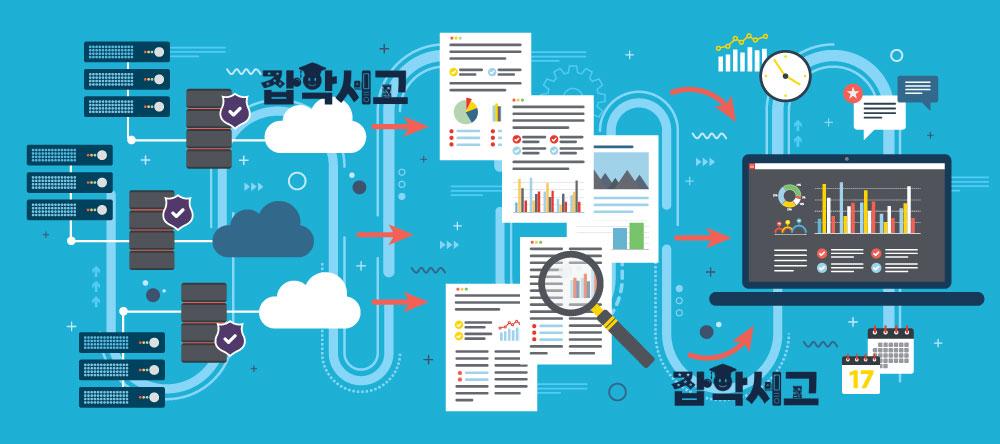 What does it take to use big data effectively?
Data Collection and Storage Strategies
Successfully using big data requires systematic strategies and methods. First, data collection and storage strategies are important. Data must be collected from various sources, and infrastructure must be built to store it efficiently. Cloud storage and data lakes (Data Lake) can be used to manage large-scale data effectively.
Data Preprocessing
Second, data preprocessing is essential. Collected data can often contain duplicates or be incomplete, requiring a process to clean it and convert it into a form suitable for analysis. Preprocessing tasks such as Data Cleaning and Data Transformation can improve data quality.
Selecting Analytical Tools and Technologies
Third, selecting appropriate analytical tools and technologies is important. Various tools and technologies are available for big data analytics, and tools must be selected to suit different analytical objectives. For example, distributed processing systems such as Hadoop and Spark, along with programming languages such as R and Python, are widely used in big data analytics.
Data Visualization and Report Writing
Fourth, data visualization and report writing are also important steps. Visualization and report writing are needed to understand analytical results and make decisions based on them. Visualization tools such as Tableau and Power BI make complex data easier to understand.
Data Security and Personal Information Protection
Fifth, strategies for data security and personal information protection are needed. Big data can contain sensitive information, making it important to manage and protect it securely. Data security must be strengthened by introducing security technologies such as data encryption, access control, and monitoring.
Building a Data Culture
Finally, building a data culture within the organization is also important. To use big data effectively, the entire organization must adopt a data-centered mindset. To achieve this, organizations must provide Data Literacy training and create an environment that encourages data-driven decision-making.
Big data is more than a simple collection of data; it is an important resource that drives future business and societal development. Various industries are using big data to achieve innovation and growth, which requires systematic strategies and advanced technologies.
The importance of big data will continue to grow, and companies and institutions that use it effectively will lead the future.