Blockchain technology is one of the innovative technologies that have attracted rapidly growing interest and attention in recent years. As a distributed system capable of replacing traditional centralized systems, it is bringing groundbreaking changes across various industries.
This article will examine in detail the basic concepts and operating principles of blockchain, the advantages of distributed systems and blockchain's impact, examples of blockchain applications in various industries, and the future and possibilities for innovation that blockchain is opening up.
Blockchain Concepts and Operating Principles
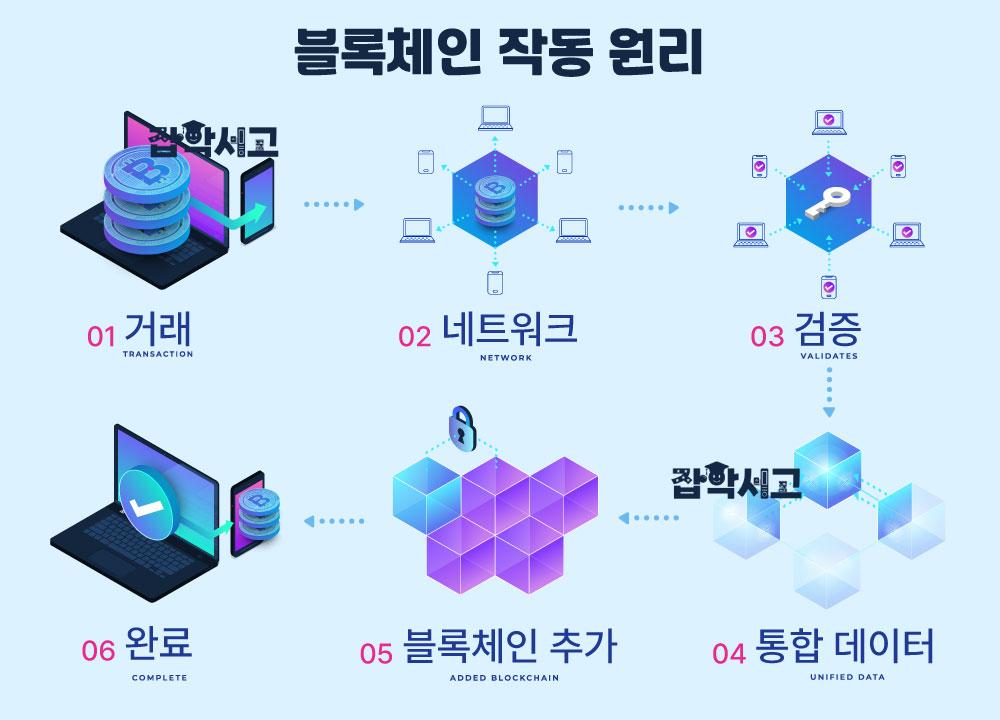 What is blockchain, and how does it work?
The Concept of Blockchain
Blockchain is a distributed ledger technology that groups data into blocks and links them together in a chain. Each block contains the hash value of the previous block and new data, making it difficult to alter and thereby ensuring data integrity. This system first became known through the cryptocurrency Bitcoin and has since been applied in various fields.
How Blockchain Works
The operating principles of blockchain are simple yet powerful. When a new transaction occurs, it must go through a process of verification and addition to a block. This process is carried out through an activity called 'mining,' and reliability is ensured by having every node participating in the blockchain network hold the same ledger. This distributed structure allows the system to remain secure without a centralized governing authority.
Immutability
One of the most important features of blockchain is 'immutability.' Once data is recorded in a block, it cannot be modified or deleted, which maintains the consistency and reliability of the data. This property is one of the reasons blockchain can be widely used in various fields, including finance, logistics, and healthcare.
Transparency
Blockchain also provides 'transparency.' All transactions are recorded in a public ledger that anyone can inspect. This helps reduce the possibility of data manipulation and improve the system's reliability. Blockchain's transparency can be used effectively, particularly by governments and nonprofit organizations.
Smart Contracts
Blockchain opens up further possibilities through its 'smart contract' functionality. A smart contract is a contract that executes automatically when predefined conditions are met. This can increase contract automation and efficiency and enable trustworthy transactions without intermediaries.
Decentralization
Finally, blockchain aims for 'decentralization.' This refers to a structure that allows a system to operate without intervention by a central governing authority or an intermediary. Decentralization plays an important role in preventing the monopolization and misuse of data and in building fairer, more transparent systems.
Advantages of Distributed Systems and the Impact of Blockchain
 What are the positive effects of blockchain?
The Basic Concept of Distributed Systems
A distributed system has a structure in which multiple nodes share and process data without a central server or administrator. This offers significant advantages in improving the system's reliability and stability. Blockchain is a prime example of such a distributed system, with multiple nodes holding the same data and thus reducing the risk of a single point of failure (Single Point of Failure).
Enhanced Data Security
Another advantage of distributed systems is data security. When data is concentrated on a centralized server, the risk of hacking or data breaches increases. In a distributed system, however, data is spread across multiple nodes, so the integrity of the entire system's data is maintained even if one node is compromised. Blockchain can maximize this level of security.
Greater Transparency
Blockchain also greatly improves system transparency. All transactions are recorded in a public ledger that anyone can inspect. This plays an important role in preventing data manipulation and fraud. Particularly in finance, blockchain's transparency contributes significantly to making transactions more trustworthy.
Greater Efficiency
Blockchain offers many benefits in terms of efficiency as well. Distributed systems can reduce operating costs because they do not require a central administrator. In addition, implementing automated processes through smart contracts and similar tools can improve work efficiency. This serves as an important factor in strengthening a company's competitiveness.
Privacy Protection
Blockchain provides users with a high level of privacy. In conventional centralized systems, users' personal information is stored on a central server, creating a high risk of disclosure. In blockchain systems, however, user data is stored in a distributed manner, which further strengthens privacy. This also offers advantages in complying with regulations such as the Personal Information Protection Act.
Building Global Networks
Finally, blockchain offers the possibility of building global networks. It enables cross-border transactions, which can promote the integration of the global economy. This can bring major innovations, particularly in finance and logistics, and contribute to international trade and economic growth.
Examples of Blockchain Applications in Various Industries
 In which fields is blockchain used?
The Financial Industry
Blockchain has brought particularly significant innovation to the financial industry. Cryptocurrencies such as Bitcoin have established themselves as a new form of money, and transactions using them are increasing. Blockchain is also used in various financial services, including remittances, payments, and loans, helping eliminate intermediaries and reduce transaction costs.
The Healthcare Industry
The use of blockchain is also attracting attention in the healthcare industry. Storing patients' medical records on a blockchain can ensure the integrity and security of the data. This can facilitate information sharing among medical professionals and protect patients' privacy. Blockchain is also used in pharmaceutical supply chain management to prevent the distribution of counterfeit drugs.
Logistics and Supply Chain Management
Blockchain is also bringing major changes to logistics and supply chain management. Recording every stage, from a product's production to its arrival in consumers' hands, on a blockchain can improve transparency and prevent unauthorized copying or the distribution of counterfeit goods. Logistics status can also be tracked in real time, enabling efficient inventory management.
Real Estate Transactions
Blockchain is also being used in real estate transactions. Storing property ownership and transaction records on a blockchain can ensure data integrity and simplify the transaction process. This can make real estate transactions more trustworthy and reduce brokerage fees.
Government and the Public Sector
Blockchain applications are also expanding in government and the public sector. Using blockchain in various areas, such as election voting systems, resident registration, and tax administration, can improve data transparency and reliability. In particular, applying blockchain to election voting systems can prevent fraudulent voting and allow the vote-counting process to be managed transparently.
The Energy Sector
Finally, the use of blockchain is also attracting attention in the energy sector. Recording energy transactions on a blockchain can allow the transaction process to be managed transparently and improve energy efficiency. In addition, a P2P energy trading model that allows small-scale energy producers to trade directly with consumers becomes possible, enabling the creation of a fairer energy market.
The Future Blockchain Is Opening Up and the Potential for Innovation
 What are blockchain's future prospects?
Combining IoT and Blockchain
Blockchain is expected to bring innovation to an even wider range of fields in the future. In particular, combining it with IoT (Internet of Things) can make it possible to build more powerful systems. As IoT devices share data through blockchain and are automatically controlled through smart contracts, new forms of smart systems can emerge.
Innovation in Education
Blockchain also has considerable potential for use in education. Storing important records, such as students' grades and graduation certificates, on a blockchain can ensure data integrity and prevent forgery. It can also increase transparency in the learning process and strengthen trust between students and educational institutions.
Innovation in the Arts and Entertainment
Blockchain can also bring innovation to the arts and entertainment. Registering the copyrights for music, films, artworks, and similar works on a blockchain can provide copyright protection and fair revenue distribution. This contributes to building a system that benefits both creators and consumers.
Transparency in Social Enterprises and Nonprofit Organizations
Social enterprises and nonprofit organizations can also use blockchain. Recording how donations are spent on a blockchain can increase transparency and allow donors to see for themselves how their donations are used. This can further encourage a culture of giving.
New Economic Systems
Blockchain also makes new forms of economic systems possible. It can transform an entire national economy through projects such as issuing a central bank digital currency (CBDC). This can complement existing financial systems and contribute to building a stronger economic structure.
Addressing Global Problems
Finally, blockchain can play an important role in addressing the various global problems facing humanity. Blockchain's characteristics can be used in a range of areas, including climate change, poverty, and human rights issues, to seek more effective and transparent solutions. This will contribute to promoting global cooperation and sustainable development.
Blockchain technology goes beyond a simple method of storing data and is bringing innovative changes to various industries. From its basic concepts and operating principles to the advantages of distributed systems and its many applications, blockchain's potential is boundless.
The future that blockchain will open up is increasingly exciting, and the innovations this technology will bring will transform many aspects of our society. Through its transparency, reliability, and efficiency, blockchain will play an important role in creating a better world.