Self-efficacy is the belief that an individual can achieve a goal in a particular situation, and it has an important influence on the individual's behavior, emotions, and overall quality of life. Self-efficacy is an important factor that determines success or failure in various situations, enabling individuals to put their abilities to use and achieve better results.
This article examines the concept of self-efficacy and its theoretical background, using these foundations to analyze its importance. It also presents practical approaches to strengthening self-efficacy in everyday life and explores in detail how to apply them through examples.
The Definition and Theoretical Background of Self-Efficacy
The Definition of Self-Efficacy and How It Develops
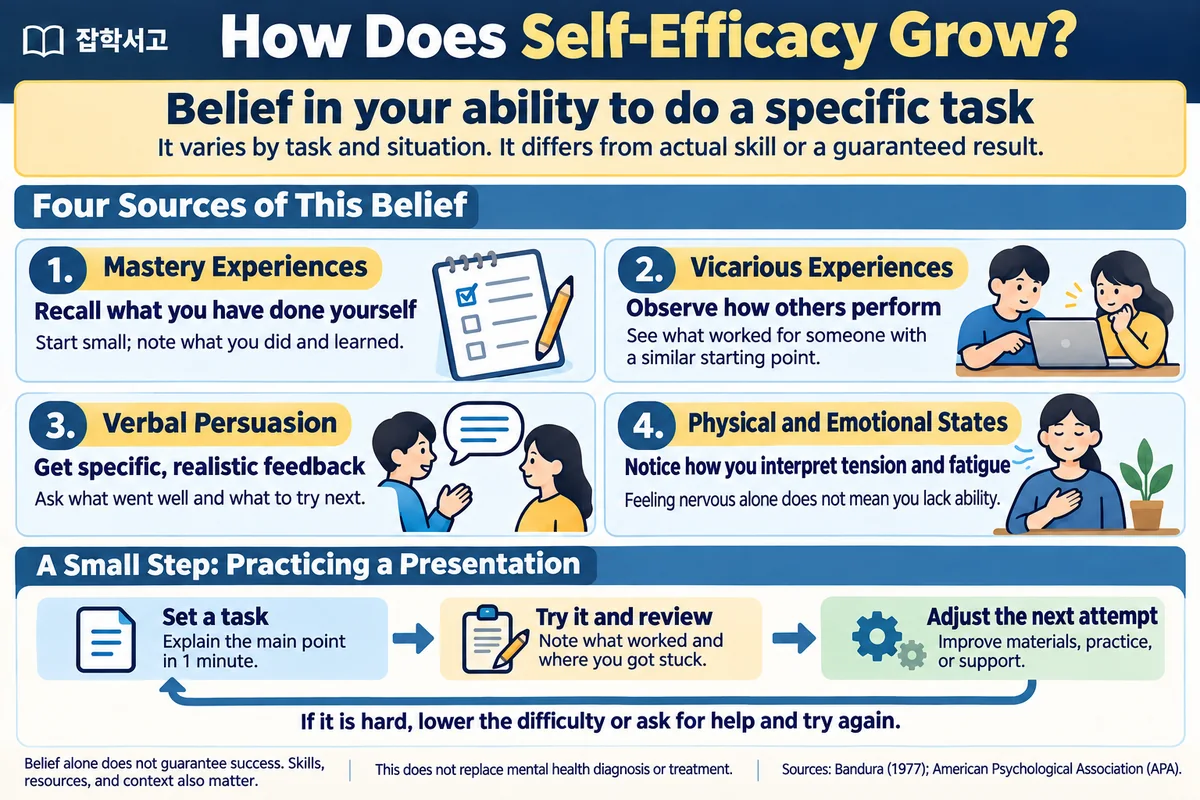
Self-efficacy refers to an individual's belief in their ability to achieve a particular goal. It goes beyond simple confidence, encompassing the conviction that one can successfully perform the specific actions needed to achieve a goal. The concept of self-efficacy has a major influence on an individual's behavior and emotions and serves as an important factor that determines success or failure in various areas of life.
Self-efficacy develops from four main sources. First, past experiences of success are the most powerful factor in strengthening self-efficacy, involving the process of gaining confidence based on previous successes. Second, vicarious experience is a way of increasing self-efficacy by observing other people succeed. Third, social persuasion contributes to strengthening an individual's self-efficacy through positive feedback or encouragement from others. Finally, emotional and psychological states encompass the influence of an individual's emotional and physical condition on self-efficacy. A positive emotional state increases self-efficacy, while a negative state can weaken it.
The Relationship Between Self-Efficacy and Goal Setting
Self-efficacy has a major influence on how individuals set and achieve goals. People with high self-efficacy set challenging goals and view failure as an opportunity to learn without fearing it. In contrast, people with low self-efficacy tend to avoid challenges or give up easily.
Self-efficacy serves as a driving force that encourages individuals to sustain their efforts. It plays an important role in various fields, particularly academics, sports, and business. For example, in education, students with high self-efficacy tend to adjust better to their studies and persist until the end when tackling difficult tasks, without giving up. In sports, self-efficacy also plays an important role in helping athletes prepare for competitions and manage stress effectively, helping them perform at their best during competition.
Practical Applications of Self-Efficacy
Self-efficacy can be applied practically in various everyday situations. To increase self-efficacy, it is important to first reassess past experiences of success, draw on examples of others' success, and receive positive social support. It is also necessary to manage one's emotional state and maintain a positive attitude.
For example, in a business setting, individuals' self-efficacy can be increased by providing positive feedback within a team and sharing examples of successful projects. Strengthening self-efficacy is also important in health management, as it helps people set health goals and consistently achieve them. Increasing confidence through exercise and maintaining a healthy lifestyle are examples of this.
The Importance of Self-Efficacy and Ongoing Research
Self-efficacy goes beyond being a simple concept and is an important psychological resource that positively influences an individual's life as a whole. It provides an important foundation for individuals to believe in their capabilities and take on challenges. In particular, various studies have demonstrated the validity and usefulness of self-efficacy, and it has positive effects on individuals' achievement, psychological well-being, and health.
These studies show that people with higher self-efficacy can achieve better results, maintain psychological stability, and form healthy interpersonal relationships. Strengthening self-efficacy is therefore essential to personal growth and development and has become an important factor in improving quality of life.
The Psychological Importance of Self-Efficacy

Self-efficacy is an important factor that determines an individual's psychological stability and quality of life. It encourages individuals to perceive themselves positively and contributes to increasing self-respect and self-esteem. People with high self-efficacy can maintain their composure even in stressful situations and respond more flexibly when solving problems. This improves psychological well-being and helps maintain mental health.
High self-efficacy evokes positive emotions within individuals, encouraging them to engage more actively with life in their daily routines. This emotional stability plays an important role in mental health and helps individuals lead happier, more stable lives.
The Correlation Between Motivation and Self-Efficacy
Self-efficacy has a decisive influence on an individual's motivation. It plays a major role in setting goals and motivating oneself to achieve them. Believing that one is capable is necessary to take more active steps toward achieving goals and experience a sense of accomplishment.
A person with high self-efficacy does not give up when faced with a challenge and continues searching for a solution until the end. This gives individuals a sense that they have control over their own actions and encourages them to make sustained efforts toward better results. As a result, this self-control and motivation play an important role in individuals' goal attainment and success.
Learning Achievement and Self-Efficacy
Self-efficacy also has a significant influence on learning achievement. Students with high self-efficacy perform better academically and attempt challenging tasks without hesitation. This leads to a positive attitude that overcomes the fear of failure and instead seeks growth through learning.
Students with high self-efficacy also believe they can achieve the goals they have set and tend to make sustained efforts throughout the learning process. This produces better learning outcomes, and their self-efficacy is further strengthened through experiences that give them a sense of accomplishment.
The Influence of Self-Efficacy on Social Relationships
Self-efficacy also has a positive influence on individuals' formation of social relationships. People with high self-efficacy tend to behave more openly and confidently in their relationships with others. This greatly helps them form healthy relationships and build better social support networks.
In particular, people with high self-efficacy can respond positively even in socially stressful situations. Because they have faith in their abilities and the situation, they do not become flustered even in difficult circumstances and adopt an attitude of trying to solve problems effectively. This psychological stability improves the quality of social relationships and contributes to greater overall satisfaction with life.
The Importance of Self-Efficacy in the Workplace
Self-efficacy is also closely related to workplace performance. Employees with high self-efficacy feel responsible for their work and have a strong tendency to solve problems in creative and independent ways. This plays an important role in increasing productivity and efficiency within an organization.
In particular, employees with high self-efficacy focus on finding solutions rather than fearing failure, continually improving their work capabilities in the process. This attitude positively influences the performance of both individuals and the organization as a whole and contributes to creating a better work environment.
The Influence of Self-Efficacy on Quality of Life
In conclusion, self-efficacy is an essential factor in improving an individual's overall quality of life. It provides a psychological foundation that helps individuals believe in their abilities and achieve better results. In addition, higher self-efficacy improves the ability to respond to stressful situations and allows individuals to maintain healthier social relationships.
Efforts to increase self-efficacy are therefore a very important part of personal growth and development. Through these efforts, individuals can lead more positive lives and go on to achieve greater success in society.
Specific Methods for Improving Self-Efficacy

Improving self-efficacy requires various practical methods. These methods help individuals recognize their abilities and achieve their goals more effectively. Here, we examine several specific, practical strategies for increasing self-efficacy.
Setting and Achieving Small Goals
One of the most effective ways to increase self-efficacy is to set small goals and achieve them. Setting goals in smaller units rather than large goals makes them easier to achieve, allowing individuals to steadily build confidence and a sense of accomplishment. Successfully achieving small goals naturally creates motivation to take on larger goals and increases individuals' overall self-efficacy.
The positive experiences gained through small accomplishments strengthen self-efficacy and provide an important foundation for achieving better results in the future. As small successes accumulate, individuals become convinced that they can achieve their goals.
The Importance of Positive Self-Talk
Giving oneself positive feedback plays an important role in improving self-efficacy. Positive self-talk is effective in strengthening belief in one's abilities and curbing negative thoughts. For example, statements such as "I can do this" and "I will find a way to resolve this situation" are powerful tools that help individuals believe in themselves.
This positive self-talk reduces stress while helping individuals maintain a positive attitude. Through it, belief in oneself grows, making it possible to maintain self-efficacy even in difficult situations.
Improving Self-Efficacy Through Vicarious Experience
Observing other people's success is effective in increasing self-efficacy. In particular, seeing the success of someone in a similar situation or with a similar background creates the belief that one can achieve something similar. These vicarious experiences provide confidence as individuals take on challenges and foster positive beliefs about achieving goals.
For example, witnessing the success of a close friend or colleague strengthens the belief that "I can do it too." This plays a very important role in increasing self-efficacy and serves as an important opportunity to develop greater belief in one's potential.
The Power of Social Support
Social support is another important factor in strengthening self-efficacy. Encouragement and support from family, friends, and colleagues provide strong motivation for individuals to achieve their goals. These people provide a sense of psychological stability and help individuals maintain a positive attitude even in challenging situations.
Social support increases psychological resilience, particularly when individuals face difficulties, and gives them the courage to take on new challenges. Through this support, individuals develop a firmer belief in their abilities, and their self-efficacy naturally improves.
Treating Failure as a Learning Opportunity
An attitude of treating failure as a learning opportunity without fearing it is very important for increasing self-efficacy. Failure is an unavoidable part of the process of achieving success, and how individuals accept it makes a significant difference to their growth. An attitude of learning and improving through failure greatly helps strengthen self-efficacy.
This attitude leads to greater growth each time individuals experience failure and encourages them to keep trying without becoming discouraged even in challenging situations. The ability to use failure as a stepping stone to success provides an important foundation for developing self-efficacy.
The Need for Professional Counseling and Coaching
Professional counseling and coaching are effective in systematically increasing self-efficacy. Counselors analyze individuals' strengths and weaknesses and suggest appropriate strategies, thereby increasing their chances of achieving goals. Coaching also enables individuals to develop specific plans needed to achieve long-term growth and change.
Receiving professional help can strengthen self-efficacy more effectively, providing a foundation for individuals to take on greater challenges. This process can promote not only short-term results but also sustainable growth over the long term.
Practical Efforts to Improve Self-Efficacy
Various practical approaches to increasing self-efficacy are very important for personal growth and development. From setting small goals to positive self-talk, learning through vicarious experience, social support, treating failure as a learning opportunity, and professional coaching, these methods help individuals trust their abilities and achieve better results.
Through continued efforts to strengthen self-efficacy, individuals will be able to achieve higher goals and lead better lives.
Applications of Self-Efficacy Through Various Examples

Self-efficacy is an important factor that brings positive changes to individuals' lives in various everyday situations. With this in mind, examining how self-efficacy works through examples allows us to clearly understand what changes this concept can bring about in practice.
Self-Efficacy in Academic Life: Goal Setting and Achievement
The first example is a university student who achieved outstanding academic results based on self-efficacy. This student clearly defined their academic goals, developed a specific plan, and put it into practice. Throughout the learning process, the student maintained confidence through positive self-talk and broadened their knowledge by collaborating with peers and gaining vicarious experiences. As a result, the student earned high grades and even received a scholarship.
This example shows how self-efficacy has an important influence on an individual's academic achievement. High self-efficacy allows individuals to maintain a positive attitude even when faced with challenging tasks and serves as a driving force for continually progressing toward goals without fearing failure.
Self-Efficacy in the Workplace: Maximizing Performance
The second example is an employee who strengthened their self-efficacy to maximize work performance. This employee clarified their work goals and continually improved their work capabilities based on feedback from supervisors and colleagues. The employee also found better ways of working by treating failure as a learning opportunity without fearing it. Through this process, work performance improved significantly, and the employee even gained an opportunity for promotion.
Self-efficacy in the workplace provides strong support for individuals to take responsibility for their work and actively solve problems. This example shows that self-efficacy plays an important role in improving workplace performance and creating better career opportunities.
Self-Efficacy in Sports: Improving Performance
The third example is an athlete who performed at their best in competition based on self-efficacy. This athlete gained confidence from past experiences of success and maintained psychological stability through positive self-talk before the competition. The athlete also managed pre-competition tension positively and delivered their best performance.
In sports, self-efficacy contributes greatly to improved performance. Belief in oneself and a positive psychological state make an important difference in competition and help individuals use their abilities to the fullest.
Self-Efficacy in Health Management: Maintaining Lifestyle Habits Consistently
The fourth example is a middle-aged woman who strengthened her self-efficacy to maintain a healthy lifestyle. This woman set clear health goals and began putting them into practice through small steps. She sustained her motivation with support from family and friends, bringing about positive changes in the process. This example shows how self-efficacy is applied to health management.
Self-efficacy plays an important role in maintaining healthy lifestyle habits and achieving health goals over the long term. This is because positive beliefs make it possible to continue taking consistent action.
Self-Efficacy in Social Relationships: Adapting to a New Environment
The fifth example is an adolescent who demonstrated self-efficacy in a new school environment. This adolescent set social goals in the new environment and built confidence through active communication with other students. By giving themselves positive feedback, the adolescent overcame social anxiety and successfully formed relationships with new friends.
Self-efficacy plays an important role in forming new social relationships even in unfamiliar environments. Through it, individuals can achieve greater social growth and maintain stable interpersonal relationships.
Self-Efficacy for Overcoming Psychological Problems: Overcoming an Anxiety Disorder
The final example is an adult who had an anxiety disorder and overcame psychological problems through self-efficacy. This adult developed a positive way of thinking through professional counseling and systematically strengthened their self-efficacy. Through this process, the adult was able to overcome anxiety and regain confidence in everyday life.
Self-efficacy is also a great help in resolving psychological problems. When individuals believe they can solve their own problems, they experience greater psychological stability and improvements in quality of life as they overcome difficulties.
Self-efficacy is a key resource that brings positive changes to individuals' lives. Through it, individuals can achieve more, form healthy social relationships, and enhance psychological stability and well-being. Exploring various practical methods for increasing self-efficacy is an important process that promotes personal growth.
Efforts to improve self-efficacy are essential to personal development and can enable individuals to lead positive and successful lives.