The business environment of the 21st century is changing rapidly, and amid these changes, companies must consider innovative management strategies to achieve sustainable growth. Advances in technology and changes in consumer demands are exposing the limitations of relying solely on existing management methods, making the search for new approaches essential to corporate survival and growth.
This material examines the importance of innovation in the modern business environment in depth and analyzes strategic approaches to strengthening corporate competitiveness, the success factors of innovative management strategies, and ways to build an organizational culture that enables sustainable innovation.
Understanding the importance of innovation in the modern business environment
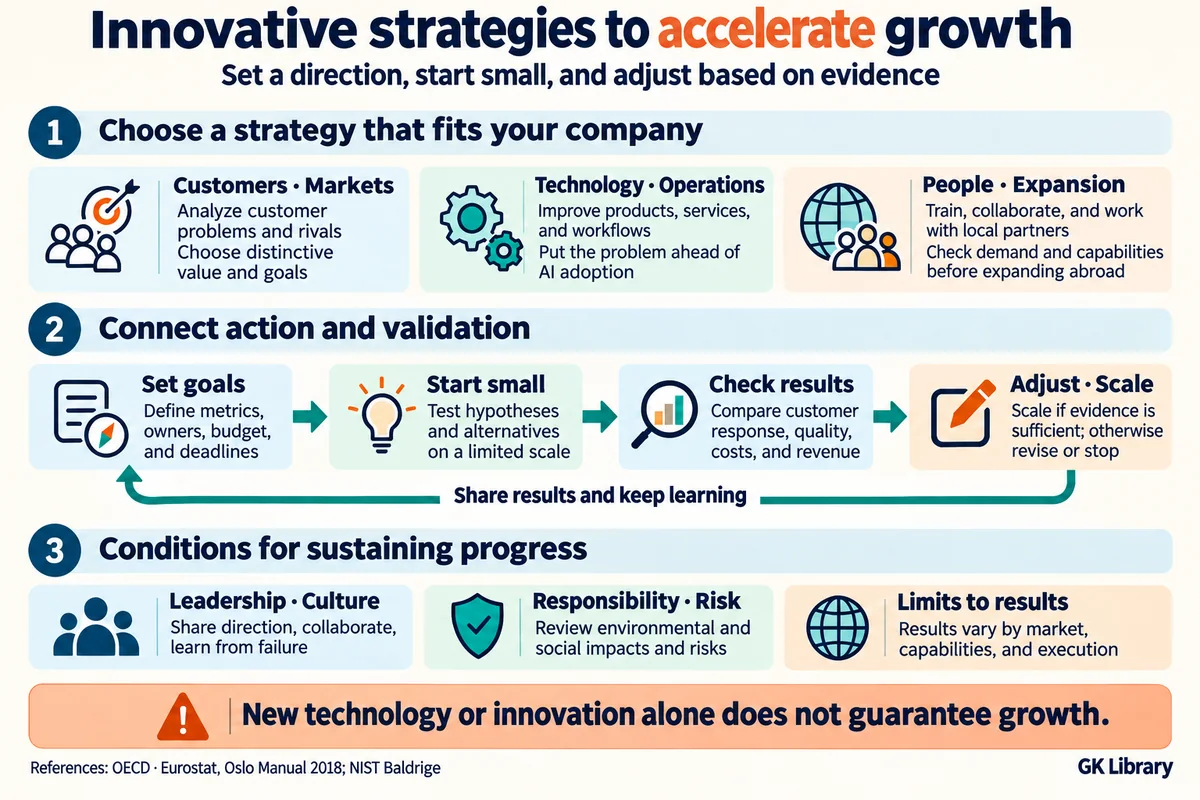

The necessity of innovation: Challenges and opportunities in a changing business environment
The modern business environment is changing rapidly due to technological advances and globalization. These changes continually present companies with challenges and opportunities, and innovation has become an essential requirement rather than an option. As technology advances, new business models emerge, barriers to market entry fall, and existing industry structures are reorganized. Because companies that fail to adapt to these changes struggle to survive, they must pursue innovation to achieve sustainable growth.
Customer-centered innovation: Creating value in line with changing consumer expectations
As consumer expectations change, companies can no longer focus solely on products or services themselves. Consumers place greater importance on experiences and value, so companies must accurately identify customer needs and provide innovative products and services tailored to them. Analyzing customer data and improving the user experience are key to achieving this. Customer-centered innovation serves as an important strategic factor that enables companies to create new value and gain a competitive advantage.
Differentiation strategies through innovation amid intense competition
Competition in the market is growing fiercer every day, and companies must pursue continuous innovation to stay ahead of their competitors. Differentiating products and services through innovation is an important means of maintaining corporate competitiveness. This can increase customer loyalty, strengthen the brand image, and provide opportunities to enter new markets. Ultimately, innovation serves as an essential tool for companies to survive and grow in a changing market.
Increasing the efficiency of internal processes: The importance of operational innovation
Innovation maximizes the efficiency of internal processes as well as external activities. Through technological innovation, companies can reduce operating costs, improve productivity, and enhance their overall competitiveness. In particular, as digital transformation accelerates, innovation using advanced technologies such as AI, big data, and IoT is increasingly recognized as essential. Such operational innovation helps companies respond efficiently to rapidly changing market conditions.
Sustainable growth and the need for innovative management strategies
Innovation aimed at long-term growth is needed rather than innovation focused on short-term results. Innovation is an important strategic means for companies to respond flexibly to market changes and prepare for future uncertainty. Companies cultivate the ability to adapt to changing conditions, thereby securing a stable market position over the long term.
Changes in organizational culture: Open-mindedness and creativity that promote innovation
Innovation also has a significant impact on a company's organizational culture. Organizations that encourage innovation value open and creative thinking and provide employees with an environment in which they can put new ideas into practice. Such an organizational culture plays an important role in maintaining sustainable competitiveness. Companies must also create an atmosphere in which failure is not feared, providing an environment where employees can freely take on challenges. This ultimately contributes to a company's continuous growth and development.
Analyzing strategic approaches to strengthening corporate competitiveness

Understanding the competitive environment through market analysis
The first strategic approach to strengthening corporate competitiveness is market analysis. By thoroughly understanding current industry trends and the competitive environment, companies can clearly understand their position and determine their direction. This allows them to analyze their strengths and weaknesses and develop strategies that make the most of opportunities. Effective market analysis is an essential process for entering new markets or securing a competitive advantage within existing markets.
Developing products and services using innovative technologies
Technological advances provide companies with new opportunities, and how effectively they use these opportunities determines their competitiveness. A good example is using AI and big data analysis to identify customer needs and develop customized products and services based on them. By adopting innovative technologies, companies can offer better user experiences and create differentiated value. This goes beyond simply using technology and becomes a core strategy for pursuing sustainable growth through it.
Developing strategies for entering global markets
In an era of globalization, relying solely on the domestic market limits growth. Developing strategies for entering overseas markets is therefore essential. This requires thorough research into local markets and an understanding of their cultures, while local partnerships can optimize market entry. Global expansion not only offers opportunities to increase sales but also serves as an important factor in expanding a company's brand awareness worldwide.
Strengthening CSR strategies for sustainable management
Modern consumers value corporate social responsibility, which has a significant impact on a company's image and credibility. Strengthening CSR (corporate social responsibility) and practicing management that considers ESG (environmental, social, and governance) factors are essential to securing long-term growth and trust beyond short-term profits. Through sustainable management, companies can create environmental and social value and thereby build a positive brand image.
The importance of human resource management
Talent is the key to driving innovation. Human resource management serves as an important factor in strengthening corporate competitiveness, and effectively managing and developing human resources is essential. By strengthening education and training programs to improve employees' capabilities and fostering a creative organizational culture that supports autonomy, companies can pursue continuous innovation. Managing and retaining talent is an important key to determining a company's future.
Developing risk management strategies
Risk management is essential in a highly uncertain business environment. Identifying risks in advance and preparing appropriate responses to unexpected situations play an important role in enabling companies to maintain stable operations even during crises. Minimizing potential threats and improving corporate sustainability through risk management strategies contribute to long-term growth.
Key success factors in implementing innovative management strategies

Establishing a clear vision and goals
The most important starting point for the success of an innovative management strategy is to establish a clear vision and specific goals. A vision defines the direction in which an organization will move and its ultimate objectives. This enables the organization to move forward with a shared goal, while setting clear goals ensures that all members move in a consistent direction.
For example, Tesla has a clear vision of a “transition to sustainable energy” and, based on this vision, sets specific goals involving electric vehicles, energy storage systems, and other areas to pursue innovative strategies. A clear vision and goals play an important role in maximizing organizational efficiency and preventing confusion during implementation. When there is a vision that members can share in this way, each person's role becomes clear, and innovative strategies are more likely to succeed.
Building an effective communication system
Effective collaboration between departments and teams is essential to implementing innovative management strategies. To achieve this, it is important to establish an open and transparent communication system in which information is shared freely and feedback is incorporated immediately.
For example, through an innovative communication culture called the “20% project,” Google created an environment in which employees could use their own time to freely propose new ideas and experiment with them. Such an open communication structure speeds up strategy implementation and makes problem-solving processes more efficient. Effective communication positively influences not only collaboration between departments but also the spread of ideas and the speed of implementation, ultimately supporting the success of innovation.
The role of capable leadership
Capable leadership is essential to driving innovative management strategies. Leaders clearly communicate the organization's vision and goals, minimize resistance to change, and motivate its members.
For example, Apple's Steve Jobs demonstrated strong leadership by clearly presenting the need for new technological innovation and its direction to the entire organization when the iPhone was launched. His leadership played a decisive role in minimizing resistance to change and moving the organization toward its goals. Capable leaders must resolve challenges that arise during the innovation process and provide ongoing support so that the organization can continue moving in a consistent direction amid change.
Strengthening technological capabilities
Innovative management strategies are often based on adopting and using the latest technologies. Companies must therefore focus on strengthening their technological capabilities so that they can enhance their competitiveness and respond to changing conditions.
For example, Amazon transformed logistics and distribution through AI and big data analysis. This enabled it to anticipate customer needs and provide faster, more efficient services. Innovation using technology in this way plays an important role in improving an organization's operational efficiency and capturing new market opportunities. By strengthening their technological capabilities, companies can pursue continuous growth in rapidly changing markets.
Creating a culture of continuous learning and improvement
Innovation does not end with a single attempt or implementation; it is a process of constant change and development. A culture that encourages continuous learning and improvement within the organization is essential to this process.
For example, Netflix continually adopts data-driven analysis and learning and improves its content to adapt to the changing media environment. Providing an environment in which members can continuously acquire new knowledge and apply it to their work allows innovative thinking to spread throughout the organization and helps maintain competitiveness.
Establishing a performance management system
Establishing a system that accurately measures and manages the results of innovative management strategies is an important factor in their success. A performance management system helps evaluate the effectiveness of strategy implementation, identify necessary improvements, and adjust the direction of innovation.
For example, IBM uses a performance management system to set specific goals for each department, regularly evaluate results, and identify ways to improve. This enables companies to continually improve their strategies and achieve their goals more quickly. Objective and systematic performance management is an important tool for ensuring the success of innovative strategies.
Thus, successfully implementing innovative management strategies requires a clear vision and goals, effective communication, capable leadership, stronger technological capabilities, a culture of continuous learning, and a performance management system to all work in harmony. When these elements are effectively combined, companies can achieve continuous growth and innovation even in rapidly changing market conditions.
Ways to build an organizational culture for sustainable innovation

Creating an open and creative organizational culture
Building an open and creative organizational culture is essential to sustainable innovation. An open culture provides an environment in which members can freely propose and implement ideas. This enables every member of the organization to become an active participant in innovation and creates opportunities for ideas from diverse perspectives to be accepted. Such an environment can help solve organizational problems through fresh perspectives and plays an important role in developing creative solutions.
A culture that treats failure as an opportunity to learn
Failure inevitably accompanies innovation. It is therefore important to create a culture in which failure is not feared. Failure should be regarded as an opportunity to learn rather than an endpoint in itself. Sharing the lessons learned from failure throughout the organization and making improvements based on them becomes a driving force for sustaining innovation. An environment that tolerates failure encourages members to try new things without hesitation and further contributes to accelerating the pace of innovation.
Encouraging continuous learning and self-development
Innovation depends on members' ability to continually acquire and apply new knowledge. Organizations must therefore create an environment in which members can continuously learn and develop themselves. To achieve this, it is important to provide educational programs and learning opportunities and actively support members in applying new technologies and knowledge to their work. Learning opportunities improve the capabilities of the entire organization, which in turn becomes the foundation for sustainable innovation.
Strengthening collaboration and teamwork
Innovation often comes to fruition through cooperation among multiple departments and teams rather than from a single idea. When members with different perspectives and expertise collaborate, they can develop better solutions. A culture that promotes collaboration and strengthens teamwork is essential to achieving this. Collaboration based on trust creates synergy and serves as an important factor in successfully driving innovation.
The role of leadership in guiding an innovative culture
Leadership plays a very important role in building an innovative organizational culture. Leaders are responsible for presenting members with a clear vision and supporting them in thinking innovatively. Leaders also continually adjust the organization's direction and motivate members to move toward its goals. Without leadership from its leaders, an organization struggles to move in a consistent direction and to maintain an innovative culture.
Sharing organizational values and vision
Sustainable innovation is possible only when the organization's values and vision are clearly shared. Values and a vision that all members can embrace provide a common direction for innovation, enabling the entire organization to move toward consistent goals. An organization with shared values and a shared vision promotes innovative thinking and forms a strong foundation for achieving sustainable growth.
Innovative management strategies have become a key factor in enhancing corporate competitiveness and achieving sustainable growth in the modern business environment. To achieve this, companies must establish a clear vision and goals, strengthen their technological capabilities under strong leadership, and build an open and flexible organizational culture.
They must also create an environment in which failure is not feared and lay a foundation for sustaining innovation through continuous learning. Through these strategic efforts, companies will be able to maintain their competitiveness in changing markets and achieve long-term success.