Business combinations and mergers are important phenomena that frequently occur in today's business environment. They are strategic choices in which two or more companies are integrated into one to maximize the efficiency of business resources, strengthen competitiveness in the market, and achieve sustainable growth.
However, the process of combining businesses is complex and multidimensional, and success requires careful planning, strategic execution, and compliance with legal regulations. This material will discuss in detail the definition and motivations of business combinations, strategies for success, legal procedures and regulations, and integration management.
Definition and Main Motivations of Business Combinations
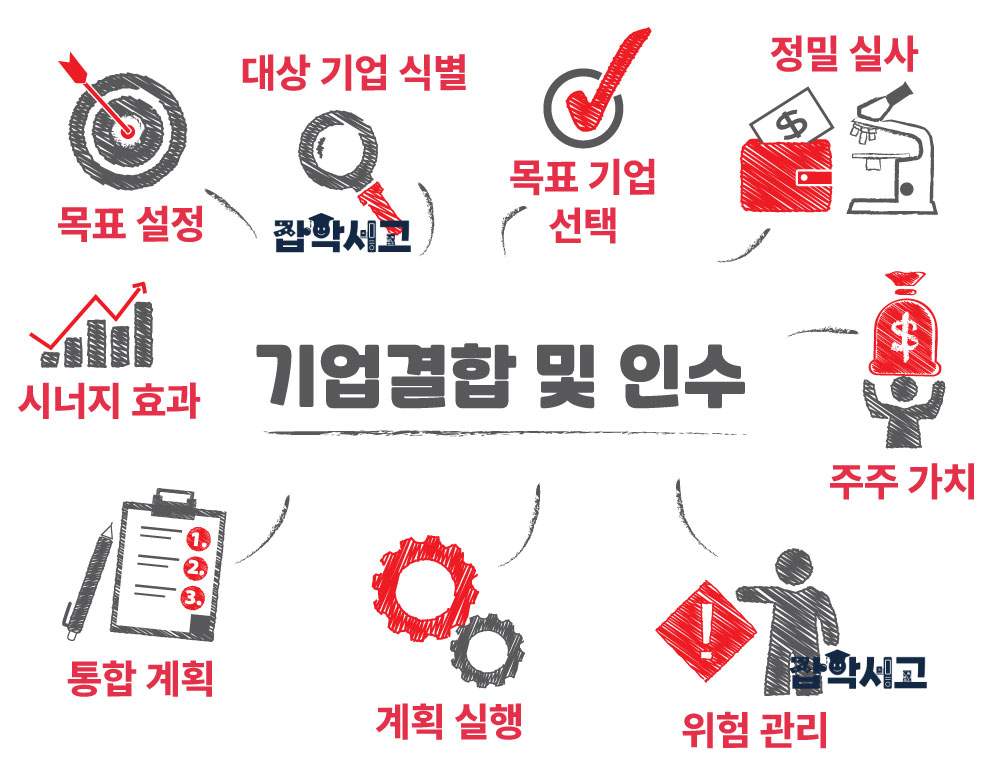 What Are Business Combinations (M&A)?
Definition and Overview of Business Combinations
Business combinations (Mergers and Acquisitions, M&A) refer to the process in which two or more independent companies are integrated into one. This process is often undertaken as a strategic choice to change a company's business structure, redistribute resources, and maximize management efficiency. Business combinations are generally divided into mergers (Merger) and acquisitions (Acquisition), with a merger referring to the combination of two companies of the same size and an acquisition referring to one company's purchase of another. These business combinations serve as an important means of achieving a company's strategic objectives.
Strengthening Market Power
One of the main motivations for companies to pursue business combinations is to strengthen their market power. Through business combinations, companies can expand their market share and secure a leading position in the market by acquiring competitors. This plays an important role in increasing competitiveness and improving corporate profitability. In particular, acquiring competitors within the same industry can provide advantages such as strengthening a company's market position and giving it the power to set prices.
Improving Management Efficiency
Business combinations also play an important role in maximizing management efficiency. When two companies combine, they can consolidate overlapping departments and optimize operational processes. This allows them to benefit from cost savings and build a more solid financial structure. In addition, combining the resources and capabilities of the merged companies can significantly improve productivity and operational efficiency. These improvements in management efficiency contribute to a company's long-term growth and stability.
Acquiring Technology and Talent
Another main motivation for business combinations is acquiring technology and talent. Particularly in technology-driven industries, acquiring a company with innovative technology can strengthen the acquiring company's technological capabilities and give it a competitive advantage in the market. This plays an important role in accelerating technological innovation and improving the quality of products and services. Companies can also achieve better management results by effectively utilizing the human resources of the acquired company. This is also of great help in improving competitiveness in the war for talent.
Entering New Markets
Business combinations can also be used as a strategy for entering new markets. In particular, companies seeking to enter overseas markets can reduce initial entry costs and adapt quickly to the local market by acquiring local companies. This is an important strategic choice for strengthening competitiveness in the global market. Companies can use the networks and experience of local companies to reduce risks in new markets and achieve successful entry.
Maximizing Shareholder Value
Finally, business combinations play an important role in maximizing shareholder value. Successful business combinations can provide tangible benefits to shareholders, such as higher share prices and increased dividends. This contributes to increasing shareholders' trust and strengthening a company's long-term growth and management stability. When the synergies following a business combination are maximized, they lead to an increase in corporate value and bring positive outcomes for shareholders.
As described above, business combinations have become an important strategic choice for corporate growth and development through various motivations and benefits, including strengthening market power, improving management efficiency, acquiring technology and talent, entering new markets, and maximizing shareholder value.
Strategies for Successful Business Combinations
 What Is Important for a Successful Business Combination?
Selecting a Target Company
The first important step toward a successful business combination is to select the target company carefully. At this stage, market research and company analysis are used to comprehensively assess the target company's financial condition, management capabilities, and position in the market. Considering strategic fit and synergies is essential in this process. Companies must closely analyze how the target company aligns with their own strategic objectives and how substantial the expected synergies after the combination will be. This enables them to get the business combination off to a successful start.
Detailed Due Diligence (Due Diligence)
The second stage is detailed due diligence (Due Diligence). This is the process of closely examining the target company's financial condition, legal issues, and operational structure. Detailed due diligence identifies and assesses all possible risks with the assistance of various specialists, including lawyers, accountants, and financial experts. This process uncovers unexpected problems and establishes a foundation for a successful business combination. Detailed due diligence is an important process for minimizing the risks of a business combination and maximizing potential synergies.
Negotiating Merger Terms
The third stage is negotiating merger terms. This process involves coordinating the interests of both sides and determining the post-merger management structure, share exchange ratio, and staffing arrangements. Negotiation is a process in which the shareholders, management teams, and legal advisers of both sides work together to arrive at optimal terms. Trust and transparency play an important role in this process. Successful negotiations ensure smooth integration after the merger and the company's long-term success.
Internal and External Communication
The fourth stage is internal and external communication. It is important to share merger plans transparently with stakeholders, including shareholders, employees, and customers, and to gain their support. This can minimize resistance that may arise during the merger process and strengthen organizational unity. Externally, it is also necessary to build a positive image through communication with the media. The success of a business combination depends on stakeholders' support and trust, and a transparent and effective communication strategy is essential for achieving this.
Developing an Integration Plan
The fifth stage is developing an integration plan. This is the process of redefining the organizational structure, operational processes, and corporate culture after the merger. At this stage, companies seek ways to make the most of both sides' strengths and maximize synergies. It is important for the integration plan to provide a clear roadmap and to be implemented in stages. A systematic approach is needed to minimize any confusion that may arise during this process and ensure stable operations after the merger.
Continuous Monitoring and Feedback
Finally, successful business combinations require continuous monitoring and feedback. Even after the merger, companies must use regular evaluations to resolve unexpected problems quickly and develop ways to maximize the benefits of integration. It is also important to compare the initial plan with actual results and make the necessary adjustments. This can ensure the long-term success of a business combination and promote continued growth.
Legal Procedures and Regulations for Business Combinations
 What Legal Procedures and Regulations Apply to Business Combinations?
Legal Procedures Under Corporate Law
The first legal procedure for a business combination is compliance with regulations under corporate law. Corporate law governs the establishment, operation, and dissolution of companies and specifies the requirements that must be followed during the business combination process. Before proceeding with a business combination, it is essential to thoroughly review the relevant laws and comply with them. To this end, it is important to obtain legal advice to understand the details of the applicable laws accurately and systematically prepare the necessary procedures.
The Fair Trade Act and Market Competition Regulations
The second important legal procedure is compliance with the Fair Trade Act. The Fair Trade Act regulates business combinations to prevent them from undermining fair competition in the market. Through business combination notifications and reviews, the Fair Trade Commission assesses the impact of the merger on market competition. During this process, companies must be carefully reviewed to ensure that they do not abuse their market power, and measures must be taken to prevent consumer harm caused by monopolies. This can maintain fairness in the market and secure long-term trust in the company.
Compliance with Securities Laws
When a business combination involves a listed company, it is important to comply thoroughly with securities laws. Procedures such as share exchanges and the issuance of new shares are required during the merger process, and these are strictly regulated under the Securities and Exchange Act. It is essential to provide shareholders with sufficient information and protect their rights through transparent procedures. This can maintain shareholders' trust and prevent legal disputes after the merger.
Tax Strategies Under Tax Law
The application of tax law is a very important factor in the business combination process. Because tax issues arising from a merger directly affect a company's financial condition, they must be accurately assessed and addressed. Companies must obtain tax advice to thoroughly analyze the tax benefits or burdens associated with the merger and develop an optimal tax strategy. This allows companies to maintain financial stability and minimize financial risks after the merger.
Labor Law and Employment Laws
Labor law and employment laws are also important considerations in the business combination process. Workforce restructuring and changes to working conditions after a merger are regulated under labor law, which is essential for protecting workers' rights and interests. Preventing legal disputes during this process requires thorough legal review as well as smooth communication between labor and management. Fair procedures that reflect workers' views are also required to promote organizational stability after the merger.
International Legal Considerations
Finally, international legal considerations are important in mergers between multinational companies. In addition to complying with the laws of each country, approval from international regulatory bodies may also be required. To this end, companies must obtain international legal advice to conduct a thorough legal review and develop strategic responses that meet each country's regulatory requirements. This is an essential stage for international business expansion and the successful completion of a merger.
Integration Management After a Business Combination
 What Processes Are Needed After a Business Combination (M&A)?
Integrating Organizational Structures and Operational Processes
The first important task after a business combination is integrating organizational structures and operational processes. This takes place through the process of forming a new organizational culture while respecting the organizational cultures of both sides. To minimize confusion after the merger, companies must establish a clear organizational structure and define roles and responsibilities clearly. This can maximize synergies and ensure efficient operations. Strengthening communication within the organization and establishing a culture of collaboration are essential for successful integration.
Managing Human Resource Integration
Managing the integration of human resources is another key element of a successful business combination. Companies must help employees adapt quickly to the new organization through workforce restructuring, education and training, and incentive systems. In particular, it is important to retain key talent after the merger and improve their morale. This can maximize productivity and ensure organizational stability. Companies must also focus on promoting cooperation among employees and building new teamwork.
Financial Integration
Financial integration is the process of accurately understanding the company's financial condition after the merger and developing a new financial strategy based on that understanding. Financial integration can maximize the cost savings arising from the merger and maintain a stable financial structure. Establishing an integrated financial system can enable efficient financial management and optimize resource allocation. During the financial integration process, it is also important to ensure consistency in the financial reporting framework and guarantee transparent financial operations.
IT System Integration
IT system integration after a business combination is essential for maximizing operational efficiency and strengthening data security. Companies can optimize business processes by integrating the IT infrastructure of both sides and introducing new systems when necessary. This can support rapid decision-making and increase the overall speed of operations. Data integrity and security are important considerations in the IT integration process. Thorough planning and execution are required to achieve this.
Integrating Customer Management and Marketing Strategies
Integrating customer management and marketing strategies after a merger plays an important role in securing a competitive advantage in the market. Companies must integrate existing customer data to understand customer needs more accurately and develop new marketing strategies based on that understanding. This can retain existing customers and attract new ones. An integrated marketing strategy can also contribute to maximizing brand value and strengthening the company's market position.
Continuous Performance Evaluation and Feedback
Finally, continuous performance evaluation and feedback are essential for sustaining a successful business combination. Companies must regularly evaluate post-merger performance, identify areas for improvement, and resolve unexpected problems quickly. This process contributes to promoting sustainable growth and ensuring the company's long-term success. Companies can also use the results of performance evaluations to establish best practices for successful business combinations and incorporate them into future merger strategies.
Business combinations and mergers are important strategic choices for corporate growth and development. However, achieving a successful business combination requires thorough planning, strategic execution, compliance with legal regulations, and integration management.
This material has provided an in-depth understanding of the definition and motivations of business combinations, strategies for success, legal procedures and regulations, and integration management. On this basis, we hope that companies can achieve sustainable growth and further strengthen their competitiveness in the market.