In this post, I want to look at what characteristics the colors we commonly use every day have and what feelings they evoke psychologically. Each color is used for its own reasons, and within it lies a variety of psychology that the color expresses.
In this material, we will look at the principles behind commonly used colors, such as the colors of the rainbow and achromatic colors. Since most of the details are included in the images, the text is written only to support them.
- Red
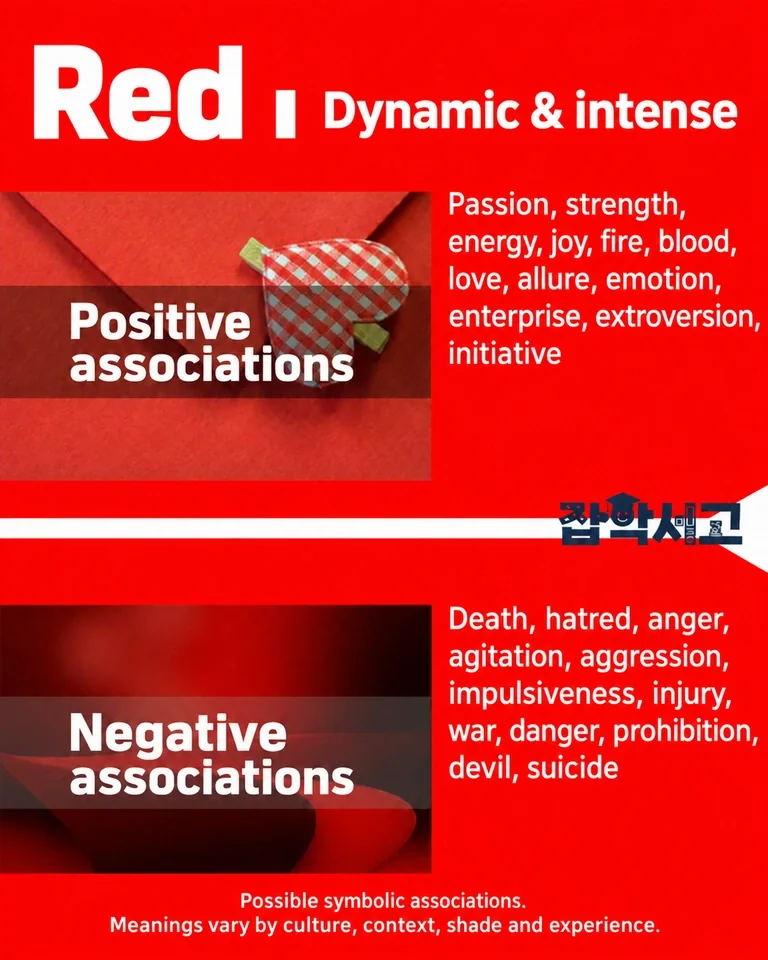 Characteristics of red
Source: GK Library original diagram. Symbolic associations, not universal effects.
Redsymbolizes ardor or passion. It is the color that represents human love, and as an intense color it also expresses great strength. Because it is also the color of human blood, it conveys negative feelings such as death or danger.
It has the strongest saturation of all colors, so it is often used to make something stand out, and it is one of the colors that carries many positive and negative images at the same time.
- Orange
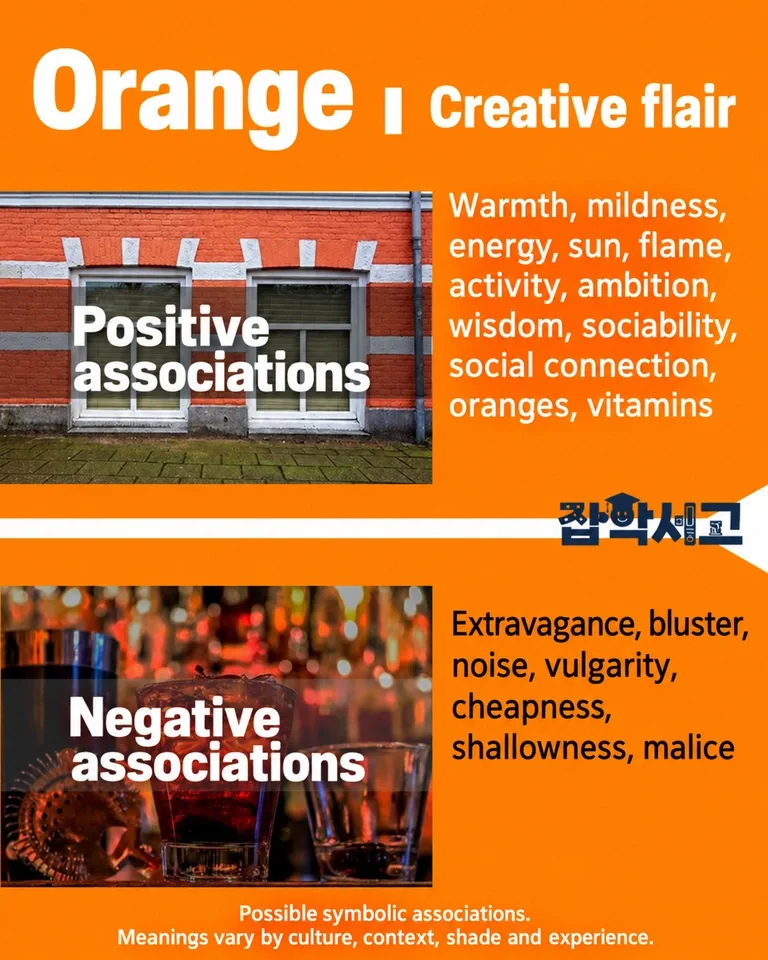 Characteristics of orange
Source: GK Library original diagram. Symbolic associations, not universal effects.
Orangeis the color between red and yellow and has the characteristics of both in equal measure. It gives a warm, active impression and has a strongly positive image.
Using orange with low-saturation colors can give a lively, vibrant image, and it is also widely used to attract particular attention or to express a creative sense.
- Yellow
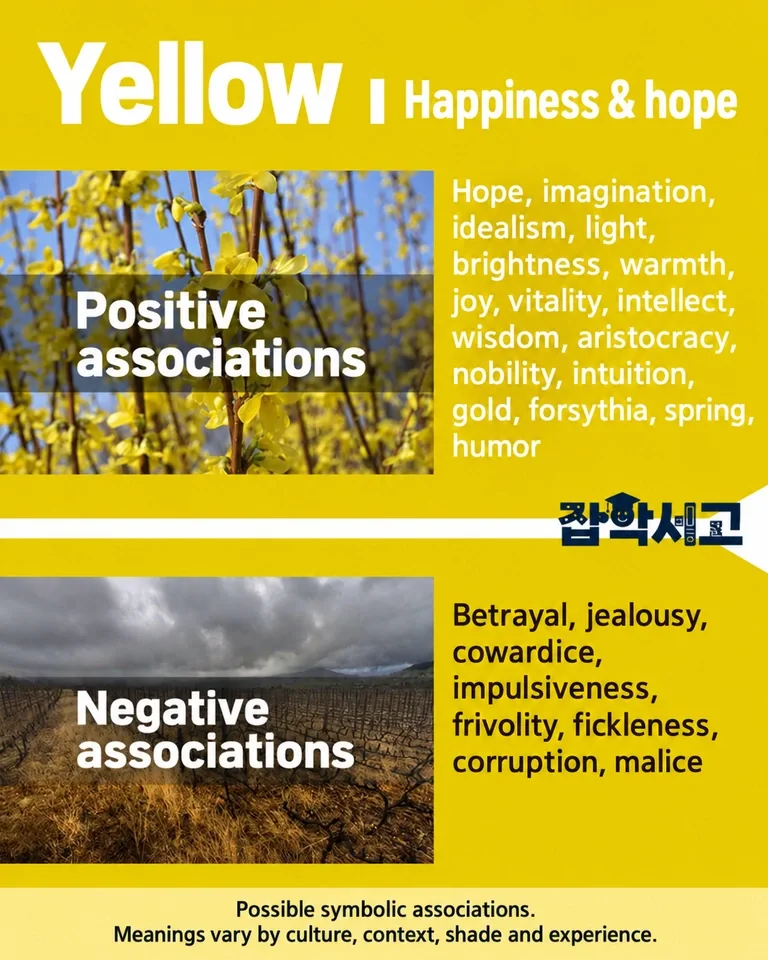 Characteristics of yellow
Source: GK Library original diagram. Symbolic associations, not universal effects.
Yellowis the color that represents happiness and hope, and it has the highest saturation and brightness of all colors. That is why, when used together with dark black, it increases visibility and is effective at drawing people's eyes.
A typical example is the safety signs commonly seen on the street. It is also a color children love, so it is widely used for children's products and toys.
- Green
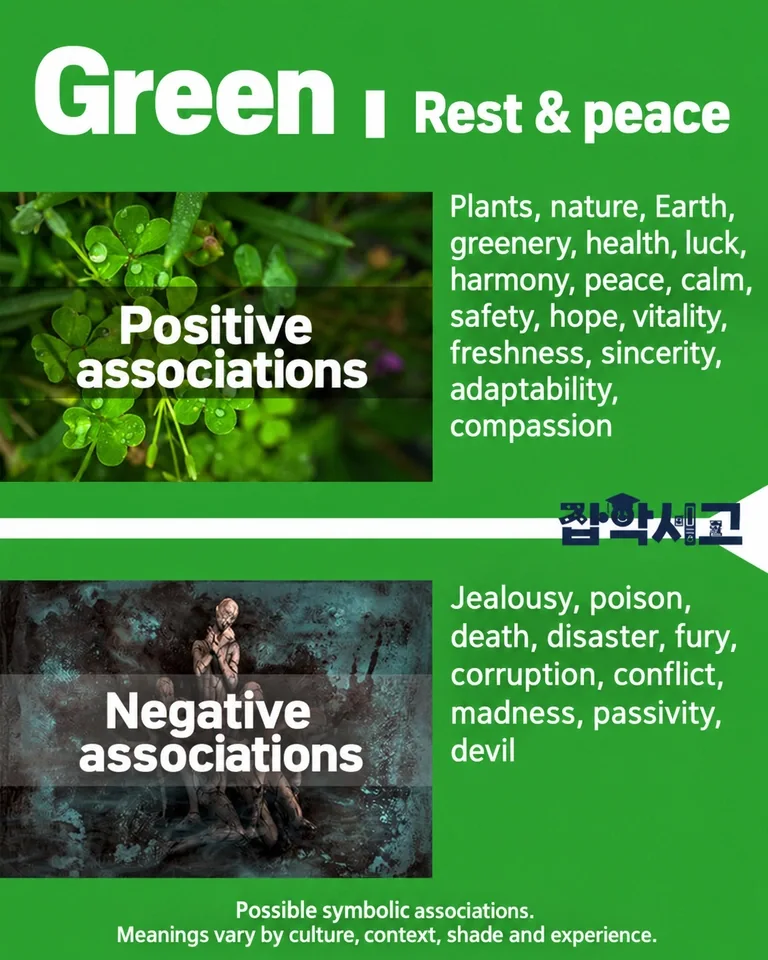 Characteristics of green
Source: GK Library original diagram. Symbolic associations, not universal effects.
Greenis the representative color symbolizing nature. As the color of forests, grass, and trees, it is psychologically comforting and gives a sense of stability. Because it means health and revival, it is also known as the symbolic color of hospitals.
On the other hand, because it is a color easily seen in nature, people can tire of it quickly, so overusing it should be avoided.
- Blue
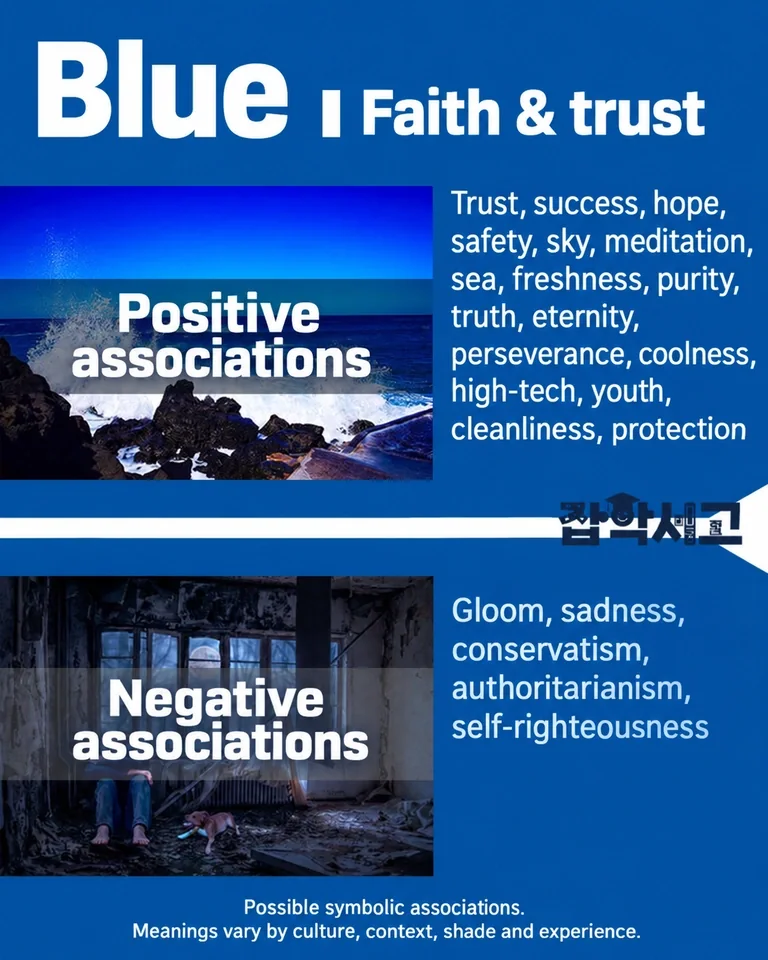 Characteristics of blue
Source: GK Library original diagram. Symbolic associations, not universal effects.
Bluesymbolizes the sea or the sky and gives a cool, calm feeling. It is a color many people prefer, and because it symbolizes trust and success, many companies use it in their logos and elsewhere.
Conversely, when blue becomes dark it creates a gloomy mood, and because it does not go well with food and lowers the appetite, care should be taken when using it in places such as restaurants.
- Purple
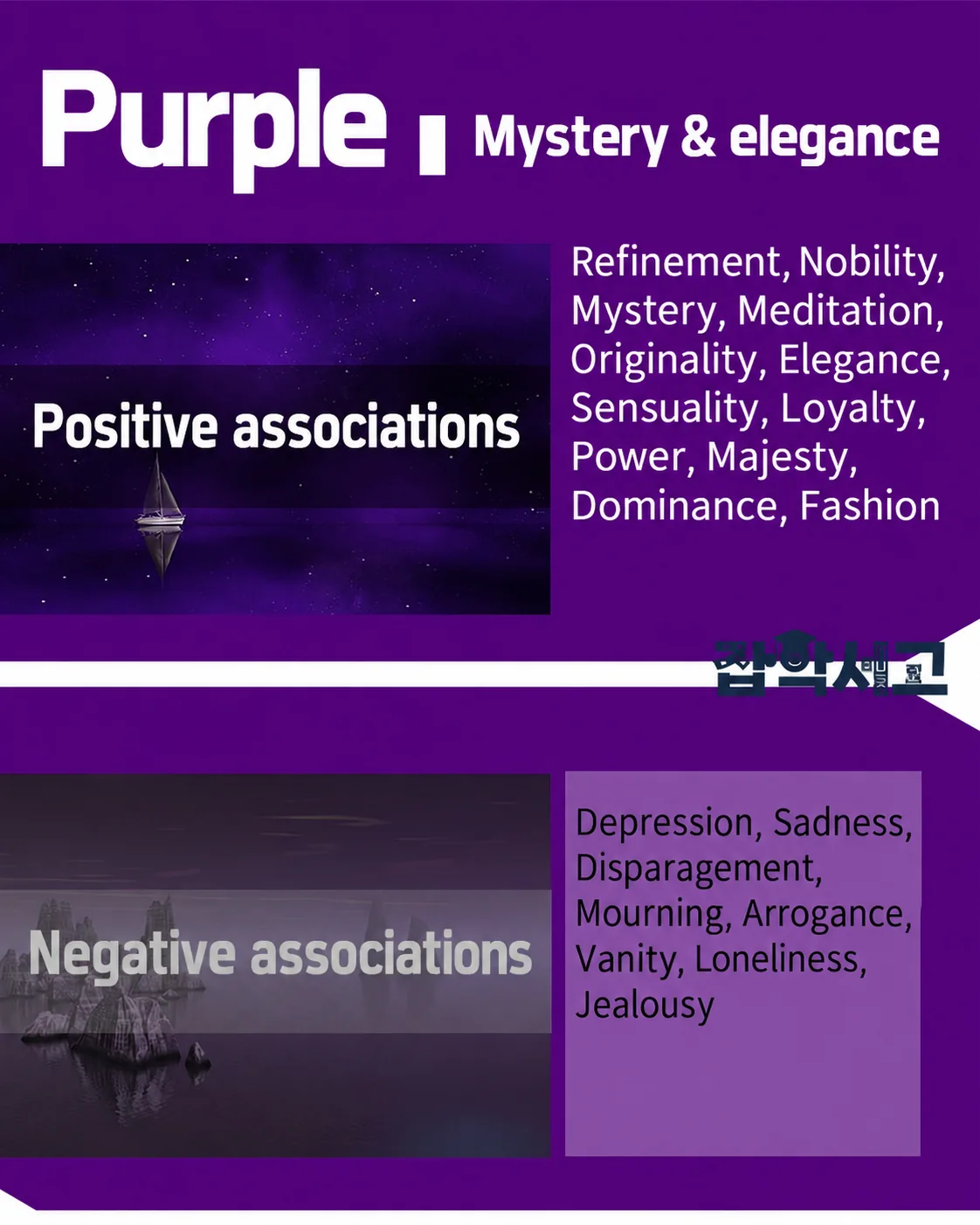 Characteristics of purple
Purpleis the color that best suits artistic sensibility. It has elegance, mystery, and refinement, and it is often used for products that women prefer.
It is also a color that symbolizes wealth and, conversely, extravagance or vanity.
- Brown
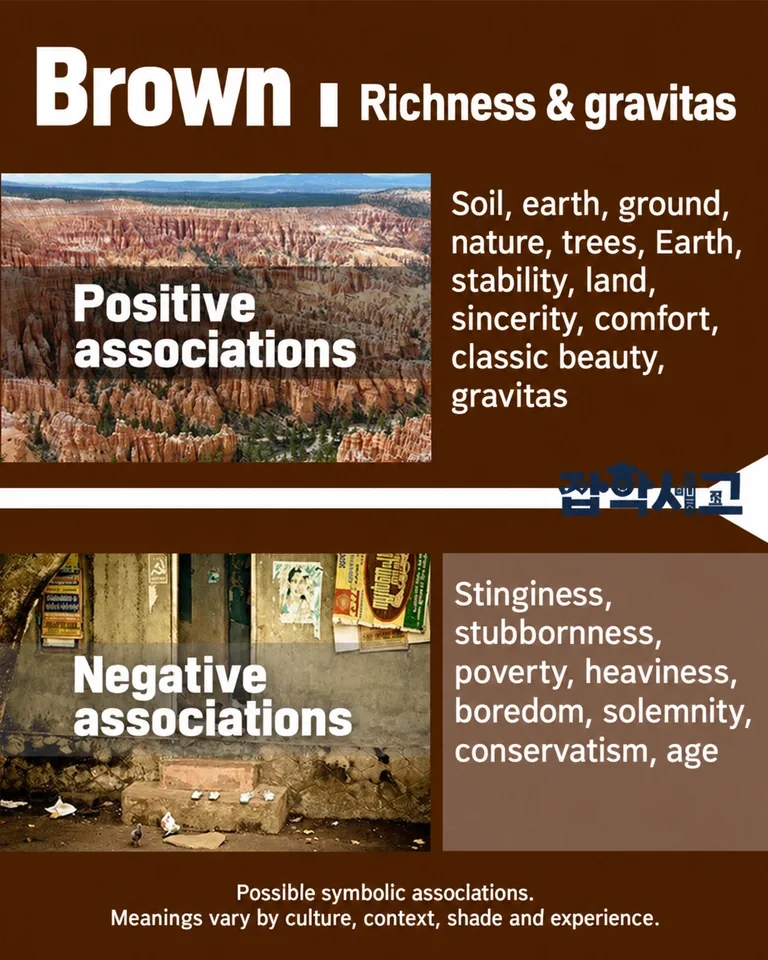 Characteristics of brown
Source: GK Library original diagram. Symbolic associations, not universal effects.
Brown is also a color that, together with green, symbolizes nature. If green is nature in the form of forests, leaves, and lawns, brown is typified by wood, land, and soil. So, likewise, it gives people a comfortable and natural feeling.
It is a color made by mixing two complementary colors, and it gives an image of neutrality and responsibility. However, it is hard to combine with other colors, so it is characteristically used mainly by adjusting its brightness.
- Gray
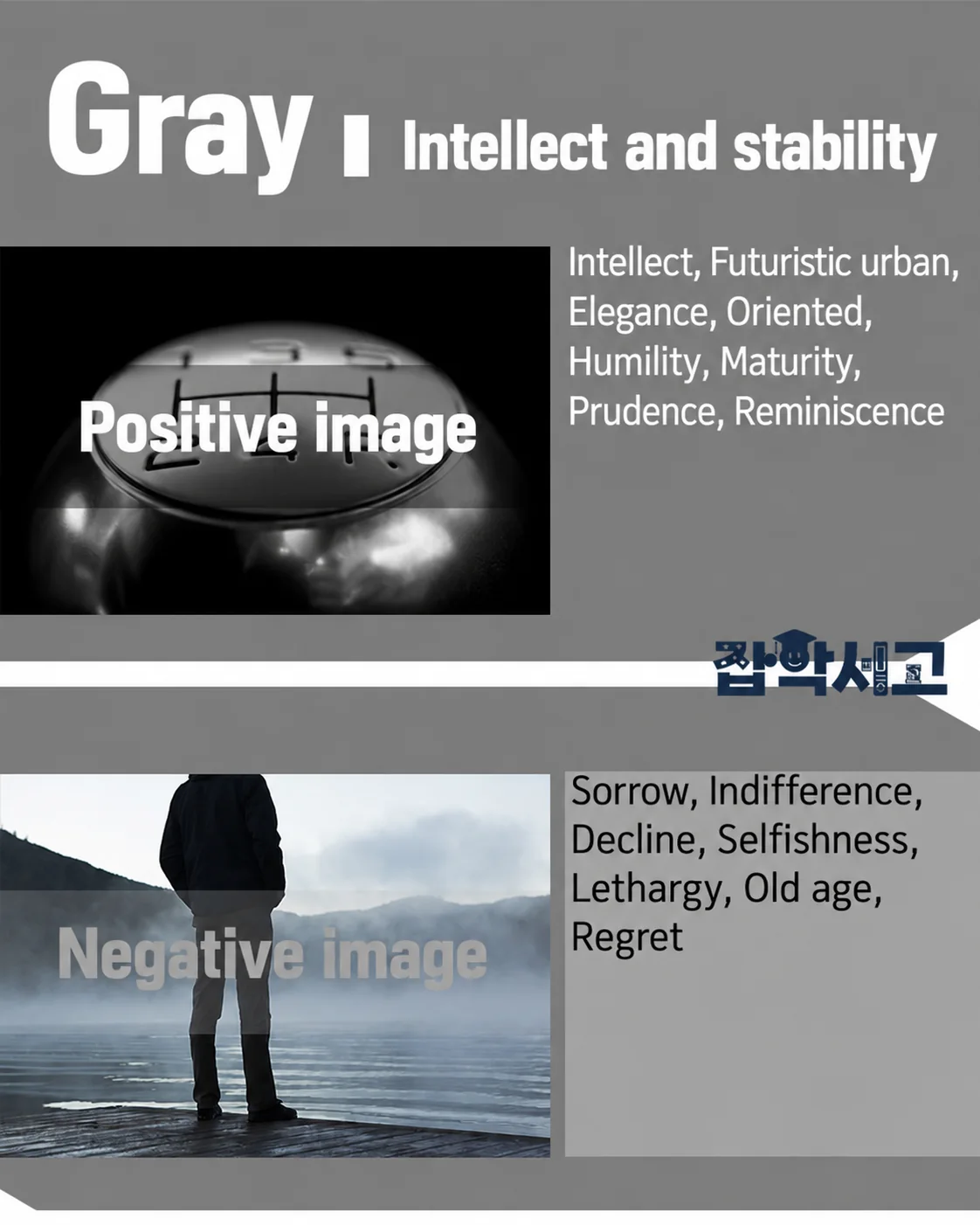 Characteristics of gray
Source: GK Library original diagram. Symbolic associations, not universal effects.
Grayis a kind of achromatic color, the midpoint between black and white. As a result, it has a strongly compromising and neutral character and can also feel passive. Using only gray without combining it with other colors can give a feeling of lethargy.
It has a dignified, sophisticated feel, so it is also used to express a luxurious image.
- White
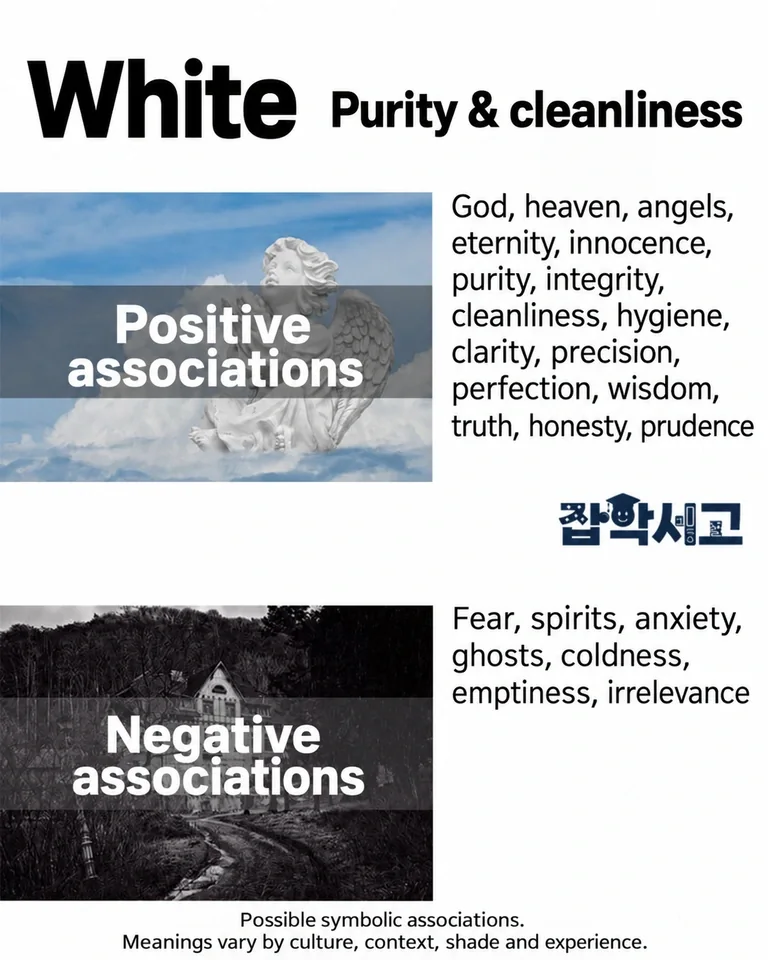 Characteristics of white
Source: GK Library original diagram. Symbolic associations, not universal effects.
Whitetypically symbolizes cleanliness and purity. It is a color that pursues ideals and a noble, graceful color. It is the color with the highest brightness, and it is characterized by going well with any color.
It is widely used to express cleanliness, but using too much of it can feel boring.
- Black
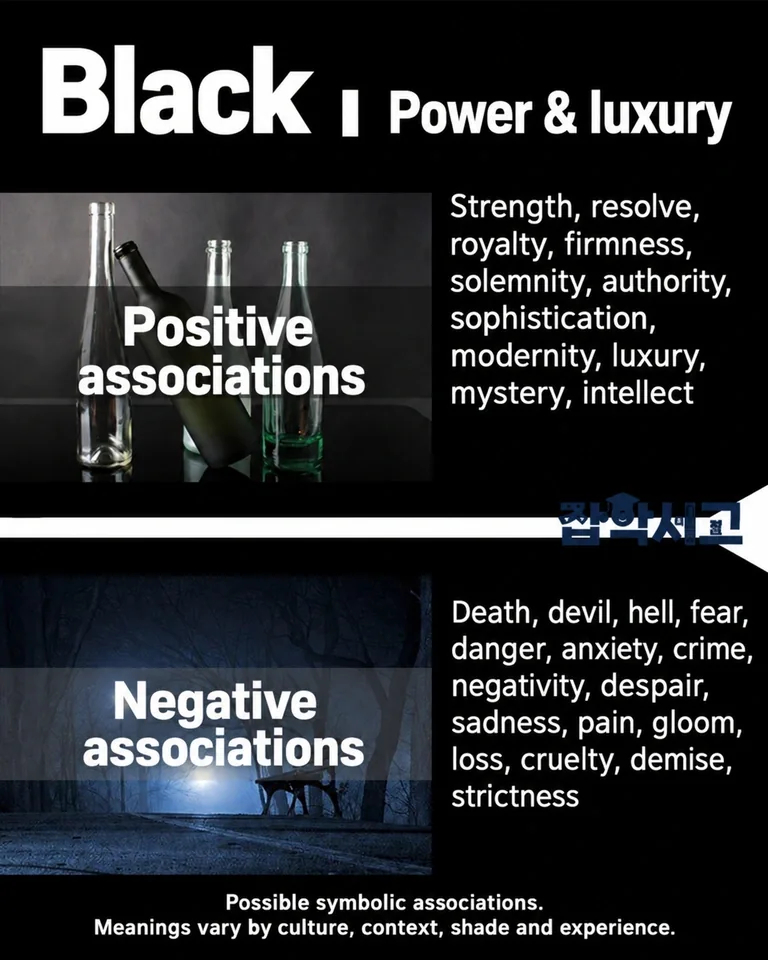 Characteristics of black
Source: GK Library original diagram. Symbolic associations, not universal effects.
Blackis the color with the lowest brightness and gives a strong, luxurious feeling. With its modern, sophisticated feel, it is widely used for high-end products, and it has a mysterious and intense charisma.
However, because of its heavy, dark feel, it is also a color more often used negatively in connection with gloom, fear, death, and the like. It carries the contrasting images of luxury and despair, but it is generally used more to reinforce negative images.
That concludes our look at the characteristics and psychology of various chromatic and achromatic colors. Each color has its own psychological traits, but the feeling can change again depending on which color it is combined with. So rather than using colors based only on the information above, it is important to judge in a combined way when putting colors together.
For ways to combine colors, please refer to the color combination article in this library. Let's understand the characteristics of each color and the principles of combining them to develop a sense of color and put it to good use.