Social adaptability refers to an individual's ability to respond appropriately to various social environments and changes while maintaining smooth relationships with others. It is increasingly recognized as an important factor in modern society and plays a key role in improving individuals' quality of life and promoting social integration. In particular, limited social adaptability can lead to psychological and social problems for individuals, which may trigger broader social conflicts.
This article examines the concept of social adaptability in depth, analyzes its importance, and explores the problems that can arise when social adaptability is limited and ways to address them. It also offers recommendations for various forms of policy and social support that can help improve social adaptability successfully.
The Concept and Importance of Social Adaptability

The Definition and Nature of Social Adaptability
Social adaptability refers to an individual's ability to understand social norms and expectations and act accordingly. It goes beyond basic survival skills to include the ability to interact harmoniously in social relationships and respond effectively to various environmental changes. Social adaptability helps individuals recognize their place in society and successfully fulfill their assigned roles.
Social adaptability is central to social interaction and plays an important role in creating and maintaining stable, positive experiences in relationships with others. Through this, individuals can strengthen their sense of belonging and self-efficacy and develop in a healthy way as members of society.
The Importance of Social Adaptability in Modern Society
Modern society is changing rapidly, and technological advances and complex social structures require individuals to have a high degree of adaptability. Social adaptability enables individuals to understand social norms and behave appropriately in response to these changes.
From an economic perspective, social adaptability is closely related to an individual's professional success. The ability to respond flexibly to a changing work environment leads to higher productivity, which plays an important role in both job security and career advancement. People with limited adaptability may become easily discouraged by change and more vulnerable to work-related stress.
Social adaptability is also an important factor in mental health. People with strong social adaptability can manage stress and anxiety effectively and are more likely to receive support through various social relationships. Conversely, limited adaptability can make people more vulnerable to mental health difficulties such as feelings of isolation and depression.
Social Adaptability and Social Solidarity
Social adaptability strengthens social solidarity by improving individuals' ability to build relationships. People with strong adaptability can communicate smoothly with people from diverse backgrounds, and this ability has a positive effect on forming social networks and building communities. It makes an important contribution to reducing social conflict and promoting social stability and development.
Social adaptability also includes the ability to understand and accept diverse cultural backgrounds. In the age of globalization, boundaries between countries and cultures are becoming less distinct, making adaptability an increasingly important factor in international relationships as well. Social adaptability is essential for individuals to adapt successfully to a multicultural society.
The Role of Social Adaptability in Education
Education is an important means of improving social adaptability. Educational programs that help students adapt to changing social environments contribute to improving their overall learning abilities and quality of life. Through these programs, students can achieve successful outcomes in both their studies and their social relationships.
In education, developing social adaptability goes beyond simply acquiring knowledge and focuses on cultivating the practical abilities students need to respond appropriately to various social situations. This helps students respond more proactively and positively when they become adults and face complex social problems.
Social adaptability is an essential ability for individuals to participate successfully in social life and for society to develop. Individuals with strong social adaptability can reliably fulfill their social roles even in changing environments, thereby positively influencing both themselves and others.
Social adaptability is highly important from economic, mental health, and social perspectives, and systematic education and support are needed to strengthen it. Improving individuals' adaptability ultimately enhances the well-being and welfare of society as a whole, and ongoing policy and social support are needed to achieve this.
The Effects of Limited Social Adaptability on Individuals and Society

The Effects of Limited Social Adaptability and Social Isolation
People with limited social adaptability are more likely to face social isolation. Because social adaptability is closely related to the ability to build and maintain smooth relationships with others, people with low adaptability experience difficulties in interpersonal relationships. This can eventually lead to broken relationships and social isolation. Social isolation has devastating effects on individuals' mental and emotional health and can cause problems such as loneliness, anxiety, and depression. Over time, these psychological difficulties negatively affect individuals' daily lives as a whole.
Workplace Difficulties and the Importance of Social Adaptability
Limited social adaptability also causes various problems in the workplace. Modern workplaces are changing rapidly, and people who cannot adapt to these changes are more likely to experience work-related stress and anxiety. Inability to cooperate smoothly in the workplace or adapt to changes in work negatively affects an individual's job performance. Over time, job satisfaction declines, and these difficulties can also become obstacles to career advancement.
In particular, because interpersonal relationships in the workplace are directly linked to job performance, social adaptability is essential for a successful working life. People with limited social adaptability experience difficulties cooperating with colleagues, which can also affect their position within the organization and their ability to fulfill their roles.
Social Norms and the Emergence of Conflict
People with low social adaptability have difficulty understanding and following social norms and rules. This is likely to cause social conflict and discord. People with limited adaptability are unable to behave in line with society's expectations, which leads to friction with those around them. Moreover, actions that violate social norms negatively affect both these individuals and those around them and can undermine society's overall stability.
If social conflict persists, it can extend beyond problems between individuals to become a broader social issue, weakening social cohesion. These problems increase social costs and become major factors that hinder community development.
Barriers to Accessing Social Resources
People with limited social adaptability have difficulty accessing various social resources. This makes their social and economic position even more vulnerable. In particular, people with low social adaptability may be unable to find the support they need in a timely manner or make full use of social safety nets and welfare services.
These barriers can deepen social inequality and make people who are already socially disadvantaged even more vulnerable. Limited social adaptability excludes them from social resources and benefits, leading to a decline in their quality of life.
The Relationship Between Educational Achievement and Social Adaptability
Limited social adaptability also negatively affects educational achievement. When students do not adapt well to the school environment, their academic performance is more likely to decline, which can reduce their motivation to learn. Students with low adaptability may also experience difficulties in relationships with their peers, leading to negative experiences throughout their school life.
Over time, these problems can become obstacles to individuals' career development. Lower academic achievement reduces employment opportunities, limiting individuals' chances of social success. Ultimately, educational achievement is closely connected to social adaptability, and efforts are needed to strengthen it.
Strategies for Strengthening Social Adaptability
Educational Programs to Improve Social Adaptability
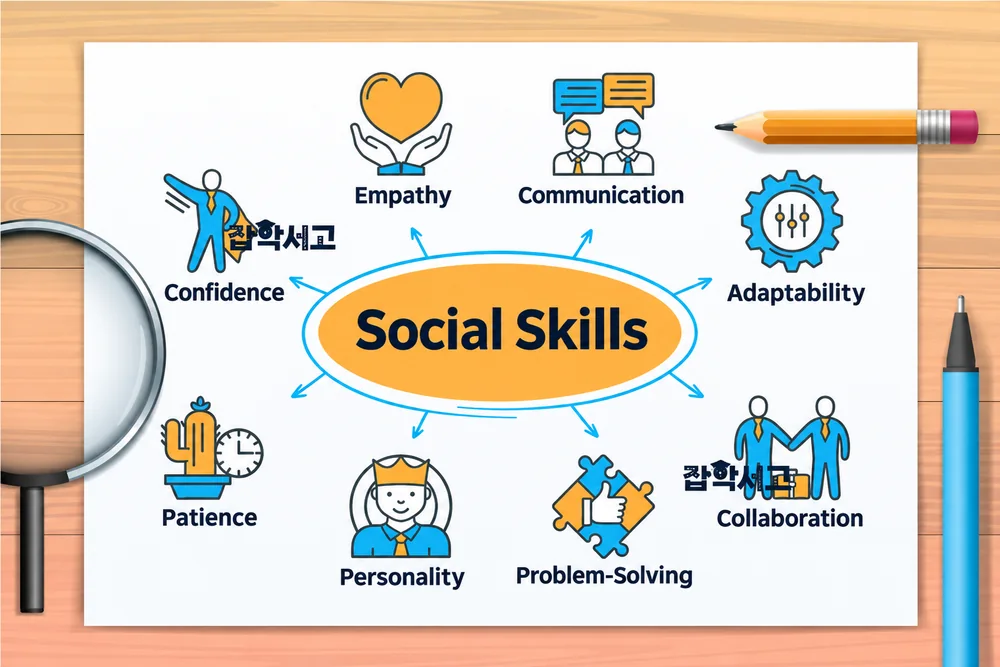
The first strategy for strengthening social adaptability is to develop educational programs. These programs focus on helping individuals acquire the various skills required in social situations. These include interpersonal skills, problem-solving abilities, and communication skills. Through educational programs, individuals can improve their social adaptability by understanding the social environments they belong to and learning appropriate behaviors and ways of responding.
In particular, this education can take place in schools or workplaces and greatly helps members of society develop the ability to respond more effectively to changing environments. Educational programs tailored to all age groups, from adolescents to adults, are essential for improving social adaptability.
Improving Adaptability Through Counseling and Psychological Support
Counseling and psychological support services play an important role in resolving the social adjustment problems individuals experience. Professional counselors or social workers identify individuals' social difficulties and provide psychological support to help relieve the anxiety or stress they experience. This support enables individuals to maintain and develop social relationships in more positive and healthy ways.
Individualized counseling programs are particularly effective for people with limited social adaptability and can help them overcome feelings of social alienation or psychological anxiety. Because psychological stability is an important factor in strengthening social adaptability, counseling and psychological support are essential strategies.
Building Community-Based Social Support Networks
Community-based social support networks greatly help improve social adaptability. When networks of mutually supportive relationships form within a local community, individuals can receive more support through their social relationships. This gives them a sense of belonging as important members of society and helps them improve their adaptability.
Social welfare organizations play an important role in strengthening these community networks. They promote interaction among residents through various community programs and activities, providing opportunities for individuals to strengthen their social adaptability. Such programs can be particularly helpful to isolated communities and marginalized groups.
Policy Support and the Strengthening of Social Adaptability
Developing policies to improve social adaptability is an important task. Governments should develop and implement various policies and programs that strengthen social adaptability. These policies should support individuals in adapting appropriately in various areas, including education, vocational training, and welfare services.
Policy support is particularly helpful to socially disadvantaged people and marginalized groups. Policies that provide practical resources and services to help them adapt to society can contribute to the stability and development of society as a whole. A policy-based approach provides an essential foundation for improving social adaptability.
Research and Evaluation of Programs to Strengthen Social Adaptability
Researching and evaluating the effectiveness of programs to improve social adaptability is essential. More effective strategies can be developed by analyzing the outcomes of various programs and improving them based on the results. Assessing through research how much each program actually improves individuals' adaptability is very important for continued progress.
This requires evaluations based on empirical evidence obtained through various forms of data analysis and case studies. These evaluations can help identify better strategies for improving social adaptability in the future.
The Need for a Multidisciplinary Approach
Finally, improving social adaptability requires a multidisciplinary approach. Because social adaptability is influenced by various factors, disciplines such as social welfare, psychology, and education should work together to offer integrated solutions. Examining problems from various perspectives and developing strategies to resolve them benefits both individuals and society.
When experts from various fields collaborate through a multidisciplinary approach, more effective and practical strategies for improving social adaptability can be developed. This can help individuals adapt more smoothly to society and improve the welfare of society as a whole.
Policy Recommendations for Improving Social Adaptability

Developing Educational Curricula to Improve Social Adaptability
The first policy recommendation for strengthening social adaptability is to develop educational curricula. Subjects or programs that strengthen social adaptability should be included in curricula from elementary school through high school. This enables students to acquire interpersonal skills, conflict-resolution abilities, and ways of responding to various social situations from childhood. Learning these skills early enables students to participate smoothly in social life as adults, supported by stronger social adaptability. This also has a positive effect on preventing school violence and improving academic achievement.
Programs to Improve Adaptability in the Workplace
Improving social adaptability in the workplace is also an important policy approach. Companies should provide training and support programs to help employees adapt well to changing work environments. These programs can cover skills needed in working life, such as conflict resolution, strengthening teamwork, and stress management, enabling employees to improve their performance and increase job satisfaction. These programs also play a major role in reducing anxiety about new work environments or changes within the organization and strengthening cooperation among employees.
Community-Based Policies to Strengthen Adaptability
Community-based policies are also important for improving social adaptability. Local communities are places where the closest social relationships in everyday life form, and interactions within them directly affect the improvement of social adaptability. Various community programs and local events promote communication among residents and provide opportunities to develop social adaptability naturally through mutual support. In particular, for people at high risk of social isolation, these interactions within the local community can be an important avenue for strengthening social adaptability.
Tailored Support Policies
Tailored support policies are needed for people with low social adaptability. Counseling and educational programs focused on specific groups or marginalized individuals can greatly improve their social adaptability. Because these people experience difficulties in interpersonal relationships or face a high risk of social isolation, psychological and social support tailored to their individual needs is important. These tailored policies provide opportunities for socially vulnerable groups to adapt more easily to society and become self-reliant.
Establishing Systems for Ongoing Monitoring and Evaluation
Ongoing monitoring and evaluation are necessary to improve the effectiveness of policies. After various policies to improve social adaptability have been implemented, their outcomes should be continuously reviewed, and the policies should be revised or supplemented when necessary. This can maximize their practical effectiveness and help develop responses suited to changing social needs. A system that identifies and addresses policy problems through regular evaluation is an important factor in policy success.
Policies to Improve Adaptability in the Age of Globalization
In the age of globalization, interactions with people from diverse cultural backgrounds are increasing, making social adaptability in this context an important task as well. Social adaptability that enables people to understand and accept different cultures, languages, and values is essential for successful adaptation in international relationships. Policies to support this can include multicultural education, international etiquette training, and efforts to strengthen the ability to communicate with people from other countries. These policies strengthen individuals' international capabilities while promoting positive relationships in the international community.
Social adaptability is an essential ability for individuals to participate successfully in social life and for society as a whole to develop harmoniously. Systematic support programs and education are essential for strengthening it, and a policy foundation should be established to sustain these efforts.
Strengthening social adaptability through the strategies and policies presented in this article will ultimately be an important process for improving both individuals' quality of life and the welfare of society as a whole.