Whether you work or not, whether you are rich or poor, what if the same amount of money landed in everyone's bank account every month? How would the world change? Some worry that people would lose the will to work, while others hope that people would finally be able to choose the work they actually want to do.
Put simply, basic income means “cash that a state or community pays regularly and unconditionally to all of its members.” Its formal name is Universal Basic Income, and in an age of shaky jobs and increasingly complex welfare systems, it is a hot topic studied by both social welfare and economics.
In this article, we will look in turn at where basic income came from, how it differs from existing welfare, what real experiments have found, and what debates remain.
Understanding Basic Income and Its Experiments
An Idea That Began as an Old Dream

The idea of giving everyone a share that forms the foundation of their livelihood is surprisingly old. In 1516, Thomas More wrote in Utopia that it would be better to provide people with a means of making a living than to punish thieves.
Thomas Paine, who greatly influenced American independence, proposed in Agrarian Justice, published in 1797, that because the land originally belongs to everyone, every person turning 21 should be paid a lump sum of 15 pounds, and everyone aged 50 and over should receive an annual pension. In the 20th century, the economist Milton Friedman also advocated a negative income tax with a similar aim.
In 1986, researchers and activists founded the Basic Income European Network, and in 2004 this group expanded worldwide to become the Basic Income Earth Network (BIEN). The definition of basic income widely used today was also formulated by this network.
Five Features That Set It Apart from Existing Welfare
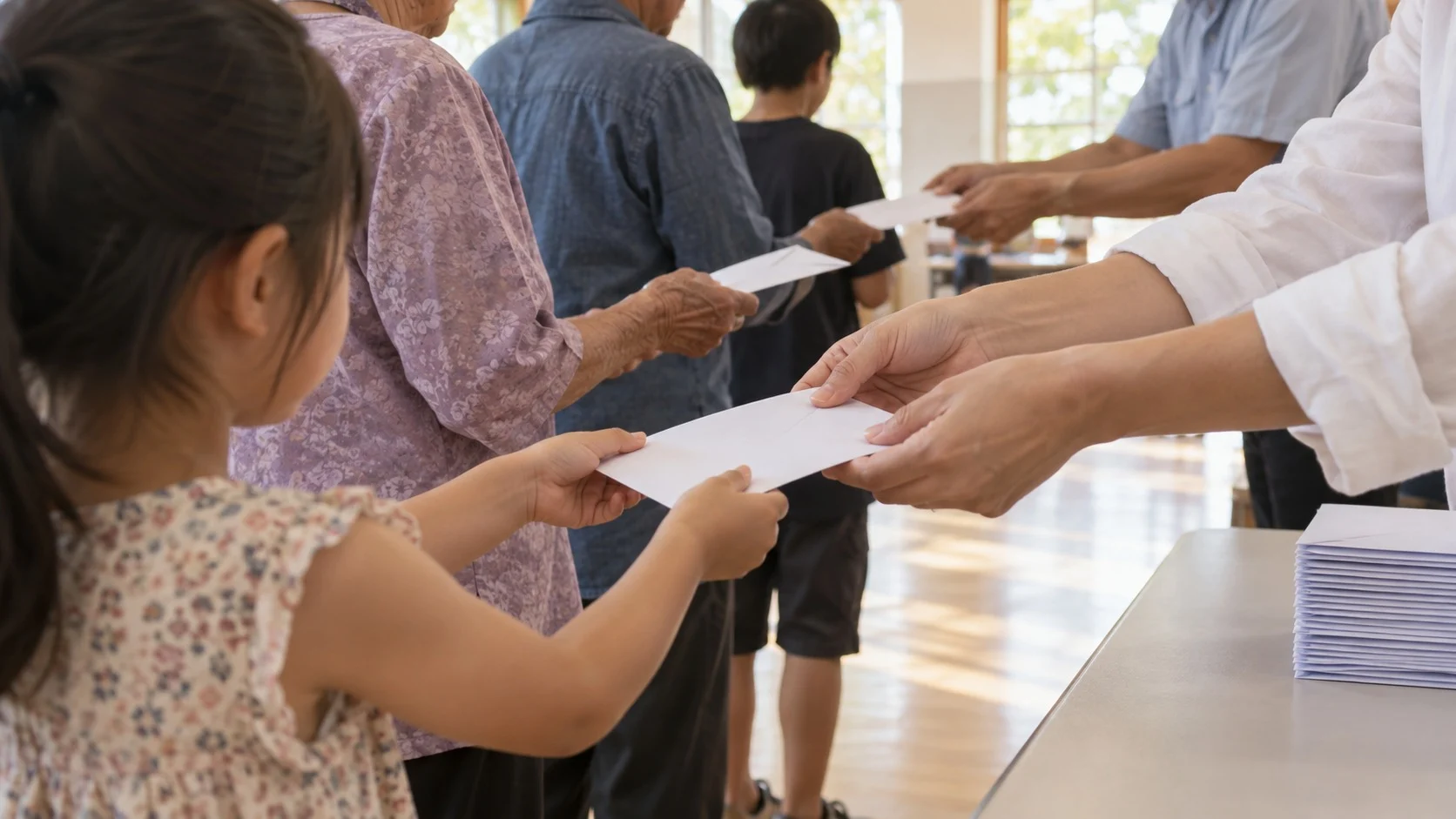
The Basic Income Earth Network defines basic income as “a periodic cash payment unconditionally delivered to all individuals, without means test or work requirement.” Breaking this sentence down reveals five features.
(1) Periodic
Rather than a large one-off sum, it is paid steadily at set intervals, such as every month.
(2) Cash Payment
It is given not as goods with a fixed use, such as rice or vouchers, but as money whose use the recipient decides for themselves.
(3) Individual
It is paid to each person separately rather than to households. Even family members without income get their own share.
(4) Universal
All members receive it without any screening of income or assets. The burden and stigma of having to prove one's poverty disappear.
(5) Unconditional
It does not ask whether you are looking for a job or are willing to work. Even if your income rises through work, the payment does not decrease.
By contrast, most existing public assistance is selective: it picks out people with low incomes for support and reduces that support as their income rises.
Experiments and Results Around the World
No country has yet fully introduced basic income nationwide, but experiments to test its effects and similar programs continue in many places.
- Alaska Permanent Fund Dividend: Since 1982, the U.S. state of Alaska has paid residents who meet eligibility requirements, including residency requirements, an annual share of the returns from a fund built with oil revenue.
- Finnish Basic Income Experiment: For two years starting in 2017, 2,000 people aged 25 to 58 who had been receiving unemployment benefits were paid 560 euros a month unconditionally. From November 2017 to October 2018, the basic income group had an average of six more days in employment than the control group, but it is difficult to separate this difference from the effects of changes to the unemployment benefit system during the same period. In the survey, respondents in the basic income group reported higher life satisfaction and less depressed mood and loneliness than those in the control group.
- Kenya Universal Basic Income Study: The charity GiveDirectly is giving cash to residents of many villages over a long period and tracking the changes in their lives.
- Gyeonggi Youth Basic Income: Launched in 2019, Gyeonggi Province's program provides 24-year-olds who meet residency and other eligibility requirements with 250,000 won per quarter, up to 1 million won per person, in local currency. In 2026, young people residing in Seongnam or Goyang are excluded from eligibility.
Because so many experiments are limited in their recipients and amounts, it is hard to extend their results directly to an entire country.
The Debate over Basic Income

Basic income raises high hopes, but the objections are just as serious. Only by understanding the arguments on both sides can we make a balanced judgment.
Issues to Weigh Together
- Funding: Giving everyone enough to live on would cost an enormous amount, which could require large tax increases or cuts to other welfare programs.
- Work Incentive: Some worry that people will work less if they receive money without working, but experiments so far have not shown a large drop in employment.
- Administrative Efficiency: Because no screening is needed, it is often credited with reducing administrative costs and gaps in the welfare safety net.
- Equity: Opinions are divided over whether it is fair to give the same money to the wealthy, or whether it would be better to concentrate support on those who need it most.
In the end, basic income is not a system with a fixed right answer but a matter of social choice about how we view work, income, and the responsibility of the community.
Starting from the old ideas of Thomas More and Thomas Paine and continuing through Alaska's dividend, Finland's experiment, and Gyeonggi Province's youth basic income, basic income is asking about new directions for welfare. At its foundation lies the idea that everyone has the right to a basic life.
Supporting everyone's life first, before asking about conditions: that is the first step in understanding basic income from the perspective of social welfare.