Gold has long been valued as a precious asset, and its importance becomes even more apparent whenever economic uncertainty increases. The gold market is influenced by the combined effects of various factors, which tend to increase price volatility.
This material analyzes the main factors that influence gold price fluctuations, reviews market trends, and explains the correlation between the global economy and the gold market. It also addresses the economic effects of changes in gold supply and demand and explores opportunities and potential risks in depth from an investor's perspective.
Analysis of Factors Behind Gold Price Fluctuations and Market Trends
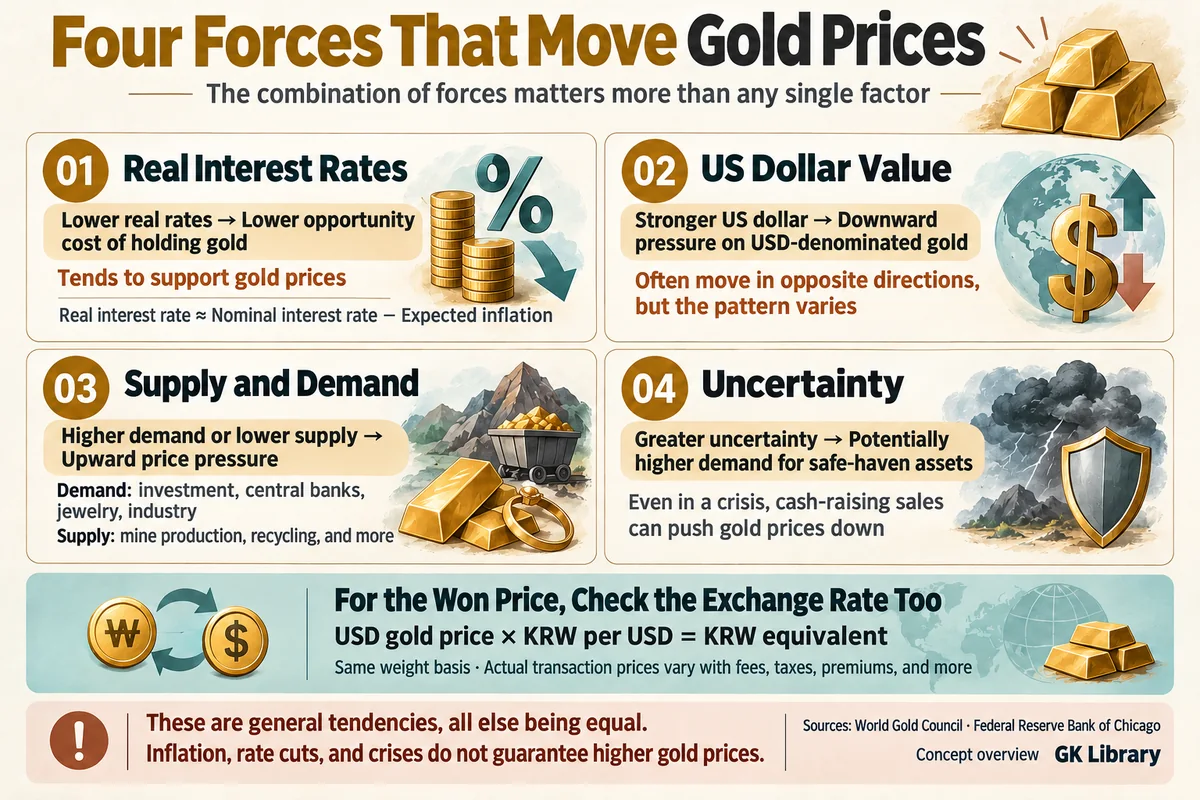

The Correlation Between Economic Uncertainty and Gold Prices
Gold prices are highly sensitive to economic uncertainty. When the economy is unstable, investors increase their demand for gold, which is considered a safe-haven asset, and this leads to higher gold prices. The COVID-19 pandemic, global trade conflicts, and political instability have had a major impact on the gold market. These economic events prompted investors to seek more stable assets, resulting in a sharp increase in investment demand for gold. The gold market is highly sensitive to such external shocks, and demand for gold is likely to continue increasing if economic uncertainty persists.
The Impact of Monetary Policy and Interest Rates
Central bank monetary policy, particularly interest rate policy, has an important influence on gold prices. Interest rates affect the investment returns of other financial products, and because gold is an asset that does not generate interest, lower interest rates increase its relative appeal. Recently, demand for gold has shown an upward trend as major central banks have continued to cut interest rates or keep them unchanged. Low interest rates make gold more attractive than investment alternatives such as cash and bonds, driving gold prices higher.
Inflation and Gold Prices
Gold has traditionally been regarded as a hedge against inflation. When inflation rises, the value of money declines, increasing demand for gold as a means of preserving value. Rising inflation in major economies over the past few years has stimulated demand for gold, and gold prices have risen as a result. In a high-inflation environment, tangible assets such as gold are more strongly preferred, making this a factor that exerts sustained upward pressure on gold prices.
Exchange Rate Fluctuations and Gold Prices
Gold prices are primarily closely correlated with the U.S. dollar. Because gold is mainly traded in dollars, a stronger dollar causes gold prices to fall, while gold prices tend to rise when the dollar weakens. Gold prices also fluctuate according to changes in the value of the U.S. dollar in international financial markets, and this has a major influence on how gold is bought and sold in global markets. Recent fluctuations in the dollar's value have also been accompanied by increased volatility in the gold market.
Investor Sentiment and Gold Price Fluctuations
Investor sentiment is one of the factors that directly influence gold prices. When instability in financial markets increases, investors develop a stronger preference for safe-haven assets such as gold, which can lead to a surge in gold prices. Conversely, when markets become more stable, demand for gold declines, often causing prices to fall. Because the gold market can experience extreme volatility depending on investors' anxiety or optimistic outlooks, it is necessary to continually monitor the influence of investor sentiment on gold prices.
Technical Factors and Gold Production
Gold prices are also influenced by technical factors. Increases in the costs of gold mining and production, whether new gold deposits are discovered, and the supply of recycled gold are important factors in determining gold prices over the long term. Rising gold mining costs, in particular, can exert additional upward pressure on gold prices. Over the past few years, gold mining costs have generally risen, acting as a supply-side factor that pushes gold prices upward. Conversely, more active development of gold mines can increase the supply of gold and become a factor that lowers prices.
Strategies for Responding to Gold Market Volatility
The gold market is highly volatile and influenced by a complex set of factors, including economic conditions, central bank monetary policy, exchange rates, inflation, investor sentiment, and technical factors. Understanding and analyzing these various factors is an essential part of developing successful investment strategies in the gold market. Through thorough analysis and a long-term perspective, investors will be able to find favorable opportunities in the gold market.
The Correlation Between the Global Economy and the Gold Market

The Interaction Between the Global Economy and Gold Prices
The global economy and the gold market are closely connected. In particular, demand for gold tends to increase when global economic growth slows. This is because investors become more inclined to seek safe-haven assets as economic uncertainty increases. For example, when the global economy contracts or a recession is expected, gold attracts attention as a stable investment destination, and this phenomenon leads to higher gold prices.
International Events and Gold Prices
Major international events related to the global economy have a significant impact on the gold market. Geopolitical conflicts, trade wars, and international political instability are major factors that increase demand for gold. In extreme situations such as war, gold's value as a safe asset becomes even more pronounced, and investors increase demand by turning to gold as an alternative investment destination. International conflicts and sharp rises in gold prices have been closely related throughout history, and this remains the case today.
Financial Market Volatility and the Appeal of Gold
Gold prices are also closely connected to volatility in global financial markets. When stock markets fall sharply or volatility increases, investors turn to safe-haven assets such as gold to avoid risk. In particular, growing uncertainty and volatility in financial markets over the past few years have further solidified gold's role as a safe-haven asset. Demand for gold surges when stock markets are unstable because gold is perceived as a means of avoiding risk.
Currency Value Fluctuations and Gold Prices
Fluctuations in the value of major currencies, particularly the U.S. dollar, directly affect gold prices. When the U.S. dollar strengthens, gold prices fall in relative terms, while gold prices tend to rise when the dollar weakens. This occurs because gold is mainly traded in dollars. Dollar volatility is reflected in gold prices in real time, and given the dollar's important position in international trade and financial markets, this correlation will continue into the future.
Monetary Policy and the Sensitivity of the Gold Market
Monetary policies implemented by central banks around the world also have an important influence on the gold market. Interest rate increases reduce gold's appeal, while interest rate cuts increase demand for gold. This is because gold is an asset that does not generate interest, making it a relatively more attractive investment when interest rates are lower. Recently, central banks in major countries have kept interest rates unchanged or lowered them, positively affecting the gold market and leading investors to show a stronger preference for gold.
Recessions and Increased Demand for Gold
Gold performs more strongly when a global recession is anticipated or actually occurs. As a recession approaches, economic uncertainty increases, and demand for gold rises accordingly. Because gold has traditionally been regarded as a safe-haven asset during recessions, gold prices show a clear tendency to rise during these periods. Since gold serves as a hedge against economic instability, the gold market maintains steady demand even during recessions.
The Complex Correlation Between the Global Economy and the Gold Market
The global economy and the gold market have a complex correlation, and they influence each other through their interactions. Factors such as slowing economic growth, international events, financial market volatility, changes in currency values, monetary policy, and recessions are the main forces driving the gold market. By analyzing these various factors comprehensively, it is possible to understand gold market trends and predict changes in gold prices in response to global economic conditions.
The Economic Impact of Changes in Gold Demand and Supply

Increased Gold Demand and Its Economic Impact
When demand for gold increases, gold prices rise, significantly affecting both individual investors who hold gold and large institutions such as central banks. Higher gold prices increase the value of gold holdings, raising the value of investors' assets and positively affecting the economy as a whole. Because central banks hold gold as part of their foreign exchange reserves, higher gold prices increase the value of a country's foreign exchange reserves, helping strengthen economic stability.
Gold Price Fluctuations and Central Bank Foreign Exchange Reserves
Gold held by central banks is an important asset for national economies, and fluctuations in gold prices directly affect foreign exchange reserves. Higher gold prices can increase the value of foreign exchange reserves and strengthen economic stability, while lower gold prices can reduce the value of these holdings and negatively affect the economy. Gold price fluctuations therefore serve as an important economic factor at the national level as well.
The Gold Mining Industry and Economic Growth
Changes on the supply side of gold have a major impact on the economy. In many countries, the gold mining industry is an important source of job creation and economic growth. When mining activity expands, jobs are created and related industries develop, positively affecting the regional economy as a whole. However, the negative environmental effects of gold mining must also be considered, as they can become a factor that harms the economy over the long term.
The Connection Between Gold Demand and Financial Markets
Because gold is regarded as a safe-haven asset, fluctuations in gold prices also have a major impact on financial markets. In particular, demand for gold tends to rise when uncertainty in financial markets increases. This can cause the prices of risky assets such as stocks to decline, and investors' transfers of assets into safe-haven assets such as gold can further increase stock market instability. Changes in gold demand therefore also have an important influence on financial market trends.
The Role of Gold in International Trade
Gold also plays an important role in international trade, and fluctuations in gold prices affect trade balances. Gold-exporting countries enjoy substantial economic benefits when gold prices rise, positively affecting their national economies. Conversely, when gold prices fall, export earnings decline, which can negatively affect trade balances. Countries that export large amounts of gold, in particular, inevitably respond sensitively to fluctuations in gold prices.
Changes in Gold Demand and Technology Industries
Gold is both a traditional investment asset and an essential material used in various industries, including electronic devices and medical equipment. Changes in gold demand and supply also directly affect the development of these industries. Industries that use gold as an important raw material can experience production disruptions when the gold supply is insufficient, which can negatively affect technological development and industrial growth. Conversely, when the gold supply is stable and demand increases, related industries are more likely to develop further.
The Multifaceted Economic Impact of Changes in Gold Demand and Supply
Changes in gold demand and supply have a variety of effects throughout the economy. Gold price fluctuations are closely connected to various economic elements, including central bank foreign exchange reserves, increased activity in the gold mining industry, financial markets, international trade, and technology industries. Understanding and analyzing these complex interactions is an important process for economic stability and growth.
Opportunities and Risks in the Gold Market from an Investor's Perspective

Opportunities in the Gold Market: A Safe-Haven Asset Against Economic Uncertainty
Gold is an important hedging instrument against economic uncertainty, offering protection against various economic risks such as recessions, rising inflation, and political instability. In particular, when an economic crisis occurs or inflation surges, gold maintains a relatively stable value and is therefore regarded by investors as a safe haven. These characteristics make gold an important investment opportunity in uncertain economic conditions.
Gold as a Tool for Portfolio Diversification
Gold has a low correlation with other assets, making it an effective instrument that can contribute to investment portfolio diversification. Including gold in a portfolio alongside traditional investment asset classes such as stocks, bonds, and real estate helps reduce the overall portfolio's risk and improve its stability. This is one reason why the value gold provides stands out, particularly when financial market volatility is high. Investors can pursue stable returns by including gold to balance their portfolios and diversify risk.
Volatility Risk in Gold Investment
However, gold investment also involves substantial volatility risk. Because gold prices are sensitive to external factors, the possibility of losses resulting from sharp price declines is always present. This volatility can pose a significant risk to investors seeking short-term capital gains. Although the nature of the gold market may allow it to be stable over the long term, short-term price surges and plunges are difficult to predict, so a cautious approach is necessary when developing short-term investment strategies.
Liquidity Risk in Gold ETFs and Related Stocks
Liquidity risk also exists in the gold market. In particular, when investing in gold ETFs or shares of gold-related companies, prices can fluctuate sharply because of market liquidity issues. Apart from changes in the price of gold itself, these financial products may expose investors to unexpected losses caused by insufficient liquidity, depending on market conditions. To minimize these risks, it is important to clearly understand the differences between direct and indirect investment in gold and approach them accordingly.
Costs Associated with Holding Gold
Gold investment can involve storage and management costs in addition to price fluctuations. Holding physical gold requires storage costs, and investing in gold ETFs or gold-related financial products also incurs management fees. These costs can negatively affect investment returns, and accumulated costs can be substantial over longer investment periods. When considering gold investment, it is therefore necessary to carefully examine associated costs, including storage and fees.
External Factors Affecting the Gold Market
Finally, the gold market is highly sensitive to external factors that are strongly influenced by political and economic events. Difficult-to-predict events such as geopolitical tensions, international financial crises, and policy changes can have a sudden impact on gold prices. These factors can present opportunities for investors, but they are also highly likely to pose unpredictable risks. Investors can therefore achieve successful investments in the gold market only by closely analyzing these external factors and developing long-term investment plans.
The Need for an Investment Strategy That Balances Opportunities and Risks
The gold market offers opportunities to prepare for economic uncertainty while also involving volatility and liquidity risks, storage and management costs, and unpredictable risks arising from external factors. Investors should carefully evaluate these opportunities and risks and pursue stable returns while minimizing risk through portfolio diversification strategies. Only thorough analysis and a cautious approach make successful investment in the gold market possible.
The gold market is a complex market that responds sensitively to economic factors and global events, presenting investors with both opportunities and risks. Clearly understanding the factors behind gold price fluctuations and market trends, as well as identifying connections with the global economy and changes in demand and supply, is essential to developing successful investment strategies.
Although the gold market is highly volatile and complex, investors will be able to discover meaningful opportunities in this market through thorough analysis and systematic strategies.