Cloud computing is a concept that has become an essential technology in the modern IT industry. It allows businesses and individuals to easily access various computing resources over the internet without needing to use physical hardware and software infrastructure directly. An accurate understanding of the concepts and principles of cloud computing is a great help in developing future IT strategies.
This article will examine the definition and key characteristics of cloud computing, its operating principles and components, and the differences among the cloud service models IaaS, PaaS, and SaaS. It will also cover the advantages and potential disadvantages of cloud computing.
Definition and Key Characteristics of Cloud Computing
Definition of Cloud Computing
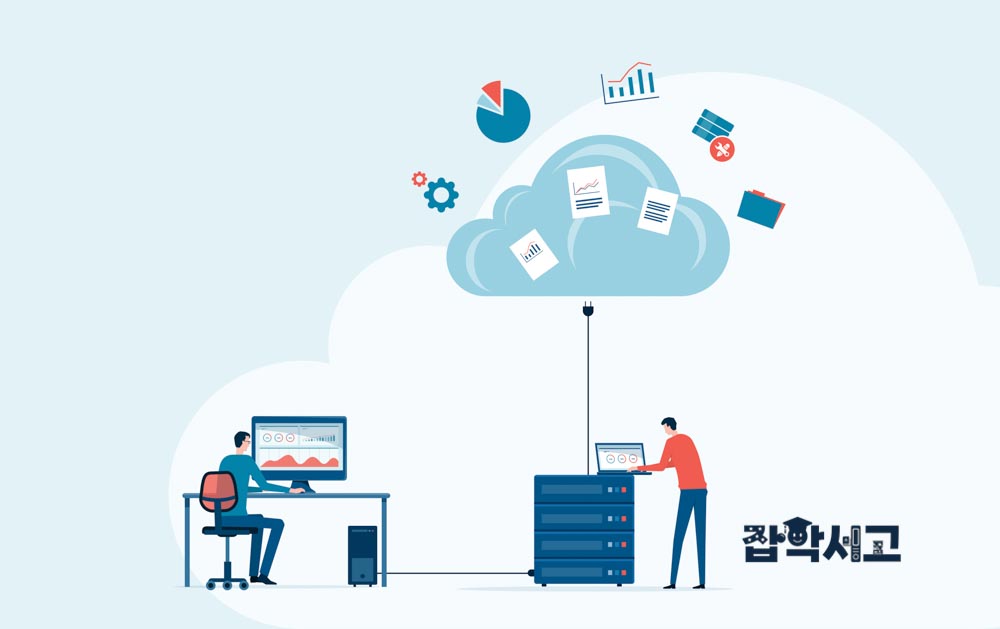
Cloud computing (Cloud Computing) is a technology that provides various computing resources, including servers, storage, databases, networks, and software, over the internet. This technology allows users to easily access the resources they need whenever they need them without depending on physical hardware or storage devices. Computer system resources and functions are delivered through cloud servers, and users access services through the cloud without having to install them on their own devices. This technology is flexible and scalable, and it can be accessed from anywhere in the world without physical constraints, making it an important technology for both businesses and individual users.
Key Characteristics of Cloud Computing
On-Demand Self-Service
One of the core characteristics of cloud computing is 'on-demand self-service.' Users can request computing resources themselves whenever they need them and use them immediately. This reduces the hassle of infrastructure management and provides high efficiency in business operations by making the necessary resources immediately available when needed. It allows users to flexibly scale resources up or down without advance planning.
Broad Network Access
Cloud services can be accessed from anywhere as long as an internet connection is available. In other words, users can access data or applications stored in the cloud without restrictions on location or device. This allows employees to carry out their work smoothly outside the office and respond flexibly in a global business environment.
Resource Pooling
Cloud computing allows multiple users to use shared resources through 'resource pooling.' Cloud service providers group resources into pools for management and distribute them efficiently among the users who need them. This approach maximizes resource utilization and prevents unnecessary resource waste. It also provides resources in an optimized manner to prevent competition for resources among users.
Rapid Elasticity
Cloud computing provides the elasticity to quickly scale resources up or down according to user requirements. Resources can be expanded quickly when demand surges as a business grows, and conversely, resources can be reduced immediately when demand falls to cut unnecessary costs. This is an important advantage of the cloud that enables rapid responses to unpredictable changes.
Measured Service
Cloud computing offers a 'measured service' model that charges according to usage. In other words, users pay only for the resources they actually use, which greatly improves the efficiency of cost management. It prevents unnecessary spending caused by excessive resource use and makes budget management clearer.
Scalability
Cloud services offer scalability that allows resources to be flexibly expanded or reduced according to business requirements. They enable quick responses to large projects or traffic surges, and resources can be reduced as needed to lower operating costs. This helps businesses prepare for rapid growth or unexpected changes.
The Importance of Cloud Computing
Cloud computing offers significant benefits in cost savings, flexibility, and efficiency for both businesses and individual users. It reduces the hassle of building and maintaining physical infrastructure and allows businesses to operate freely without technical constraints. Cloud environments also enable quick and flexible responses in data management, security, and application development.
Operating Principles and Components of Cloud Computing
Operating Principles of Cloud Computing
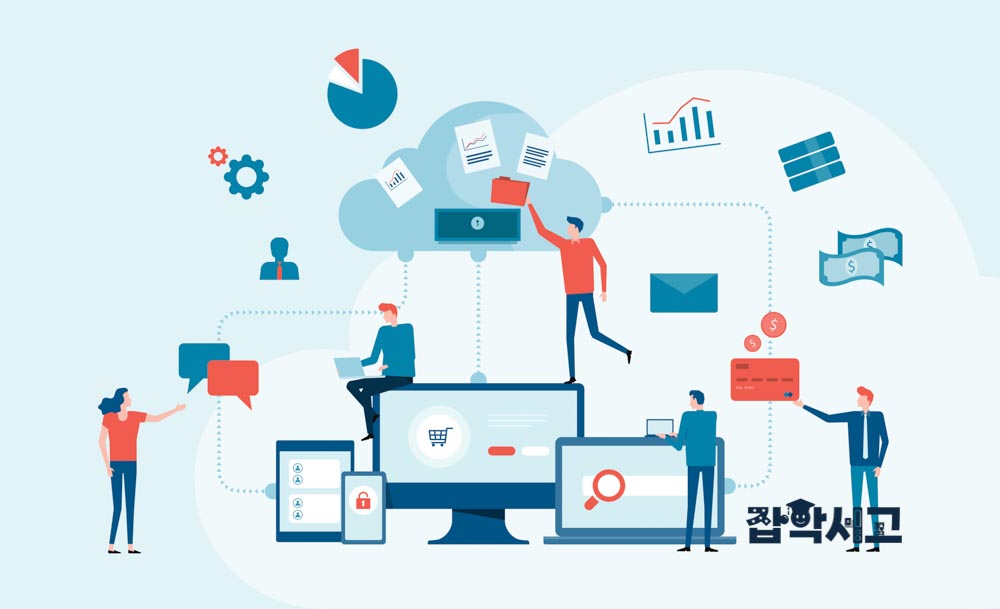
Cloud computing works by virtualizing physical resources and delivering them over the internet. Virtualization technology divides physical servers into multiple virtual servers, which are then provided to users through a network. Virtualization technology enables efficient resource use and makes it possible to build an environment where multiple users can use the same physical resources simultaneously. This maximizes resource utilization and enables cost savings and flexible resource management.
Frontend and Backend Components
The frontend is the interface through which users access cloud services, including web browsers and applications. Users request cloud resources and process the data they need through these frontends. A user-friendly and intuitive frontend plays an important role in improving the accessibility of cloud services.
The backend includes servers, data stores, and network equipment managed by the cloud service provider. It communicates with the frontend to provide the resources requested by users and is where the cloud system's main data processing takes place. The backend performs important functions to ensure system stability and performance, allowing users to access cloud services smoothly.
Cloud Infrastructure and Platforms
Cloud infrastructure is a core component of a cloud system that encompasses both physical and virtualized resources. It includes physical servers, data stores, and network equipment, through which resources are provided to users. Cloud infrastructure serves as the underlying structure for delivering stable services, with resources managed efficiently.
A cloud platform refers to the software environment that operates on top of cloud infrastructure. This platform manages physical resources and handles the allocation and operation of resources requested by users. Cloud platforms enable more flexible resource use and provide various functions that can maximize system performance.
The Role of Data Centers
A data center is core infrastructure for cloud computing, a space where numerous servers and network devices are brought together to provide large-scale computing resources. Cloud service providers can efficiently operate and manage large-scale resources through data centers. Data center operations are an important factor determining the performance, security, and reliability of cloud services, enabling cloud computing services to be delivered smoothly.
The Importance of Virtualization Technology
Virtualization technology plays an important role in cloud computing. It allows a single physical server to be divided into multiple virtual servers for use, enabling resources to be efficiently divided and utilized. Virtualization allows multiple users to use resources simultaneously and maximizes resource utilization. This enables businesses to reduce costs and build more flexible IT infrastructure.
The Role of Middleware
Middleware is software that helps the frontend and backend communicate smoothly in a cloud system. It plays an important role in processing the data requested by users, running applications, and managing data delivery smoothly. Middleware integrates the various functions of a cloud computing system and helps provide resources quickly and efficiently according to user requirements.
Cloud Service Models: Comparing IaaS, PaaS, and SaaS

Overview of Cloud Service Models
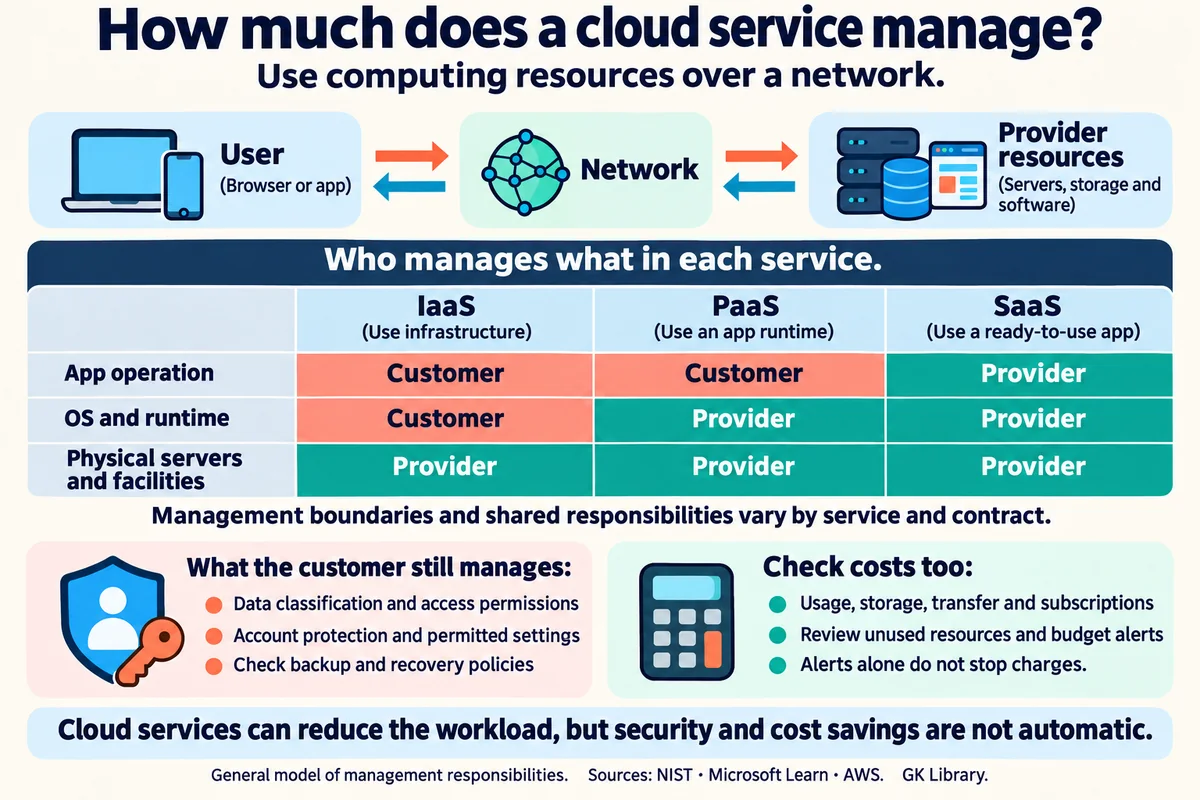
Cloud service models are broadly divided into three types: IaaS (Infrastructure as a Service), PaaS (Platform as a Service), and SaaS (Software as a Service). These models are distinguished by the scope of services they provide, and users can select and use services at the level they need. Understanding the resources and forms of service each model provides is an important factor in determining a cloud adoption strategy.
IaaS: Infrastructure Services
IaaS is the most basic cloud service model, providing computing resources such as servers, storage, and networks over the internet. Users can rent and use resources as needed without directly managing physical hardware. IaaS offers a high degree of flexibility and control, but it comes with the burden of users having to configure and manage the infrastructure themselves. Major IaaS providers include Amazon Web Services (AWS), Microsoft Azure, and Google Cloud Platform.
IaaS is suitable for businesses that need to build large-scale infrastructure and offers the advantage of being able to adjust server capacity elastically. However, because users must manage operating systems and network configurations themselves, the management burden is substantial, and infrastructure specialists may be needed to operate it.
PaaS: Platform Services
PaaS is a service that provides an integrated platform for developers to develop, run, and manage applications. Because PaaS provides a development environment that includes operating systems, development tools, and database management systems, developers can focus on application development without worrying about infrastructure. Google's App Engine and Salesforce's Heroku are representative PaaS providers.
PaaS accelerates development and makes application deployment and management easier. However, the functions provided by a PaaS platform are limited, which may restrict the use of specific technologies or tools. Nevertheless, PaaS is advantageous for developers who need rapid prototyping and efficient application management.
SaaS: Software Services
SaaS is a service that provides finished software over the internet. Users can access the service immediately through a web browser or similar interface without having to install or manage the software. Representative SaaS offerings include Google Workspace, Microsoft 365, and Salesforce.
The main advantage of SaaS is ease of use. Users can access the latest version of the software at any time without having to worry about software maintenance or upgrades on their side. However, users may face restrictions when customizing the software. SaaS is particularly useful for small and medium-sized businesses and individual users, allowing them to use software cost-effectively.
Comparing IaaS, PaaS, and SaaS
IaaS provides only basic infrastructure, and users can install and operate the software they want on that foundation. PaaS also provides a development environment, helping developers focus on application development without the burden of infrastructure management. SaaS provides finished software, allowing end users to use it easily without complex configuration.
IaaS offers flexibility and control but carries a substantial management burden. PaaS enables rapid development and deployment but may be subject to platform limitations. SaaS offers great ease of use, but its disadvantage is the difficulty of customization. By understanding the advantages and disadvantages of these service models, users will be able to select the best cloud service for their needs and business circumstances.
Analyzing the Advantages and Potential Disadvantages of Cloud Computing

Cost Savings
One of the greatest advantages of cloud computing is cost savings. Businesses can rent and use the resources they need through cloud services without having to build and maintain their own physical infrastructure. The cloud offers a 'pay-as-you-go' model, which reduces unnecessary resource waste by charging only for what is used. This can significantly reduce not only the initial cost of building infrastructure but also long-term operating costs. These cost savings are a particularly significant advantage for small businesses and startups.
Scalability
Cloud computing allows resources to be scaled freely. Users can flexibly expand or reduce resources as their businesses grow and respond quickly to rapidly changing market conditions. Resources can be added immediately when they are insufficient and, conversely, reduced immediately when the need decreases, effectively addressing both resource excess and shortages. This provides a highly favorable environment for startups and small and medium-sized businesses that find large investments in resources burdensome.
Accessibility
Another advantage of cloud computing is its excellent accessibility. With an internet connection, cloud resources can be used from anywhere in the world, and users can carry out their work in the same working environment regardless of location. This is a particularly important advantage in the current environment, where remote work is widespread, providing a foundation for distributed teams to collaborate efficiently. It allows businesses to operate smoothly even in a global working environment.
Security Issues
However, cloud computing also has potential disadvantages. The biggest issue among them is security. Because data is transmitted and stored over the internet, the risk of hacking or data leaks is always present. Addressing these security issues requires strong security policies and technologies, such as encryption, access control, and regular security audits. When using cloud services, it is essential to maintain continuous security monitoring and a defense system.
Service Dependence
There is also the issue of dependence on cloud services. If users become overly dependent on a cloud service provider, they have no choice but to bear the full impact when that provider experiences technical problems or service interruptions. Because this can pose a significant threat to business continuity, a way to distribute risk through a multi-cloud strategy that uses multiple cloud providers simultaneously is needed. This can minimize the impact of failures at a particular service provider.
Difficulty Predicting Costs
Cloud computing's usage-based pricing structure is advantageous for reducing initial costs, but a disadvantage is that actual costs may be higher than expected when usage increases. Costs can rise sharply, particularly during periods of surging resource use or when services expand. Therefore, managing cloud costs requires continuous monitoring of usage patterns and consideration of cost-saving measures, such as reducing unneeded resources in a timely manner.
Cloud computing is an innovative technology that offers various advantages, including cost savings, scalability, and accessibility. However, it also has potential disadvantages, such as security issues, service dependence, and difficulty predicting costs, making it important to manage these risks effectively. By thoroughly understanding the advantages and disadvantages of cloud computing and developing a strategy that takes them into account, it will be possible to build a more efficient and secure IT environment.
Cloud computing has established itself as an indispensable and important technology in modern IT environments. Understanding its concepts and principles, along with its various service models and their advantages and disadvantages, is a great help in building more efficient and flexible IT infrastructure.
Cloud computing technology will continue to evolve, bringing new opportunities and challenges. We hope that both businesses and individuals can create a better future through cloud computing.