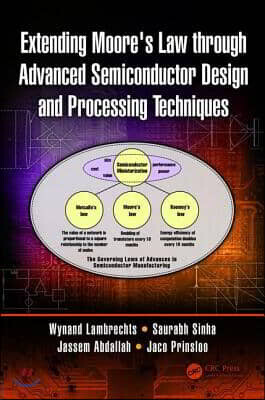
The smartphone in your hand is far faster than the computers that filled entire rooms decades ago, and it costs incomparably less. It feels natural that computers become smaller, faster, and cheaper every year, but behind this trend lies a single prediction that the semiconductor industry has treated as its goal for more than half a century. That prediction is “Moore’s Law.”
Put simply, Moore’s Law refers to the empirical rule that “the number of transistors on a single chip doubles roughly every two years.” Rather than a principle that holds automatically like a law of nature, it is closer to a prediction based on observing the pace of technological progress, and a schedule the industry has followed together.
This article explains, in easy-to-understand terms, the background behind the birth of Moore’s Law and its precise meaning, the ways it changed the world, the situation today as it runs into physical limits, and the new technologies opening up the era beyond it.
Moore’s Law: The Prediction That Led Half a Century of Semiconductors
What Is Moore’s Law?


Moore’s Law originated in an article that Gordon E. Moore, who led research at the semiconductor company Fairchild Semiconductor, published in the magazine Electronics in 1965. He observed that the number of components that could be placed on a single integrated circuit had been roughly doubling every year, and predicted that this trend would continue for the next ten years.
In 1975, Moore revised this pace to “doubling every two years,” and this phrasing later became widely known. The name “Moore’s Law” is said to have been coined not by Moore himself but by the engineer Carver Mead. In 1968, Moore co-founded Intel with Robert Noyce, setting out on a path to prove the prediction himself.
- Transistor (Transistor): A tiny switch that turns electrical signals on and off; it is the most basic unit of computer computation.
- Integrated circuit (Integrated Circuit): A component in which countless transistors and wires are etched all at once onto a piece of silicon about the size of a fingernail.
- Density (Density): A measure of how many transistors are packed into the same area.
How Moore’s Law Changed the World

A pace of doubling every two years may not seem like much at first, but over time it produces differences that are hard to imagine. In 20 years it adds up to about 1,000 times, and in 40 years about 1 million times.
(1) Explosive gains in performance (Performance)
The 4004, Intel’s first microprocessor released in 1971, contained about 2,300 transistors. Today’s high-performance chips hold tens of billions of them and can perform correspondingly complex calculations in an instant.
(2) Falling prices (Cost)
The more transistors that are packed onto the same size of silicon, the lower the cost of each transistor. Thanks to this, computers once used only by research labs and large corporations made their way into our homes and pockets.
(3) Miniaturization of devices (Miniaturization)
As components shrank, ever-smaller devices appeared one after another, such as personal computers, laptops, mobile phones, and smartwatches.
(4) The industry’s schedule (Roadmap)
Semiconductor companies set their research plans and investment schedules with Moore’s Law as their target. Some observers argue that as the prediction became a goal in turn, it took on a self-fulfilling effect.
A Law Approaching Its Physical Limits

Moore’s Law, which held for more than half a century, began to slow noticeably from the mid-2000s. As transistors shrank to the scale of just a few dozen atoms, reducing their size itself became increasingly difficult and expensive.
- Heat problems (Heat): Around the mid-2000s, “Dennard Scaling,” the principle that power consumption decreases as transistors are made smaller, broke down, making it difficult to handle the heat if operating speeds kept rising.
- Quantum tunneling (Quantum Tunneling): When the insulating layer becomes too thin, electrons pass through the barrier and leak out, so the switch does not turn off properly.
- Rising costs (Cost): Etching ever finer circuits requires enormously expensive equipment such as extreme ultraviolet (EUV) lithography machines, greatly increasing the cost of building a single factory.
For this reason, instead of pushing up the speed of a single chip, the multi-core (Multi-core) approach of placing several cores side by side came into wide use.
Technologies Opening the Era Beyond Moore’s Law

As shrinking has become harder, the industry is looking for performance along other paths. The trend is to keep progress going not only by making circuits smaller, but by stacking, dividing, and specializing them.
- 3D stacking (3D Stacking): Instead of laying circuits out on a flat plane, they are stacked layer upon layer to fit more components into the same area.
- Chiplets (Chiplet): Instead of one large chip, small chips divided by function are bundled together, making them easier to manufacture and more convenient to combine.
- Specialized chips (Specialized Chip): Chips optimized for specific tasks, such as GPUs and NPUs tailored to artificial intelligence computation, raise efficiency.
- New materials and structures (New Materials): Researchers are trying to delay the limits by changing the shape of transistors or studying materials to replace silicon.
More than Moore (More than Moore)
The trend of going beyond the race to increase transistor counts and instead adding value by integrating diverse functions such as sensors, communications, and power into one is called “More than Moore.”
Moore’s Law was not a law of the universe but a prediction that began with one person’s observation, yet over half a century countless people have turned that prediction into reality. As a result, we now carry in our hands computing power that was hard to even dream of a generation ago.
Take a moment to think about the long history contained in the smartphone and laptop you use today. Knowing that small advances, steadily accumulated, can change the world is the first step toward foreseeing the future of technology.