Design does more than pursue visual beauty; it plays an important role in maximizing information communication and the user experience. In this process, the concept of a 'module' holds a particularly important place. Modules play a major role in organizing design systematically, maintaining consistency, and improving efficiency.
This article will explore modules, a core element of visual design, in depth and discuss ways to use them effectively.
The Essence of Design: What Is a Module?
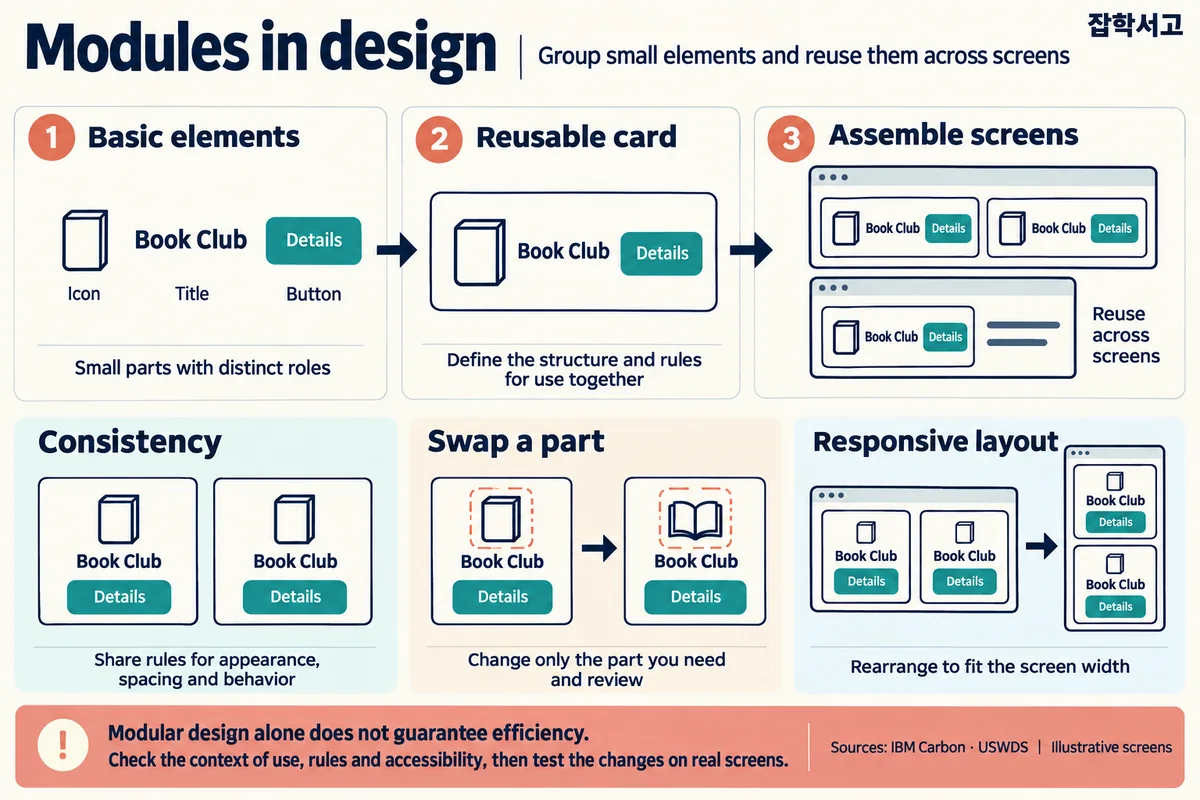

The Definition and Role of Modules
In visual design, a module is an independent component that performs a specific function or role. It can be used repeatedly and can be modified or replaced independently. Typical examples in web design include buttons, icons, and text blocks, which are designed to be used consistently across different pages or sections. Modules play an important role in maintaining a unified design and improving the user experience.
Maintaining a Systematic Design Structure through Modules
The concept of modules is essential for maintaining a systematic structure and consistency in visual design. Repeatedly using the same elements ensures a unified design, which is essential for delivering a consistent user experience. Using modules can maximize the efficiency of design work, greatly helping to save time and costs. This systematic structure is particularly valuable in complex design projects.
Ease of Maintenance and Updates
Modular design offers the advantage of easy maintenance and updates. When a particular module is changed, those changes are automatically reflected wherever that module is used, allowing the entire design to be managed efficiently. This is especially useful in large-scale projects, making it possible to respond quickly while maintaining consistent design quality. This characteristic provides an important advantage in digital environments where changes are frequent.
The Importance of Modules in Collaboration
Modules also play an important role in collaboration. Various team members, including designers, developers, and marketers, can work from the same modules, facilitating communication and improving work efficiency. A modular approach reduces project complexity, strengthens collaboration between teams, and greatly increases the project's chances of success. Its importance becomes particularly apparent in large-scale projects that require cooperation between multiple departments.
The Importance of Modules
Modules have become an essential element of visual design, and understanding and using them well is the first step toward creating excellent design. Using modules effectively can maintain design consistency, improve work efficiency, and strengthen collaboration. The next section will examine the history of modules and their development in visual design, providing a deeper understanding of their importance.
The History of Modules and Their Development in Visual Design

The Origins of Modules: Beginnings in Ancient Architecture
The concept of modules originated in ancient architecture. Bricks of identical size and shape used in Roman buildings were a type of module, helping to maintain structural consistency and make the construction process more efficient. This modular approach made it possible to systematically manage the design and construction of complex buildings and later expanded into various fields.
Modern Design and the Bauhaus Movement
With the advent of the modern era, the concept of modules expanded across design as a whole. In particular, the Bauhaus movement emphasized standardization and functionality in design and actively introduced modular design. Bauhaus aimed to unite art and technology, pursuing simple and efficient design. This approach greatly influenced the formation of modern visual design and was particularly evident in graphic design and interior design. Bauhaus principles emphasize the efficiency and functionality of modular design and continue to inspire many designers today.
Modularization in the Digital Age
The concept of modules in visual design began to develop in earnest with the arrival of the digital age. Advances in computers and software provided an environment in which design elements could be modularized and easily duplicated and modified. This came to play an important role, particularly in web design and UI/UX design. In digital environments, modular design provides a consistent user experience and allows designs to be adjusted flexibly to suit different devices and resolutions.
Examples of Modular Design Systems
Prominent examples of modular design systems include Google's 'Material Design' and Apple's 'Human Interface Guidelines.' These systems were developed to provide a consistent user experience across different devices and resolutions. Material Design provides a unified user experience across various Google services through a consistent design language, while the Human Interface Guidelines enable consistent interface design across Apple products. These design systems maximize efficiency and consistency through modularization.
The Development of Collaboration Tools and Modular Design
Another important factor in the evolution of modules is the development of design collaboration tools. Design collaboration tools such as Figma, Sketch, and Adobe XD provide an environment in which team members can collaborate in real time using modular design. These tools make it easy to share and modify modular design elements, greatly improving the efficiency and consistency of the design process. The development of collaboration tools makes modular design easier to apply in large-scale projects and enables smooth communication between teams.
The Importance of Modules in Visual Design
As shown above, modules have played an important role in the history and development of visual design. The concept of modules, which began in ancient architecture, passed through the Bauhaus movement and continues to develop further in the digital age. Modular design provides efficiency and consistency, enabling a consistent user experience across various devices and environments. With this background in mind, the next section will examine module components and design principles in detail.
Module Components and Design Principles

The Definition and Importance of Module Components
Modules consist of various components, each of which plays an important role in improving a design's functionality and aesthetic quality. Text, images, icons, buttons, and layout components are key elements that make up modules, and following specific design principles is essential to designing them effectively.
The Importance of Text and Ensuring Readability
Text is one of the core components of a module and a primary means of communicating information. To improve text readability, it is important to set appropriate font sizes, line spacing, and letter spacing. Contrast between the text and background color should also enable information to be communicated with visual clarity. This is an important design principle that helps information reach users easily.
The Visual Communication Power of Images and Icons
Images and icons are important visual elements that communicate complex information intuitively. Images help users understand immediately, while icons provide intuitive navigation within an interface. When using images and icons, it is important to maintain a consistent style, which is essential for maintaining a unified overall design and improving the user experience.
Designing User Interaction with Buttons
Buttons are a primary element of user interaction, playing an important role in how users interact with websites or applications. Their size, color, and position should be designed appropriately so that users can easily recognize and click them. Button states—default, hover, and clicked—should also be clearly distinguished so that users can intuitively understand how buttons respond to interaction. This is an important design principle for optimizing the user experience.
Layout Components and Grid Systems
Layout components define the structure of a module and play an important role in maintaining balance and consistency throughout the design. Grid systems are commonly used to maintain a uniform layout, ensuring a sense of stability and visual order in the design. Grid systems are particularly useful tools when designing layouts for web pages or applications.
The Role and Importance of Color
Color is an important element in modular design, determining the design's mood and emotional tone. Choosing an appropriate color palette helps maintain design consistency, while color can distinguish the importance of information or guide user behavior. Color has a major impact on the user experience, attracting visual interest and clarifying the hierarchy of information.
The Importance of Typography and Spacing
Typography and spacing are important elements that determine a module's overall readability and usability. Appropriate font choices, font sizes, and line spacing should be considered to provide an optimal reading experience. Typography plays an important role in improving a design's readability and aesthetic quality, while spacing helps clarify the visual relationships between text and other components.
Designing Consistent and Efficient Modules
Understanding and applying the individual elements that make up a module and the principles for designing them makes it possible to create a consistent and efficient design. By considering all components together—including text, images, icons, buttons, layout, color, and typography—designers can create designs that provide users with an optimal visual experience. This approach helps improve design quality and maximize user satisfaction.
Practical Strategies for Using Modules Effectively

The Importance of Building a Design System
Building a systematic design system is essential for using modules effectively. A design system organizes and standardizes modules and their components, maintaining consistent design and facilitating collaboration. This makes it easy to apply consistent design to new projects while saving time and resources. A design system ensures unity between teams and helps maximize efficiency even in complex design work.
Maximizing Module Reusability
When designing modules, it is important to make them flexible enough to be used in different situations. To maximize reusability, modules should offer multiple size, color, and style options and be designed for use across different pages or sections. For example, a button module should include size and color options so that it can meet various design requirements. Reusable modules greatly help shorten development time and maintain design consistency.
Incorporating User Feedback
After applying modular design, a process of improvement that actively incorporates user feedback is needed. Since the user experience is an important factor in determining a design's success, it is important to improve and optimize modules through feedback from actual users. This makes it possible to continually improve the user experience and create more refined designs. Regular user testing and surveys can identify practical ways to improve.
Ongoing Updates and Maintenance
Modular design should be continually updated over time to reflect changes in trends and technology. To do so, establishing regular reviews and an update plan is essential. Because design trends change rapidly, keeping modules up to date can help maintain competitiveness. Regular maintenance ensures that modules remain valid and plays an important role in maintaining consistency throughout the system.
The Importance of Collaboration and Communication
Because modular design often involves multiple team members working together, smooth communication is essential. Actively using collaboration tools to strengthen communication between teams and sharing progress through regular meetings can maintain project consistency. Clear communication ensures that the project progresses successfully and plays an important role in maximizing the effectiveness of modular design.
Analyzing Successful Examples of Module Use
Finally, referring to successful examples of modular design is also an effective strategy. Existing successful examples can be analyzed and benchmarked for application to your own project. This makes it possible to explore practical ways to use modules and introduce new approaches. Case studies provide a deep understanding of module design and use, helping to increase a design's chances of success.
Modules have become an essential element of visual design, and understanding and using them properly is an important key to creating successful designs. This article has examined the essence and history of modules, their components and design principles, and strategies for using them effectively in detail.
With this knowledge, we hope you can create more consistent and efficient designs. It remains important to improve your ability to use modules through continued learning and updates.