Convection is one of the phenomena that play an important role in Earth science. It occurs under a wide range of environmental conditions and has a major influence on weather and climate change. The term refers to the process by which heat and matter are transferred through the flow of a gas or liquid, and it can be observed on a vast scale, from the Earth's interior to the atmosphere and the oceans.
This article takes a detailed look at the basic principles and definition of convection, the various forms of convection on Earth, the effects of convection on climate and weather, and real-life applications of convection.
The Basic Principles and Definition of Convection
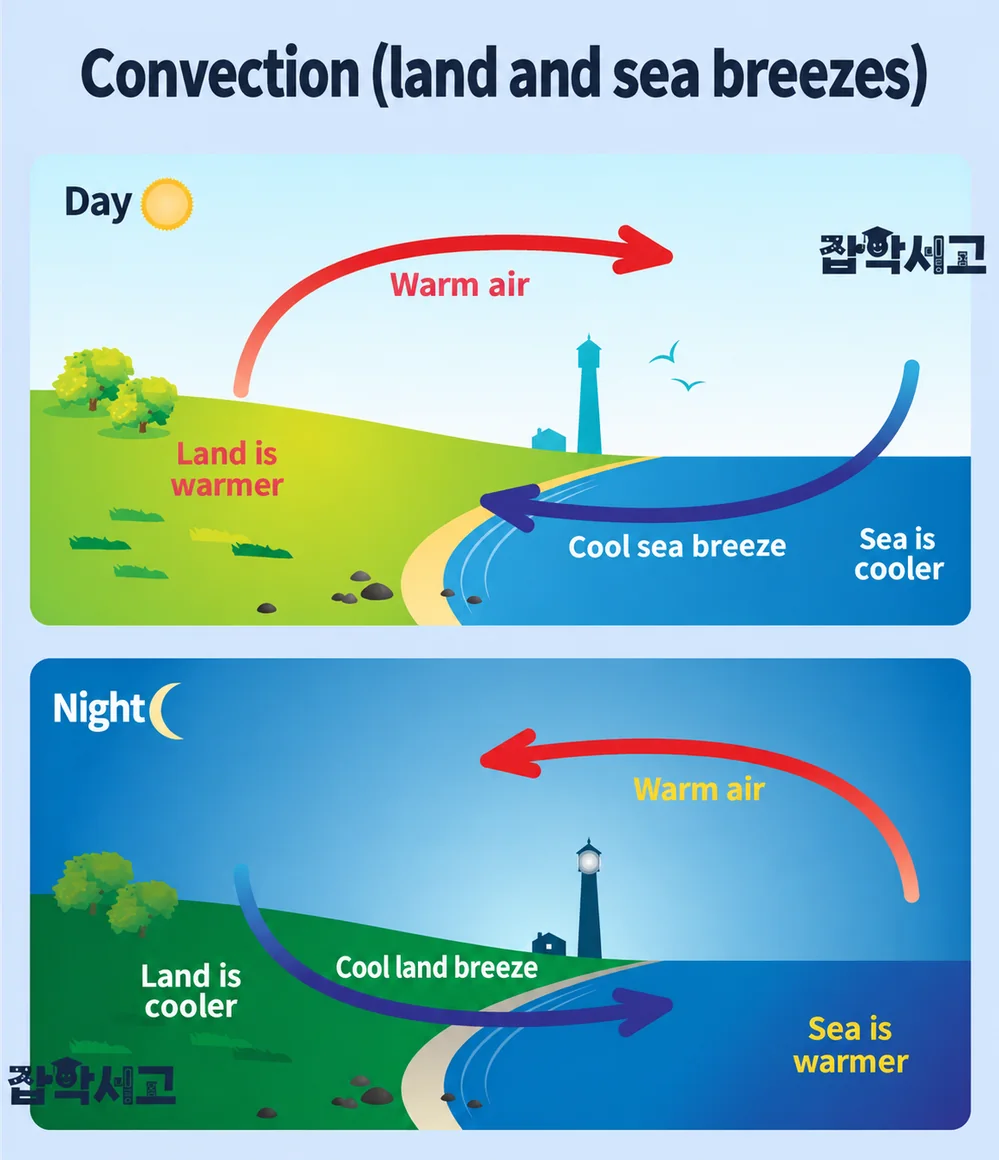 How does convection work?
Convection is a type of heat transfer: the process by which heat is carried as a gas or liquid physically moves. The process is driven mainly by differences in temperature and can appear at many different scales and in many forms. Convection is divided into natural convection and forced convection; natural convection arises from differences in density, while forced convection is driven by an external force.
How Convection Works
Fundamentally, convection reflects the tendency of heat to move from warmer places to cooler ones. Material in a warmer region expands and becomes less dense, which causes it to rise. Material in a cooler region, on the other hand, contracts, becomes denser, and sinks. As this process repeats, convection keeps going.
Convection Inside the Earth
Convection also plays an important role inside the Earth. Heat released from the hot core at the planet's center drives convection through the mantle, which in turn affects the movement of tectonic plates and seismic activity. For this reason, convection is regarded as a key element of the Earth's internal engine.
Convection in the Atmosphere
In the atmosphere, too, convection works as an important heat-transfer mechanism and contributes to weather and climate change. Updrafts formed by convection create clouds, trigger precipitation, and have a strong influence on weather phenomena such as tropical cyclones.
Convection in the Oceans
Convection also plays an important role in the oceans. Convection caused by differences in ocean water temperature drives ocean circulation, moving heat and matter around, and this has a major influence on the Earth's climate system. El Niño, for example, is a phenomenon in which sea surface temperatures in the tropical eastern Pacific become higher than normal, changing atmospheric convection and circulation.
Applications of Convection in Industry and Engineering
Convection also offers a variety of applications in industry and engineering. Heat-transfer technologies that use convection are employed in cooling systems, heating systems, aircraft engines, nuclear power plants, and more. These technologies contribute to efficient heat management and energy savings.
Convection and Natural Disaster Forecasting
Convection also plays an important role in forecasting natural disasters. Tropical cyclones such as hurricanes, for example, are formed by strong convection in the atmosphere over warm seas, and this allows meteorologists to predict a hurricane's path and strength. Such forecasts provide important information for disaster prevention and preparedness.
Convection plays an important role in many areas, including the Earth's interior, the atmosphere, the oceans, industry, and natural disaster forecasting. Understanding and applying this phenomenon is essential for responding to climate change, managing energy, and preparing for disasters, and it calls for continued research and attention.
The Various Forms of Convection on Earth
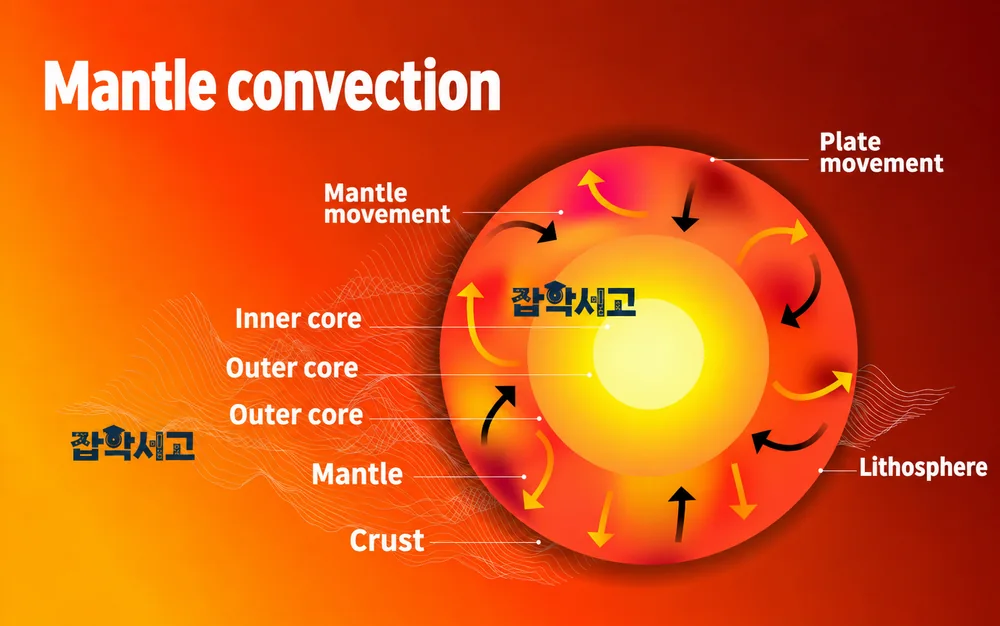 Mantle convection, one form of convection
Atmospheric Convection
The most common form of convection on Earth is atmospheric convection. It occurs mainly as the Earth's surface is heated by the sun. Solar heat warms the ground, which raises the temperature of the air and lowers its density. As a result, warm air rises and cool air sinks, driving atmospheric convection.
Pressure Differences and Wind
Atmospheric convection is also closely linked to differences in air pressure. When convection creates rising and sinking air currents, pressure differences appear between regions, and air moves horizontally from areas of high pressure to areas of low pressure. This is what we call wind. Convection and wind together shape weather patterns and affect cloud formation and the amount of precipitation. In equatorial regions in particular, strong solar heating makes tropical convection very active, which can trigger extreme weather events such as tropical depressions and hurricanes.
Ocean Convection
Ocean convection is another important convection phenomenon. Driven by differences in seawater temperature and salinity, ocean convection has a major influence on the Earth's climate system. In the polar regions, for example, seawater becomes colder and saltier, which makes it denser so that it sinks. In equatorial regions, by contrast, warm seawater is less dense, so it does not sink but stays near the surface, while the cold, dense water that has sunk at high latitudes spreads out along the deep ocean, forming the deep-water circulation. This ocean convection forms large-scale ocean circulation that carries heat and matter around the globe.
Mantle Convection
Convection also occurs inside the Earth. Mantle convection in particular is an important mechanism for transferring the Earth's internal heat. Hot material in the mantle rises and cooler material sinks, producing convection, which has a major influence on the movement of tectonic plates and on seismic activity. Mantle convection is also closely linked to volcanic activity.
The Jet Stream and General Atmospheric Circulation
The general circulation of the atmosphere also features strong horizontal winds that are distinct from convection. The jet stream is a strong westerly wind that blows horizontally in the upper troposphere, at altitudes of about 10 to 15 km. The jet stream is driven by the temperature difference between the polar and equatorial regions and plays an important role in the general circulation of the atmosphere. It also has a major impact on air travel, as it can affect aircraft speed and fuel consumption.
Urban Convection and the Heat Island Effect
Small-scale convection also occurs at the Earth's surface. In city centers, for example, buildings and roads absorb solar heat and warm the surrounding air, which produces urban convection. This urban convection shapes the microclimate of downtown areas and can lead to the heat island effect. Because this affects the environment and energy consumption, it becomes an important consideration in urban planning and design.
Convection on Earth takes many forms, in the atmosphere, the oceans, and the Earth's interior, and each of these has an important influence on the Earth's climate, weather, and crustal activity. Understanding convection is essential for predicting natural phenomena and solving a range of industrial and environmental problems.
How Convection Affects Climate and Weather
 What effects does convection have on climate and weather?
Convection has a major influence on changes in climate and weather. Atmospheric convection shapes weather patterns and directly affects cloud formation and the amount of precipitation.
Convection and Temperature Regulation
Convection plays an important role in regulating temperature. Atmospheric convection regulates temperature by carrying warm air up to higher altitudes and bringing cool air down to the surface. This is closely tied to seasonal change as well; in summer, strong convection can occur and bring heavy rain or thunderstorms.
Ocean Convection and Climate Change
Ocean convection plays an important role in the Earth's climate system. Convection caused by differences in ocean water temperature drives large-scale ocean circulation, moving heat and matter around, and this has a major influence on climate change. El Niño, for example, is a phenomenon in which sea surface temperatures in the tropical eastern Pacific become higher than normal, changing atmospheric convection and circulation, and it can cause climate anomalies around the world.
Convection and the Distribution of Air Pollution
Convection also affects how air pollution is distributed. Atmospheric convection carries pollutants up to higher altitudes and spreads them to surrounding areas. When convection is active, pollutants are often diluted and air quality near the ground improves. Conversely, when convection weakens, for example because of a temperature inversion, pollutants can become trapped near the ground and air pollution in cities can get worse.
Convection and Weather Forecasting
Convection also plays an important role in weather forecasting. Meteorologists monitor convection to predict weather patterns and events. Convection makes it possible to forecast cloud formation, precipitation, storms, and other weather events, which is a great help in preventing and preparing for disasters.
Convection and Climate Change Research
Convection also plays an important role in climate change research. Scientists use convection to understand the Earth's climate system and to develop climate models. This allows them to predict future climate change and prepare strategies to respond to it. Understanding convection is essential for responding to climate change.
Convection plays an important role in many areas, from climate and weather to air pollution, weather forecasting, and climate change research. Understanding and analyzing this phenomenon is essential for predicting future weather patterns and preparing responses to climate change.
Real-Life Applications of Convection
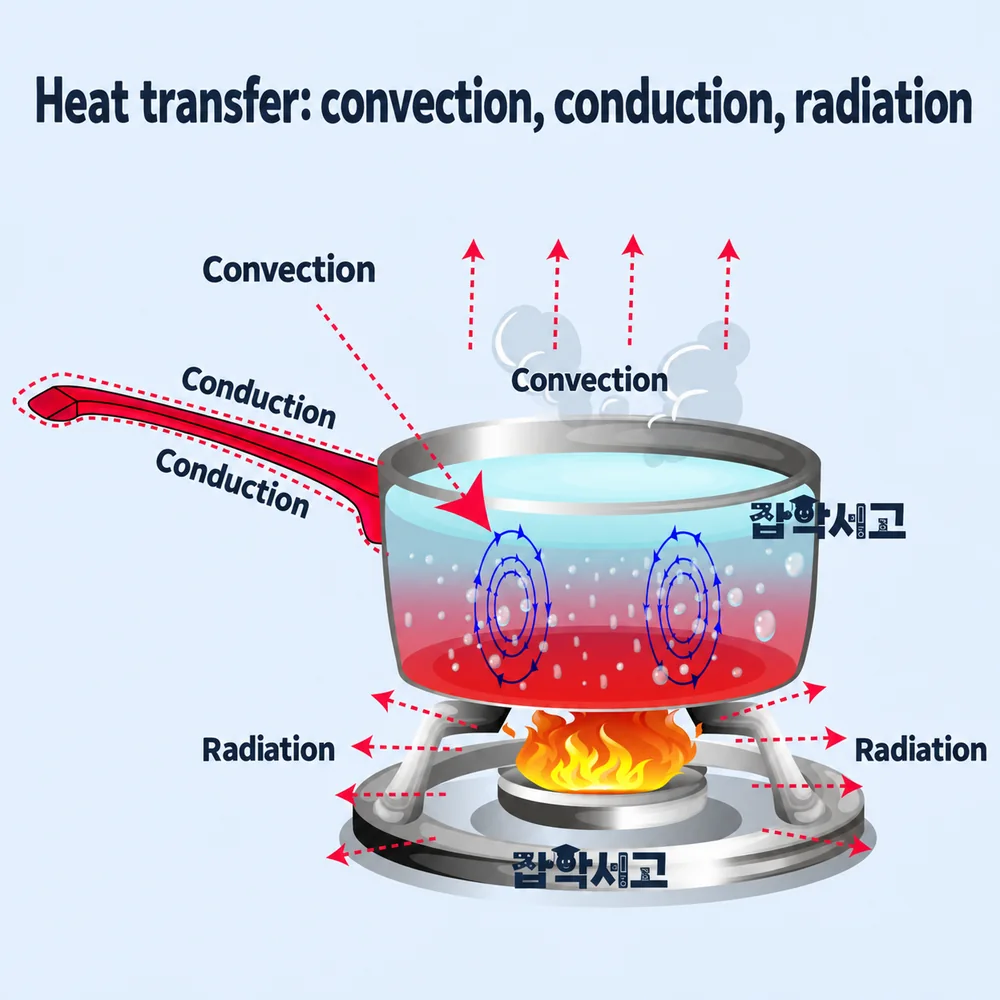 Convection: how heat transfer works
Applications of Convection in Heating and Cooling Systems
Convection plays an important role in heating and cooling systems. Heating systems use convection to warm air so that it rises, while cool air sinks, and this circulation regulates indoor temperature. This creates a comfortable indoor environment while using energy efficiently. Convection is also an important factor in cooling systems. To cool computers and other electronic devices, for example, cooling fans and heat sinks that make use of convection are used, and these systems prevent the devices from overheating and keep them running reliably.
How Aircraft Engines Use Convection
In aircraft engines, too, convection is used to transfer heat efficiently and improve fuel efficiency. By using convection to carry heat away from the combustion chamber efficiently, engine performance is improved, and by controlling the airflow around the aircraft, its stability and performance are enhanced. This helps reduce aircraft operating costs and improve safety.
Applying Convection in Nuclear Power Plants
Convection also plays an important role in heat management at nuclear power plants. The heat generated in a reactor is removed through the circulation of coolant and heat exchange, and convection is one of the ways that heat is transferred. Some reactors are equipped with passive safety systems designed so that the coolant keeps carrying heat away by natural circulation (natural convection) even if the pumps stop. These systems contribute to efficient heat management and make plant operation more stable.
Applying Convection in Architecture
Convection is also an important consideration in architecture. Ventilation systems that use natural convection help improve indoor air quality and save energy. These systems circulate air through windows or vents and effectively regulate indoor temperature and humidity. This raises a building's energy efficiency and creates a comfortable living environment.
The Role of Convection in Disaster Response
Convection also plays an important role in disaster response. Meteorologists monitor convection to predict natural disasters such as hurricanes and typhoons. These forecasts are a great help in preventing and preparing for disasters and help minimize loss of life and damage to property. Understanding convection is one of the key elements of disaster response.
Convection plays an important role in many fields, including heating and cooling systems, aircraft engines, nuclear power plants, architectural design, and disaster response. Using this phenomenon effectively raises energy efficiency, ensures safety, and ultimately helps improve the quality of everyday life. Continued research into convection and its applications is essential to many aspects of our lives.
Convection plays a central role in Earth science and offers a wide range of applications across our daily lives and industry as a whole. By looking at the basic principles and definition of convection, the various forms of convection on Earth, the effects of convection on climate and weather, and real-life applications of convection, we have been able to understand why it matters.
This knowledge will be a great help in responding to climate change, managing energy efficiently, and preparing for disasters. Continued research into and understanding of convection will remain necessary, and we hope it will help us pursue a better environment and a better quality of life.