Among the natural phenomena around us, some hide complex principles that we rarely notice. One of them is the Coriolis effect. This phenomenon refers to the way Earth's rotation alters the paths along which objects move.
The Coriolis effect has wide-ranging influence, from weather phenomena to ocean circulation and many areas of everyday life. In this article, we will take a detailed look at the definition and principle of the Coriolis effect, its influence on weather phenomena, its relationship with ocean circulation, and examples of its application in real life.
Definition and Principle of the Coriolis Effect
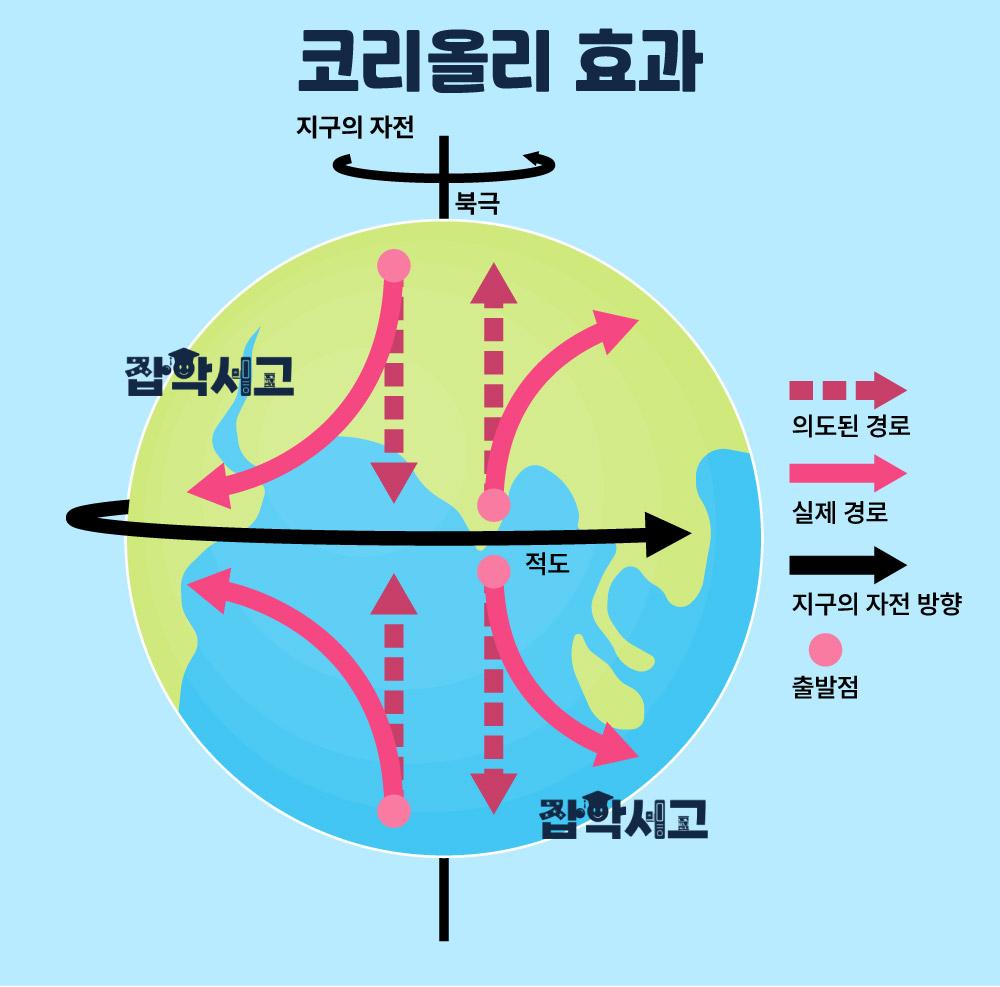 What is the Coriolis effect?
Definition of the Coriolis Effect
The Coriolis effect is the phenomenon in which, as Earth rotates, the path of an object moving along its surface is altered. First described in 1835 by the French mathematician Gaspard-Gustave de Coriolis, this effect arises from an inertial force produced by Earth's rotation. It is especially pronounced in large-scale systems and can best be observed in the atmosphere and the oceans.
Principle of the Coriolis Effect
The Coriolis effect is explained by the Coriolis force, an inertial force produced by Earth's rotation. Earth rotates from west to east, and its rotational speed is fastest at the equator and slower toward the poles. Because of this difference in rotational speed, an object moving from the equator toward a pole is deflected to the right (in the Northern Hemisphere) or to the left (in the Southern Hemisphere).
- Northern Hemisphere: When an object moves north, it is deflected to the right because of differences in Earth's rotational speed. Conversely, it is also deflected to the right when moving south.
- Southern Hemisphere: When an object moves south, it is deflected to the left. It is also deflected to the left when moving north.
Mathematical Explanation
The Coriolis force is expressed mathematically as follows.
Fc=2m(v×ω)
Here, Fc is the Coriolis force, m is the mass of the object, v is the velocity of the object, and ω is the angular velocity of Earth's rotation. This equation shows the interaction between the object's velocity and Earth's rotation.
Examples of Application
The Coriolis effect exerts a strong influence on weather phenomena. For example, the movement of high- and low-pressure systems in Earth's atmospheric flow is greatly affected by the Coriolis effect. Tropical storms such as typhoons and hurricanes also rotate in particular directions because of this effect. In addition, ocean currents flow in particular directions due to the Coriolis effect, which has a major impact on marine ecosystems and climate.
In conclusion, the Coriolis effect is an inevitable phenomenon caused by Earth's rotation and is deeply embedded in our daily lives and in natural phenomena. By understanding it, we can gain important insights into weather forecasting, oceanographic research, and a wide range of practical applications.
How the Coriolis Effect Influences Weather Phenomena
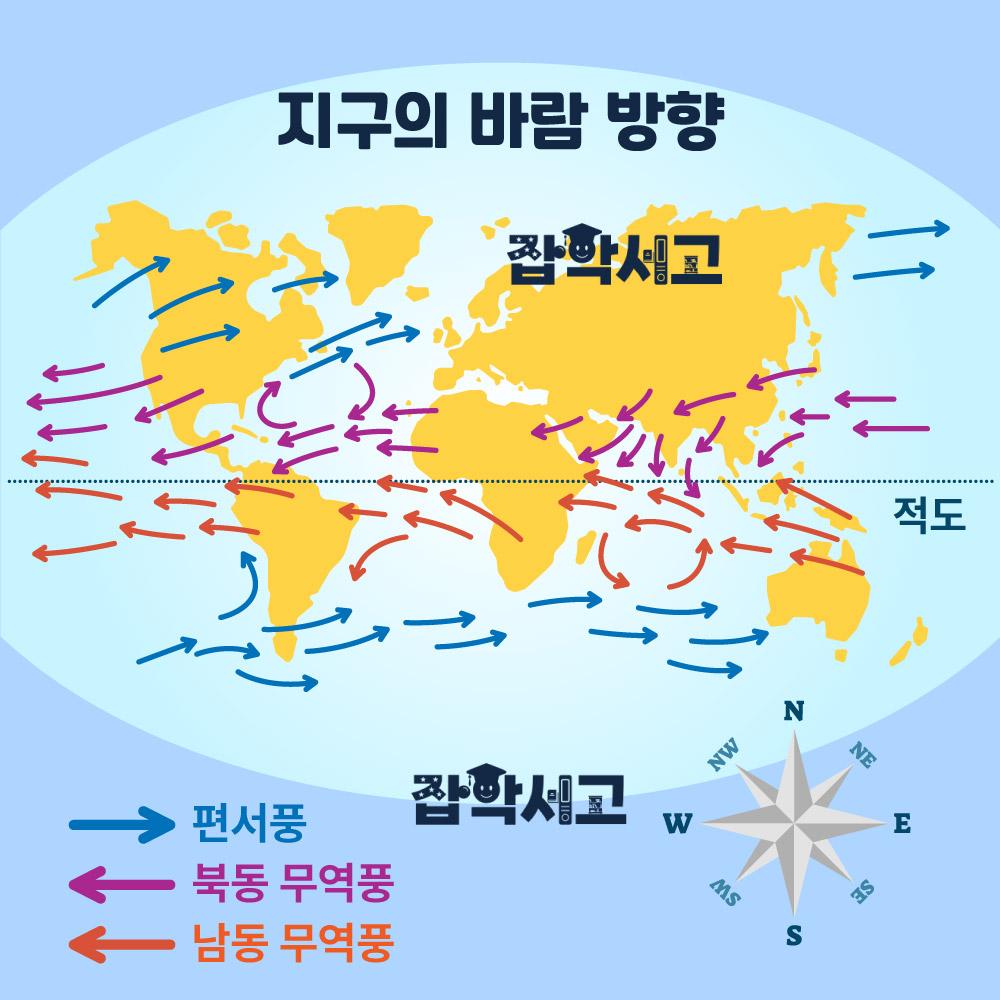 How does the Coriolis effect affect weather phenomena?
The Coriolis effect has a profound influence on weather phenomena and plays an important role in shaping Earth's atmospheric circulation and weather patterns. In this section, we will take a concrete look at how the Coriolis effect influences weather phenomena.
Atmospheric Circulation and the Coriolis Effect
The circulation patterns of Earth's atmosphere are strongly influenced by the Coriolis effect. Because Earth receives more solar energy at the equator, air rises near the equator and sinks in the polar regions. This large-scale circulation of air is deflected by the Coriolis effect, forming different atmospheric circulation patterns in each hemisphere.
- Hadley Circulation: Air that rises near the equator moves north and south toward higher latitudes and sinks at about 30 degrees latitude. In this process, the Coriolis effect deflects the air's path to the east, forming easterly winds called the trade winds.
- Ferrel Circulation: This circulation occurs in the mid-latitudes between the Hadley circulation and the polar circulation, and the air forms the westerlies, which move from west to east.
- Polar Circulation: In the polar regions, cold air sinks and moves toward the equator, and in the process the Coriolis effect forms the polar easterlies.
Low- and High-Pressure Systems
The Coriolis effect also influences the direction in which low- and high-pressure systems rotate.
- Low Pressure Systems: In the Northern Hemisphere, low-pressure systems rotate counterclockwise, while in the Southern Hemisphere they rotate clockwise. This happens as air is drawn toward the center under the Coriolis effect.
- High Pressure Systems: High-pressure systems rotate clockwise in the Northern Hemisphere and counterclockwise in the Southern Hemisphere. This is because air moving outward from the center is deflected by the Coriolis effect.
Typhoons and Hurricanes
The Coriolis effect also plays an important role in the formation and tracks of typhoons and hurricanes. These tropical cyclones form over warm sea surfaces near the equator and begin to rotate because of the Coriolis effect. They rotate counterclockwise in the Northern Hemisphere and clockwise in the Southern Hemisphere. The Coriolis effect also causes these storms to move away from the equator toward higher latitudes.
Jet Streams
Jet streams, located 10–15 km above the ground, are strong currents of fast-moving air that are formed and maintained by the Coriolis effect. These jet streams shape large-scale weather patterns and play an important role in weather forecasting. For example, jet streams form the boundaries of cold waves and heat waves and determine the paths along which weather systems move.
The Coriolis effect has an important influence on the formation and development of weather phenomena and is deeply involved in a variety of weather elements, from Earth's atmospheric circulation patterns, low- and high-pressure systems, and typhoons and hurricanes to jet streams. This understanding provides an important foundation for weather forecasting and climate research, enabling us to predict and respond to natural phenomena more accurately.
Ocean Circulation and the Coriolis Effect
 How does it affect ocean circulation?
The Coriolis effect also plays an important role in ocean circulation, greatly influencing how Earth's large-scale current patterns are formed and regulated. In this section, we will look at how the Coriolis effect acts on ocean circulation and at the major current systems and phenomena that result.
Direction and Paths of Ocean Currents
In Earth's oceans, large-scale currents flow in consistent directions, and this flow is strongly affected by the Coriolis effect. In the Northern Hemisphere, currents are deflected to the right, and in the Southern Hemisphere, to the left. This deflection is observed mainly in the surface layer of the ocean and contributes to forming the major current patterns of the oceans.
- Gyres: Ocean gyres, which are large-scale current systems, form through the interaction between the Coriolis effect and the wind. The North Atlantic Gyre and the North Pacific Gyre rotate clockwise in the Northern Hemisphere, while the South Atlantic Gyre and the South Pacific Gyre rotate counterclockwise in the Southern Hemisphere. These gyres distribute energy and heat throughout the oceans and have an important influence on marine ecosystems and climate.
Equatorial Currents and El Niño
Equatorial currents flow from east to west near the equator, a region where the Coriolis effect is weak. Nevertheless, these currents influence important climate phenomena such as El Niño and La Niña.
- El Niño: El Niño is a phenomenon in which sea surface temperatures near the equator in the central and eastern Pacific become abnormally high, causing large-scale weather changes. The Coriolis effect regulates the flow of this seawater and affects the strength and duration of El Niño.
- La Niña: La Niña is the opposite of El Niño, referring to cases in which sea surface temperatures near the equator become abnormally low. The Coriolis effect also plays an important role in this phenomenon, bringing about changes in large-scale ocean and weather patterns.
The Ocean Mixed Layer and Heat Transport
The Coriolis effect also influences the movement and distribution of heat in the ocean's mixed layer. The mixed layer is the surface layer just below the sea surface, where mixing is promoted by the wind and the Coriolis effect. This process evens out the distribution of seawater temperature and salinity, contributing to the health of marine ecosystems and to climate regulation.
Nutrient Distribution and Marine Ecosystems
Through ocean currents, the Coriolis effect also affects the distribution of nutrients in the ocean. For example, the movement of gyres and currents promotes upwelling, a phenomenon that brings nutrient-rich deep water up to the surface. This process supplies important nutrients to marine life and helps maintain the productivity and diversity of marine ecosystems.
The Coriolis effect plays an important role in forming and maintaining ocean circulation and is deeply involved in a variety of ocean phenomena, including large-scale current patterns, equatorial currents and climate phenomena, and the mixed layer and nutrient distribution. This understanding provides an important foundation for oceanographic research and climate change prediction, helping us better protect and manage Earth's marine environment.
Real-Life Applications of the Coriolis Effect
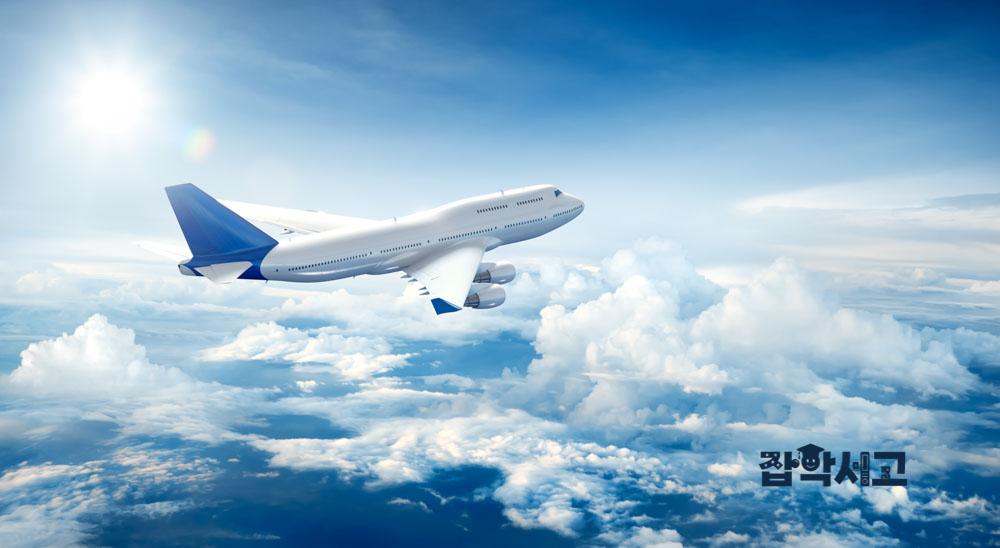 In what situations does it affect our everyday lives?
The Coriolis effect also applies to our everyday lives in various ways, and understanding it can provide important insights in many fields. In this section, we will look at concrete examples of how the Coriolis effect applies in real life.
Aviation and Navigation
The Coriolis effect is an important factor in planning routes for aircraft and ships.
- Aviation: Airplanes set their routes on intercontinental flights with the Coriolis effect in mind. Because Earth's rotation deflects an airplane's path, route planners must take this into account to design the optimal route. This helps reduce fuel consumption and shorten flight times.
- Navigation: Ships must also take the Coriolis effect into account when sailing long routes. In particular, when setting routes across the oceans, reflecting this effect in choosing the optimal course ensures safe and efficient navigation.
Military Operations
The Coriolis effect is also an important factor in military operations.
- Long-range artillery: When long-range shells or missiles are fired, the projectile's path is deflected by Earth's rotation. If this is not calculated accurately, it becomes difficult to hit the target. Military operations therefore adjust the launch angle and direction to account for the Coriolis effect.
- Drones and unmanned aerial vehicles: The Coriolis effect must also be considered in long-distance flights of drones and unmanned aerial vehicles. Doing so makes it possible to set accurate flight paths and to carry out precise detection of and strikes on target areas.
Sports
The Coriolis effect also has an influence in some sports.
- Golf: In long golf shots, the ball's path may be slightly deflected by the Coriolis effect while it is in flight. Professional golfers take this into account when adjusting the direction and power of their shots.
- Soccer: In soccer, too, a ball kicked over a long distance can be affected by the Coriolis effect. This is especially noticeable when the ball goes high and stays in the air for a long time. Players take this into account and make fine adjustments to the ball's path when shooting or passing.
Weather Forecasting
Meteorologists also use the Coriolis effect as an important variable in weather forecasting. By including the Coriolis effect when predicting atmospheric flows and patterns, weather models can make more accurate forecasts. This plays an important role in weather forecasts, natural disaster prediction, climate change research, and more.
Agriculture
The Coriolis effect also has an indirect influence on agriculture. Because weather patterns and ocean currents affect the agricultural environment, agricultural planning and crop management must take into account weather changes influenced by the Coriolis effect. This is an especially important factor in large-scale farming operations.
The Coriolis effect has an important influence on a wide range of real-life fields, including aviation, navigation, military operations, sports, weather forecasting, and agriculture. By understanding it and applying it appropriately, we can increase efficiency and make more accurate plans and predictions. These examples underscore once again the importance of the Coriolis effect and show how it is used in our daily lives and in various professional fields.
The Coriolis effect is not merely a physical phenomenon but an important factor that deeply affects our daily lives and the natural environment. This unique phenomenon, caused by Earth's rotation, shapes weather patterns, regulates ocean currents, and also affects aviation and navigation.
I hope this article has helped you understand the various aspects of the Coriolis effect and has given you an opportunity to look at natural phenomena more deeply. I hope we will continue to explore the mysteries of nature and learn more about the Earth we live on.