At a campsite or a concert, snap a stick with a ‘crack’ and shake it, and a fluorescent glow spreads through it. There is no battery and no wire, and it does not feel hot in your hand. Nothing has been burned or heated the way a candle or a light bulb is, so how does it give off light? The secret lies in a chemical reaction taking place inside the stick. This phenomenon is ‘Chemiluminescence.’
Put simply, chemiluminescence means ‘the phenomenon in which energy released by a chemical reaction comes out as light instead of heat.’ Because it gives off almost no heat, it is also called ‘cold light,’ and when it happens inside a living organism it is called bioluminescence.
In this piece we will look in turn at what chemiluminescence is and how the light is produced, examples such as glow sticks, luminol, and fireflies, and the ways it is used in laboratories and industry.
How Chemical Reactions Give Off Light
What Is Chemiluminescence?
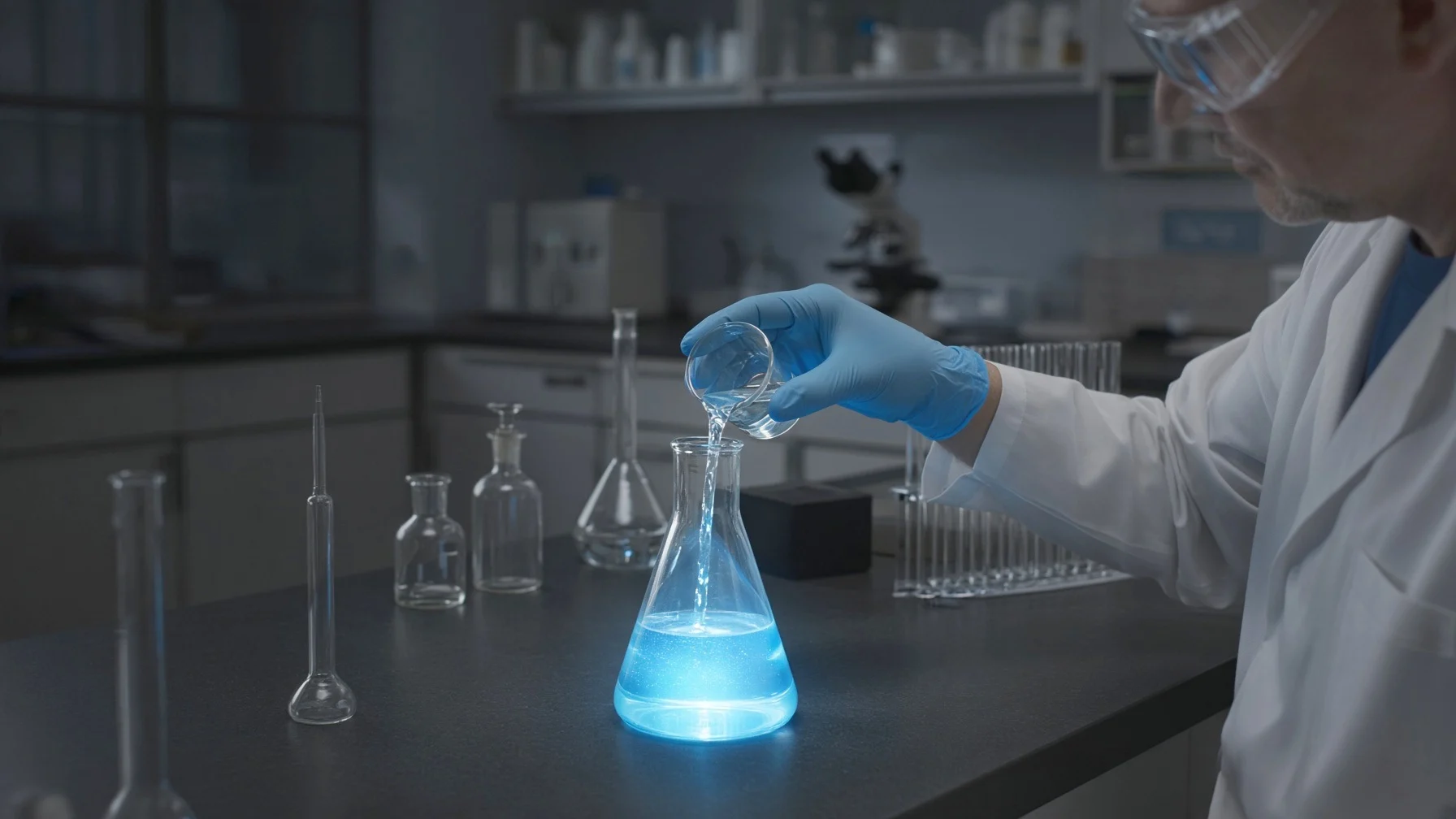
Most of the light we usually see comes from hot objects. When an object heated to a high temperature gives off light, as a candle or an incandescent bulb does, it is called incandescence. Chemiluminescence, on the other hand, is light produced by the reaction itself, even at low temperatures.
(1) A Light Known Since Long Ago
White phosphorus, discovered in 1669 by Hennig Brand of Germany, gave off a soft green glow on its own in the air. It was such a striking sight that the name phosphorus comes from a Greek word meaning ‘light-bearer,’ and this glow is a classic example of chemiluminescence, produced as white phosphorus reacts with oxygen in the air. Among substances made in the laboratory, the Polish chemist Bronisław Radziszewski first observed chemiluminescence in 1877 in a compound called lophine.
(2) Similar but Different Kinds of Light
These three kinds of light are distinguished by where they get their energy.
- Fluorescence: The phenomenon in which a substance that has absorbed light immediately gives off light of a different color.
- Phosphorescence: The phenomenon in which a substance holds on to the light energy it has absorbed and releases it slowly; glow-in-the-dark stickers are a typical example.
- Chemiluminescence: The phenomenon in which light is produced by the energy of a chemical reaction alone, without absorbing any light.
How the Light Is Produced
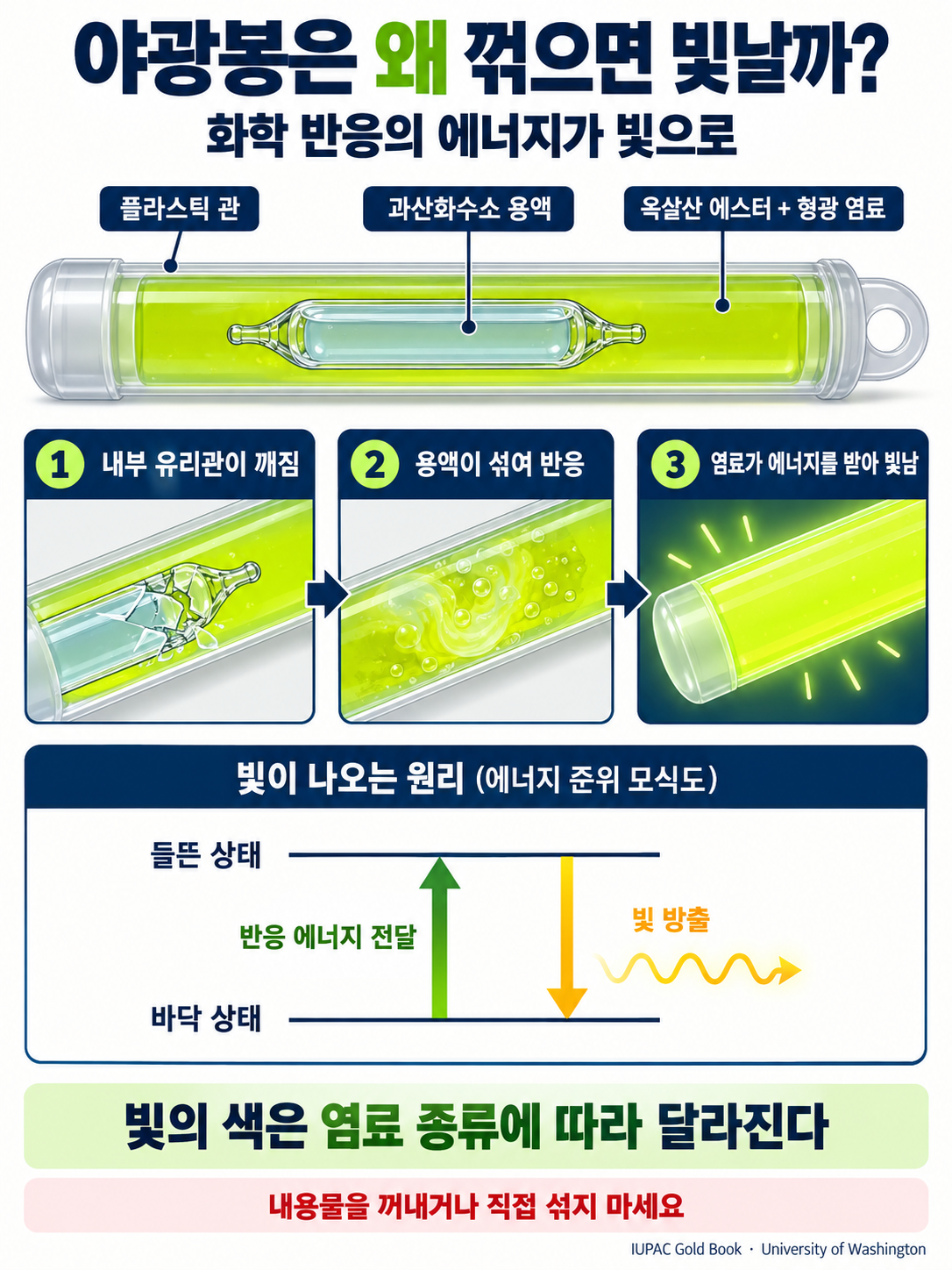
The key is the ‘excited state.’ Electrons in a substance normally stay in the most stable state, the ground state, but when they gain energy they move up to a higher level, the excited state. The excited state is unstable, so the electrons soon return to where they were, and as they do, they release the leftover energy as photons, the particles of light.
(1) The Reaction Creates Excited Molecules
Ordinary chemical reactions release their leftover energy as heat. In chemiluminescence, the product formed when two substances react is born in an excited state from the start. Because this molecule gives off light as it drops back to the ground state, the temperature hardly rises.
(2) The Molecule Decides the Color of the Light
The color of the light depends on how much energy is released on the way down. The greater the energy, the closer the light is to blue; the smaller the energy, the closer it is to red. That is why, depending on which molecule gives off the light, the same principle can produce many different colors.
Chemiluminescence in Everyday Life
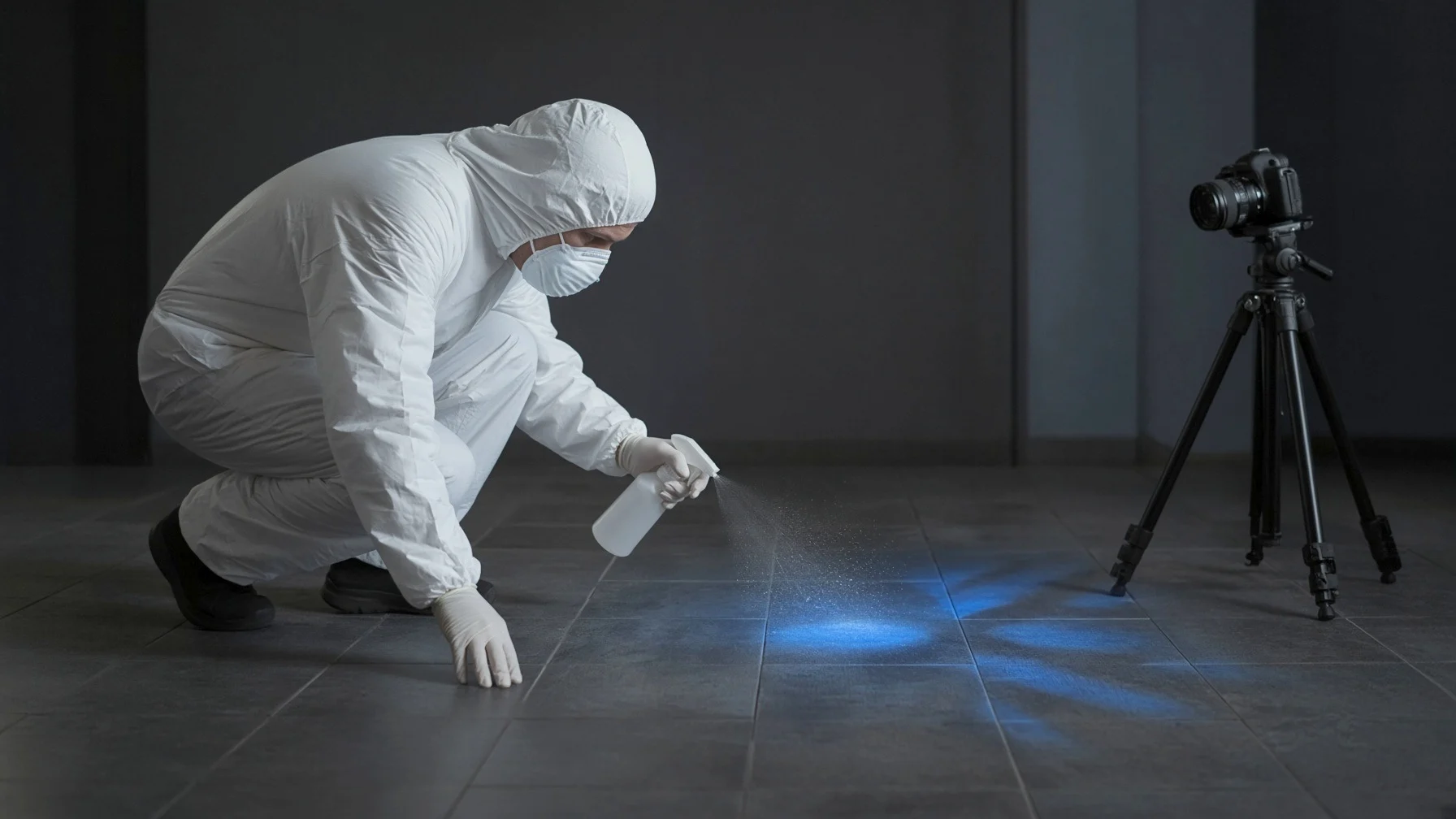
Chemiluminescence is closer to us than you might think, even outside the laboratory. Its uses range from toys to criminal investigations to living things in nature.
[Case 1] Glow Sticks That Light Up When You Bend Them
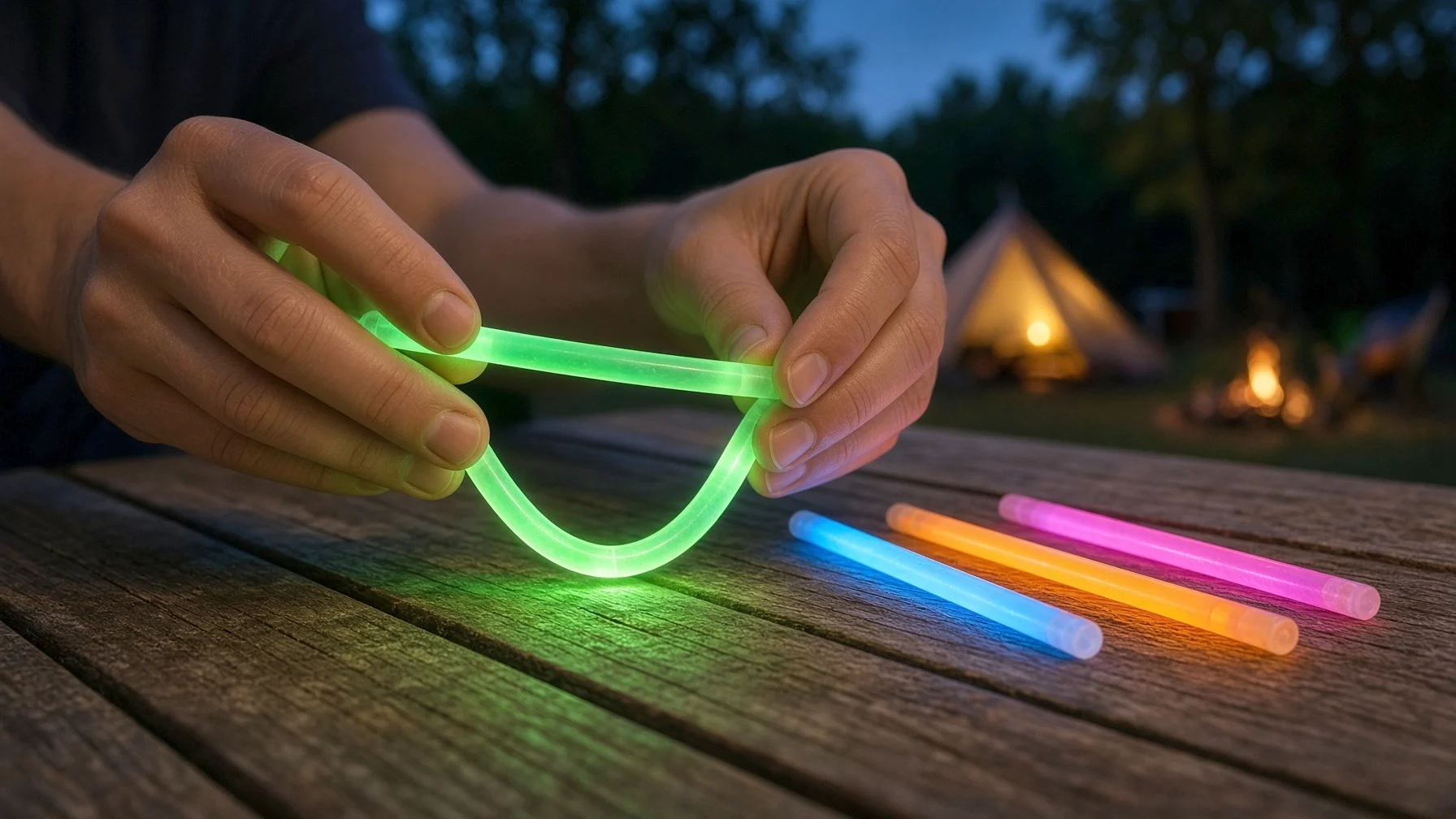
Inside a glow stick there is a solution containing an oxalate ester and a fluorescent dye, along with a thin glass tube holding hydrogen peroxide. When you bend the stick, the glass tube breaks and the two solutions mix, and the energy from the reaction excites the dye, producing light. This method is based on a reaction discovered in the 1960s by Edwin Chandross of Bell Labs in the United States, and it took its present form after Michael Rauhut of the chemical company American Cyanamid improved it. Changing the type of dye produces colors such as green, blue, and orange; in warm places the stick is brighter but goes out sooner, while in cold places it is dimmer but lasts longer.
[Case 2] Luminol, Which Finds Bloodstains
Luminol is a substance that gives off a blue light when it reacts with hydrogen peroxide, and it was first synthesized in Germany in 1902. In 1928 the German chemist H. O. Albrecht discovered that blood makes this light stronger, because the iron in the hemoglobin in blood helps the reaction along. Then in 1937 the German forensic scientist Walter Specht studied in detail how to use it to test for bloodstains at crime scenes. Even a tiny amount of blood left on a spot that has been wiped clean glows for about 30 seconds in the dark.
[Case 3] Fireflies That Light Up the Night
Fireflies give off light when luciferin in their bodies reacts with oxygen with the help of an enzyme called luciferase. It is, in effect, chemiluminescence produced by a living thing, and jellyfish and fish in the deep sea also give off light by a similar principle, although the substances differ from species to species.
The Uses and Limits of Chemiluminescence
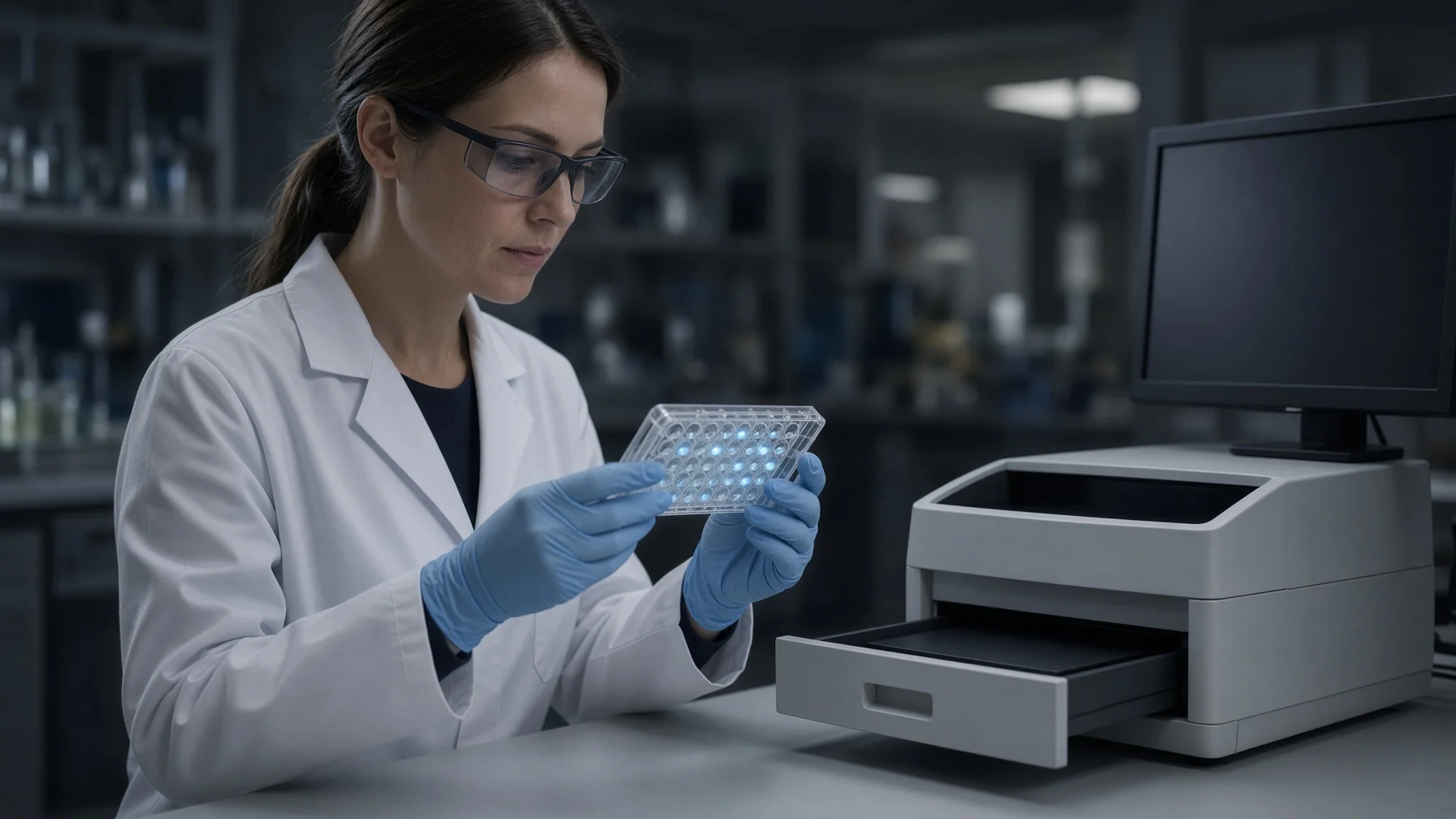
Because chemiluminescence does not need light shone on it from outside, the background stays dark, and that makes it possible to detect even very small amounts of light accurately. Thanks to this advantage, it is widely used as an analytical tool.
(1) It Detects Very Small Amounts
Air monitoring instruments measure the amount of pollutants in the air by counting the light given off when nitric oxide reacts with ozone. In life science experiments, a light-producing reaction is attached to a specific protein so that even amounts too small to see can be detected.
(2) Once It Is On, It Cannot Be Undone
Once the reacting substances are used up, the light ends too, which is why a glow stick can be used only once. Luminol also gives off light when it reacts with substances containing iron or copper and with bleach, so even if it glows, you should not immediately conclude it is blood but confirm it again with other tests.
Chemiluminescence shows that light can be born simply when one substance meets another, even without lighting a fire. The glow sticks at a concert, the blue light at a crime scene, and the fireflies on a summer night all shine by the same principle.
Asking once more where the light in front of you came from is the first step in exploring the chemistry of everyday life.