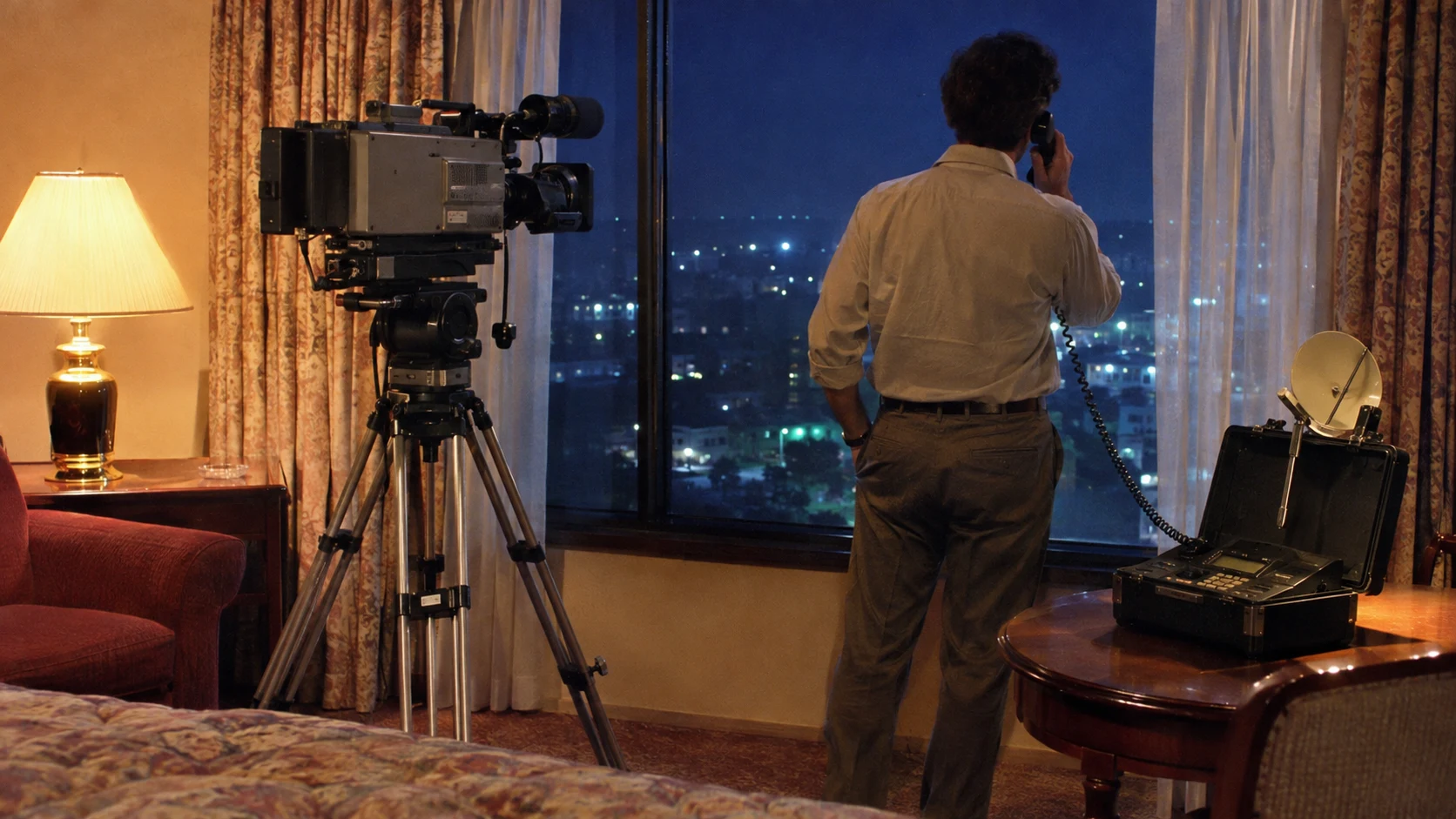
Have you ever seen devastating scenes from a distant country on the evening news for days, followed shortly by a government announcing it would send aid workers or troops? In journalism and communication studies, the idea that television news, especially live broadcasting, influences governments’ diplomatic and military decisions is called the CNN Effect.
Simply put, the CNN Effect means ‘the phenomenon in which images on screen move public opinion, and that opinion speeds up or redirects government policy decisions.’ The term takes its name from CNN, the 24-hour news channel launched in 1980, and became widely known through the Gulf War and the Somalia crisis of the early 1990s.
In this article, we will look in turn at how 24-hour live coverage changed the diplomatic environment, the three ways the media influence policy, the cases of Somalia and Bosnia, and finally the debate surrounding this effect and what it looks like today.
Between News Images and Government Decisions: The CNN Effect at a Glance
1. How 24-Hour Live Coverage Changed the Clock of Diplomacy

War reporting before CNN took time. During the Vietnam War, film had to be physically shipped back, but once live satellite broadcasting took hold, scenes from the other side of the globe appeared instantly on living-room screens.
(1) A channel made famous by live coverage
CNN built its presence by broadcasting the 1986 explosion of the Space Shuttle Challenger and the 1987 rescue of baby Jessica McClure, who had fallen into a well, in real time. During the 1991 Gulf War, it broadcast the war live from inside Iraq, letting viewers and governments around the world watch the same images at the same moment.
(2) Less time to think
Margaret Tutwiler, then spokesperson for the U.S. State Department, remarked to the effect that the time to react had been compressed and there was no longer room for analysis and intelligence gathering. More and more often, the images came first and the government’s official position had to catch up.
(3) Diplomacy on deadline
Lloyd Cutler, counsel to President Jimmy Carter, called this situation ‘foreign policy on deadline.’ Former Secretary of State James Baker also said that television coverage drives policymakers to settle on a position in a hurry.
2. Three Ways the Media Influence Policy

The claim that ‘news moves policy’ is too broad to test as it stands. Steven Livingston of George Washington University in the United States sorted the CNN Effect into three roles in a 1997 paper.
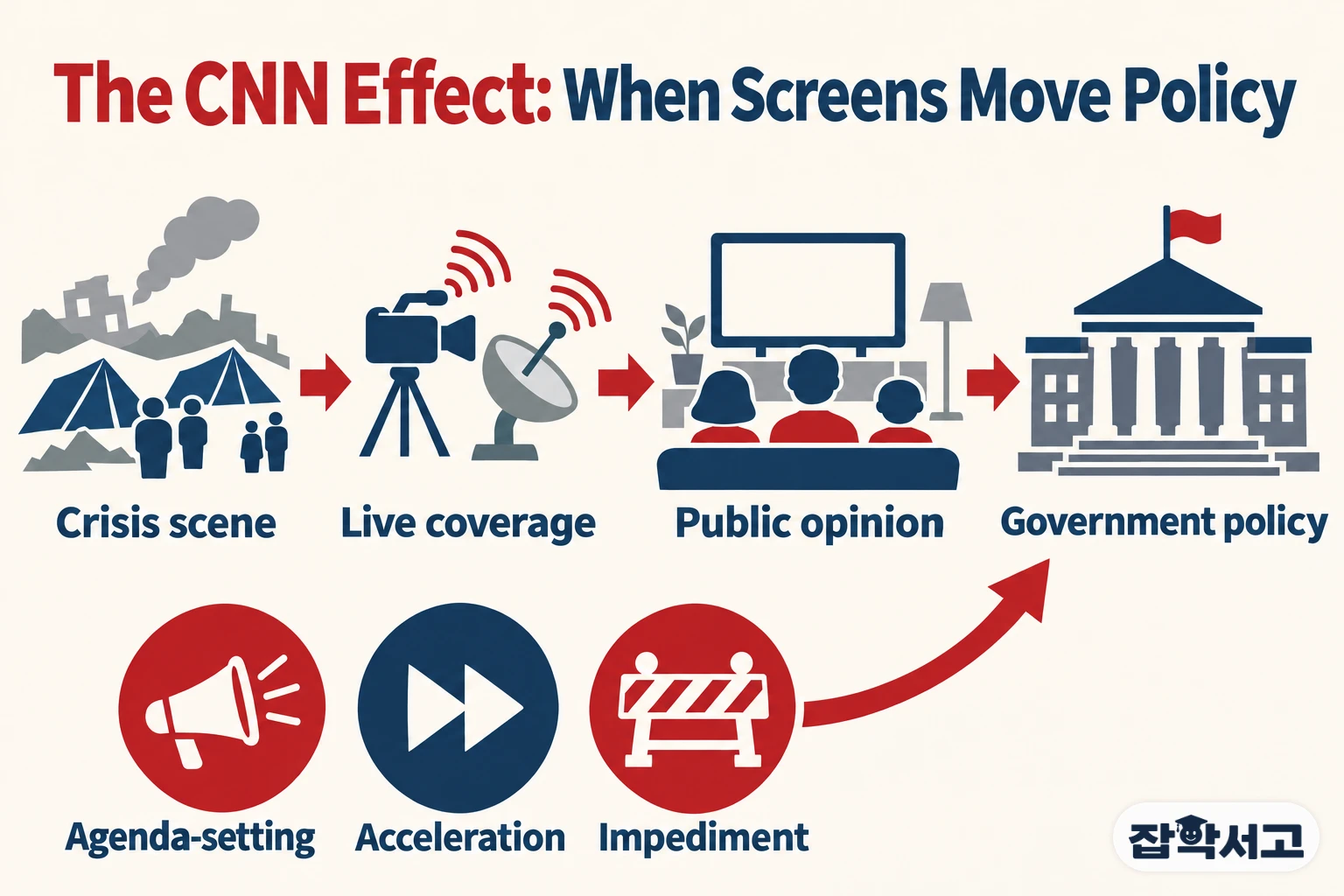
- Agenda-Setting Agent: The role in which repeated, emotional images lift a crisis in a distant country that had been ignored into a problem the government must address.
- Accelerant: The role in which live coverage pushes policymakers to decide faster than usual, without enough deliberation.
- Impediment: The role in which reports of casualties or horrific scenes turn public opinion, making it hard for the government to push ahead with the policy it originally intended.
- Policy Uncertainty: The condition that the less settled a policy is within the government, the greater the media’s influence becomes.
Seen this way, the CNN Effect is not the simple story that ‘the news controls the government’ but a framework for asking when, and in which direction, the media exert influence.
3. The Questions Left by Somalia and Bosnia

The CNN Effect is most often discussed in connection with the humanitarian crises of the early 1990s. Yet a closer look at the cases shows that the power of images was not as simple as it might seem.
(1) Was the Somalia deployment driven by images?
In 1992, the United States sent troops to support relief efforts in Somalia, which was suffering from famine and civil war. However, studies analyzing the volume of coverage found that television reporting followed the government’s policy moves rather than preceding them.
(2) The images from Mogadishu and the withdrawal
After a battle in Mogadishu in October 1993, footage of a crowd dragging the body of a slain U.S. soldier reached the news. President Bill Clinton announced that U.S. forces would withdraw by March 31, 1994, and these images are cited as a classic example of the media acting as an impediment.
(3) Mixed responses in Bosnia
When scenes from camps in Bosnia were reported in August 1992, the U.S. government issued condemnations but did not take military action. By contrast, British scholar Piers Robinson cited NATO’s intervention following the 1994 siege of Goražde as a case of a strong CNN Effect.
4. Myth or Reality: The CNN Effect Today
Research on the CNN Effect has moved away from arguing over whether it exists toward asking under what conditions it appears.
(1) Robinson’s two conditions
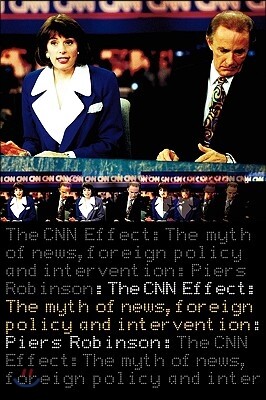
In his 2002 book The CNN Effect: The Myth of News Media, Foreign Policy and Intervention, Robinson argued that a strong effect requires two conditions together: coverage that sharply criticizes government policy while emphasizing the suffering of civilians and refugees, and a government that has not yet decided on the use of force.
(2) Attention makes a difference in aid
Media attention also affects how much help people receive. One analysis found that by February 2005 the international community had raised about 500 dollars for each person affected by the 2004 Indian Ocean tsunami, but only 50 cents for each person affected by Uganda’s war, then in its 18th year.
(3) The CNN Effect in the smartphone era
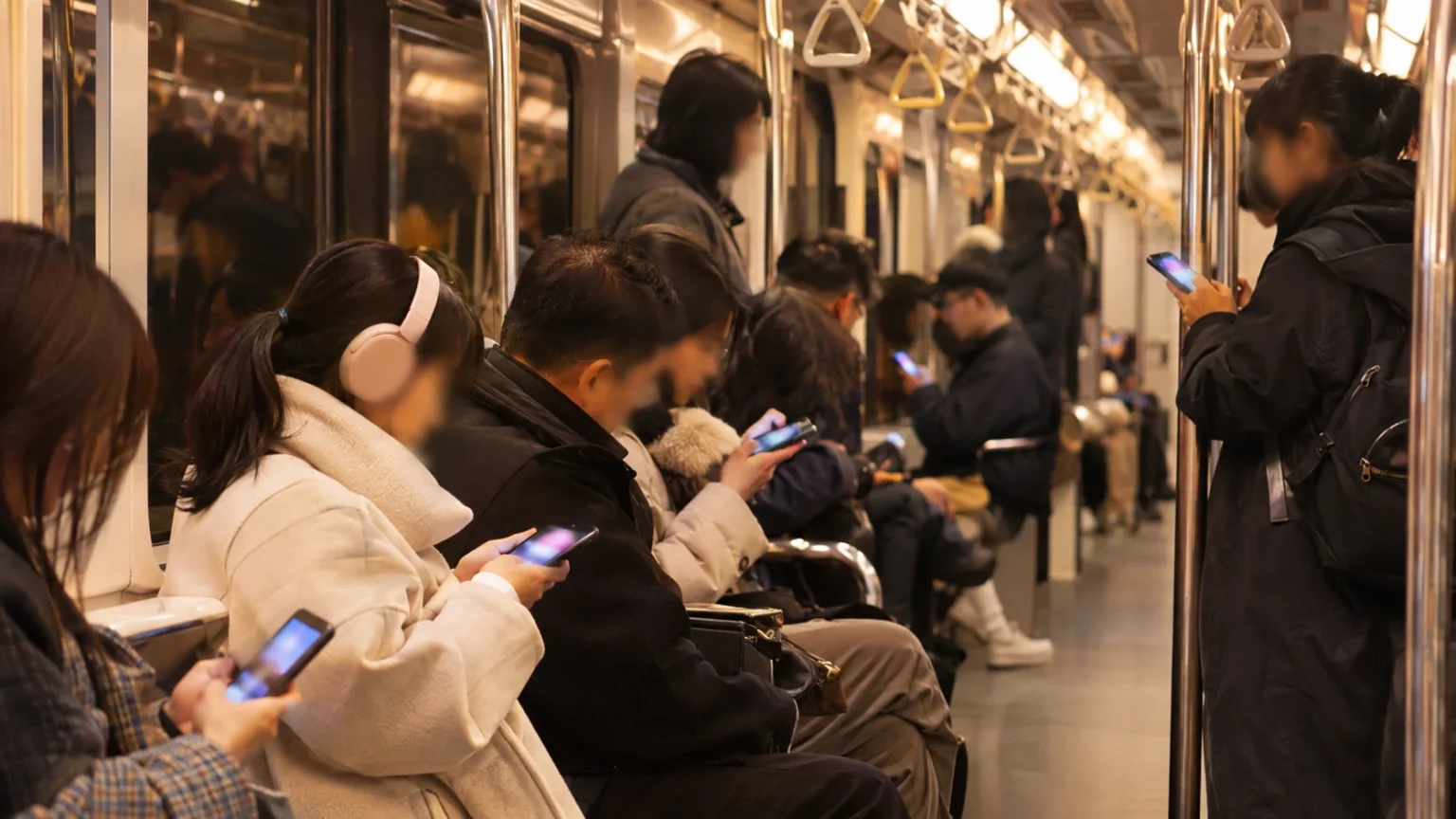
Today, smartphone videos from people on the scene and social media spread images even before broadcasters’ cameras do. If images have the power to move policy, we also need to look at which scenes are chosen and which are left out.
In the end, the CNN Effect is not a story about the press steering the government at will, but about how images can change the direction and speed of decisions when a government hesitates. The simple idea that what appears on screen can change what gets decided is the first step toward understanding the CNN Effect.