When you hear on the news that a central bank has released new money, have you ever wondered whose pocket that money reaches first? It is widely known that prices rise when the amount of money increases, but not every price rises at once or at the same rate. Depending on where the new money enters first, some people gain and others lose, and this phenomenon is called the Cantillon Effect.
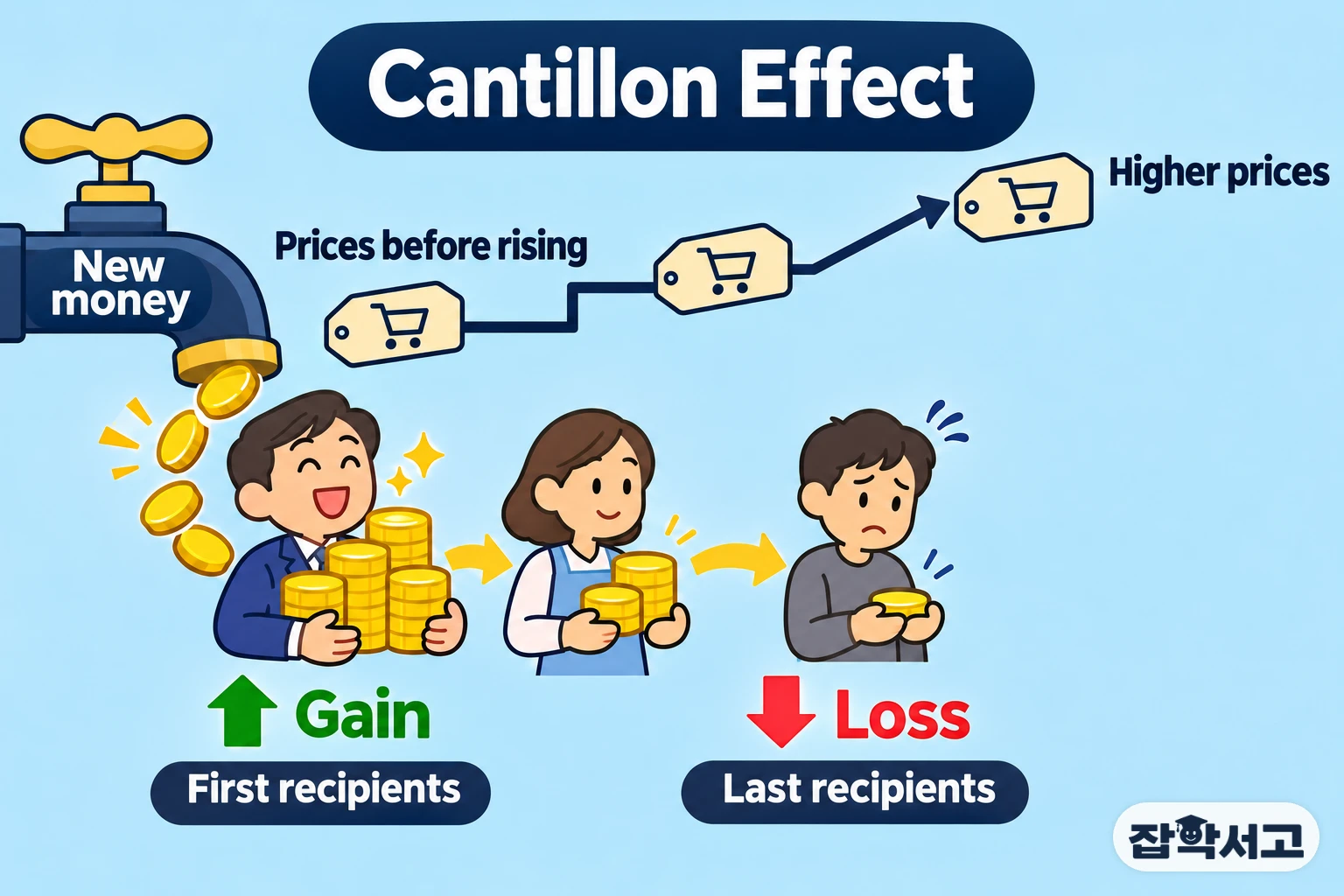
Put simply, the Cantillon Effect means ‘the phenomenon in which those who receive newly created money first can spend it before prices rise and so gain, while those who receive it later have to pay prices that have already risen and so lose.’ It is named after Richard Cantillon, an Irish-born banker active in Paris in the early 18th century, who was the first to explain it systematically.
In this article, we will look in turn at the meaning and origin of the Cantillon Effect, the path along which new money spreads, examples ranging from silver mines to quantitative easing, and finally the debates and limitations surrounding the concept.
The invisible redistribution created by the order in which money arrives: the world of the Cantillon Effect
1. Meaning and origin of the Cantillon Effect

Richard Cantillon was born in County Kerry, Ireland, in the 1680s and made a fortune as a banker in Paris. Around 1730 he wrote the Essay on the Nature of Trade in General (Essai sur la Nature du Commerce en Général). The manuscript circulated in handwritten copies and was published in French only in 1755, after his death.
(1) A book called the cradle of economics
In the late 19th century, the British economist William Stanley Jevons rediscovered this forgotten book and called it ‘the cradle of political economy.’ It is regarded as a work that systematically examined how markets and money behave even before Adam Smith’s The Wealth of Nations (1776).
(2) Money does not spread all at once
Cantillon argued that new money does not spread through the whole economy at the same time; it first enters particular places and then spreads outward step by step. For that reason, he explained, prices do not rise evenly either, but rise first where the money arrives first.
(3) Insights gained from speculation
Cantillon is said to have made a large profit during the frenzy over John Law’s Mississippi Company shares by buying early and selling at high prices. Many interpret his analysis as reflecting this experience of watching up close who gains first when money and credit pile up on one side.
2. The path along which new money spreads

The Cantillon Effect is easy to grasp if you picture pouring water into one side of a pond. The water level rises first where the water is poured, and as the ripples spread, the level farther away rises only much later. In the same way, new money first pushes up spending and prices where it enters and, over time, spreads to other parts of the economy.
- Money Neutrality: The idea that even if the quantity of money increases, in the long run only the price level changes, while the real economy, such as output and relative prices, does not.
- Quantity Theory of Money: A theory holding that the quantity of money and the price level move in proportion.
- Relative Price: The ratio of one good’s price to another good’s price; the Cantillon Effect focuses on the fact that this ratio changes.
- Asset Price Inflation: A phenomenon in which the prices of assets such as stocks, bonds, and real estate rise sharply before everyday consumer prices do.
(1) First recipients
Those who get hold of new money first can buy goods and assets at prices that have not yet risen, so their real purchasing power increases.
(2) Recipients in the middle
Because they receive money after some prices have already risen, gains and losses are mixed, and which is larger depends on what they buy.
(3) Last recipients
People who live on income that is adjusted late, such as wages or pensions, have to pay prices that have already risen, so they can buy less with the same money.
3. From silver mines to quantitative easing
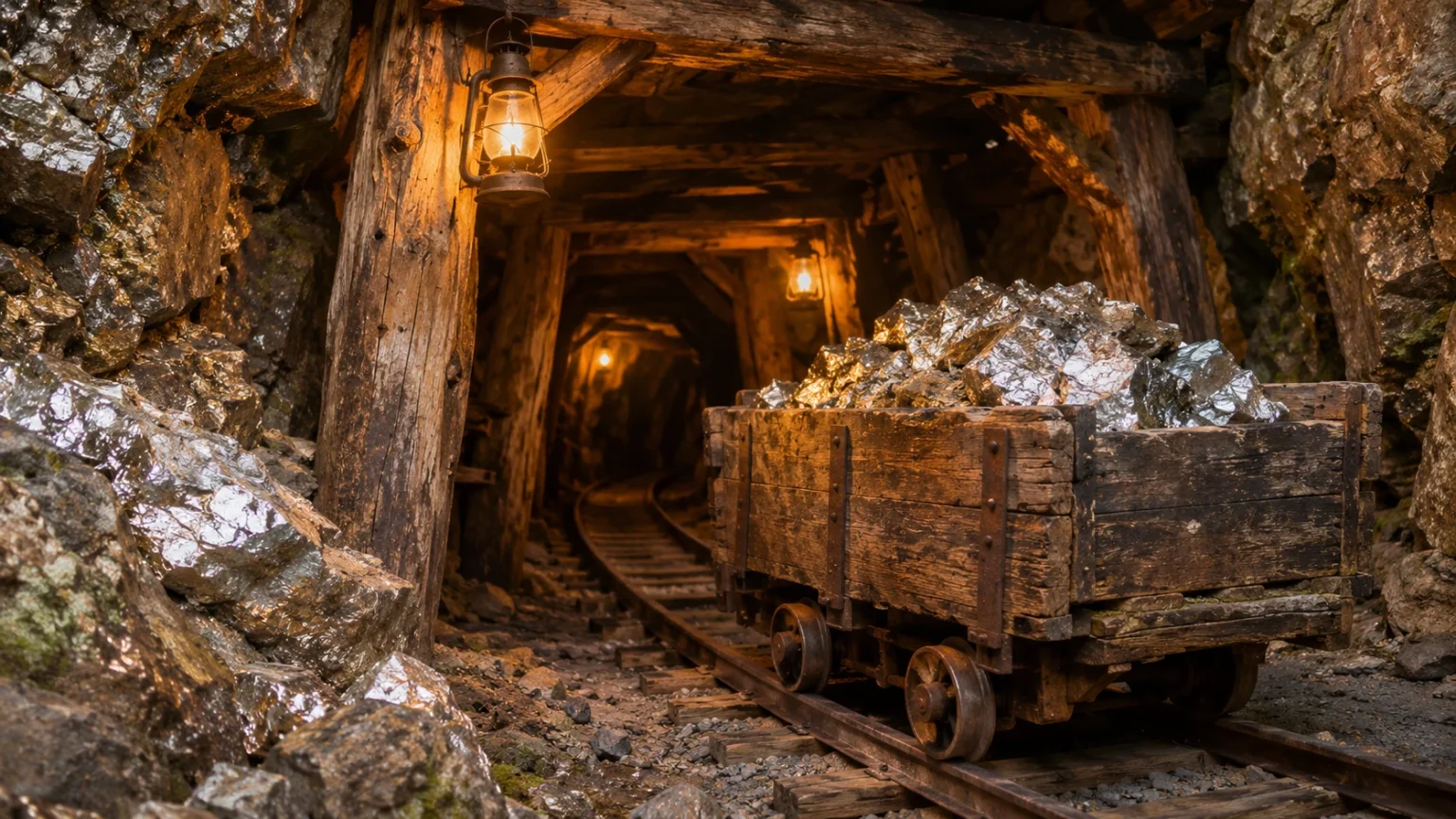
The Cantillon Effect is an old idea, but it is called up again whenever large amounts of money are released. From the story of 18th-century silver mines to the policies of 21st-century central banks, the concept is used to examine where new money flowed first.
(1) The silver mine owner’s table
The example Cantillon himself gave was a silver mine. He speculated that mine owners and miners, who get the new silver first, would buy more meat and wine and less bread and beer. Prices of meat and wine would then rise, farmers would turn their land from grain to livestock and vineyards, and the poor who lived on bread and beer would actually find themselves worse off.
(2) New World silver and the Price Revolution
The ‘Price Revolution,’ in which European prices rose for a long time after large amounts of silver from the Americas flowed into Spain in the 16th century, is often mentioned alongside it. The inflow of silver is counted as one of the causes of this rise in prices, and the fact that places reached first by the new money fared differently from those reached later echoes Cantillon’s observation.
(3) Quantitative easing and asset prices
After the 2008 financial crisis, several central banks carried out quantitative easing (QE), releasing money by buying large amounts of assets such as government bonds. In a 2012 analysis, the Bank of England stated that its asset purchases had pushed up stock and bond prices and that the benefits went mainly to households holding financial assets. In the survey at the time, the top 5% of households held about 40% of household financial assets.
4. Debates and limitations surrounding the Cantillon Effect

The Cantillon Effect is intuitively easy to understand, but measuring how large it actually is is not easy. If the same policy prevented a recession and protected jobs, it becomes difficult to say in a single direction who gained and who lost.
(1) The Austrian School’s extension
Ludwig von Mises and Friedrich Hayek used Cantillon’s idea as a foundation for their theory of business cycles. Their explanation is that when new money pushes interest rates below their natural level, a boom occurs as money floods into capital goods, stocks, and real estate, followed later by a correction.
(2) The mainstream view
Mainstream economics generally treats the Cantillon Effect as a question of the redistribution of wealth that accompanies an increase in money. Even if money is neutral in the long run, the differences in distribution that arise along the way deserve separate attention.
(3) Questions to ask about policy
The Cantillon Effect leads us to ask not so much ‘Is releasing money good or bad?’ as ‘Through whom does the new money flow?’ Even for the same amount, the distributional outcome can differ depending on whether it is released through financial markets or paid directly to households.
The simple idea that the order in which money arrives matters as much as the amount of money is the first step toward understanding the Cantillon Effect.