Commodities are a central component of the global economy, encompassing resources that significantly affect various industries and markets. A wide range of commodities, including crude oil, natural gas, metals, and agricultural products, have become indispensable resources in modern society, and their importance continues to grow.
This article aims to closely analyze the importance of commodities in the global economy and the structure of their markets, while examining in depth the major participants, the factors behind price fluctuations, and the effects of these factors on the global economy.
The Importance of Commodities in the Global Economy

The Historical Importance of Commodities
Commodities have played an important role throughout the development of human civilization. In ancient civilizations, metals such as copper and tin were used as major resources, becoming the driving force behind the Bronze Age. During the Industrial Revolution, iron and coal became key commodities, laying the foundation for mechanized industry. In this way, commodities have served as essential resources for economic development in each era, transforming human history.
The Role of Commodities in Modern Industry
Commodities continue to occupy an important place in modern society. Oil and natural gas, in particular, are central to global energy consumption. These resources are essential in various fields, including automobiles, aircraft, and electricity generation, and are key resources underpinning economic activity. Beyond energy, metal commodities are also essential resources in construction, manufacturing, and the electronics industry. Iron and aluminum serve as basic materials for construction and manufacturing, while copper and silicon play important roles as key materials in electronic devices.
Agricultural Commodities and Their Economic Importance
Agricultural commodities also occupy an important position in the modern economy. Agricultural products such as grains, coffee, and sugar form the foundation of the food industry, and changes in their supply, demand, and prices have a major impact on food prices. Climate change or natural disasters, in particular, significantly affect agricultural production and supply, greatly increasing market volatility. This volatility also affects consumer prices, creating ripple effects throughout the economy.
Commodities and International Trade
Commodities are also an important factor in international economic relations. Economic relationships between commodity exporters and importers account for a substantial share of world trade, and fluctuations in commodity prices greatly affect the stability of national economies. For example, when crude oil prices rise, the economic burden on major crude oil importers increases, while the economies of exporting countries may experience a boom. As such, ensuring a stable supply of commodities and managing their prices are emerging as key priorities in national economic policy.
Commodities and Financial Markets
Commodities are also regarded as important investment assets in financial markets. Commodity futures trading offers investors a variety of investment opportunities and contributes to greater liquidity and volatility in financial markets. A wide range of commodities, from precious metals such as gold and silver to oil and grains, are used as investment vehicles, and commodities constitute an important asset class in their own right within financial markets. In this way, commodities as financial products have complex effects on the economy and markets.
An Analysis of Commodity Market Structure and Major Players

The Main Sectors of Commodity Markets
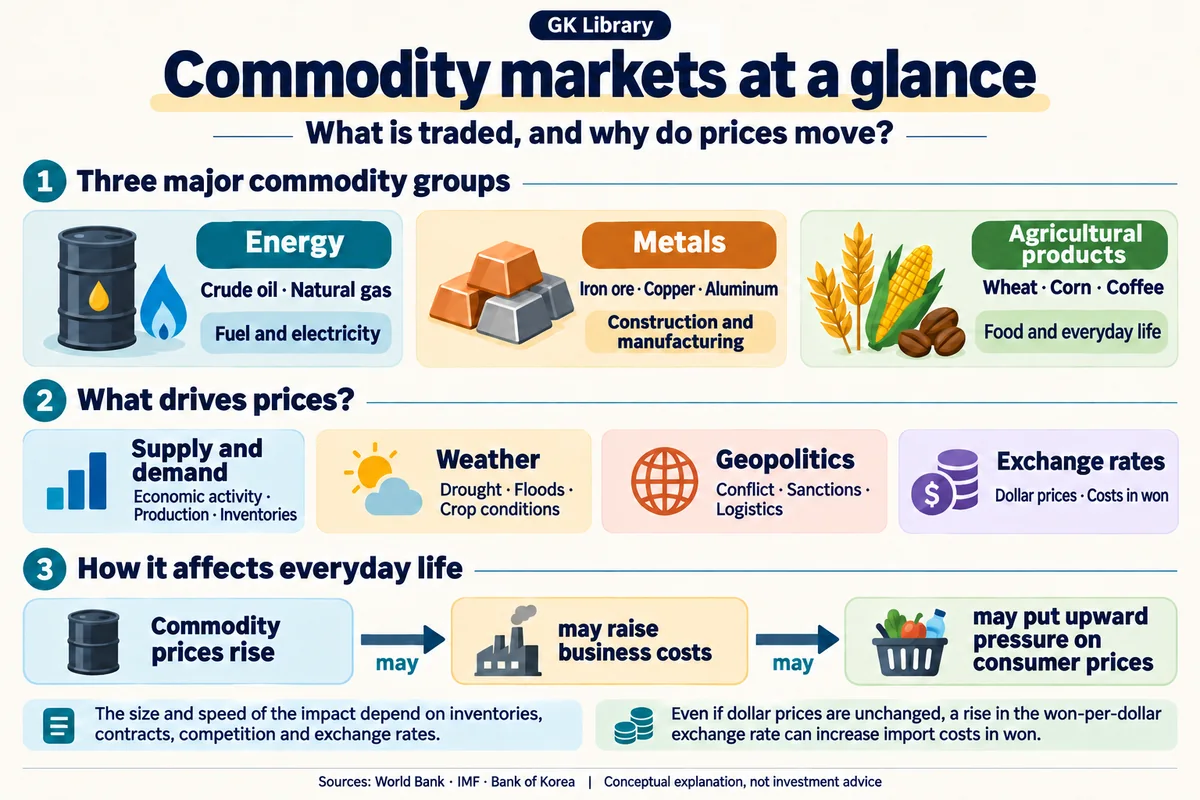
Commodity markets are broadly divided into three sectors: energy, metals, and agricultural products. Each sector has a distinct market structure and is closely connected to various industries. In the energy sector, oil and natural gas are key resources that play an important role in meeting global energy demand. In the metals sector, iron ore, copper, aluminum, gold, and silver are important resources used as essential materials in various fields, including construction, electronics, and manufacturing. The agricultural sector includes important resources such as grains, coffee, sugar, and cotton, which play key roles in the food and textile industries.
Energy Commodity Markets and Major Companies
Oil and natural gas are the main resources in energy commodity markets, which are led by large companies responsible for their exploration, production, refining, and distribution. Global energy companies such as ExxonMobil, Chevron, and British Petroleum (BP) play important roles in global energy markets, regulating resource supplies and influencing price formation. These companies play important roles at every stage, from oil and gas production to delivery to the final consumer.
The Structure of Metal Commodity Markets and Major Players
Metal commodity markets are centered on resources such as iron ore, copper, aluminum, gold, and silver, which are used as essential materials in various industries, including construction, manufacturing, and electronics. Global mining companies such as Rio Tinto, BHP Billiton, and Vale are responsible for producing and refining these resources and lead metal commodity markets worldwide. These companies have a significant impact on global markets through activities such as mining operations, commodity refining, and sales.
Major Companies in Agricultural Commodity Markets
Agricultural commodity markets encompass a variety of resources, including grains, coffee, sugar, and cotton, which are primarily used in the food and textile industries. Global agricultural companies such as Cargill, ADM, and Louis Dreyfus lead agricultural production and distribution through extensive farmland and production facilities. These companies manage supply chains in agricultural commodity markets and play important roles worldwide.
The Role of Governments and International Organizations
Governments and international organizations play important roles in commodity markets. The Organization of the Petroleum Exporting Countries (OPEC) is a major player in the global oil market, seeking to stabilize market prices by coordinating oil production among its member countries. National governments also manage the effects on their own economies through regulations governing commodity imports and exports, and these policies significantly influence overall trends in commodity markets.
The Role of Financial Markets and Investors
Financial institutions and investors also play important roles in commodity markets. Commodity futures exchanges forecast volatility in commodity prices, while investors use financial products to respond to price fluctuations and pursue returns. This participation by financial markets increases liquidity in commodity markets and serves as one of the major factors that increase volatility in resource prices.
Factors Behind Commodity Price Fluctuations: Economic and Political Elements

The Law of Supply and Demand
The most fundamental principle behind commodity price fluctuations is the law of supply and demand. Prices rise when demand increases and fall when supply increases. For example, economic growth in China and India can sharply increase global demand for commodities, causing prices to rise. Conversely, prices tend to fall when commodity supplies are abundant. In particular, demand increases significantly when the global economy is active, while economic downturns show a pattern of falling prices as demand declines.
Production Costs and Technological Factors
The costs involved in commodity production are also major determinants of prices. Commodity prices tend to rise as the costs of exploration, extraction, and refining increase. For example, when drilling costs increase during crude oil production, crude oil prices also rise to reflect the resulting production costs. Conversely, technological advances and improvements in energy efficiency help reduce production costs, but introducing new technologies requires considerable time and expense. As a result, technological factors also serve as important influences on commodity price fluctuations.
Political Instability and International Relations
Political factors play an important role in commodity price fluctuations. Political instability or war in a particular country, or internal conflicts in oil-producing countries, can disrupt commodity supplies and cause prices to rise. Energy resources such as oil are particularly sensitive to political conditions in producing countries. Trade regulations and trade disputes between countries also directly affect commodity imports and exports, causing price fluctuations. For example, export restrictions or sanctions involving major producing countries can cause the prices of the affected resources to surge.
The Impact of Exchange Rate Fluctuations
Exchange rate fluctuations directly affect commodity prices. Because most commodities are traded in US dollars, commodity prices tend to fall when the dollar appreciates and rise when it depreciates. This is a particularly important factor in international trade, and commodity prices can vary significantly with changes in exchange rates. For example, a stronger dollar makes commodities more expensive and reduces demand, while a weaker dollar makes them relatively cheaper and increases demand.
Climate Change and Natural Disasters
Climate change and natural disasters directly affect energy resources as well as agricultural commodities. Climatic changes such as droughts and floods can hamper agricultural production, causing the prices of grains, coffee, sugar, and other products to surge. Natural disasters such as hurricanes and earthquakes can also damage crude oil or natural gas production facilities, disrupting supplies and potentially causing sharp price increases. Because these natural factors are difficult to predict, they are among the factors that greatly increase commodity price volatility.
Speculative Trading and Market Sentiment
Speculative trading and market sentiment play important roles in price volatility in commodity markets. When investors anticipate future price movements and engage in speculative trading, prices can rise or fall sharply regardless of actual supply and demand conditions. Such speculative trading is influenced by market sentiment and temporarily increases market liquidity, but it can also intensify volatility.
The Impact of Changes in Commodity Markets on the Global Economy
The Economic Impact of Rising Commodity Prices
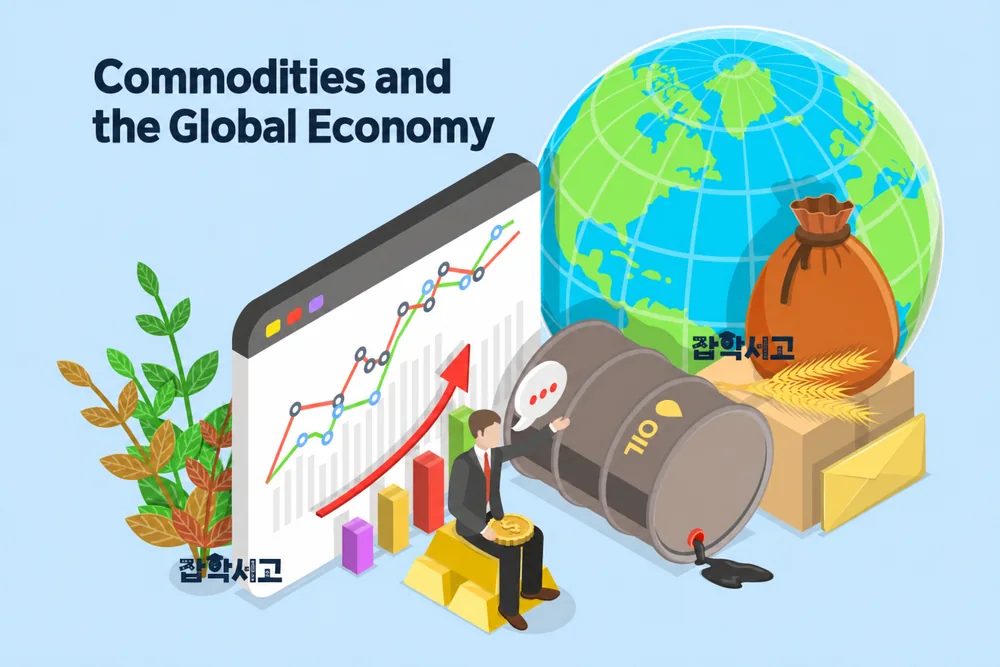
Rising commodity prices increase production costs, adversely affecting corporate profitability. This can lead to higher consumer goods prices and cause inflation, increasing the overall economic burden. For example, rising oil prices increase transportation and energy costs, resulting in broadly higher prices for consumer goods and services. This situation can reduce consumer spending and constrain economic growth as companies' operating costs increase.
The Economic Benefits of Falling Commodity Prices
Conversely, falling commodity prices reduce companies' production costs and improve their competitiveness. This leads to lower product prices, encouraging consumer spending and accelerating economic growth. For example, falling steel prices reduce the cost burden on the construction industry and stimulate construction activity, which can lead to increased employment and greater economic activity. Falling commodity prices are a factor that positively affects not only manufacturing but also other industries across the economy.
The Impact on Economic Relations Between Countries
Changes in commodity markets also have a profound impact on economic relations between countries. Commodity exporters can benefit economically when prices rise, but they face economic difficulties when prices fall. For example, Saudi Arabia, an oil-exporting country, is heavily dependent on oil prices, and fluctuations in oil prices are an important factor determining its economic growth. In this way, commodity price fluctuations serve as a major factor that changes economic relations between exporting and importing countries.
The Impact on Financial Markets and Investment
Commodity price fluctuations also have a major impact on financial markets. Commodities are major investment assets, and when their prices rise, the value of related stocks and financial products rises, potentially increasing investment returns. However, when commodity prices plunge, investors suffer losses, and volatility can increase across financial markets. Financial products such as commodity futures markets reflect this price volatility, presenting investors with significant opportunities or risks.
The Impact on Government Economic Policy
Commodity price fluctuations also significantly affect government economic policy. Rising prices increase inflationary pressure, prompting central banks to consider raising interest rates. Conversely, falling commodity prices can cause deflation and are highly likely to prompt interest rate cuts. These interest rate policies directly affect economic growth and employment, while also bringing changes to the direction of government fiscal policy.
Social Impacts and Inequality
Commodity price fluctuations can also have social effects. In particular, a surge in agricultural prices increases food prices, placing a greater cost-of-living burden on people with low incomes. This can cause social instability and increase the burden on government social welfare policies. Rising agricultural prices can lead to problems related to food security and can also cause social conflict in some regions.
Commodities form an important pillar of the global economy and are deeply connected to trends in various industries and markets. Fluctuations in these commodity markets are intricately intertwined with economic and political factors, and their changes have a variety of effects across the global economy.
Continuously monitoring and analyzing volatility in commodity markets is therefore essential to maintaining the stability of the global economy and developing long-term growth strategies. We hope this article helps deepen understanding of commodity markets, which will continue to require sustained attention and in-depth research.