
Add just a few drops of lemon juice to water and it quickly tastes sour. That is because even a little acid greatly changes the acidity of water. Yet the blood in our bodies never leaves a very narrow pH range of 7.35 to 7.45, even though acid is constantly produced as we eat and exercise. A solution like this, which keeps its pH constant even when acid or base comes in, is called a buffer solution.
Put simply, a buffer solution is a solution containing a weak acid and its conjugate base, or a weak base and its conjugate acid, dissolved together, so that its pH barely changes even when a little acid or base is added. When the Danish chemist Søren Sørensen proposed the pH scale in 1909, the term ‘buffer’ also came into use alongside it, and today the principle is widely applied in everything from keeping us alive to medicines, cosmetics, and laboratories.
This article explains, in easy-to-understand terms, what a buffer solution is and how it works, how to calculate its pH, buffering inside the human body, and examples of how buffers are used in daily life and industry.
How Buffer Solutions Work and How They Are Used
What Is a Buffer Solution?
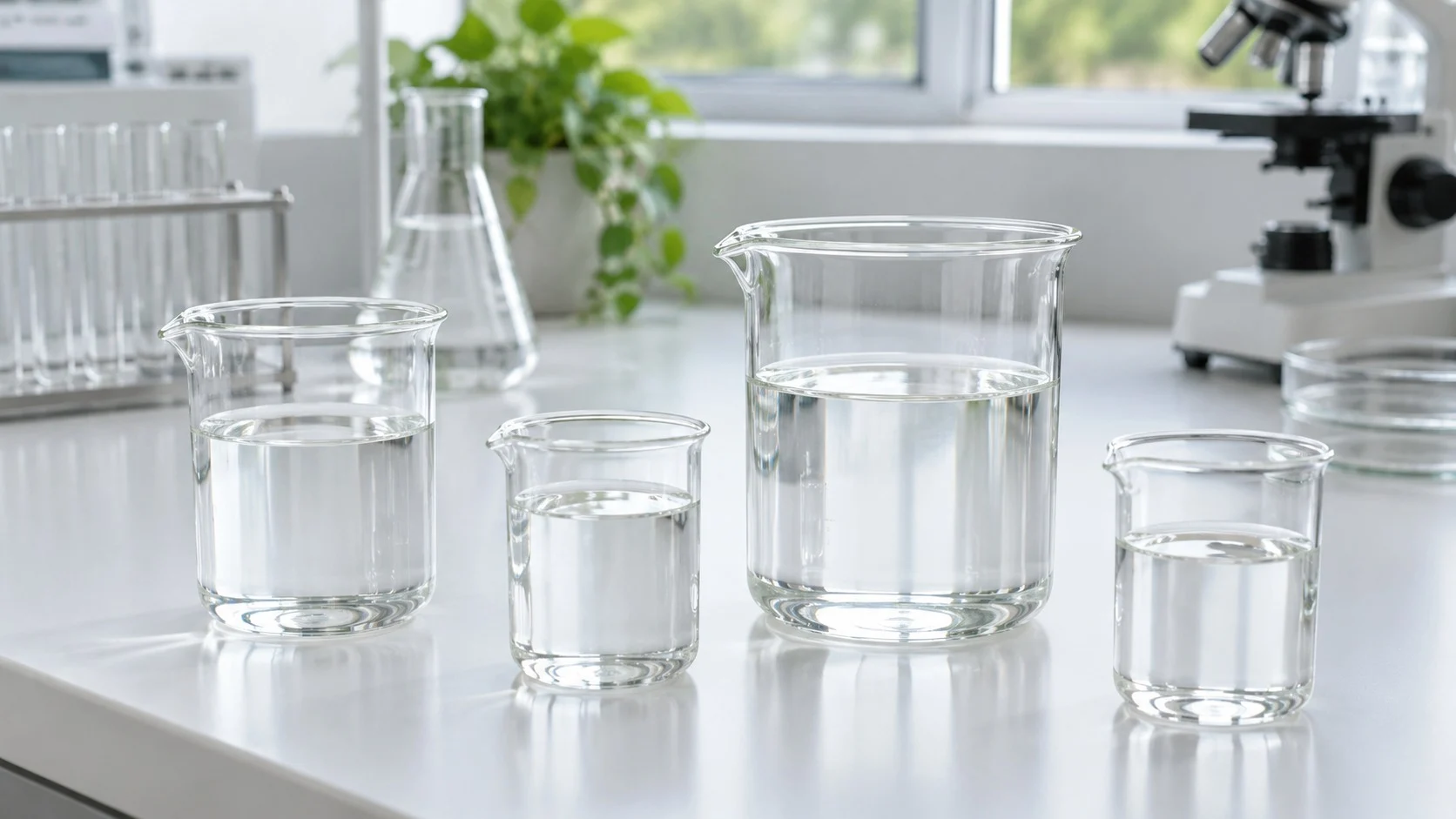
Pure water has a pH of 7, but adding even a little acid or base shifts its pH considerably. A buffer solution, by contrast, keeps nearly the same pH even when the same amount is added. The secret is that it already contains components ready to take in incoming acid and base, respectively.
(1) A pair of a weak acid and its conjugate base
A typical example is a solution of acetic acid mixed with sodium acetate. Acetic acid is a weak acid that can give up hydrogen ions, and the acetate ion is its conjugate base, which can accept hydrogen ions.
(2) Types of buffer solutions
Buffer solutions can be divided into two types depending on which pair they use.
- Acidic buffer: Made from a weak acid and its conjugate base, such as acetic acid and sodium acetate, it holds the pH in a range below 7.
- Basic buffer: Made from a weak base and its conjugate acid, such as ammonia and ammonium chloride, it holds the pH in a range above 7.
How Does a Buffer Solution Hold Its pH?
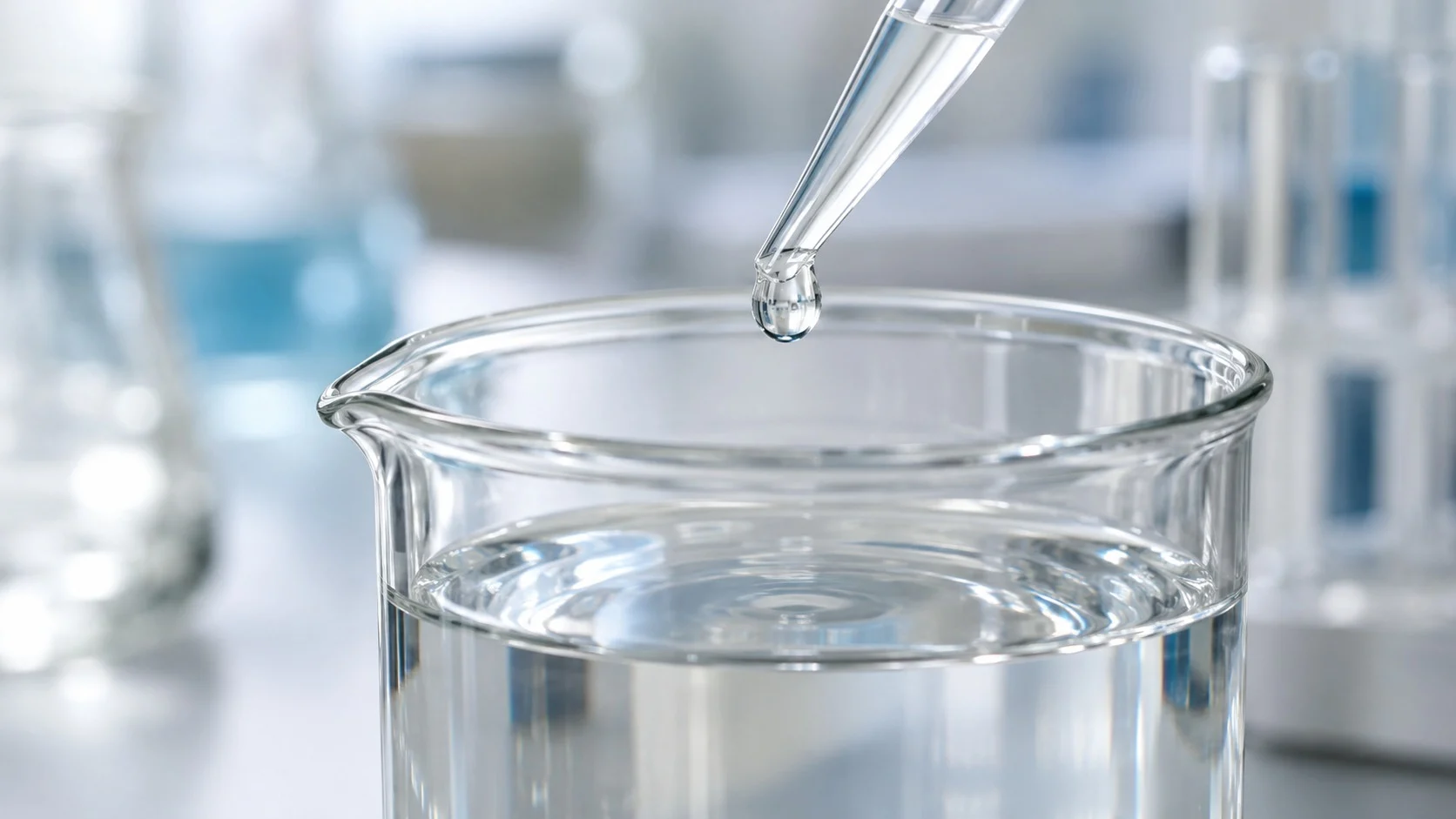
The two components of a buffer solution act like gatekeepers guarding both sides. Whichever side an intruder comes from, the right gatekeeper steps up and holds it.
(1) When acid comes in
Adding a strong acid such as hydrochloric acid increases the number of hydrogen ions. The acetate ion, the conjugate base, then combines with the hydrogen ions and turns into acetic acid, a weak acid, so the number of free hydrogen ions does not rise much.
(2) When base comes in
Adding a strong base such as sodium hydroxide increases the number of hydroxide ions. This time, acetic acid gives up hydrogen ions, which combine with the hydroxide ions to form water, so the pH hardly rises.
(3) The Henderson-Hasselbalch equation
In 1908, the American biochemist Lawrence Henderson expressed the relationship between the components of a buffer solution and the hydrogen ion concentration as an equation, and in 1916 the Dane Karl Hasselbalch rewrote it in terms of pH. The equation is pH = pKa + log([conjugate base] ÷ [weak acid]). When the two components are present in equal amounts, the pH equals the acid's pKa, which for acetic acid is about 4.76. The buffering effect works best when the pH is within about 1 above or below the pKa.
How Does the Body Hold Its pH?

The human body is itself a giant buffering system. The carbon dioxide that cells produce as they respire dissolves in water to form carbonic acid, and if this acid were not dealt with, the blood would quickly tip toward acidity.
(1) The carbonic acid–bicarbonate buffer system
The most important buffer in the blood is the pair of carbonic acid and bicarbonate ions. In normal blood, there are about 20 times as many bicarbonate ions as dissolved carbon dioxide, which keeps the pH near 7.4.
(2) Teamwork between the lungs and kidneys
This buffer system is especially powerful because the body directly controls both of its components. The lungs change how much carbon dioxide is expelled by breathing faster or slower, and the kidneys keep the balance by reabsorbing or excreting bicarbonate ions.
(3) Other buffer systems
Inside cells, the phosphate buffer system, and in the blood, proteins such as hemoglobin also take up hydrogen ions and help hold the pH steady.
Where Are Buffer Solutions Used?
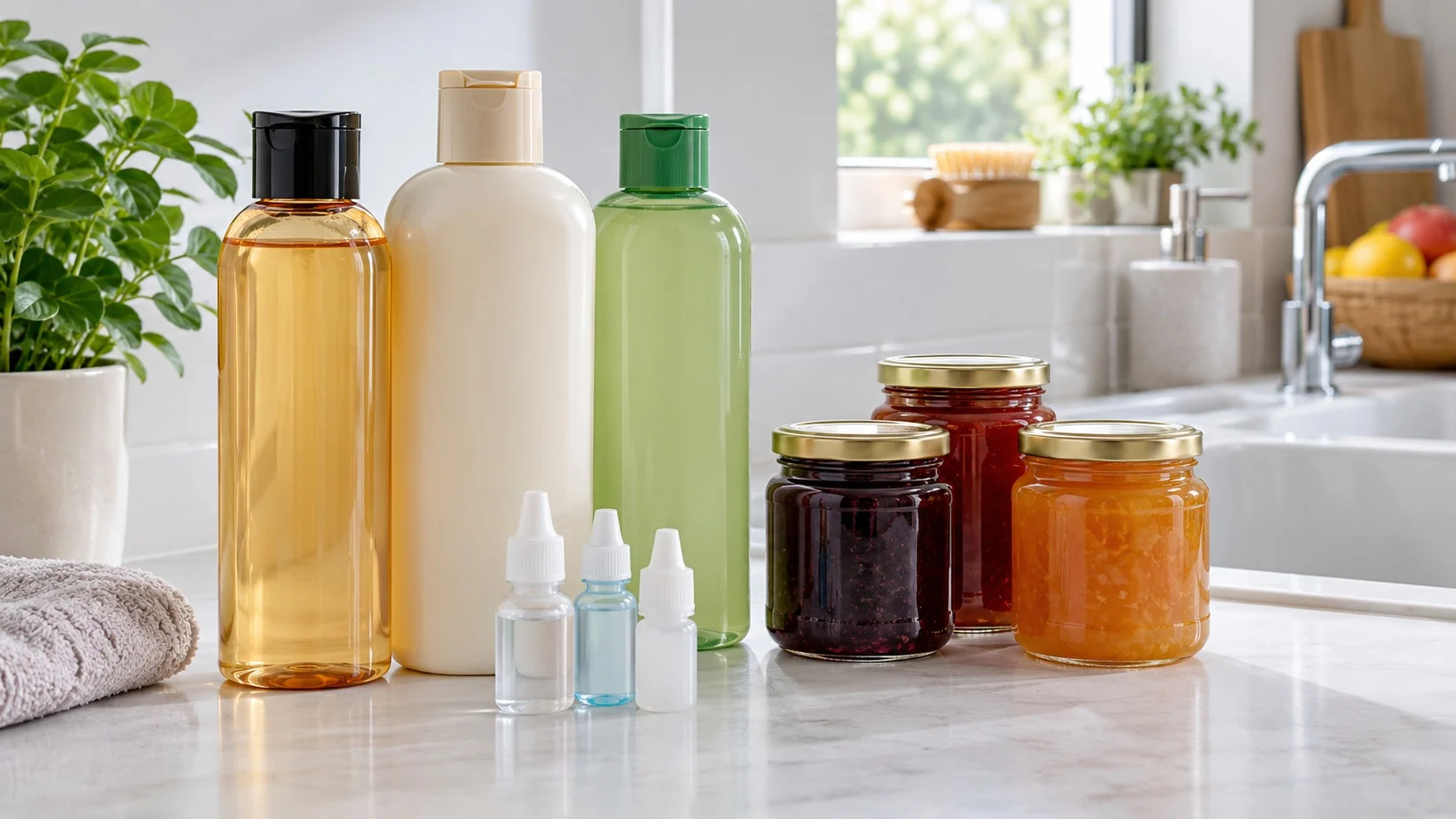
Buffer solutions are used anywhere that even a slight shift in pH would change the outcome.
- Pharmaceuticals: Eye drops and injections contain buffering agents because matching the pH of tears and blood reduces irritation and helps the medicine stay effective longer.
- Cosmetics: Shampoos and facial cleansers use ingredients such as citric acid to adjust their pH so that they stay mildly acidic to suit the skin and scalp.
- Life science research: Enzymes and proteins are very sensitive to pH, so in experiments they are handled in solutions such as phosphate-buffered saline.
- Food processing: When making drinks or jams, buffering agents keep sourness, color, and shelf life consistent.
Buffer solutions have their limits, however. If the amount of acid or base coming in exceeds the amount of buffering components, the buffer can no longer hold it back, and the pH changes sharply. This limit is called the buffer capacity, and it increases as the concentration of the components rises.
Buffer solutions show that the power to stand firm in the face of drastic change comes from a pair prepared in advance. Just as our bodies keep acid and base in balance every moment, it is important to build in the room to absorb change.
Preparing in advance to absorb the shocks: that is the first step toward the wisdom of keeping things stable.