When we wonder about something, we type a few letters into a search box and find the answer in an instant. Yet more than 100 years ago, when there were neither computers nor electronic networks, some people actually pushed forward a dream of gathering all the world’s knowledge in one place so that anyone could look it up.
Two Belgian lawyers copied information scattered across books, newspapers, and reports onto palm-sized cards, one piece per card, and filed them in huge cabinets according to set numbers. Within a few decades, the cards piled up to more than 15 million, and people sent questions by letter and received answers. The home of this dream was the ‘Mundaneum.’
In this article, we will look in turn at the people who founded the Mundaneum and the ideas they held, the structure of a knowledge store built on cards and classification numbers, its question-answering service run by mail, and the story of its decline and rediscovery.
A Dream of Weaving the World’s Knowledge with Paper Cards
A City of Knowledge Dreamed Up by Two Lawyers
Paul Otlet and Henri La Fontaine, who created the Mundaneum, were lawyers in Brussels, Belgium. The two met in 1891 and grew close through their shared interests in bibliography and international cooperation.
(1) The Idea of Putting Knowledge on Cards Instead of Books
In an 1892 essay, Otlet pointed out that books are inconvenient containers for storing information. Because the author decides the order in which facts appear, it is hard to find the one fact you want. He believed that if information were broken into small pieces and written on cards, one per card, it could be freely classified and inserted.
(2) The Beginning of the International Institute of Bibliography
In 1895, the two held the first International Conference of Bibliography and founded the International Institute of Bibliography (Institut International de Bibliographie). The institute later changed its name to the International Federation for Information and Documentation (FID).
(3) From the World Palace to the Mundaneum
In 1919, the Belgian government provided the left wing of the Palais du Cinquantenaire in Brussels. It was first called the ‘World Palace (Palais Mondial)’ and received the name Mundaneum in 1924. La Fontaine, who won the Nobel Peace Prize in 1913, contributed his prize money to the project.
A Knowledge Store Built of Cards and Numbers
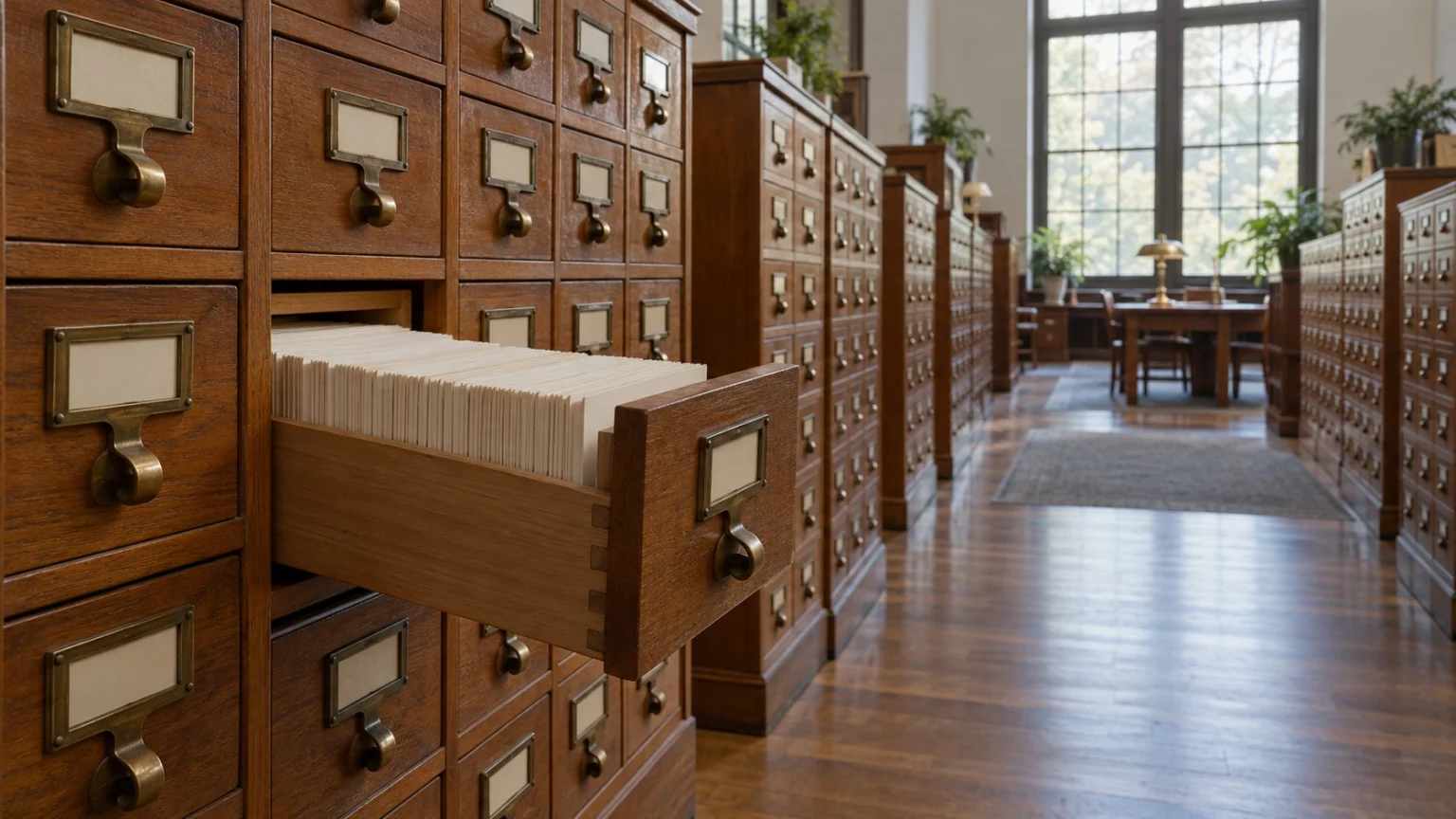
At the heart of the Mundaneum was a giant collection of cards known as the ‘Universal Bibliographic Repertory.’ Started in 1895, it reached 400,000 cards by the end of that year and passed 15 million in 1934.
- Index Card: Information from books and articles was written down one item per card so it could be rearranged at any time.
- Filing Cabinet: Countless cabinets specially designed to hold the cards filled the rooms.
- Universal Decimal Classification: A numbering system the two men expanded from the Dewey Decimal Classification, which determined where each card would be placed.
- Archive Room: 100,000 files containing letters, reports, and newspaper articles, along with millions of images, were stored separately.
The Universal Decimal Classification could join several subjects together with symbols, so it could express even overlapping topics. This system is still used today in many libraries outside the English-speaking world.
A Search Service That Asked by Letter and Answered with Cards
Otlet did not leave the information he collected gathering dust in storage. Starting in 1896, he opened a fee-based service that answered questions by mail.
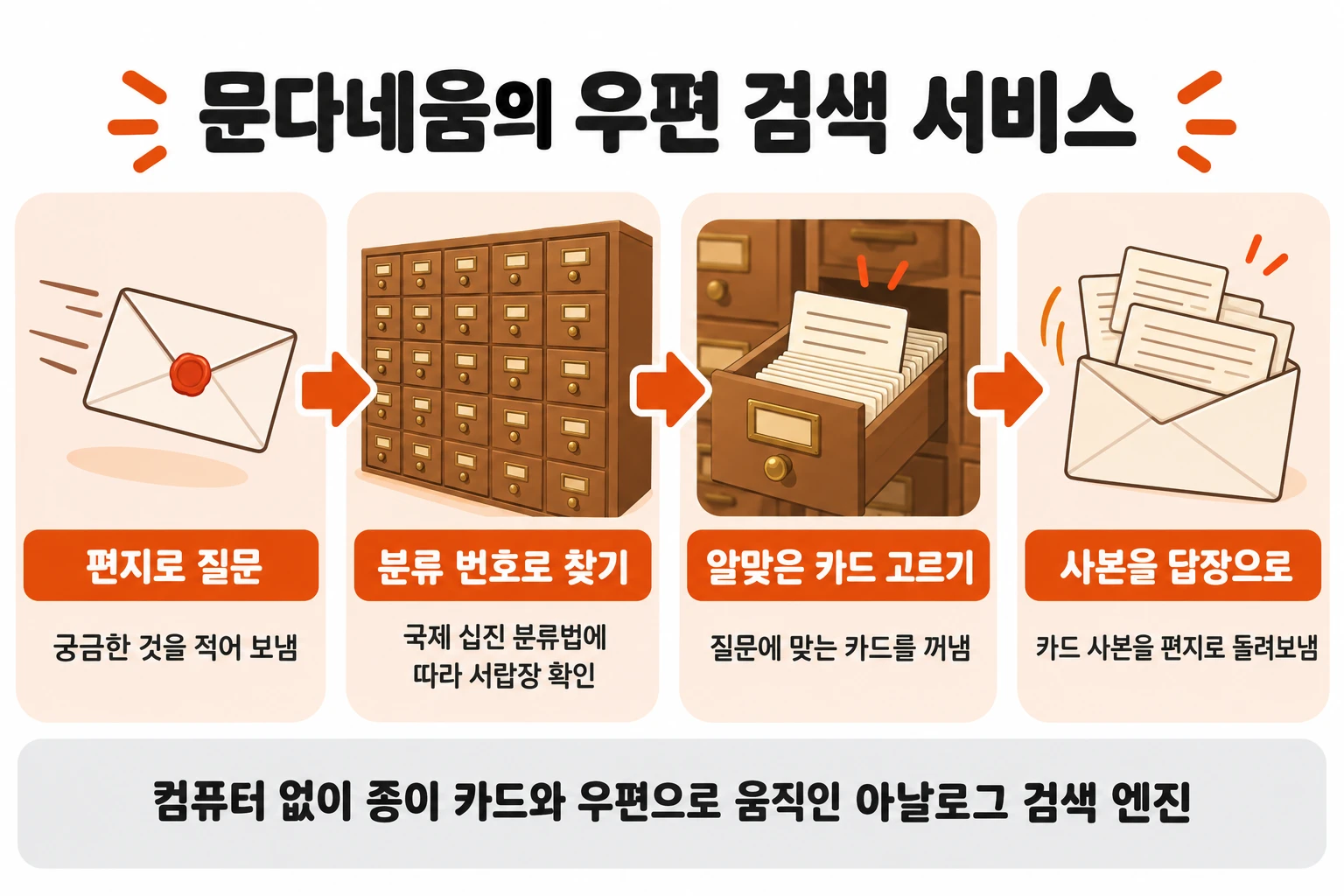
(1) Questions and Answers Sent by Post
When someone sent a question by letter, staff found the right cards in the cabinets and mailed copies back as a reply. One researcher called this service an ‘analog search engine.’
(2) Inquiries That Grew Every Year
By 1912, it was answering more than 1,500 questions a year. For questions likely to return more than 50 results, it would even send a warning in advance.
(3) Knowledge Opened from Home
In works such as his 1934 book Treatise on Documentation (Traité de documentation), Otlet imagined a future in which people would sit at home, look up distant documents on a screen, and move between linked materials. Because this vision resembles today’s internet, he is regarded as a pioneer of information science.
A Closed Store and Its Rediscovered Value
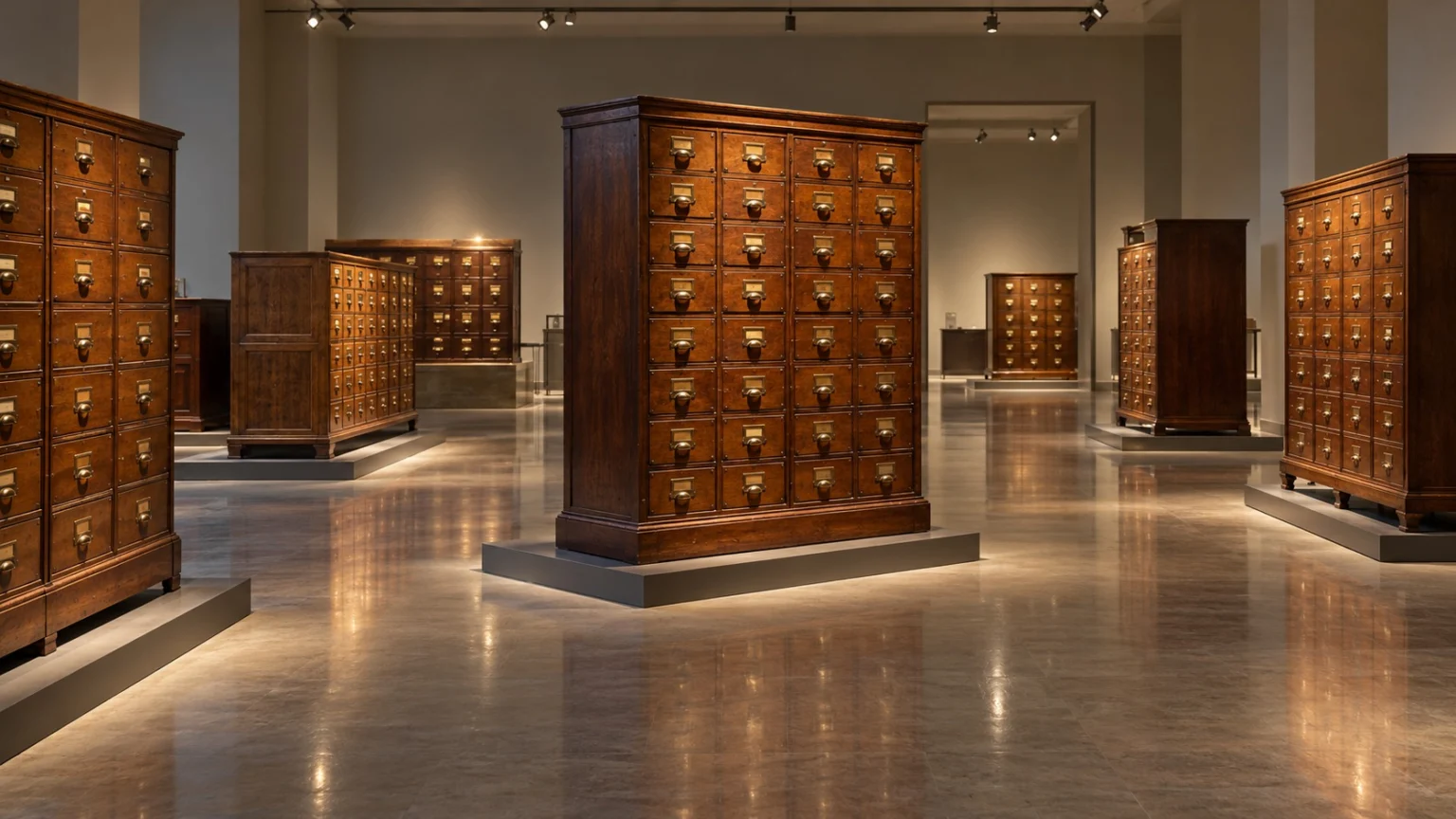
The Mundaneum’s dream did not last long. In 1934, the Belgian government cut off its support and the offices were shut. Otlet stood guard in front of the locked doors in protest, but to no avail.
(1) Scars Left by War
When Germany occupied Belgium in 1940, an exhibition of Nazi German art moved into the Mundaneum’s space, and much of the material was lost in the process. Otlet died in 1944 without seeing his dream fulfilled.
(2) The World City Left Unfinished
Otlet also commissioned the architect Le Corbusier to design a city of knowledge centered on the Mundaneum in Geneva, Switzerland, but the plan was never built.
(3) The Mundaneum Returns as a Museum
After the World Wide Web appeared, Otlet’s ideas drew attention once again. In 1998, the Mundaneum museum opened in a former department store building in Mons, Belgium, and in 2015 Google honored him with a commemorative doodle depicting the Mundaneum’s filing cabinets.
The Mundaneum showed that breaking information into small pieces, classifying it by consistent rules, and finding it and handing it to those who need it is what keeps knowledge alive. Although it had to rely on paper cards and the post, the ideas underlying it carried on into today’s search engines and databases.
Weaving scattered knowledge together so it can be found is the first step toward a world of information open to everyone.